11 results for "GABA-A R gamma 2 Small Molecules and Peptides" in Products
GABA-A R gamma 2: Small Molecules and Peptides
GABA A (γ-aminobutyric acid-type A) receptors are members of the cysteine-loop family of neurotransmitter-gated ion channels. GABA binding to A-type receptors induces anion-selective ion channel opening. These receptors are the principal fast inhibitory neurotransmitter receptors in the CNS. GABA A receptors are heteropentamer combinations of seven subunit types; α, β, γ, δ, ε, θ, and π. Three subunits, α, β, and γ, have at least ...

Competitive and selective GABAA antagonist
| Alternate Names: | Gabazine |
| Chemical Name: | 6-Imino-3-(4-methoxyphenyl)-1(6H)-pyridazinebutanoic acid hydrobromide |
| Purity: | ≥98% (HPLC) |

Positive allosteric modulator of GABAA receptors
| Alternate Names: | 3a,5a-THPROG |
| Chemical Name: | (3α,5α)-3-Hydroxy-pregnan-20-one |

Benzodiazepine antagonist
| Alternate Names: | Ro 15-1788 |
| Chemical Name: | 8-Fluoro-5,6-dihydro-5-methyl-6-oxo-4H-imidazo[1,5-a][1,4]benzodiazepine-3-carboxylic acid, ethyl ester |
| Purity: | ≥99% (HPLC) |

α5-selective GABAA inverse agonist
| Chemical Name: | 3-(1,1-Dimethylethyl)-7-(5-methyl-3-isoxazolyl)-2-[(1-methyl-1H-1,2,4-triazol-5-yl)methoxy]-pyrazolo[1,5-d][1,2,4]triazine |
| Purity: | ≥98% (HPLC) |

GABAA partial agonist; displays subtype selectivity
| Chemical Name: | 3-(2,5-Difluorophenyl)-7-(1,1-dimethylethyl)-6-[(1-methyl-1H-1,2,4-triazol-5-yl)methoxy]-1,2,4-triazolo[4,3-b]pyridazine |
| Purity: | ≥98% (HPLC) |

Postitive allosteric modulator of GABAA receptors
| Chemical Name: | (3α,5β)-3-Hydroxy-pregnan-20-one |

GABAA agonist
| Alternate Names: | Gaboxadol |
| Chemical Name: | 4,5,6,7-Tetrahydroisoxazolo[5,4-c]pyridin-3-ol hydrochloride |
| Purity: | ≥98% (HPLC) |

Benzodiazepine inverse agonist
| Chemical Name: | N-Methyl-β-carboline-3-carboxamide |
| Purity: | ≥99% (HPLC) |

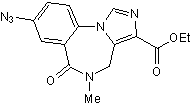
Benzodiazepine partial inverse agonist
| Chemical Name: | 8-Azido-5,6-dihydro-5-methyl-6-oxo-4H-imidazo[1,5-a][1,4]benzodiazepine-3-carboxylic acid ethyl ester |
| Purity: | ≥98% (HPLC) |
Active metabolite of oxcarbazepine (Cat. No. 3864)
| Alternate Names: | GP 47779 |
| Chemical Name: | 10,11-Dihydro-10-hydroxy-5H-dibenz(Z)[b,f]azepin-5-carboxamide |
| Purity: | ≥98% (HPLC) |

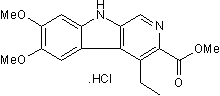
Benzodiazepine inverse agonist
| Chemical Name: | 4-Ethyl-6,7-dimethoxy-9H-pyrido[3,4-b]indole-3-carboxylic acid methyl ester hydrochloride |
| Purity: | ≥98% (HPLC) |