
GABA-A R alpha 2: Small Molecules and Peptides
GABA A (γ-aminobutyric acid-type A) receptors are members of the cysteine-loop family of neurotransmitter-gated ion channels. GABA binding to A-type receptors induces anion-selective ion channel opening. These receptors are the principal fast inhibitory neurotransmitter receptors in the CNS. GABA A receptors are heteropentamer combinations of seven subunit types; α, β, γ, δ, ε, θ, and π. Three subunits, α, β, and γ, have at least three separate gene products in mammals, and typical GABA A receptors have some combination of α, β, and γ subunits.
The rat α2 isoform is a 53 kDa, 423 amino acid (aa), 4 transmembrane protein with two terminal extracellular regions. The ligand-binding region is in the N-terminus (aa 15 - 222). As with many receptors, phosphorylation is likely to be used as a regulatory mechanism. The α2 subunit is known to be phosphorylated on Ser/Thr residues. Rat α2 has multiple isoforms, all involving the 5' UTR. These may dictate α2 levels within the cell. This receptor subunit is particularly abundant in forebrain areas and is a potential target of anabolic steroids. Behavioral alterations associated with steroid abuse may be a manifestation of α2β3γ2L receptor activation.
12 results for "GABA-A R alpha 2 Small Molecules and Peptides" in Products
12 results for "GABA-A R alpha 2 Small Molecules and Peptides" in Products
GABA-A R alpha 2: Small Molecules and Peptides
GABA A (γ-aminobutyric acid-type A) receptors are members of the cysteine-loop family of neurotransmitter-gated ion channels. GABA binding to A-type receptors induces anion-selective ion channel opening. These receptors are the principal fast inhibitory neurotransmitter receptors in the CNS. GABA A receptors are heteropentamer combinations of seven subunit types; α, β, γ, δ, ε, θ, and π. Three subunits, α, β, and γ, have at least three separate gene products in mammals, and typical GABA A receptors have some combination of α, β, and γ subunits.
The rat α2 isoform is a 53 kDa, 423 amino acid (aa), 4 transmembrane protein with two terminal extracellular regions. The ligand-binding region is in the N-terminus (aa 15 - 222). As with many receptors, phosphorylation is likely to be used as a regulatory mechanism. The α2 subunit is known to be phosphorylated on Ser/Thr residues. Rat α2 has multiple isoforms, all involving the 5' UTR. These may dictate α2 levels within the cell. This receptor subunit is particularly abundant in forebrain areas and is a potential target of anabolic steroids. Behavioral alterations associated with steroid abuse may be a manifestation of α2β3γ2L receptor activation.

Competitive and selective GABAA antagonist
| Alternate Names: | Gabazine |
| Chemical Name: | 6-Imino-3-(4-methoxyphenyl)-1(6H)-pyridazinebutanoic acid hydrobromide |
| Purity: | ≥98% (HPLC) |

Potent GABAA agonist; also GABAA-ρ partial agonist
| Chemical Name: | 5-Aminomethyl-3-hydroxyisoxazole |
| Purity: | ≥98% |

Positive allosteric modulator of GABAA receptors
| Alternate Names: | 3a,5a-THPROG |
| Chemical Name: | (3α,5α)-3-Hydroxy-pregnan-20-one |

Benzodiazepine inverse agonist
| Chemical Name: | N-Methyl-β-carboline-3-carboxamide |
| Purity: | ≥99% (HPLC) |

α5-selective GABAA inverse agonist
| Chemical Name: | 3-(1,1-Dimethylethyl)-7-(5-methyl-3-isoxazolyl)-2-[(1-methyl-1H-1,2,4-triazol-5-yl)methoxy]-pyrazolo[1,5-d][1,2,4]triazine |
| Purity: | ≥98% (HPLC) |

GABAA agonist
| Alternate Names: | Gaboxadol |
| Chemical Name: | 4,5,6,7-Tetrahydroisoxazolo[5,4-c]pyridin-3-ol hydrochloride |
| Purity: | ≥98% (HPLC) |

Postitive allosteric modulator of GABAA receptors
| Chemical Name: | (3α,5β)-3-Hydroxy-pregnan-20-one |

Benzodiazepine inverse agonist
| Chemical Name: | 4-Ethyl-6,7-dimethoxy-9H-pyrido[3,4-b]indole-3-carboxylic acid methyl ester hydrochloride |
| Purity: | ≥98% (HPLC) |
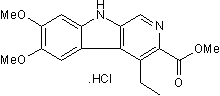
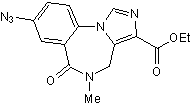
Benzodiazepine partial inverse agonist
| Chemical Name: | 8-Azido-5,6-dihydro-5-methyl-6-oxo-4H-imidazo[1,5-a][1,4]benzodiazepine-3-carboxylic acid ethyl ester |
| Purity: | ≥98% (HPLC) |
Active metabolite of oxcarbazepine (Cat. No. 3864)
| Alternate Names: | GP 47779 |
| Chemical Name: | 10,11-Dihydro-10-hydroxy-5H-dibenz(Z)[b,f]azepin-5-carboxamide |
| Purity: | ≥98% (HPLC) |

Benzodiazepine antagonist
| Alternate Names: | Ro 15-1788 |
| Chemical Name: | 8-Fluoro-5,6-dihydro-5-methyl-6-oxo-4H-imidazo[1,5-a][1,4]benzodiazepine-3-carboxylic acid, ethyl ester |
| Purity: | ≥99% (HPLC) |

GABAA partial agonist; displays subtype selectivity
| Chemical Name: | 3-(2,5-Difluorophenyl)-7-(1,1-dimethylethyl)-6-[(1-methyl-1H-1,2,4-triazol-5-yl)methoxy]-1,2,4-triazolo[4,3-b]pyridazine |
| Purity: | ≥98% (HPLC) |
