
Human/Mouse/Rat 11 beta-HSD1 Antibody
R&D Systems, part of Bio-Techne | Catalog # AF3397

Conjugate
Catalog #
Key Product Details
Species Reactivity
Validated:
Human, Mouse, Rat
Cited:
Human, Mouse, Rat, Rabbit
Applications
Validated:
Western Blot, Simple Western
Cited:
Western Blot, Immunoprecipitation
Label
Unconjugated
Antibody Source
Polyclonal Goat IgG
Product Specifications
Immunogen
E. coli-derived recombinant human 11 beta-HSD1
Asn24-Lys292
Accession # P28845
Asn24-Lys292
Accession # P28845
Specificity
Detects endogenous human, mouse and rat 11 beta-HSD1 in Western blots.
Clonality
Polyclonal
Host
Goat
Isotype
IgG
Scientific Data Images for Human/Mouse/Rat 11 beta-HSD1 Antibody
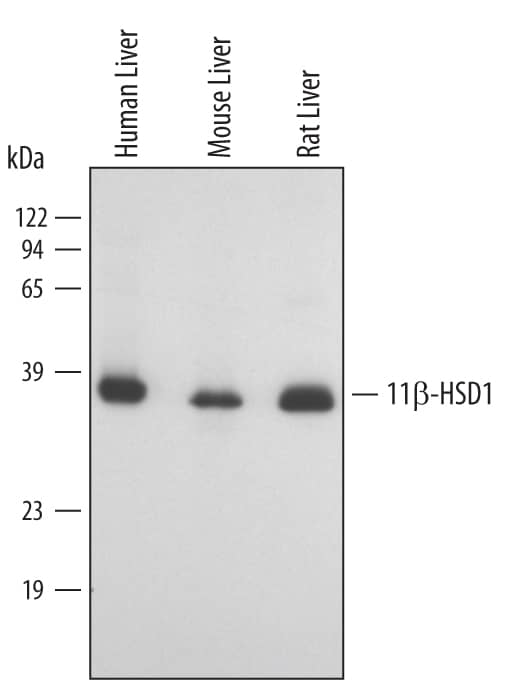
Detection of Human/Mouse/Rat 11 beta-HSD1 by Western Blot.
Western blot shows lysates of human, mouse and rat liver tissue. PVDF membrane was probed with 0.5 µg/mL of Human/Mouse/Rat 11 beta-HSD1 Antigen Affinity-purified Polyclonal Antibody (Catalog # AF3397) followed by HRP-conjugated Anti-Goat IgG Secondary Antibody (Catalog # HAF109). A specific band was detected for 11 beta-HSD1 at approximately 36 kDa (as indicated). This experiment was conducted using Immunoblot Buffer Group 2.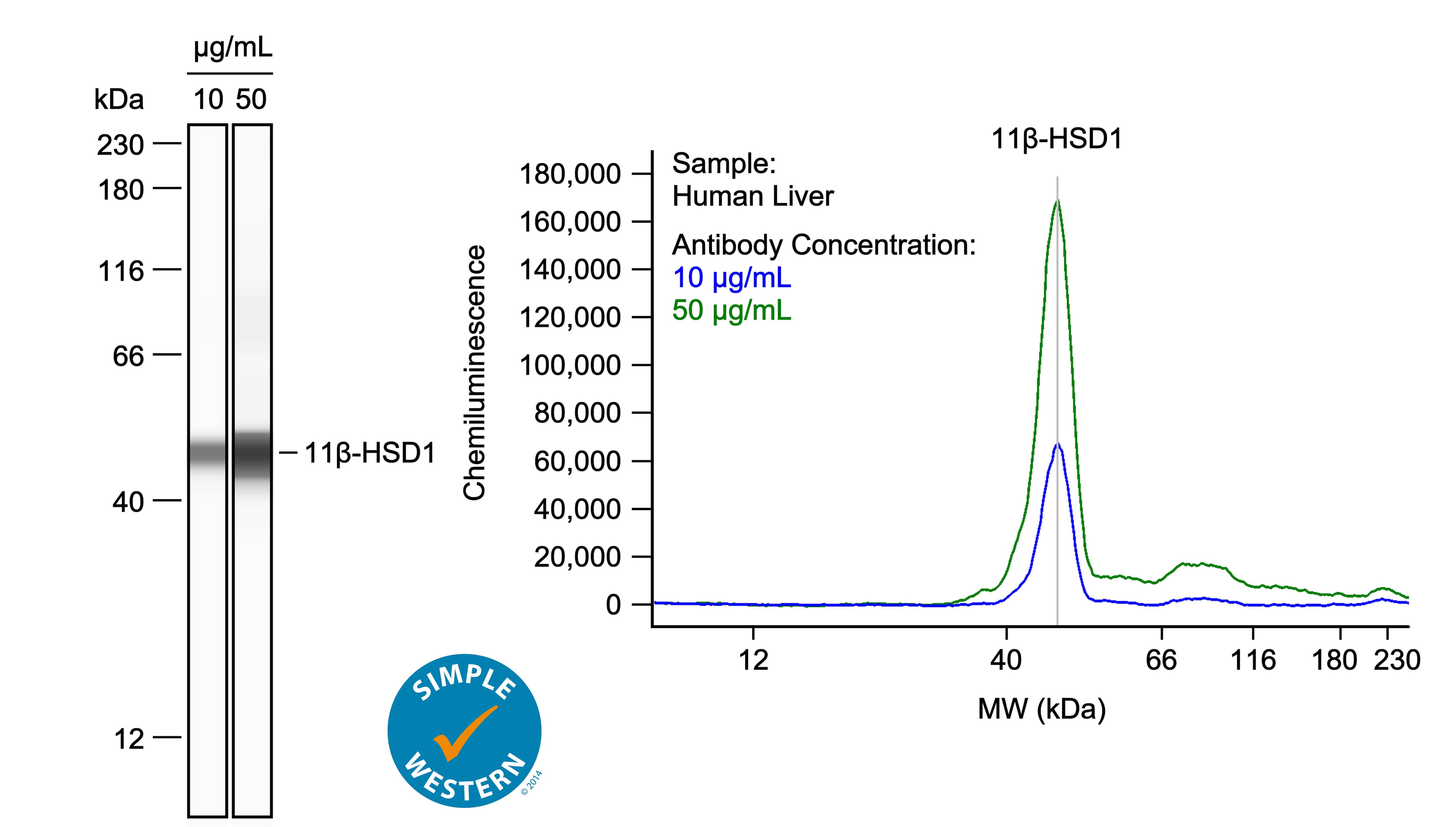
Detection of Human 11 beta-HSD1 by Simple WesternTM.
Left: Simple Western lane view shows lysates of human liver, loaded at 1 mg/ml. A specific band was detected for 11 beta-HSD1 at approximately 48 kDa (as indicated) using both 10 µg/ml and 50 µg/ml of Goat Anti-Human/Mouse/Rat 11 beta-HSD1 Antigen Affinity-purified Polyclonal Antibody (Catalog # AF3397) followed by HRP-conjugated Donkey Anti-Goat Secondary Antibody (Catalog # 043-522-2). This experiment was conducted under reducing conditions and using the 12-230kDa separation system. Right: Simple Western electropherogram showing the same Goat Anti-Human/Mouse/Rat 11 beta-HSD1 Antigen Affinity-purified Polyclonal Antibody (Catalog # AF3397) tested at 10 µg/ml (blue line) and 50 µg/ml (green line) in the human liver.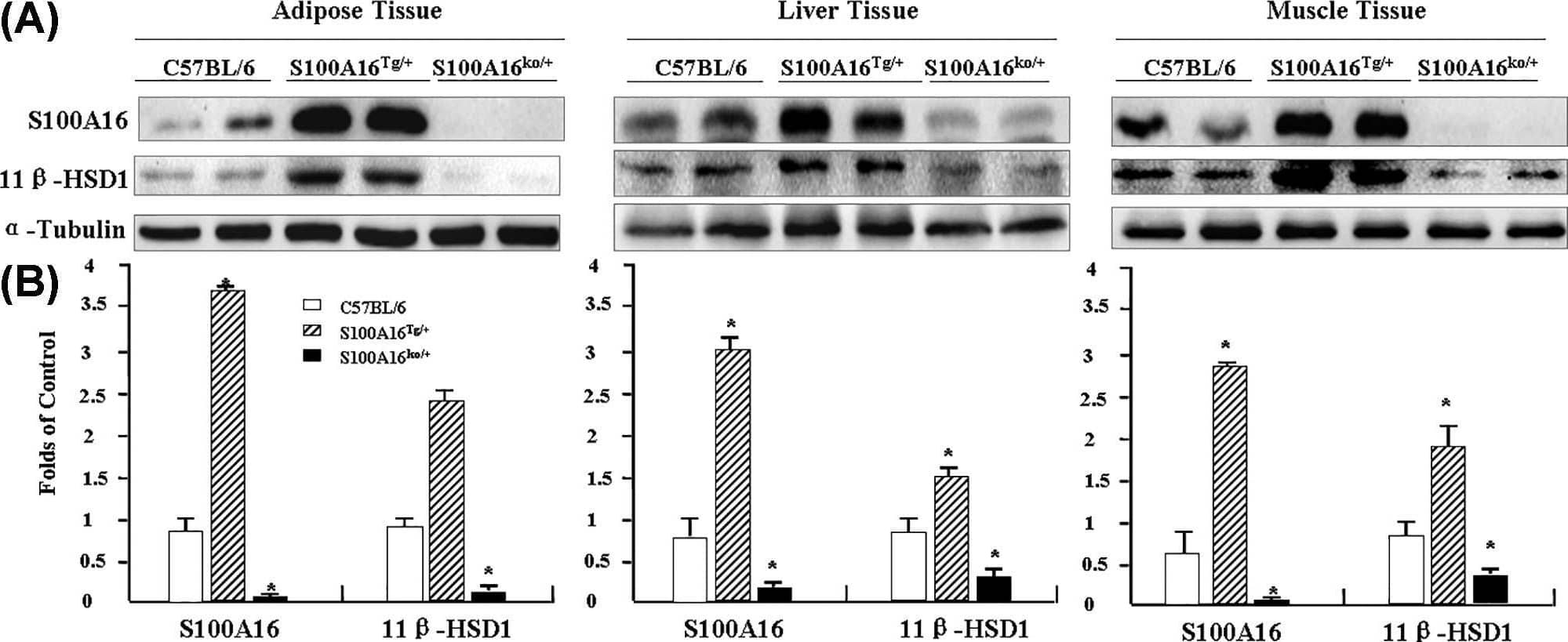
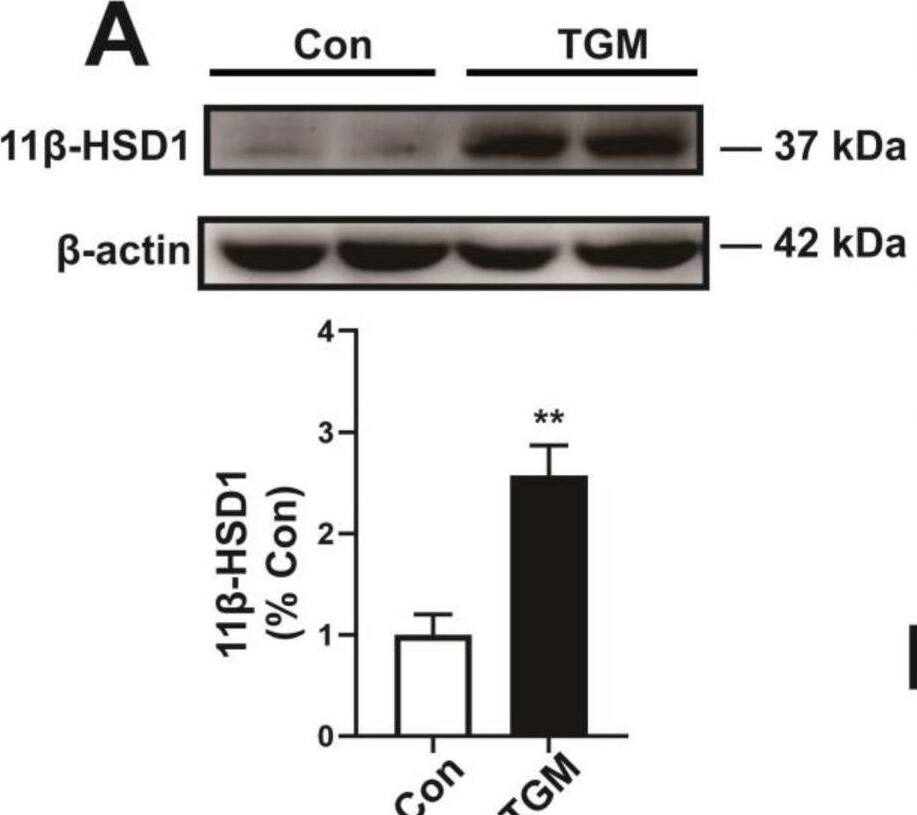
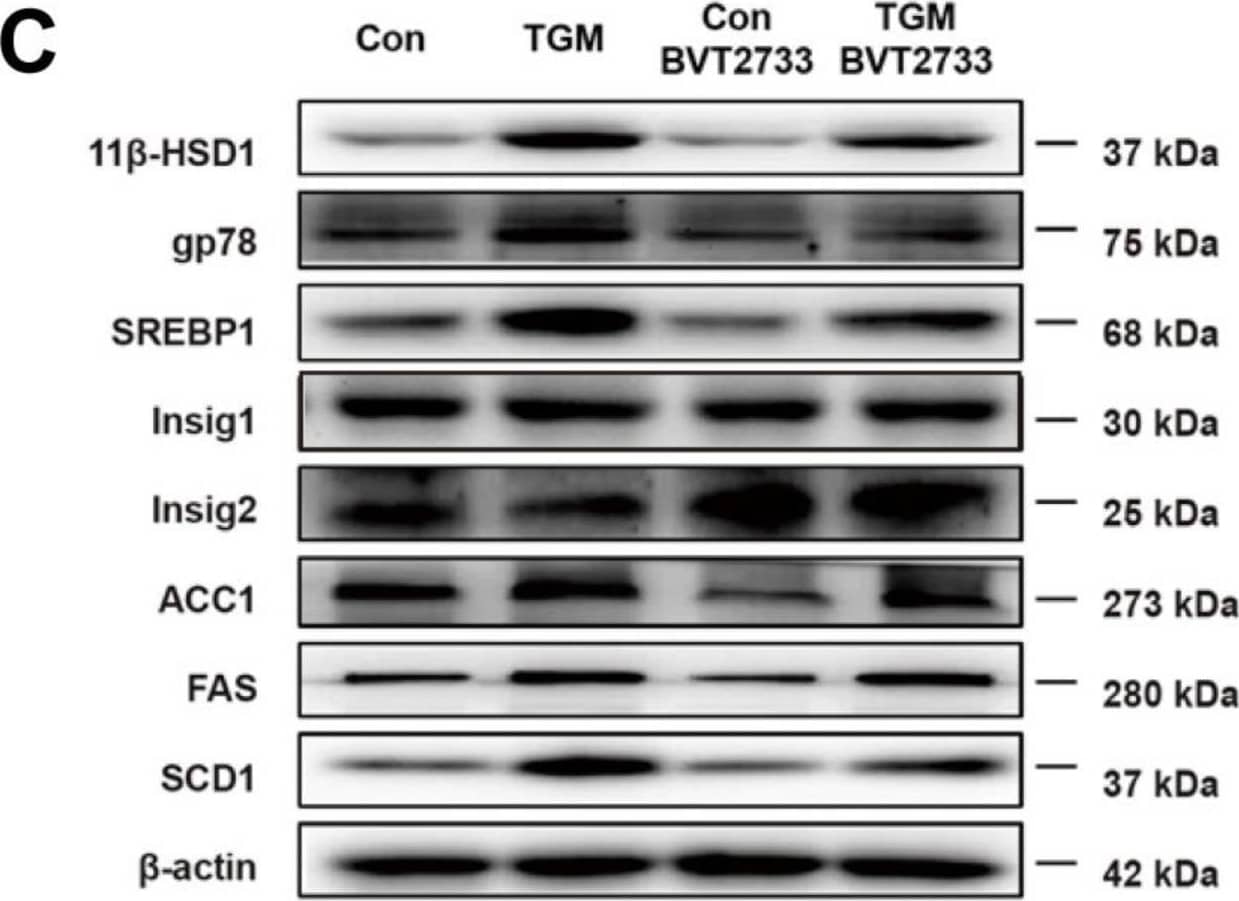
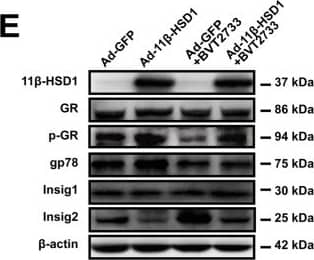
Detection of 11 beta-HSD1 by Western Blot
Effect of S100A16 on 11 beta-HSD1 expression Adipose, liver, and muscle tissues were removed from C57BL/6, S100A16Tg/Tg, and S100A16KO/+ mice, and proteins were extracted. (A) Analysis of S100A16 and 11 beta-HSD1 protein levels by Western blotting. (B) Relative expression of S100A16 and 11 beta-HSD1 based on grayscale analysis with alpha-tubulin as a control. Image collected and cropped by CiteAb from the following open publication (https://pubmed.ncbi.nlm.nih.gov/31399502), licensed under a CC-BY license. Not internally tested by R&D Systems.
Applications for Human/Mouse/Rat 11 beta-HSD1 Antibody
Application
Recommended Usage
Simple Western
10-50 µg/mL
Sample: Human liver tissue
Sample: Human liver tissue
Western Blot
0.5 µg/mL
Sample: Human, mouse and rat liver tissue
Sample: Human, mouse and rat liver tissue
Formulation, Preparation, and Storage
Purification
Antigen Affinity-purified
Reconstitution
Reconstitute at 0.2 mg/mL in sterile PBS. For liquid material, refer to CoA for concentration.
Formulation
Lyophilized from a 0.2 μm filtered solution in PBS with Trehalose. See Certificate of Analysis for details.
*Small pack size (-SP) is supplied either lyophilized or as a 0.2 µm filtered solution in PBS.
*Small pack size (-SP) is supplied either lyophilized or as a 0.2 µm filtered solution in PBS.
Shipping
Lyophilized product is shipped at ambient temperature. Liquid small pack size (-SP) is shipped with polar packs. Upon receipt, store immediately at the temperature recommended below.
Stability & Storage
Use a manual defrost freezer and avoid repeated freeze-thaw cycles.
- 12 months from date of receipt, -20 to -70 °C as supplied.
- 1 month, 2 to 8 °C under sterile conditions after reconstitution.
- 6 months, -20 to -70 °C under sterile conditions after reconstitution.
Background: 11 beta-HSD1
Hydoxysteroid (11-beta) Dehydrogenase, type I 11-beta-hydroxysteroid dehydrogenase 1(11 beta-HSD1, HSD11B1 or HSD1) is a microsomal glycoprotein enzyme, with an apparent mass of 36 kDa, that catalyzes the conversion of the stress hormone cortisol to the inactive metabolite cortisone. 11 beta-HSD1 can also catalyze the reverse reaction, the conversion of cortisone to cortisol. 11 beta-HSD1 has been detected in a wide range of rat and human tissues, including lung and testis, but highest amounts are expressed in the liver. Human 11 beta-HSD1 shares 79 and 77% sequence identity with mouse and rat 11 beta-HSD1, respectively. There are at least 2 isoforms of 11 beta-HSD. The other isoform, type II, is expressed predominantly in the kidney and placenta and catalyzes only the 11-beta-dehydrogenation reaction. High levels of cortisol can lead to visceral obesity and particular defects in the expression or function of 11 beta-HSD1 have also been associated with insulin resistance and cognitive function.
Long Name
11 beta Hydroxysteroid Dehydrogenase 1
Alternate Names
11 betaHSD1, HSD11B1
Gene Symbol
HSD11B1
UniProt
Additional 11 beta-HSD1 Products
Product Documents for Human/Mouse/Rat 11 beta-HSD1 Antibody
Product Specific Notices for Human/Mouse/Rat 11 beta-HSD1 Antibody
For research use only
Loading...
Loading...
Loading...
Loading...
Loading...