4 results for "Hematopoietic Prostaglandin D Synthase/HPGDS Small Molecules and Peptides" in Products
Hematopoietic Prostaglandin D Synthase/HPGDS: Small Molecules and Peptides
Prostaglandin D Synthase (PGDS) catalyzes the conversion of prostaglandin (PG) H2 to PGD2, which is a major prostanoid produced in a variety of tissues. Two types of PGDS have been isolated: the glutathione-dependent hematopoietic PGDS (HPGDS) and the glutathione-independent lipocalin type PGDS. HPGDS is a cytosolic enzyme that is expressed in mast cells and antigen presenting cells. It is the only mammalian member of the class Sigma glutathione S transferase, showing a broad specificity ...

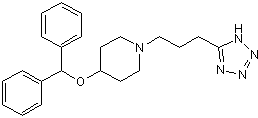
Human hematopoietic prostaglandin D synthase (H-PGDS) inhibitor
| Chemical Name: | 4-(Diphenylmethoxy)-1-(3-2H-tetrazol-5-yl)propyl]-piperidine |
| Purity: | ≥98% (HPLC) |
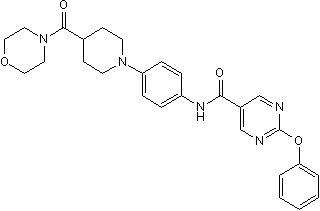
Potent hematopoietic prostaglandin D synthase (H-PGDS) inhibitor
| Chemical Name: | N-[4-[4-(4-Morpholinylcarbonyl)-1-piperidinyl]phenyl]-2-phenoxy-5-pyrimidinecarboxamide |
| Purity: | ≥98% (HPLC) |
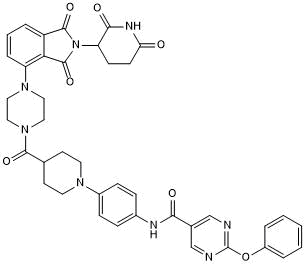
Potent hematopoietic prostaglandin D2 synthase Degrader (PROTAC®)
| Chemical Name: | N-[4-[4-[[4-[2-(2,6-Dioxo-3-piperidinyl)-2,3-dihydro-1,3-dioxo-1H-isoindol-4-yl]-1-piperazinyl]carbonyl]-1-piperidinyl]phenyl]-2-phenoxy-5-pyrimidinecarboxamide |
| Purity: | ≥98% (HPLC) |
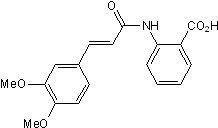
Antiallergic; inhibits inflammatory mediator release from mast cells
| Chemical Name: | 2-[[3-(3,4-Dimethoxyphenyl)-1-oxo-2-propenyl]amino]benzoic acid |
| Purity: | ≥98% (HPLC) |