
Cultrex Synthetic Hydrogel Kit (RUO), 1 mL
R&D Systems, part of Bio-Techne | Catalog # CSH-RUO-01
Extracellular Matrix for 3D Organoid Cultures - Fully Defined, Synthetic Component Derived Formulation.

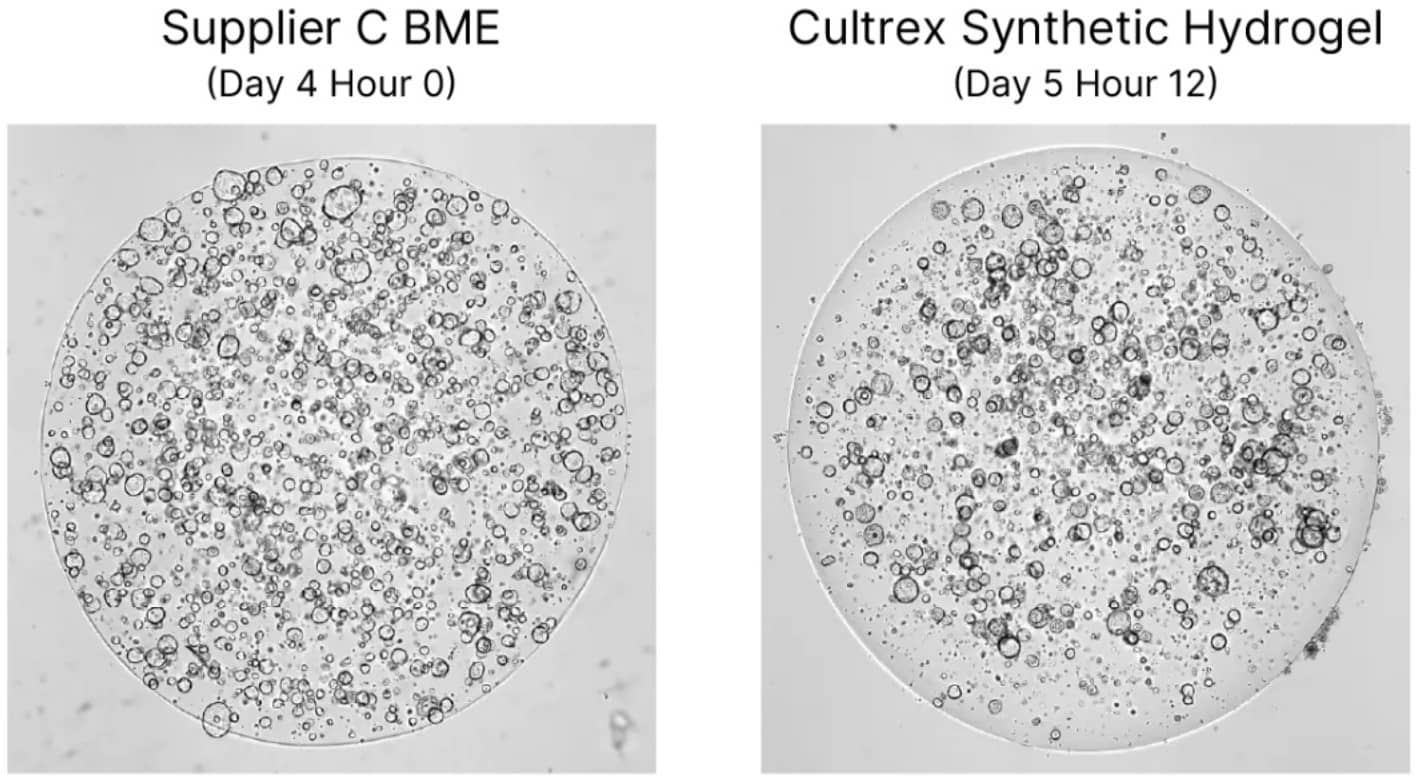
Key Product Details
Features
Cultrex Synthetic Hydrogel is a fully defined, synthetic component derived hydrogel formulation developed to further advance 3D organoid and cell culturing. This product is ideal for end users who have development efficiency, process consistency, and compliance driven end goals.
Key Benefits
- Improved Culture Consistency: Controlled formulation reduces variables
- Uncompromised Performance: Comparable performance to animal component derived matrices
- Improved Imaging: Non-Fluorescent hydrogel is optimal for high- and super-resolution microscopy methods
- Efficient Harvesting: Synthetic component derived formulation allows for facile organoid and cell extraction with protease digestion
- User-Friendly Format: Kit format provided with validated protocol to support out-of-the-box user experience
Applications
Cell Culture
Product Summary for Cultrex Synthetic Hydrogel Kit (RUO), 1 mL
Why Use Cultrex Synthetic Hydrogel?
Cultrex Synthetic Hydrogel is a fully defined, synthetic-component derived hydrogel formulation. While animal-component derived formulations have inherent variability, synthetic component derived formulations enable increased variable control for improved consistency and improved compliance for end users trying to reduce animal component risks. Formed through the cross-linking of synthetic polymer chains, the soft structure and porosity of hydrogels is able to mimic living tissue environments.
Cultrex Synthetic Hydrogel provides a proprietary formulation that has a storage modulus observed to support 3D cell and tissue organoid cultures in human intestinal, human liver, and human lung applications requiring an extracellular matrix scaffold.
Cultrex Synthetic Hydrogel provides a proprietary formulation that has a storage modulus observed to support 3D cell and tissue organoid cultures in human intestinal, human liver, and human lung applications requiring an extracellular matrix scaffold.
What Comes in the Cultrex Synthetic Hydrogel Kit?
One kit includes 8 vial components to prepare desired hydrogel volume. One kit prepares up to 1 mL of total hydrogel volume. A digital protocol is provided for optimal out-of-the-box customer experience. See Product Datasheet.
Product Specifications
Endotoxin Level
≤ 4 EU/mL by Limulus Amoebocyte Lysate (LAL) assay
Cell Culture Testing
Organoid Culture - Cultrex Synthetic Hydrogel supports growth and expansion of human intestinal organoid progenitor cells.
Gelling Assay - Cultrex Synthetic Hydrogel gels in less than 30 minutes at 37 °C.
Dome Assay Cultrex Synthetic Hydrogel forms and maintains stable 3-D dome structures on cell culture plates.
Gelling Assay - Cultrex Synthetic Hydrogel gels in less than 30 minutes at 37 °C.
Dome Assay Cultrex Synthetic Hydrogel forms and maintains stable 3-D dome structures on cell culture plates.
Scientific Data Images for Cultrex Synthetic Hydrogel Kit (RUO), 1 mL
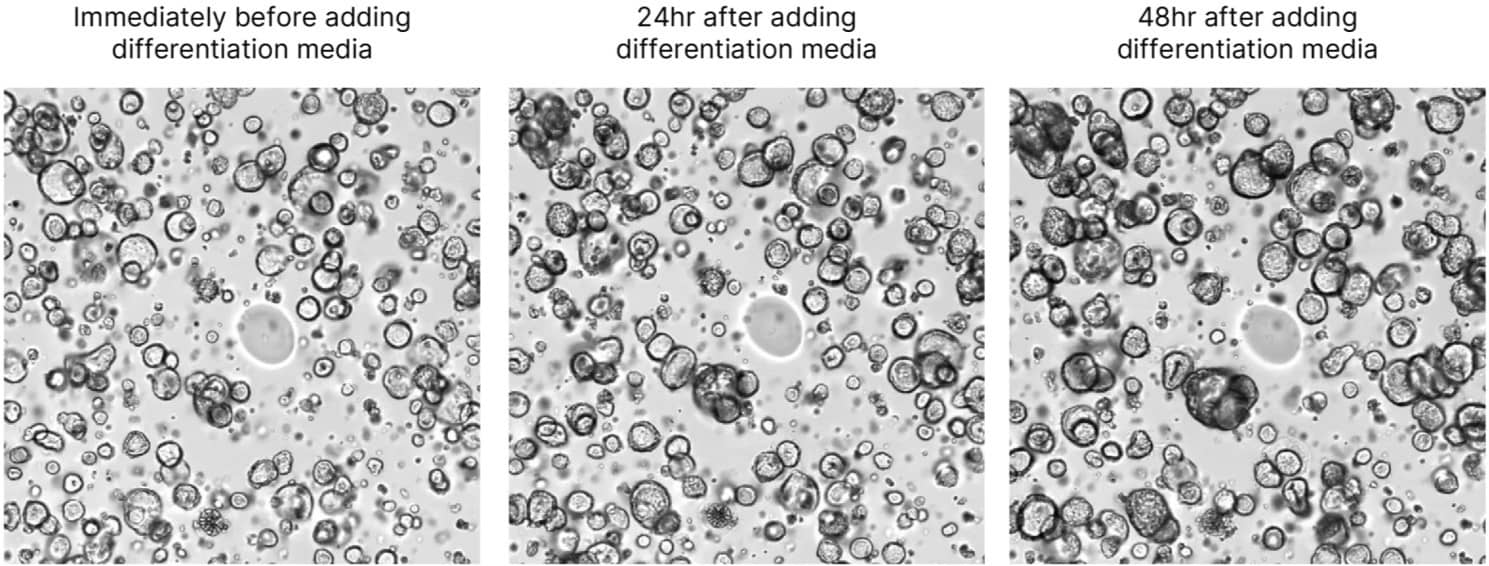
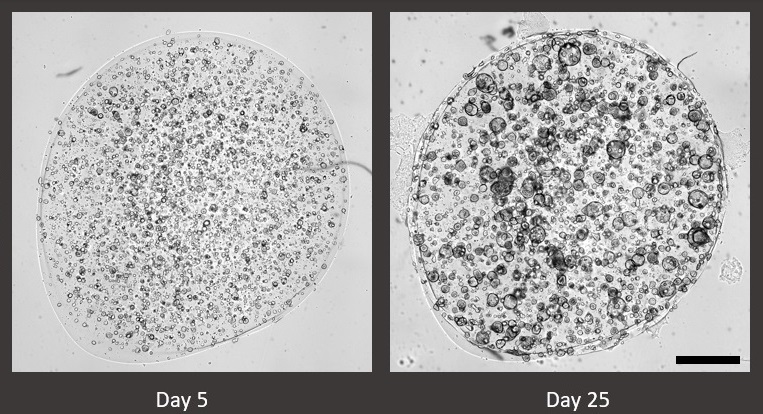
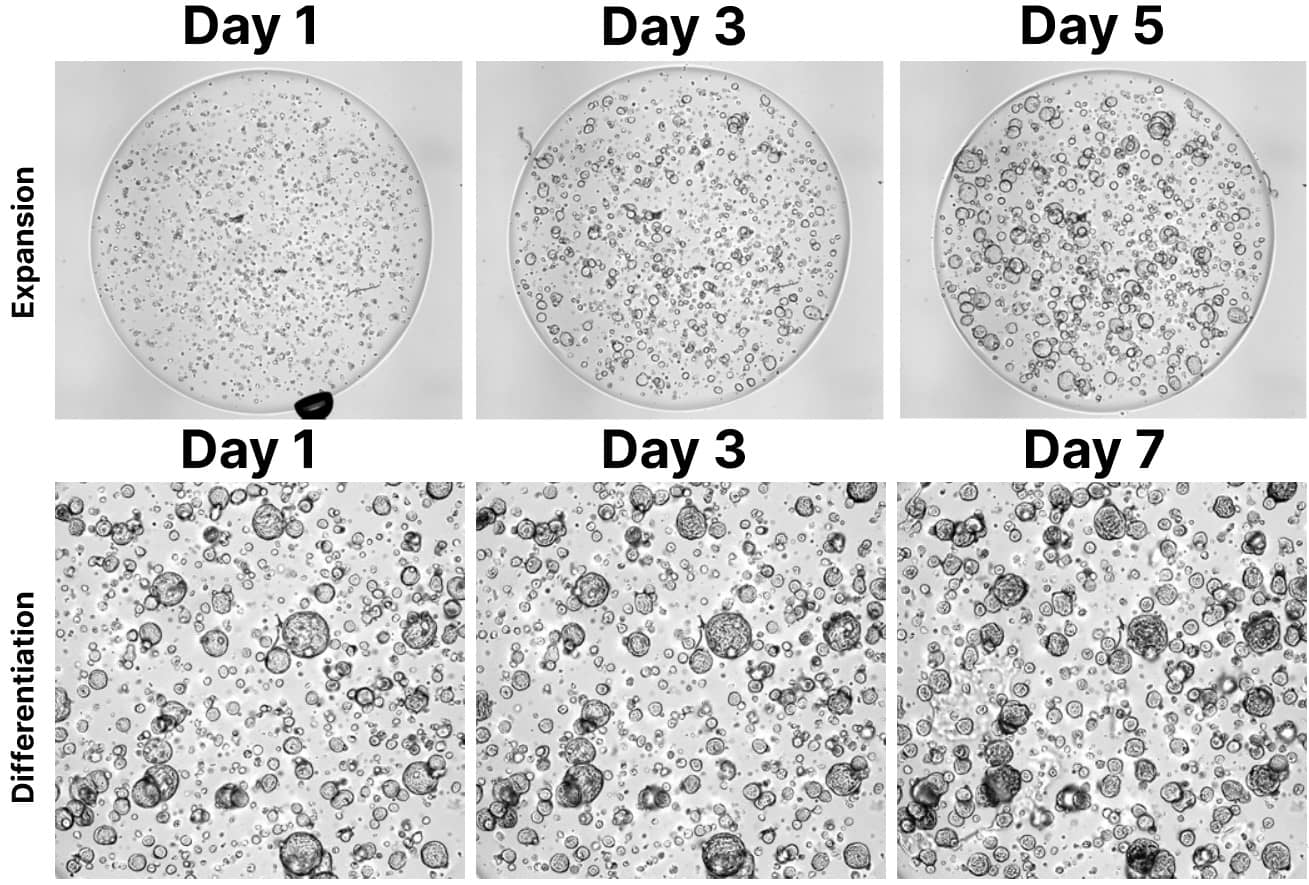
Differentiation of Intestinal Organoids in Cultrex Synthetic Hydrogel.
Organoids expanded in Cultrex Synthetic Hydrogel exhibit expected cystic morphology, indicative of healthy baseline development. Upon differentiation, the organoids begin to lose their cystic morphology and start forming more specialized, structured tissues. This demonstrates the ability of Cultrex Synthetic Hydrogel to support both healthy initial organoid growth and subsequent differentiation into mature structures.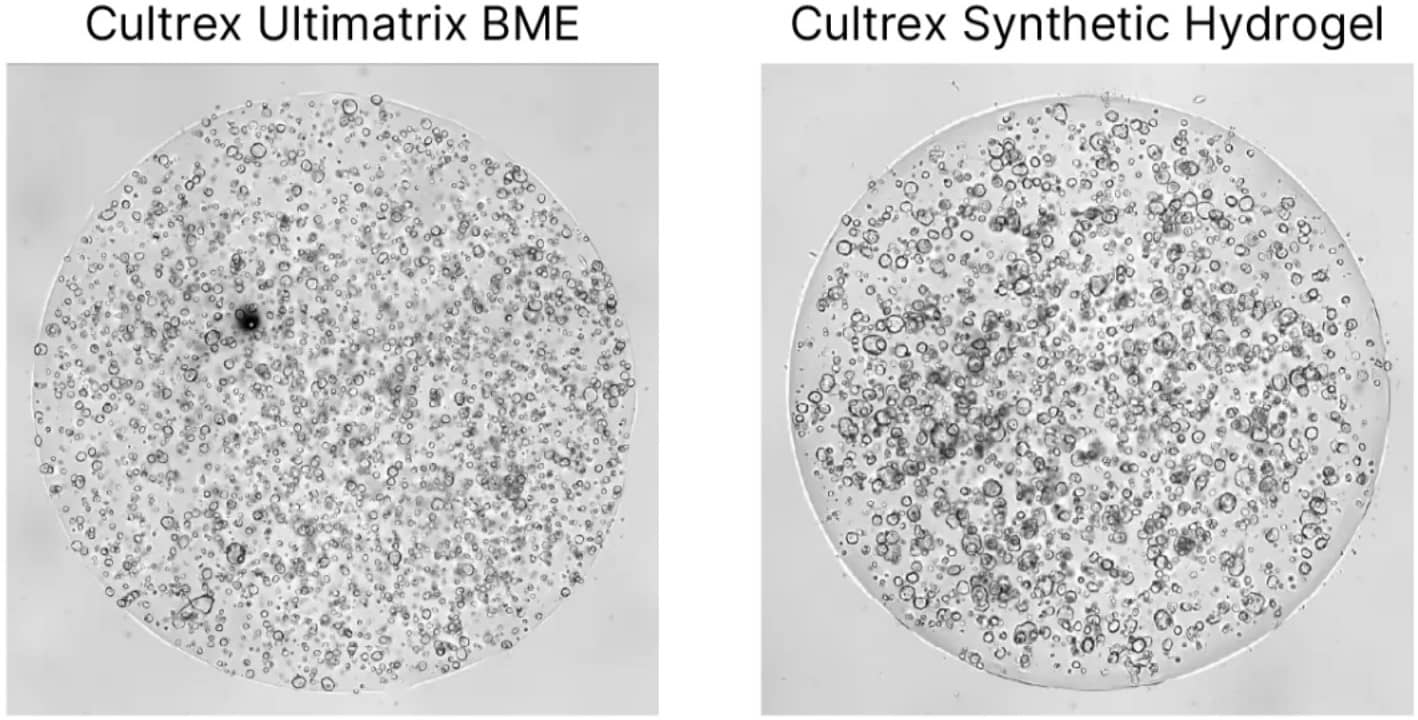
Cultrex Synthetic Hydrogel Performance Compared to Basement Membrane Extracts.
Cultrex UltiMatrix BME (Catalog # BME001-05) domes were plated at 10,000 cell per 10 μL hydrogel, and Cultrex Synthetic Hydrogel (Catalog # CSH-RUO) domes were plated at 15,000 cells. After three days in culture, comparable organoid growth is observed.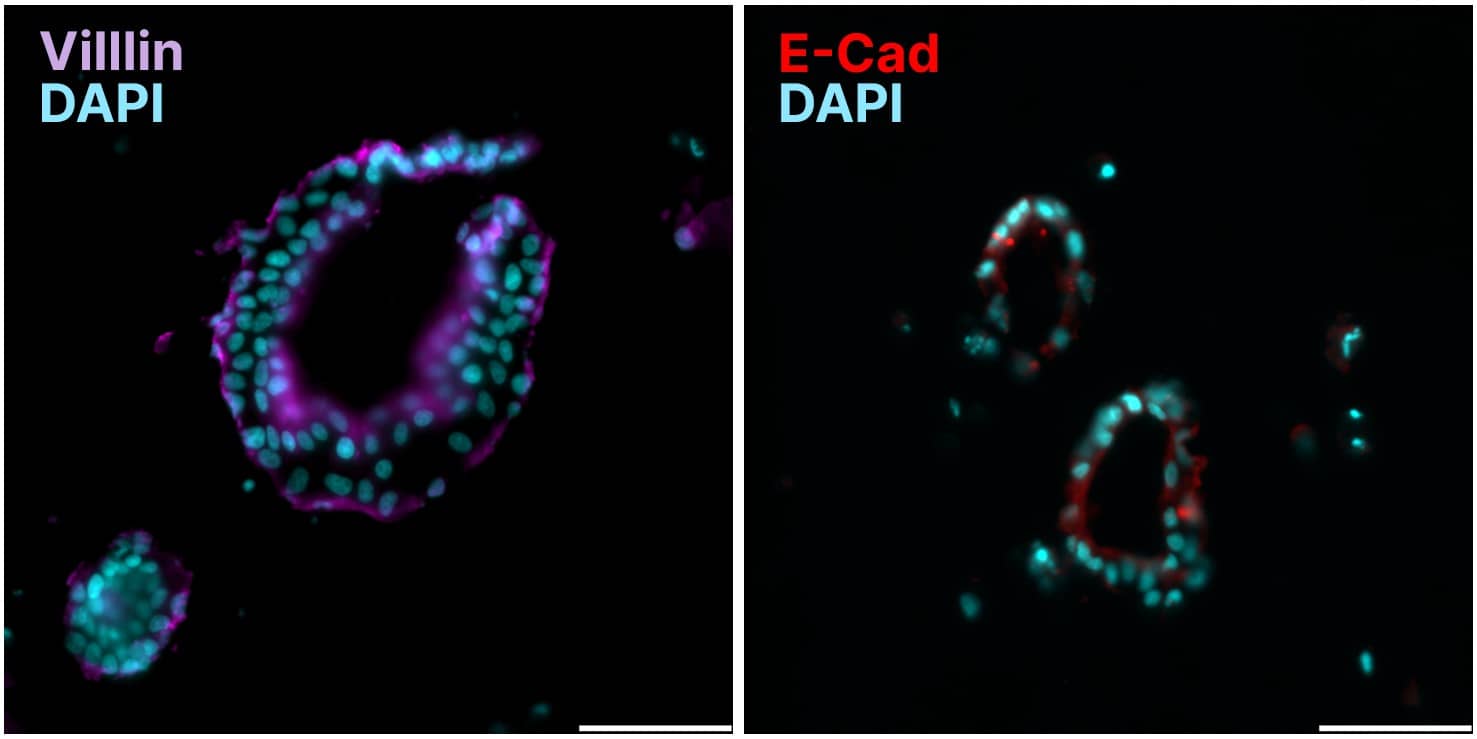
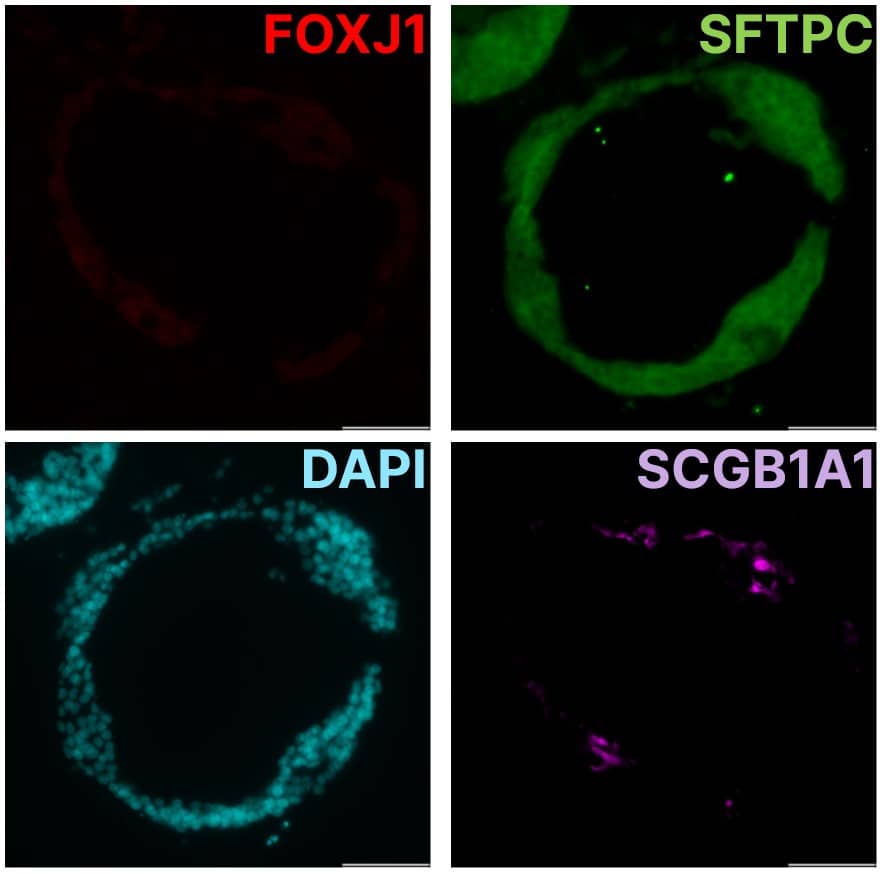
ICC Imaging of Enteroids.
Images of human enteroids expanded with Wnt/RSPO2 (Catalog # BT-WRSP2) in Cultrex Synthetic Hydrogel (Catalog # CSH-RUO-01), with quantification of total organoid area on day 4. ICC images of enteroids stained with Villin (Catalog # NBP2-75707), E-Cadherin (Catalog # AF748) and DAPI in Synthetic Hydrogel. Scale bar indicates 50 µm.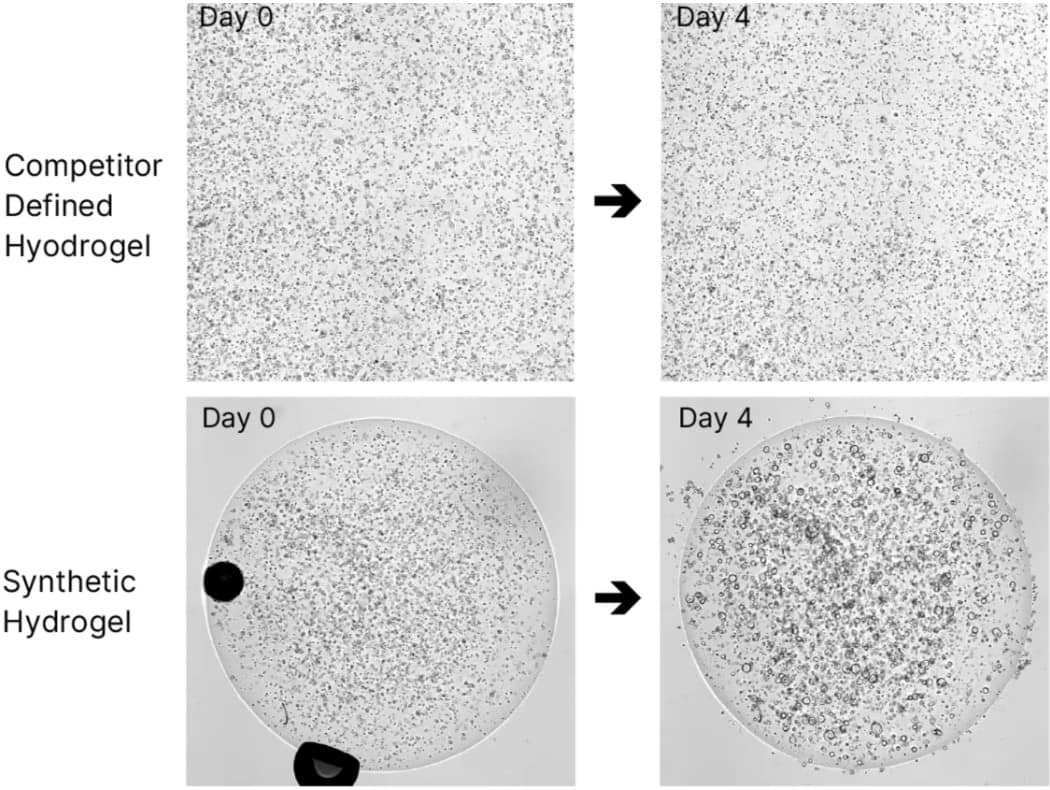
Formulation, Preparation, and Storage
Shipping
The product is shipped with dry ice or equivalent. Upon receipt, store it immediately at the recommended temperature.
Storage
Store the unopened product at ≤ -70 °C. Use a manual defrost freezer and minimize repeated freeze-thaw cycles.
Stability
Product is stable for 12 months from date of manufacture when stored at ≤ -70 °C. See lot specific Certificate of Analysis for expiration date.
Background: Basement Membrane Extracts
Basement membrane extract (BME) is a type of extracellular matrix (ECM) derived from Engelbreth-Holm-Swarm mouse sarcomas. BME is commonly used in cell culture and tissue engineering to provide a 2-D or 3-D scaffold for cells, allowing them to grow, differentiate, and interact in an environment that closely mimics the native ECM. This makes BME invaluable for modeling the behavior of cells in vivo. All Cultrex BME formulations are rigorously tested to ensure performance, quality, and lot-to-lot consistency.
Additional Basement Membrane Extracts Products
Product Documents for Cultrex Synthetic Hydrogel Kit (RUO), 1 mL
Product Specific Notices for Cultrex Synthetic Hydrogel Kit (RUO), 1 mL
- This product is produced by and ships from R&D Systems, Inc., a Bio-Techne brand.
- This product is covered by one or more of the following US patents: 16/942580; PCT/US2020/044067 and other pending US patent applications and foreign equivalents 3148127; 202080063571.3; 20757115.9.
- For research use only. Not for diagnostic use.
Loading...
Loading...
Loading...
Loading...