
TLR7 Antibody [Biotin]
Novus Biologicals, part of Bio-Techne | Catalog # NBP3-71082
Fc Region Site-Specific Biotinylated Antibody

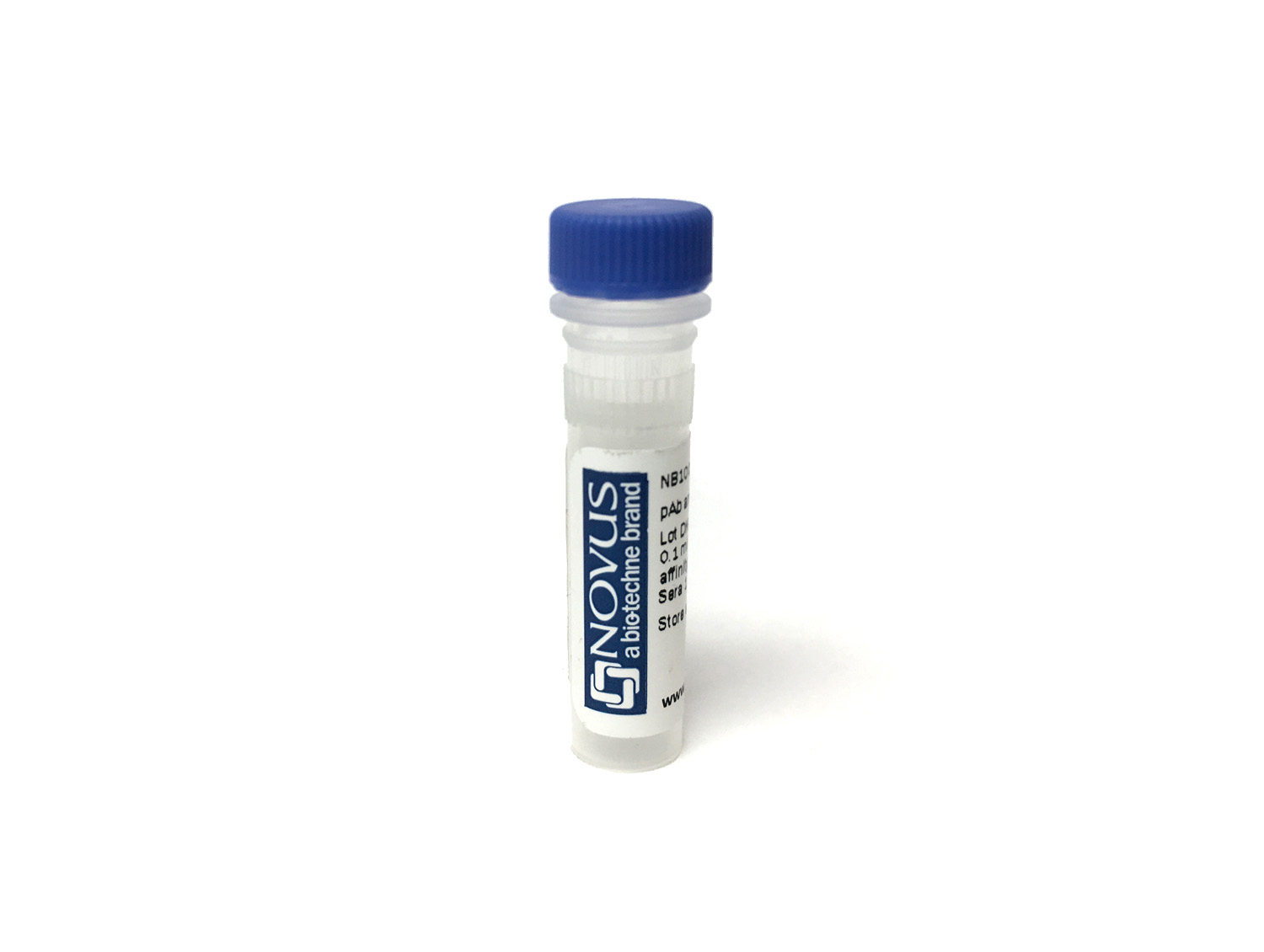
Key Product Details
Species Reactivity
Human
Applications
Immunohistochemistry, Immunohistochemistry-Paraffin
Label
Biotin
Antibody Source
Polyclonal Rabbit IgG
Concentration
Concentrations vary lot to lot. See vial label for concentration. If unlisted please contact technical services.
Product Specifications
Immunogen
This antibody was developed against a recombinant protein corresponding to amino acids: MLNFTKNLKVLQKLMMNDNDISSSTSRTMESESLRTLEFRGNHLDVLWREGDNRYLQLFKNLLKLEELDISKNSLSFLPSGVFDGMPPNLKNL
Reactivity Notes
Immunogen displays the following percentage of sequence identity for non-tested species: Rat (80%)
Clonality
Polyclonal
Host
Rabbit
Isotype
IgG
Description
This conjugate is made on demand and is not held in inventory. As a result, each order represents a unique lot.
Successful site-specific biotin conjugation is confirmed by reducing SDS-PAGE, revealing a mobility shift of the antibody heavy-chain when biotin is covalently attached. Free biotin from the conjugation process has been removed. The antibody concentration is provided on the individual product label.
For specialized conjugation needs, like large quantities, and specific concentrations, bulk and custom antibody conjugation services are available.
Applications for TLR7 Antibody [Biotin]
Application
Recommended Usage
Immunohistochemistry
1:20 - 1:50
Immunohistochemistry-Paraffin
1:20 - 1:50
Application Notes
Recommended applications and dilutions are based on validated applications from the unconjugated base product
NBP2-32483
Formulation, Preparation, and Storage
Purification
Affinity purified
Formulation
40% glycerol and PBS (pH 7.2).
Preservative
0.02% Sodium Azide
Concentration
Concentrations vary lot to lot. See vial label for concentration. If unlisted please contact technical services.
Shipping
The product is shipped with polar packs. Upon receipt, store it immediately at the temperature recommended below.
Stability & Storage
Store at 4C short term. Aliquot and store at -20C long term. Avoid freeze-thaw cycles.
Background: TLR7
While TLRs play an important role in innate immune response, dysfunction in the TLR-MyD88 signaling cascade has also been reported in various autoimmune disorders (5,6). Elevated expression of TLR7 is associated with increased risk of system lupus erythematosus (SLE), an autoimmune disease involving B cell hyperactivity (6,7). Studies involving mouse models has also found that increased TLR7 expression predisposes mice to a lupus-like disease (7). Therapeutics targeting TLR7 have been developed to either enhance or inhibit its activity depending on the circumstance. For example, TLR7 agonists such as imiquimod, resiquimod, and 852A are used to increase TLR7 activity for treatment of cancers and to fight viral infections (7,8). On the other hand, TLR7 antagonists inhibit its activation and have been developed to combat chronic immune stimulation as seen in inflammatory and autoimmune diseases (8).
References
1. Petes C, Odoardi N, Gee K. The Toll for Trafficking: Toll-Like Receptor 7 Delivery to the Endosome. Front Immunol. 2017;8:1075. https://doi.org/10.3389/fimmu.2017.01075
2. Maeda K, Akira S. TLR7 Structure: Cut in Z-Loop. Immunity. 2016;45(4):705-707. https://doi.org/10.1016/j.immuni.2016.10.003
3. Krieg AM, Vollmer J. Toll-like receptors 7, 8, and 9: linking innate immunity to autoimmunity. Immunol Rev. 2007;220:251-269. https://doi.org/10.1111/j.1600-065X.2007.00572.x
4. Uniprot (Q9NYK1)
5. Zheng C, Chen J, Chu F, Zhu J, Jin T. Inflammatory Role of TLR-MyD88 Signaling in Multiple Sclerosis. Front Mol Neurosci. 2020;12:314. https://doi.org/10.3389/fnmol.2019.00314
6. Chi H, Li C, Zhao FS, et al. Anti-tumor Activity of Toll-Like Receptor 7 Agonists. Front Pharmacol. 2017;8:304. https://doi.org/10.3389/fphar.2017.00304
7. Fillatreau S, Manfroi B, Dorner T. Toll-like receptor signalling in B cells during systemic lupus erythematosus. Nat Rev Rheumatol. 2021;17(2):98-108. https://doi.org/10.1038/s41584-020-00544-4
8. Patinote C, Karroum NB, Moarbess G, et al. Agonist and antagonist ligands of toll-like receptors 7 and 8: Ingenious tools for therapeutic purposes. Eur J Med Chem. 2020;193:112238. https://doi.org/10.1016/j.ejmech.2020.112238
Long Name
Toll-like Receptor 7
Alternate Names
toll-like receptor 7
Gene Symbol
TLR7
Additional TLR7 Products
Product Documents for TLR7 Antibody [Biotin]
Product Specific Notices for TLR7 Antibody [Biotin]
This product is for research use only and is not approved for use in humans or in clinical diagnosis. Primary Antibodies are guaranteed for 1 year from date of receipt.
Loading...
Loading...
Loading...
Loading...