
CTLA-4 Antibody (MSVA-152R) - Azide and BSA Free
Novus Biologicals, part of Bio-Techne | Catalog # NBP3-57328
Recombinant Monoclonal Antibody

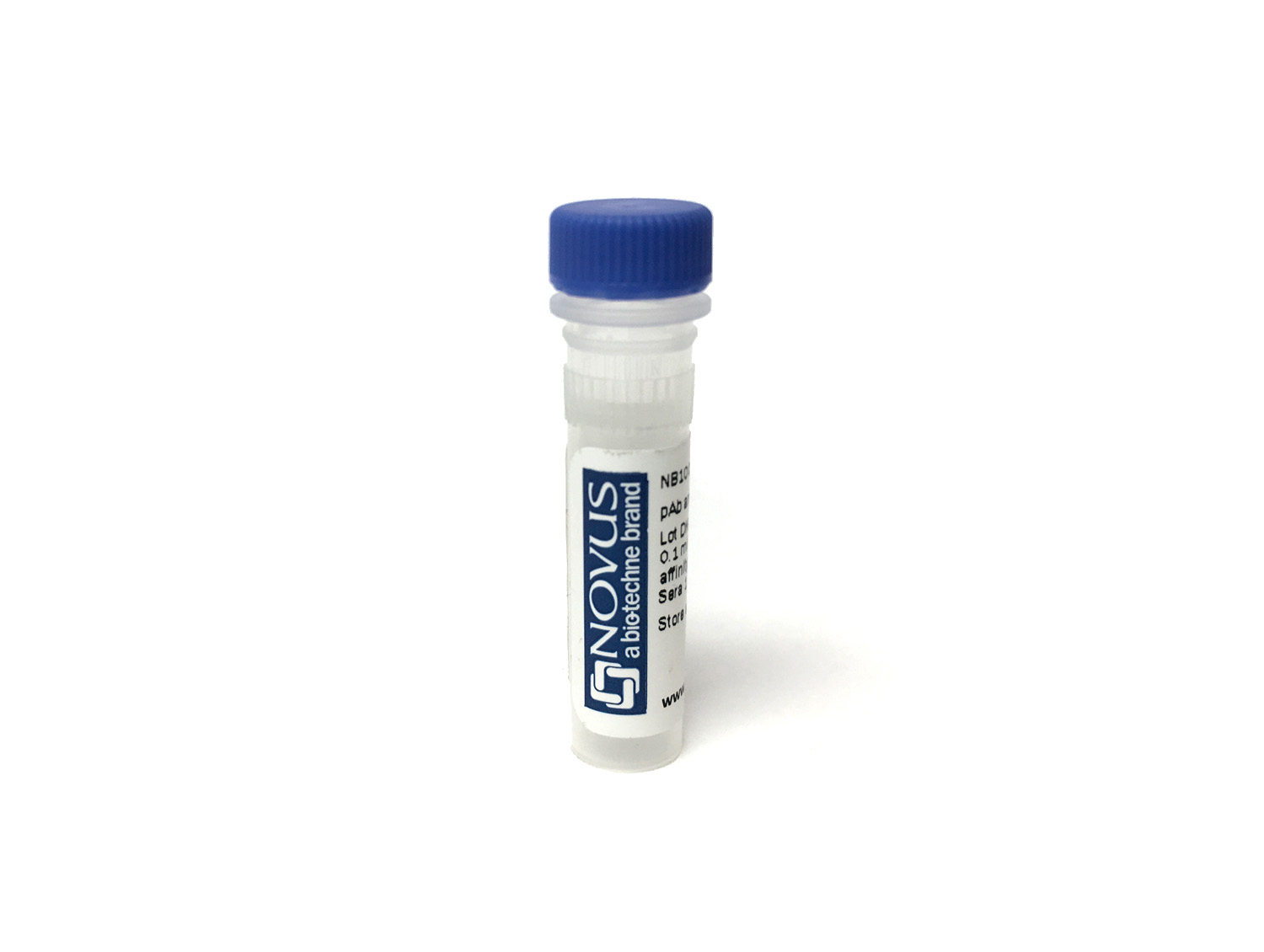
Key Product Details
Species Reactivity
Human
Applications
Immunohistochemistry, Immunohistochemistry-Paraffin
Label
Unconjugated
Antibody Source
Monoclonal Rabbit IgG Clone # MSVA-152R
Format
Azide and BSA Free
Concentration
1 mg/ml
Product Specifications
Immunogen
Recombinant fragment of human CTLA-4 protein Swissprot P16410
Localization
Cell surface
Clonality
Monoclonal
Host
Rabbit
Isotype
IgG
Description
This antibody is highly specific and optimized for use in Immunohistochemistry.
It has been validated on TMAs covering 76 normal tissues and numerous cancer tissues.
Positive Control
Postive control:Tonsil: A moderate strong membranous and cytoplasmic CTLA4 immunostaining should be seen in a subset of T-lymphocytes with strongest staining in follicular T-helper cells of germinal centres.
Negative Control
Negitve control:Tonsil: The majority of lymphocytes in germinal centres and all epithelial cells should stain negative.
Applications for CTLA-4 Antibody (MSVA-152R) - Azide and BSA Free
Application
Recommended Usage
Immunohistochemistry
Optimal dilutions of this antibody should be experimentally determined.
Immunohistochemistry-Paraffin
Optimal dilutions of this antibody should be experimentally determined.
Application Notes
Manual Protocol: Freshly cut sections should be used (less than 10 days between cutting and staining). Heat-induced antigen retrieval for 5 minutes in an autoclave at 121C in pH 7,8 Target Retrieval Solution buffer. Apply the antibody at a dilution of 1:50 at 37C for 60 minutes. Visualization of bound antibody by the EnVision Kit (Dako, Agilent) according to the manufacturer's directions.
Formulation, Preparation, and Storage
Purification
Protein A or G purified
Format
Azide and BSA Free
Preservative
No Preservative
Concentration
1 mg/ml
Shipping
The product is shipped with polar packs. Upon receipt, store it immediately at the temperature recommended below.
Stability & Storage
Store at 4C short term. Aliquot and store at -20C long term. Avoid freeze-thaw cycles.
Background: CTLA-4
Similar to programmed cell death protein 1 (PD-1), CTLA-4 is an inhibitory immune checkpoint protein (3,5). Checkpoint blockade immunotherapy using drugs or antibodies to target CTLA-4 is one of the main approaches for cancer treatment (5). A number of drugs targeting CTLA-4, or a combination of CTLA-4/PD-1, have been approved for treatment of various cancers like melanoma, renal cell carcinoma, and colorectal cancer (5). While blocking CTLA-4 in the tumor microenvironment is a promising cancer therapeutic, the absence of CTLA-4 under normal conditions can have deleterious effects. Studies have found that patients with CTLA-4 deficiency or mutations have clinical features associated with autoimmunity and immune dysregulation (4). Treatment options for CTLA-4 deficiency includes immunoglobulin-replacement therapy, corticosteroids, CTLA-4-immunoglobulin (Ig) fusion protein, and, in life-threatening cases, hematopoietic stem cell transplantation (4,6). Additionally, engaging CD80/CD86 with CTLA-4-Ig is a common immunosuppressive treatment for rheumatoid arthritis and kidney transplant recipients (6).
References
1. Romo-Tena, J., Gomez-Martin, D., & Alcocer-Varela, J. (2013). CTLA-4 and autoimmunity: new insights into the dual regulator of tolerance. Autoimmunity reviews, 12(12), 1171-1176. https://doi.org/10.1016/j.autrev.2013.07.002
2. Hosseini, A., Gharibi, T., Marofi, F., Babaloo, Z., & Baradaran, B. (2020). CTLA-4: From mechanism to autoimmune therapy. International immunopharmacology, 80, 106221. https://doi.org/10.1016/j.intimp.2020.106221
3. Rowshanravan, B., Halliday, N., & Sansom, D. M. (2018). CTLA-4: a moving target in immunotherapy. Blood, 131(1), 58-67. https://doi.org/10.1182/blood-2017-06-741033
4. Verma, N., Burns, S. O., Walker, L., & Sansom, D. M. (2017). Immune deficiency and autoimmunity in patients with CTLA-4 (CD152) mutations. Clinical and experimental immunology, 190(1), 1-7. https://doi.org/10.1111/cei.12997
5. Rotte A. (2019). Combination of CTLA-4 and PD-1 blockers for treatment of cancer. Journal of experimental & clinical cancer research : CR, 38(1), 255. https://doi.org/10.1186/s13046-019-1259-z
6. Bluestone, J. A., St Clair, E. W., & Turka, L. A. (2006). CTLA4Ig: bridging the basic immunology with clinical application. Immunity, 24(3), 233-238. https://doi.org/10.1016/j.immuni.2006.03.001
Long Name
Cytotoxic T-lymphocyte-associated Molecule 4
Alternate Names
CD152, CTLA4
Gene Symbol
CTLA4
Additional CTLA-4 Products
Product Documents for CTLA-4 Antibody (MSVA-152R) - Azide and BSA Free
Product Specific Notices for CTLA-4 Antibody (MSVA-152R) - Azide and BSA Free
This product is for research use only and is not approved for use in humans or in clinical diagnosis. Primary Antibodies are guaranteed for 1 year from date of receipt.
Loading...
Loading...
Loading...
Loading...