Protein Kinase A Activators: Small Molecules and Peptides
The cAMP-dependent protein kinase (PKA) holoenzyme is composed of two regulatory and two catalytic subunits, designated PKA R and PKA C, respectively. Upon PKA R subunit binding to the second messenger cAMP, active PKA C subunits are released, initiating a phosphorylation cascade that regulates such cellular functions as metabolism, ion transport, and gene transcription. Catalytic PKA subunit isoforms, Cα, Cβ and, in humans, Cγ, have been identified.
2 results for "Protein Kinase A Activators Small Molecules and Peptides" in Products
Protein Kinase A Activators: Small Molecules and Peptides

The cAMP-dependent protein kinase (PKA) holoenzyme is composed of two regulatory and two catalytic subunits, designated PKA R and PKA C, respectively. Upon PKA R subunit binding to the second messenger cAMP, active PKA C subunits are released, initiating a phosphorylation cascade that regulates such cellular functions as metabolism, ion transport, and gene transcription. Catalytic PKA subunit isoforms, Cα, Cβ and, in humans, Cγ, have been identified.
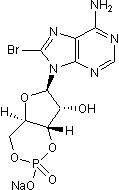
Cell-permeable cAMP analog
| Chemical Name: | 8-Bromoadenosine-3',5'-cyclic monophosphate sodium salt |
| Purity: | ≥99% (HPLC) |
Cell-permeable cAMP analog
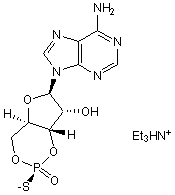
| Chemical Name: | (S)-Adenosine, cyclic 3',5'-(hydrogenphosphorothioate) triethylammonium |
| Purity: | ≥98% (HPLC) |