


27 results for "cAMP" in Products
cAMP Products
cAMP (adenosine 3’5’-cyclic monophosphate) is a ubiquitous intracellular second messenger that mediates a diverse range of cellular processes in all organisms from bacteria to higher eukaryotes. It is converted from adenosine triphosphate (ATP) by adenylyl cyclases (ACs), and is inactivated by phosphodiesterases (PDEs) which catalyze its hydrolysis to 5’-AMP. In mammals, upon interaction with extracellular ligands, G protein coupled receptors (GPCRs) linked to Gαs ...
| Sensitivity: | 8.57 pmol/mL |
| Applications: | ELISA |
| Assay Range: | 3.75 - 240 pmol/mL (Cell Culture Supernates, Cell Lysates, Serum, EDTA Plasma, Heparin Plasma, Saliva, Urine) |


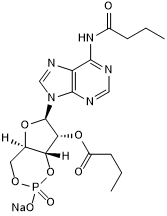
| Alternate Names: | Bucladesine sodium |
| Chemical Name: | N6,O2'-Dibutyryladenosine 3',5'-cyclic monophosphate sodium salt |
| Purity: | ≥98% (HPLC) |

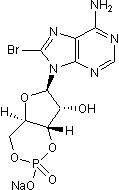
| Chemical Name: | 8-Bromoadenosine-3',5'-cyclic monophosphate sodium salt |
| Purity: | ≥99% (HPLC) |
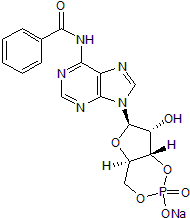
| Chemical Name: | N-Benzoyladenosine cyclic 3',5'-(hydrogen phosphate) monosodium salt |
| Purity: | ≥98% (HPLC) |
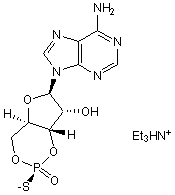
| Chemical Name: | (R)-Adenosine, cyclic 3',5'-(hydrogenphosphorothioate) triethylammonium |
| Purity: | ≥98% (HPLC) |

| Chemical Name: | (S)-Adenosine, cyclic 3',5'-(hydrogenphosphorothioate) triethylammonium |
| Purity: | ≥98% (HPLC) |
| Sensitivity: | 1.54 nmol/L |
| Applications: | ELISA |
| Assay Range: | 3.75 - 240 nmol/L (Cell Culture Supernates, Cell Lysates, Tissue Homogenates, EDTA Plasma, Urine) |

| Alternate Names: | Bucladesine sodium |
| Chemical Name: | N6,O2'-Dibutyryladenosine 3',5'-cyclic monophosphate sodium salt |
| Purity: | ≥98% |

| Reactivity: | Multi-Species |
| Details: | Mouse IgG1 Monoclonal Clone #250532 |
| Applications: | ICC |
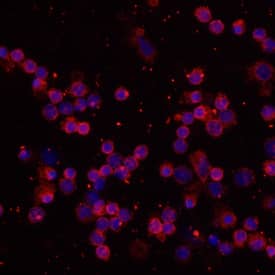
Conjugate
Catalog #
| Reactivity: | Multi-Species |
| Details: | Mouse IgG1 Monoclonal Clone #250532 |
| Applications: | ICC |
Conjugate
Catalog #
| Reactivity: | Multi-Species |
| Details: | Mouse IgG1 Monoclonal Clone #250532 |
| Reactivity: | Multi-Species |
| Details: | Mouse IgG1 Monoclonal Clone #250532 |
| Reactivity: | Multi-Species |
| Details: | Mouse IgG1 Monoclonal Clone #250532 |
| Applications: | ICC |
Conjugate
Catalog #
| Reactivity: | Multi-Species |
| Details: | Mouse IgG1 Monoclonal Clone #250532 |
| Applications: | ICC |
Conjugate
Catalog #
| Reactivity: | Multi-Species |
| Details: | Mouse IgG1 Monoclonal Clone #250532 |
| Applications: | ICC |
Conjugate
Catalog #
| Reactivity: | Multi-Species |
| Details: | Mouse IgG1 Monoclonal Clone #250532 |
| Applications: | ICC |
Conjugate
Catalog #
| Reactivity: | Multi-Species |
| Details: | Mouse IgG1 Monoclonal Clone #250532 |
| Applications: | ICC |
Conjugate
Catalog #
| Reactivity: | Multi-Species |
| Details: | Mouse IgG1 Monoclonal Clone #250532 |
| Applications: | ICC |
Conjugate
Catalog #
| Reactivity: | Multi-Species |
| Details: | Mouse IgG1 Monoclonal Clone #250532 |
| Applications: | ICC |
Conjugate
Catalog #
| Reactivity: | Multi-Species |
| Details: | Mouse IgG1 Monoclonal Clone #250532 |
| Reactivity: | Multi-Species |
| Details: | Mouse IgG1 Monoclonal Clone #250532 |
| Reactivity: | Multi-Species |
| Details: | Mouse IgG1 Monoclonal Clone #250532 |
| Reactivity: | Multi-Species |
| Details: | Mouse IgG1 Monoclonal Clone #250532 |
| Applications: | Ctrl |

| Applications: | Ctrl |