
Simple Plex Tau and Phospho Tau Assays
Sensitive and Reproducible Total Tau and Phospho Tau Detection
Simple Plex assays run on the Ella platform offer sensitive and reproducible human total tau and phospho tau detection. These assays have sub- picogram sensitivity with 4-5 logs of dynamic range, so you can detect even subtle protein expression changes. Total Tau and pTau assays are validated in multiple sample types including cerebrospinal fluid, serum, and plasma.
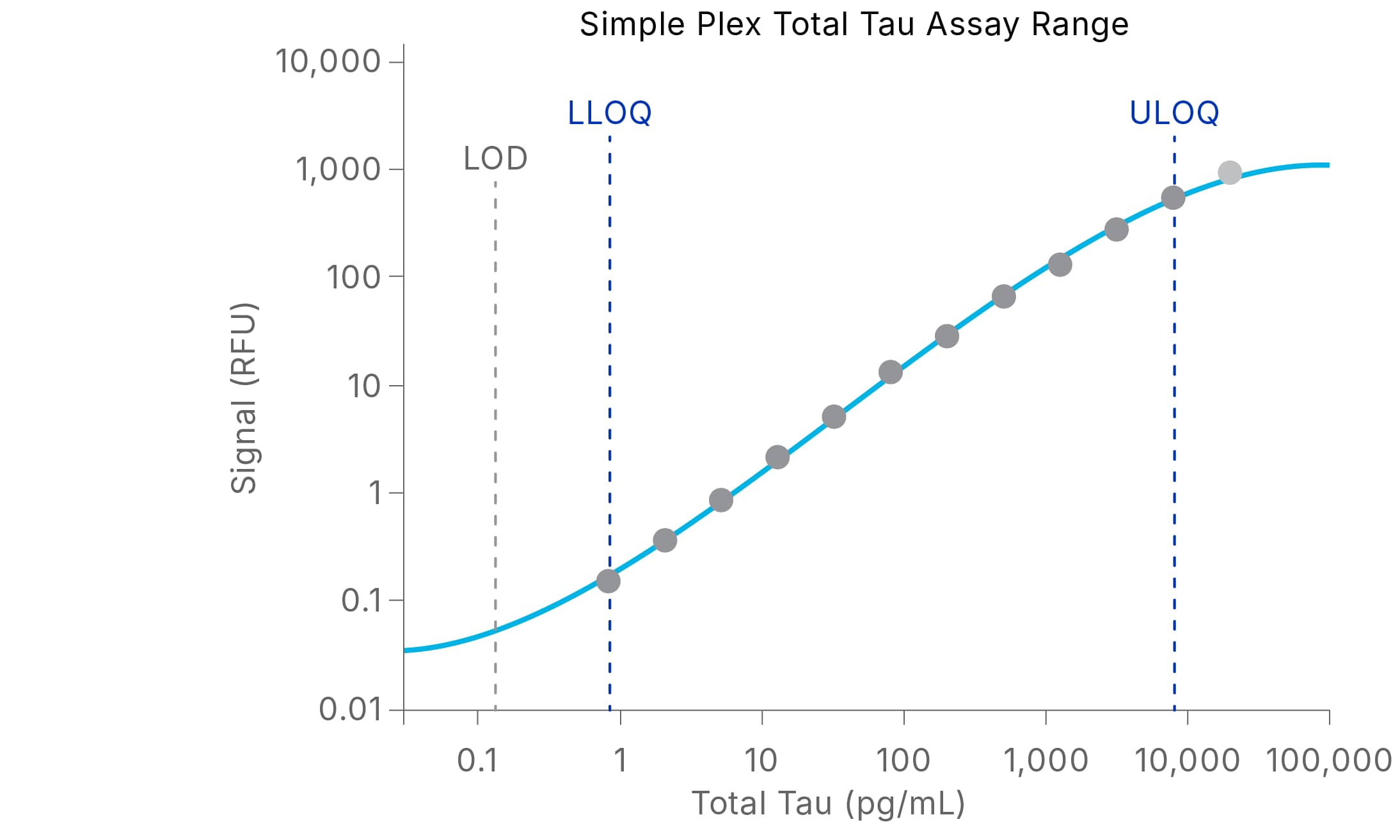
Figure: Assay range for Simple Plex Human Total Tau Assay: 0.84 - 8,000 pg/mL (Cell Culture Supernates, Serum, EDTA Plasma, Heparin Plasma, Cerebrospinal Fluid)
Simple Plex Total Tau and Phospho Tau Assay Highlights
Proven Performance, Consistent Results
Simple Plex Human Tau assays have been extensively validated in numerous studies, demonstrating they are highly sensitive, specific, and precise for the detection and quantification of Tau protein. Simple Plex Total Tau and pTau 217 assays on the Ella platform give you the data you need to power your neuroscience research with a high level of automation, validation, and reliability. Simple plex assays’ intra-assay and inter-assay precision average under 10% CV across tests.
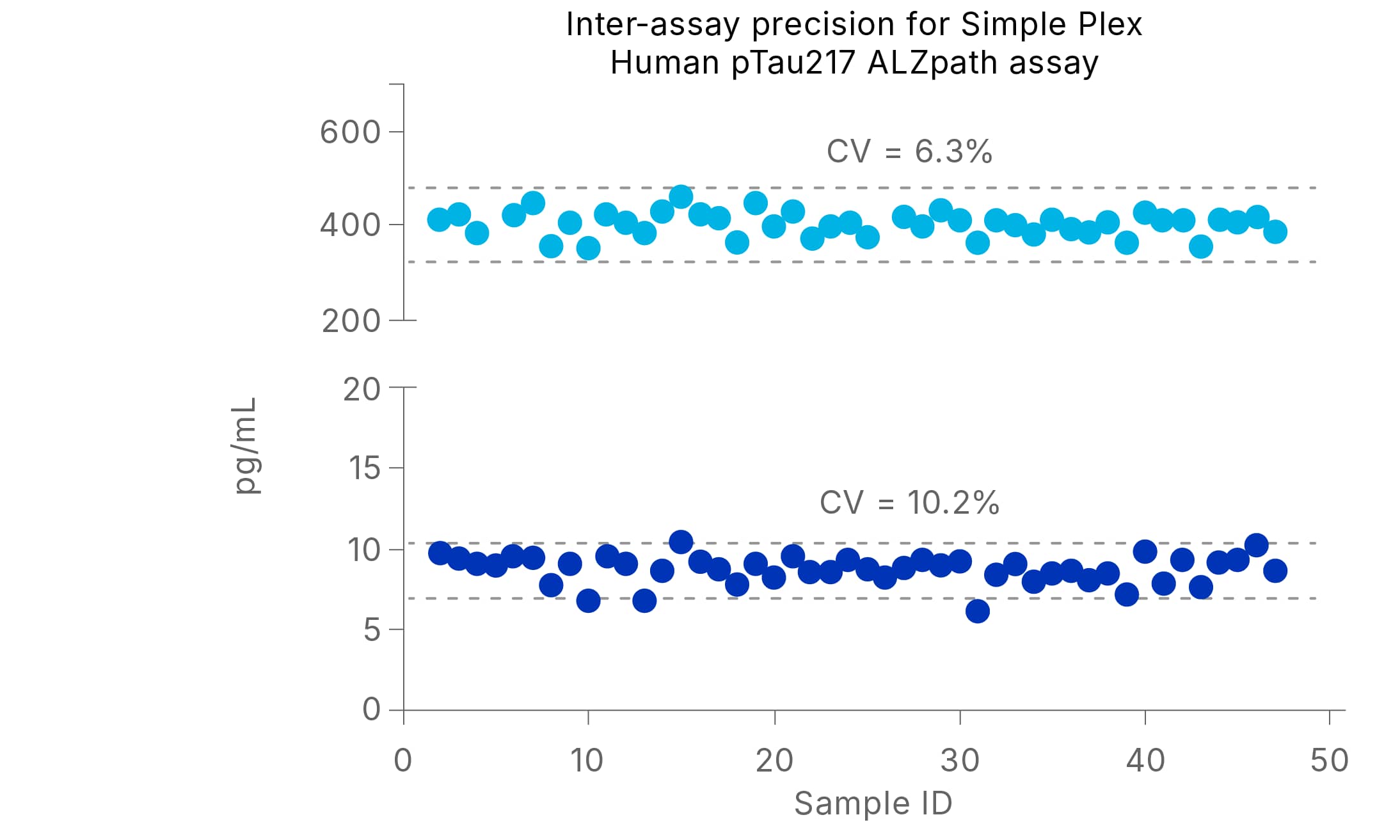
Figure: Inter-assay precision averaged at 6.3% and 10.2% CV using both high and low-level controls (n=46 per control) for the Simple Plex pTau217 ALZpath Assay.
Efficiency in Every Sample
Combining microfluidic design with highly specific antibodies, Ella processes up to 72 samples in just 90 minutes with a sample volume as low as 25 µL.
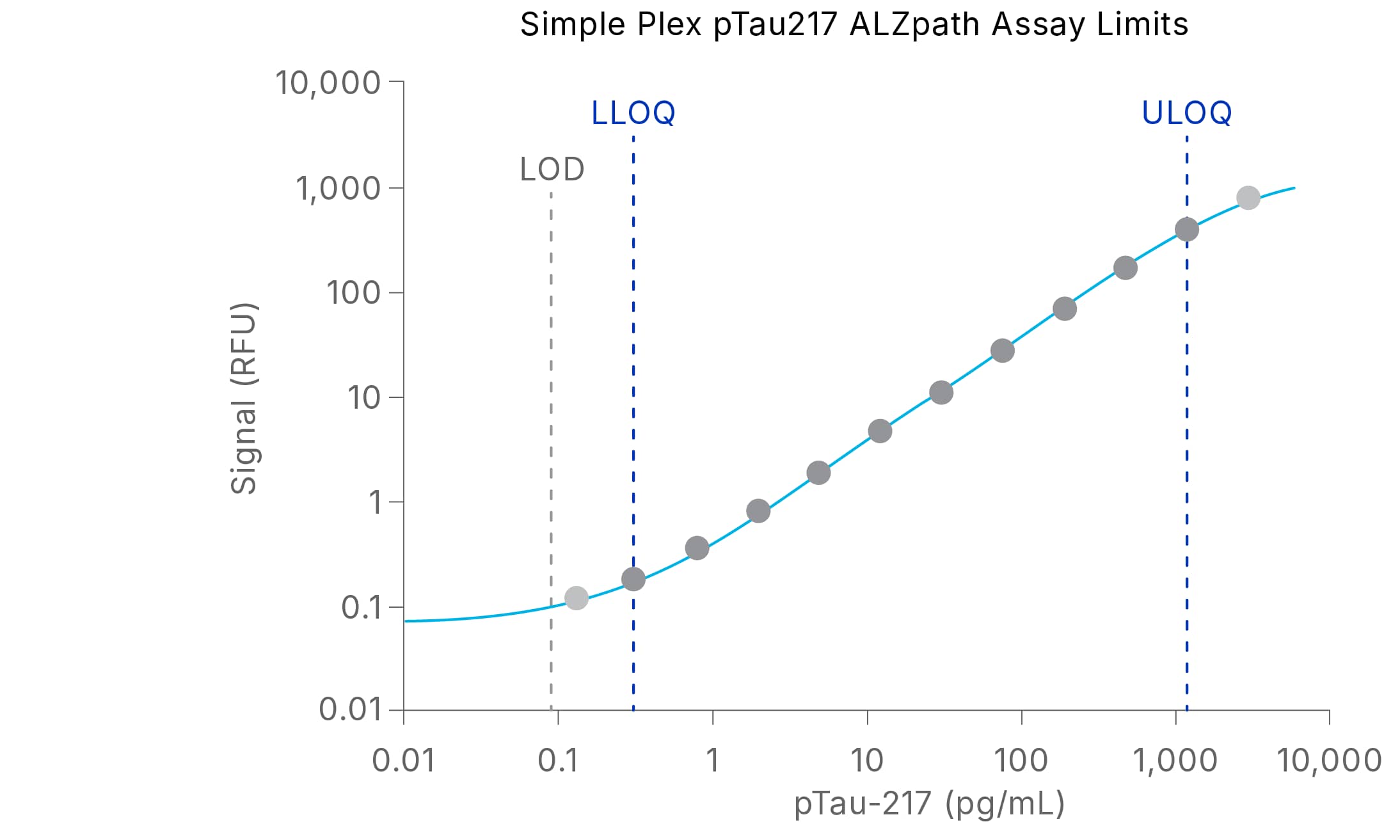
Figure: pTau 217 assay limits. The limit of detection (defined as three standard deviations above the blank) was determined as 0.09 pg/mL, and the limits of quantitation were determined as 0.31-1,200 pg/mL.
pTau 217: Transforming Alzheimer's Disease Diagnostics
Phosphorylated tau protein (pTau-217) has emerged as one of the most promising biomarkers in Alzheimer’s disease research
As evidence grows for its use in diagnosing AD, developing reliable blood-based assays remains a challenge. Many existing methods are costly and time-consuming, limiting their clinical accessibility. Expanding access to this highly accurate biomarker is essential for broader implementation of AD blood tests.
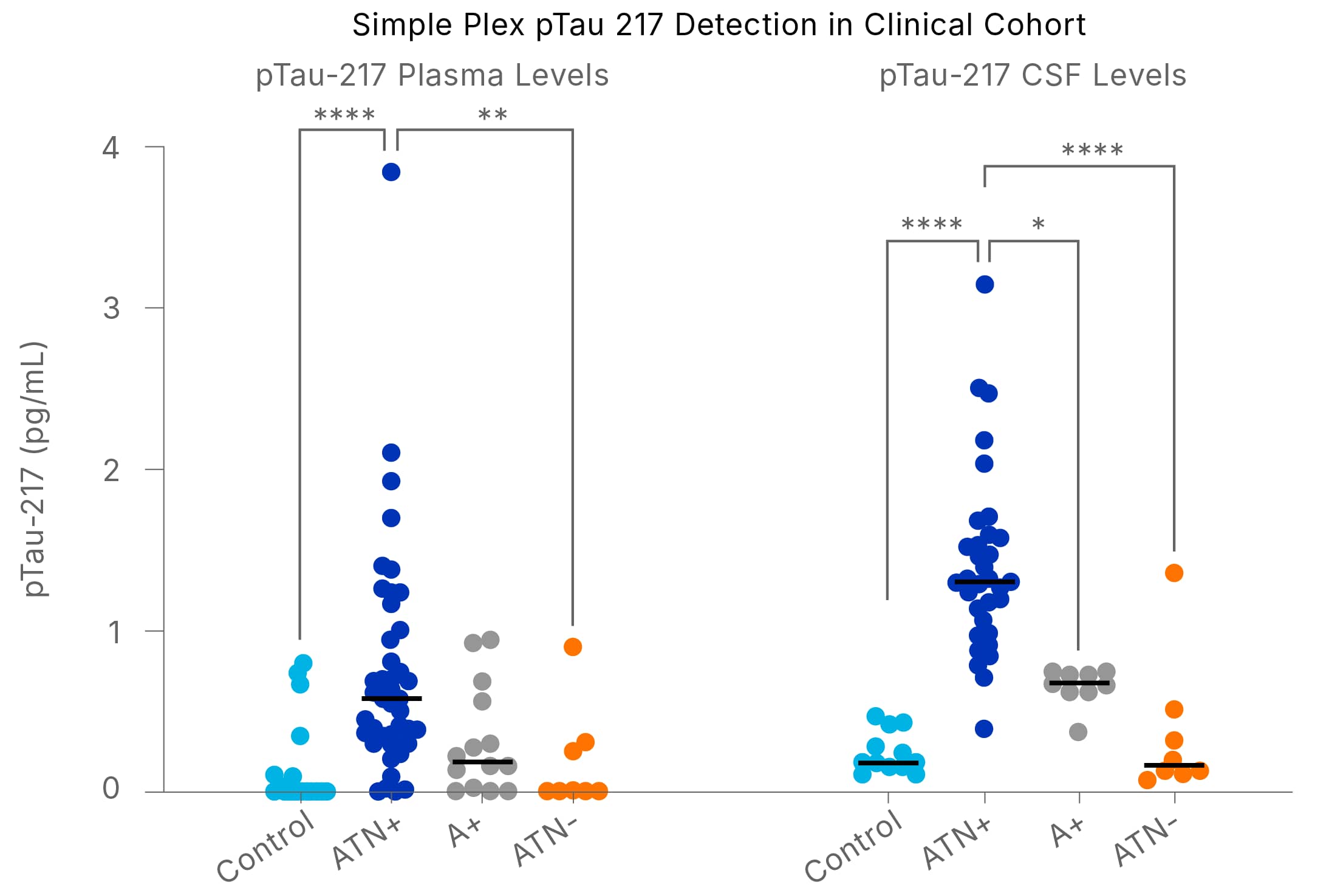
Simple Plex pTau-217 ALZpath assay, run on the Ella platform, demonstrated high sensitivity and accuracy in detecting Alzheimer’s pathology. Plasma levels of pTau-217 were significantly elevated in Alzheimer’s patients who exhibit Alzheimer’s related pathology (ATN+), consistent with prior findings. Both plasma and CSF pTau-217 levels showed strong elevation in ATN-positive AD samples (p<0.001, Mann-Whitney test), in line with earlier reports.
Figure: Plasma (left) and CSF (right) Human pTau-217 levels were compared between healthy control donors and clinically diagnosed Alzheimer’s disease patients. Amyloid/ Tau/ Neurodegeneration (ATN+) positive patients had significantly elevated plasma and CSF pTau-217 levels when compared to both healthy controls as well as ATN negative patients. Significant difference in CSF pTau levels was also found upon comparison of ATN+ and Amyloid positive (A+) patient groups. Statistical analysis was performed using the Kruskal-Wallis test, followed by Dunn’s multiple comparisons post-hoc test.
Your Ideal Solution for Alzheimer’s Research
With exceptional precision, efficiency, and minimized cross-reactivity, Simple Plex assays can help in your Alzheimer’s research by enabling the rapid, large-scale collection of biomarker data—making new insights and discoveries possible.
Simple plex assays are available for pTau-217, Amyloid beta aa1-40/42, neurofilament-light and GFAP.

Rethink Your Biomarker Detection With Ella
Rethink Your Biomarker Detection With Ella
Standard ELISA techniques for detecting protein biomarkers often come up short in terms of sensitivity and reproducibility. Ella automates your assay workflow, delivering accurate and consistent data— without the manual set up common with traditional ELISAs. With Ella’s compact footprint and hands-free workflow, you get accurate data with no manual steps.

Use Less of Your Limited Samples
Use Less of Your Limited Samples
Simple Plex Tau assays run on a microfluidic cartridge that automates all steps of the immunoassay. Three data replicates are measured in an independent microfluidic channel, so there's no cross-reactivity, providing improved sensitivity and the ability to detect—all with as little as 25 µL per sample.

Ultra-Sensitive Neuro Biomarker Detection
Ultra-Sensitive Neuro Biomarker Detection
Simple Plex neuroscience assays have been extensively validated in numerous studies, demonstrating exceptional sensitivity and precision for detecting low abundance proteins. Fluorescent detection improves sensitivity by 10X and boosts dynamic range up to 5 logs while the fully automated assay workflow delivers results in less than 90 minutes.
Phospho Tau in Alzheimer’s Disease
Tau protein is essential for maintaining microtubule stability. In its normal state, tau shows minimal inclination to misfold, aggregate, or build up within or outside cells. However, damaging alterations to tau can cause it to misfold and clump, leading to a group of neurodegenerative conditions called tauopathies.
Normally, phosphorylation plays a key role in tau function, but excessive phosphorylation results in hyperphosphorylated tau (p-tau), which self-aggregates—a defining trait of many tauopathies.
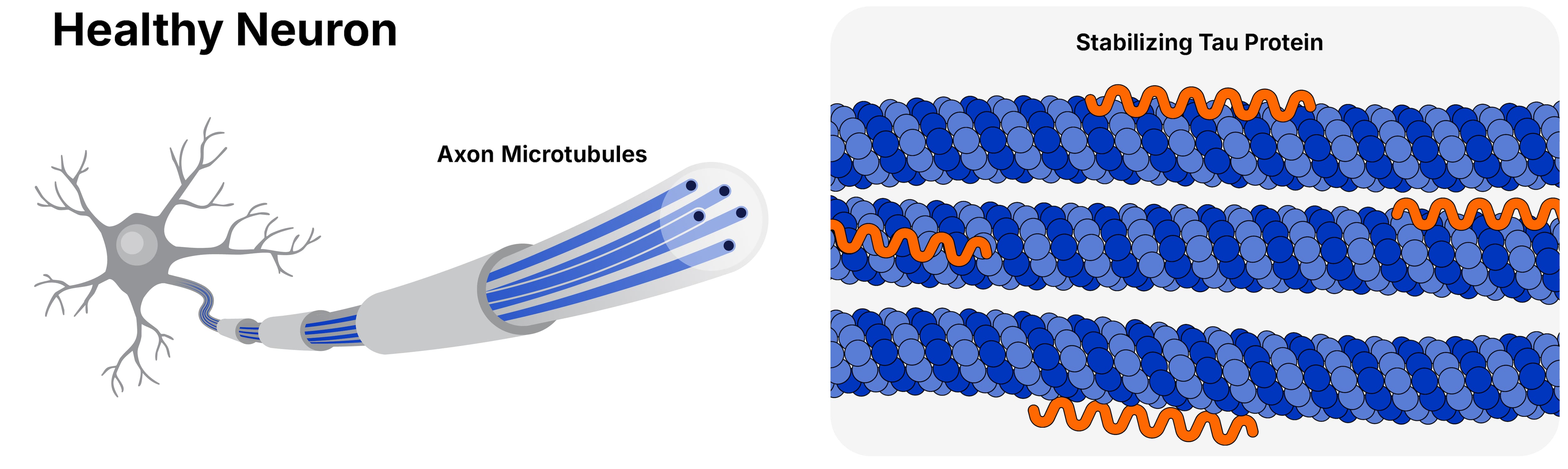
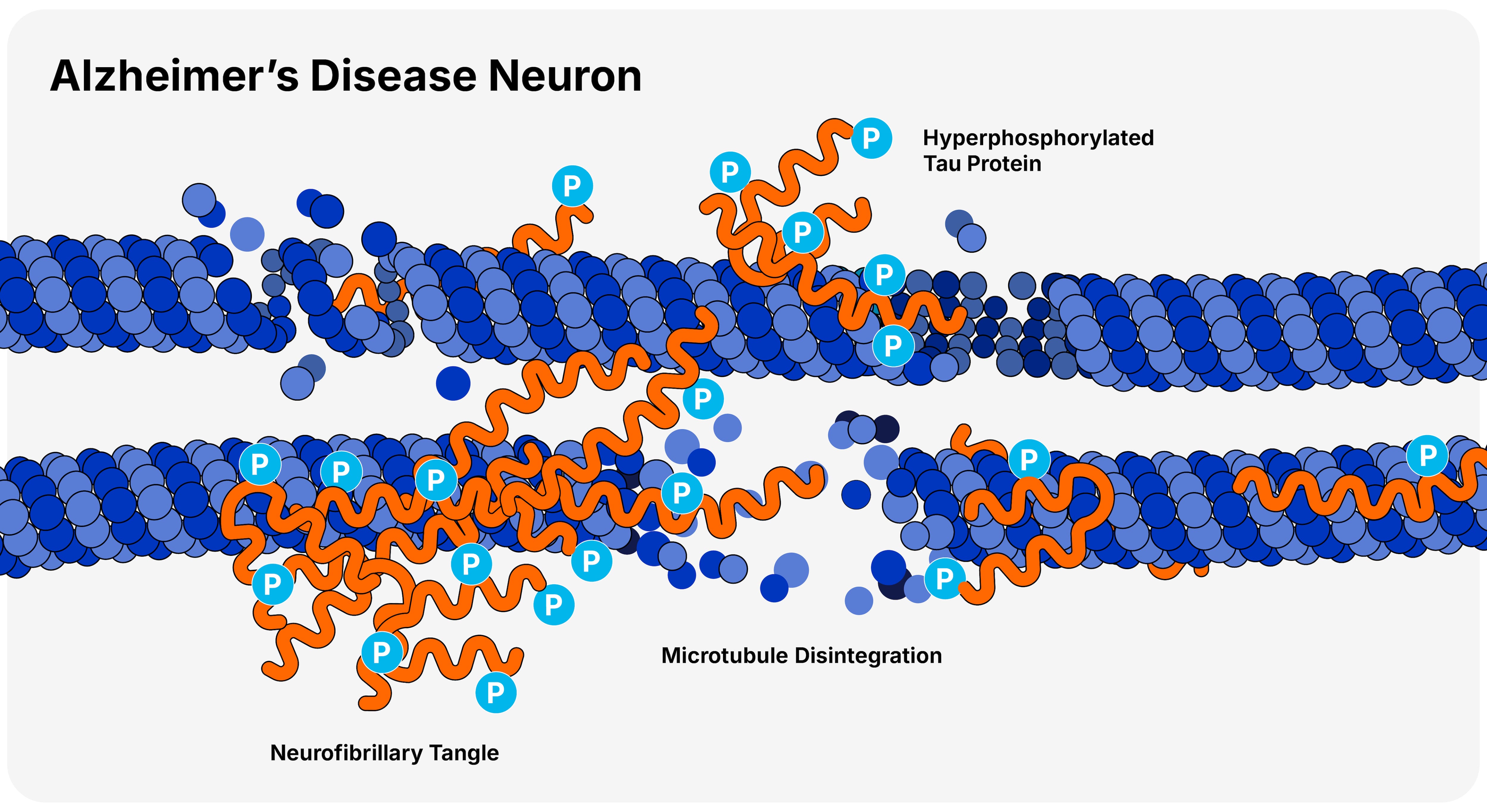
This hyperphosphorylated state changes tau's shape and charge, exposing the microtubule-binding domain and promoting tau clumping. Over time, these clumps form neurofibrillary tangles. When tau aggregates, it disrupts the movement of materials along nerve cell fibers, weakening microtubule stability.
Studies have shown that people with Alzheimer’s Disease (AD) have roughly four times more abnormal or hyperphosphorylated tau proteins than those without AD. These abnormal tau proteins lose their main role of microtubule stabilization and have a higher tendency to aggregate, potentially damaging brain function.
Consequently, the tau-microtubule interaction weakens, impacting synaptic plasticity and impeding the transport of vital substances along nerve fibers. Ultimately, these disruptions contribute to cognitive impairments commonly seen in AD.
Resources

Advancing Neuroscience Discovery
Advancing Neuroscience Discovery
Raising the bar in analytical speed and precision
Advances in next-generation analytical assays are reshaping neuroscience research, delivering unparalleled sensitivity and reproducibility. These innovations allow for more precise detection of early-stage neurological disorders, paving the way for improved diagnostics and more effective therapeutic interventions. As technology continues to evolve, so does our potential to unlock new insights into brain diseases, driving breakthroughs in treatment and discovery.
Immunoassays for Neuroinflammation
Immunoassays for Neuroinflammation
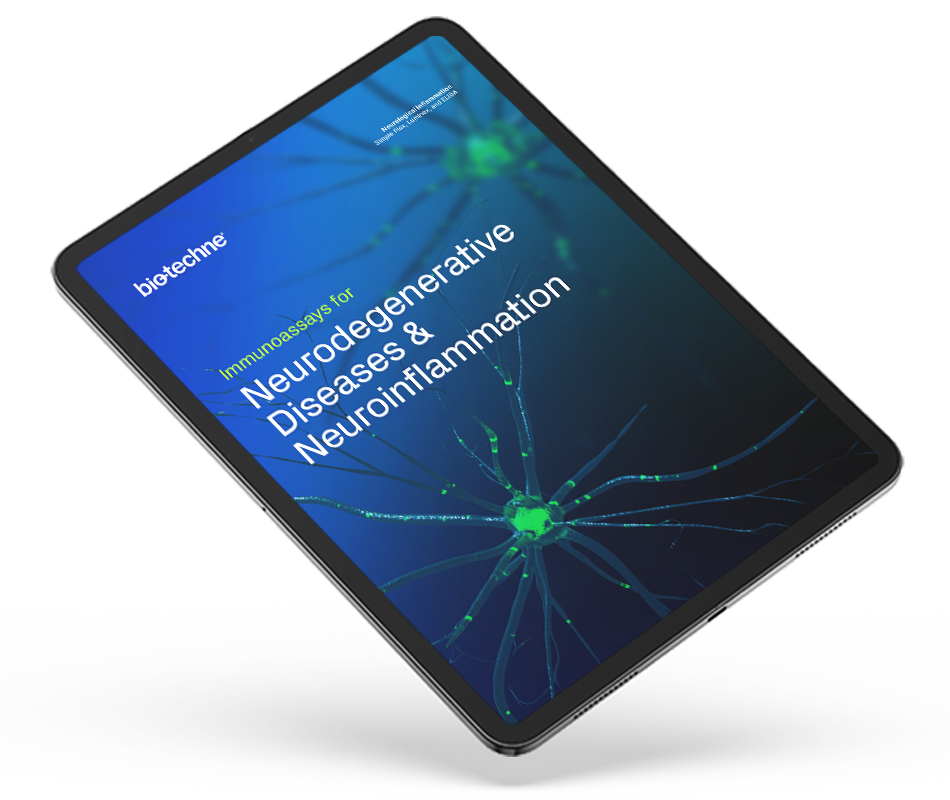
The field of research into neurodegeneration and various neurological disorders is growing rapidly. As the range of treatment options broaden and attention turns to early detection, there arises a demand for improved, non-invasive methods to track neuro biomarkers and neuroinflammatory cytokines. In this guide, you’ll find the optimal assays for your neuroinflammation research.

4 Essentials of Immunoassay Quality
4 Essentials of Immunoassay Quality
Reliable and precise measurement of protein levels is crucial in clinical and translational research, making immunoassays an indispensable tool for assessing critical quality attributes (CQAs) and for biomarker detection.
The 4 Essentials of Quality Guide provides insights into the importance of Spike Recovery, Dilution Linearity, Specificity, and Consistency. These key attributes make an immunoassay valuable for long-term success and have trusted results year after year.