
Human FGF-19 Antibody
R&D Systems, part of Bio-Techne | Catalog # AF969


Scientific images may be resized, cropped, or adjusted for brightness or contrast for presentation purposes. These updates are limited to presentation and do not affect the underlying scientific interpretation of the data. Where available, additional source data may be provided upon request.
Conjugate
Catalog #
Key Product Details
Species Reactivity
Validated:
Human
Cited:
Human, Mouse
Applications
Validated:
Western Blot, Blockade of Receptor-ligand Interaction, Simple Western
Cited:
Western Blot, Neutralization, ELISA Development, In vivo assay
Label
Unconjugated
Antibody Source
Polyclonal Goat IgG
Product Specifications
Immunogen
E. coli-derived recombinant human FGF-19
Phe27-Lys216
Accession # O95750
Phe27-Lys216
Accession # O95750
Specificity
Detects human FGF-19 in direct ELISAs and Western blots. In direct ELISAs, less than 5% cross‑reactivity with recombinant human (rh) FGF-7, rhFGF-21 and recombinant mouse FGF-15 is observed.
Clonality
Polyclonal
Host
Goat
Isotype
IgG
Endotoxin Level
<0.10 EU per 1 μg of the antibody by the LAL method.
Scientific Data Images for Human FGF-19 Antibody
Detection of Human FGF‑19 by Western Blot.
Western blot shows lysates of COLO 205 human colorectal adenocarcinoma cell line, conditioned media from COLO 205 cell line, and HT-29 human colon adenocarcinoma cell line. PVDF membrane was probed with 0.5 µg/mL of Goat Anti-Human FGF-19 Antigen Affinity-purified Polyclonal Antibody (Catalog # AF969) followed by HRP-conjugated Anti-Goat IgG Secondary Antibody (Catalog # HAF017). A specific band was detected for FGF-19 at approximately 22 kDa (as indicated). This experiment was conducted under reducing conditions and using Immunoblot Buffer Group 1.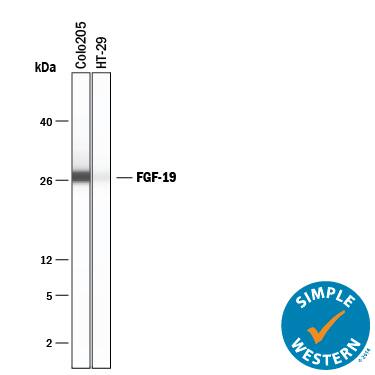
Detection of Human FGF‑19 by Simple WesternTM.
Simple Western lane view shows conditioned media from COLO 205 human colorectal adenocarcinoma cell line and HT-29 human colon adenocarcinoma cell line, loaded at 0.2 mg/mL. A specific band was detected for FGF-19 at approximately 26 kDa (as indicated) using 10 µg/mL of Goat Anti-Human FGF-19 Antigen Affinity-purified Polyclonal Antibody (Catalog # AF969) followed by 1:50 dilution of HRP-conjugated Anti-Goat IgG Secondary Antibody (Catalog # HAF109). This experiment was conducted under reducing conditions and using the 2-40 kDa separation system.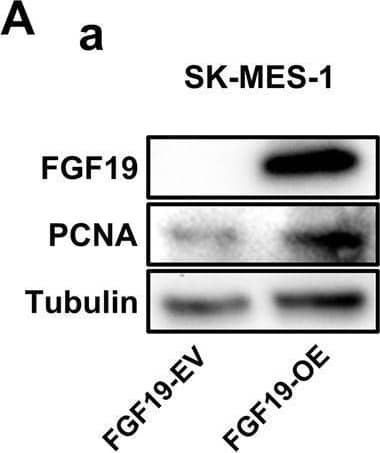
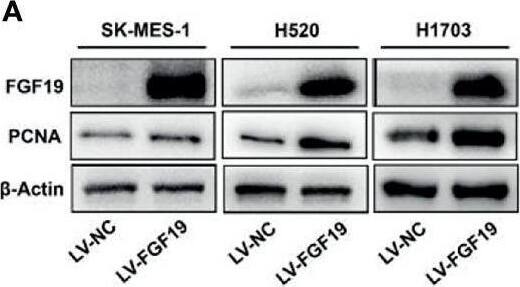
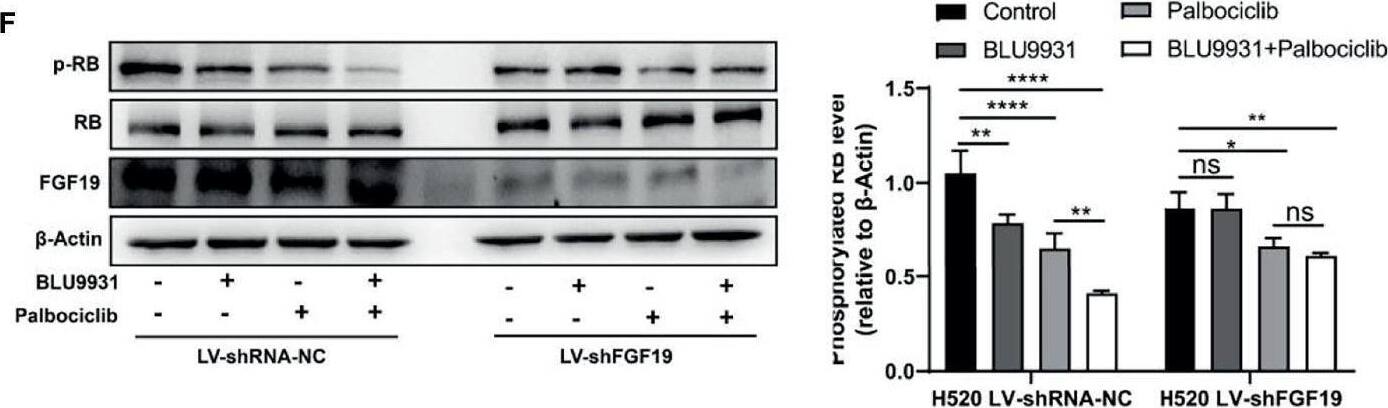
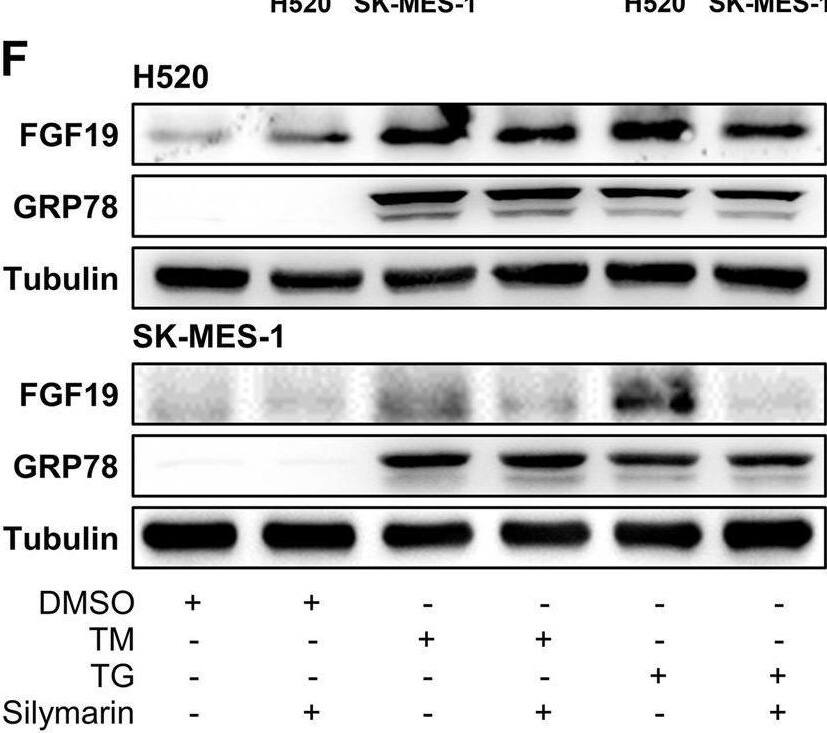
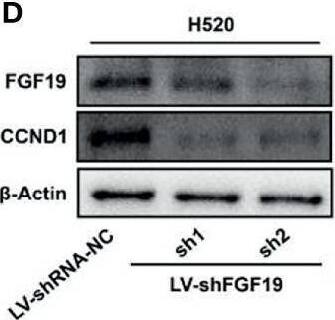
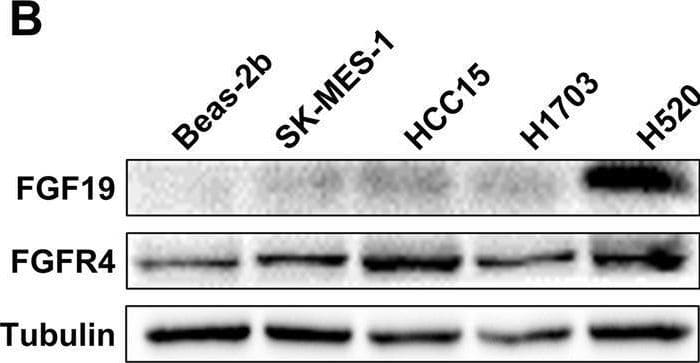
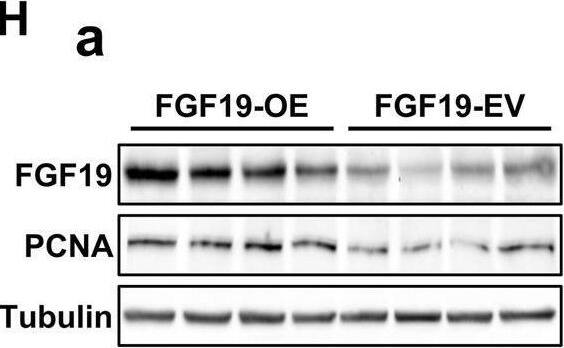
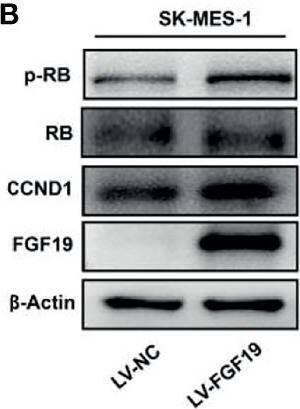
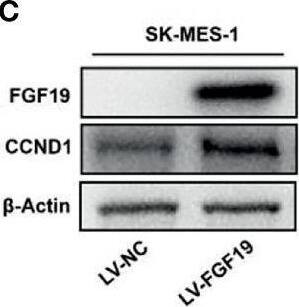
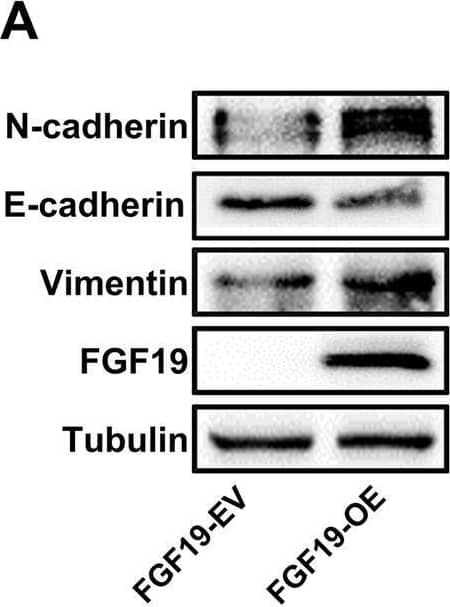
Detection of FGF-19 by Western Blot
Overexpression of FGF19 promotes the proliferation of LSQ cells in vitro and in vivo.SK-MES-1 and HCC95 cells were transduced with FGF19 overexpression lentivirus (FGF19-OE), or control lentivirus (FGF19-EV) to construct stable cell lines. a Quantification of the overexpression of FGF19 in forms as cellular protein (a), mRNA (b) or secreted protein in conditioned medium (c) in SK-MES-1 cells. b Enrichment plots of PCNA expression signatures according to FGF19 expression levels in an LSQ cohort. c Cell proliferation assays of the SK-MES-1 and HCC95 stable cells with FGF19 overexpression. d Colony formation in SK-MES-1 cells with or without FGF19 overexpression. e The effect of overexpression of FGF19 on the apoptosis induced by cisplatin in HCC95 cell lines. f Enrichment plots of cell cycle signatures according to FGF19 expression levels in an LSQ cohort. g Images of tumor nodules from subcutaneous mouse xenograft model with or without FGF19 overexpression. h (a) Western blot analysis of FGF19 and PCNA expression in tumors; (b) serum samples of FGF19 expression; (c) volume of tumors; and (d) body weight of mice from the two groups. i IHC analysis of Ki-67 expression in tumors. j Oil red O analysis of tumors from the two groups. Data are represented as mean and SEM from three independent experiments. *p < 0.05; **p < 0.01; ***p < 0.001. Image collected and cropped by CiteAb from the following open publication (https://pubmed.ncbi.nlm.nih.gov/32111983), licensed under a CC-BY license. Not internally tested by R&D Systems.

Applications for Human FGF-19 Antibody
Application
Recommended Usage
Blockade of Receptor-ligand Interaction
In a functional ELISA, 2-8 µg/mL of this antibody will block 50% of the binding of 250 ng/mL of Recombinant Human FGF-19 (Catalog # 969-FG) to immobilized Recombinant Human FGF R4 Fc Chimera (Catalog # 685-FR) coated at 2 µg/mL (100 µL/well). At 10 μg/mL, this antibody will block >90% of the binding.
Simple Western
10 µg/mL
Sample: Conditioned media from COLO 205 human colorectal adenocarcinoma cell line and HT‑29 human colon adenocarcinoma cell line
Sample: Conditioned media from COLO 205 human colorectal adenocarcinoma cell line and HT‑29 human colon adenocarcinoma cell line
Western Blot
0.5 µg/mL
Sample: Conditioned media from COLO 205 cell line and HT‑29 human colon adenocarcinoma cell line
Sample: Conditioned media from COLO 205 cell line and HT‑29 human colon adenocarcinoma cell line
Formulation, Preparation, and Storage
Purification
Antigen Affinity-purified
Reconstitution
Reconstitute at 0.2 mg/mL in sterile PBS. For liquid material, refer to CoA for concentration.
Formulation
Lyophilized from a 0.2 μm filtered solution in PBS with Trehalose. *Small pack size (SP) is supplied either lyophilized or as a 0.2 µm filtered solution in PBS.
Shipping
Lyophilized product is shipped at ambient temperature. Liquid small pack size (-SP) is shipped with polar packs. Upon receipt, store immediately at the temperature recommended below.
Stability & Storage
Use a manual defrost freezer and avoid repeated freeze-thaw cycles.
- 12 months from date of receipt, -20 to -70 °C as supplied.
- 1 month, 2 to 8 °C under sterile conditions after reconstitution.
- 6 months, -20 to -70 °C under sterile conditions after reconstitution.
Background: FGF-19
Fibroblast growth factor 19 (FGF-19) belongs to the large FGF family which has at least 23 members (1, 2). All FGF family members are heparin-binding growth factors with a core 120 amino acid (aa) FGF domain that allows for a common tertiary structure. FGFs are expressed during embryonic development and in restricted adult tissues. They act on cells of mesodermal and neuroectodermal origin to regulate diverse physiologic functions including angiogenesis, cell growth, pattern formation, embryonic development, metabolic regulation, cell migration, neurotrophic effects and tissue repair (3, 4). Signaling receptors for FGFs are type I transmembrane receptor tyrosine kinases belonging to the Ig superfamily. Four distinct but related classes of FGF receptors, FGF R1, 2, 3, and 4, exist. Through alternative splicing, multiple isoforms for FGF R1, 2 and 3, with distinct ligand recognition profiles, are also generated (4).
Human FGF-19 cDNA predicts a 251 aa precursor protein with a 22 aa signal peptide and a 229 aa secreted mature protein with no potential N-linked glycosylation sites (1, 2). Among FGF family members, human FGF-19 is most closely related to chicken FGF-19 and murine FGF-15, sharing approximately 61% and 51% aa sequence identity, respectively (1, 2, 5). Neither the human orthologue of mouse FGF-15, nor the mouse counterpart of human FGF-19 has been identified. With the exception of adult gall bladder epithelium, FGF-19 expression is restricted to fetal tissues (1, 2). Unlike most FGFs which bind to and activate more than one FGF receptor, FGF-19 is a specific ligand for FGF R4 (2). Similarly, another FGF family member, FGF-7 (KGF), only activates KGF R, the IIIb isoform of FGF R2 (4). During chick embryogenesis, FGF-19 has been shown to act synergistically with Wnt-8c to initiate inner ear development (5).
References
- Nishimura, T. et al. (1999) Biocheim. Biophys. Acta 1444:148.
- Xie, M. et al. (1999) Cytokine 11:729.
- Goldfarb, M. (1996) Cytokine & Growth Factor Reviews 7:311.
- Green, P. et al. (1996) BioEssays 18:639.
- Ladher, R.K. et al. (2000) Science 290:1965.
Long Name
Fibroblast Growth Factor 19
Alternate Names
FGF19
Entrez Gene IDs
9965 (Human)
Gene Symbol
FGF19
UniProt
Additional FGF-19 Products
Product Documents for Human FGF-19 Antibody
Product Specific Notices for Human FGF-19 Antibody
For research use only
Loading...
Loading...
Loading...
Loading...
Loading...