
CGRP1 Antibody [Allophycocyanin] - (Research Grade eptinezumab Biosimilar)
Novus Biologicals, part of Bio-Techne | Catalog # NBP3-28122APC
Recombinant Monoclonal Antibody

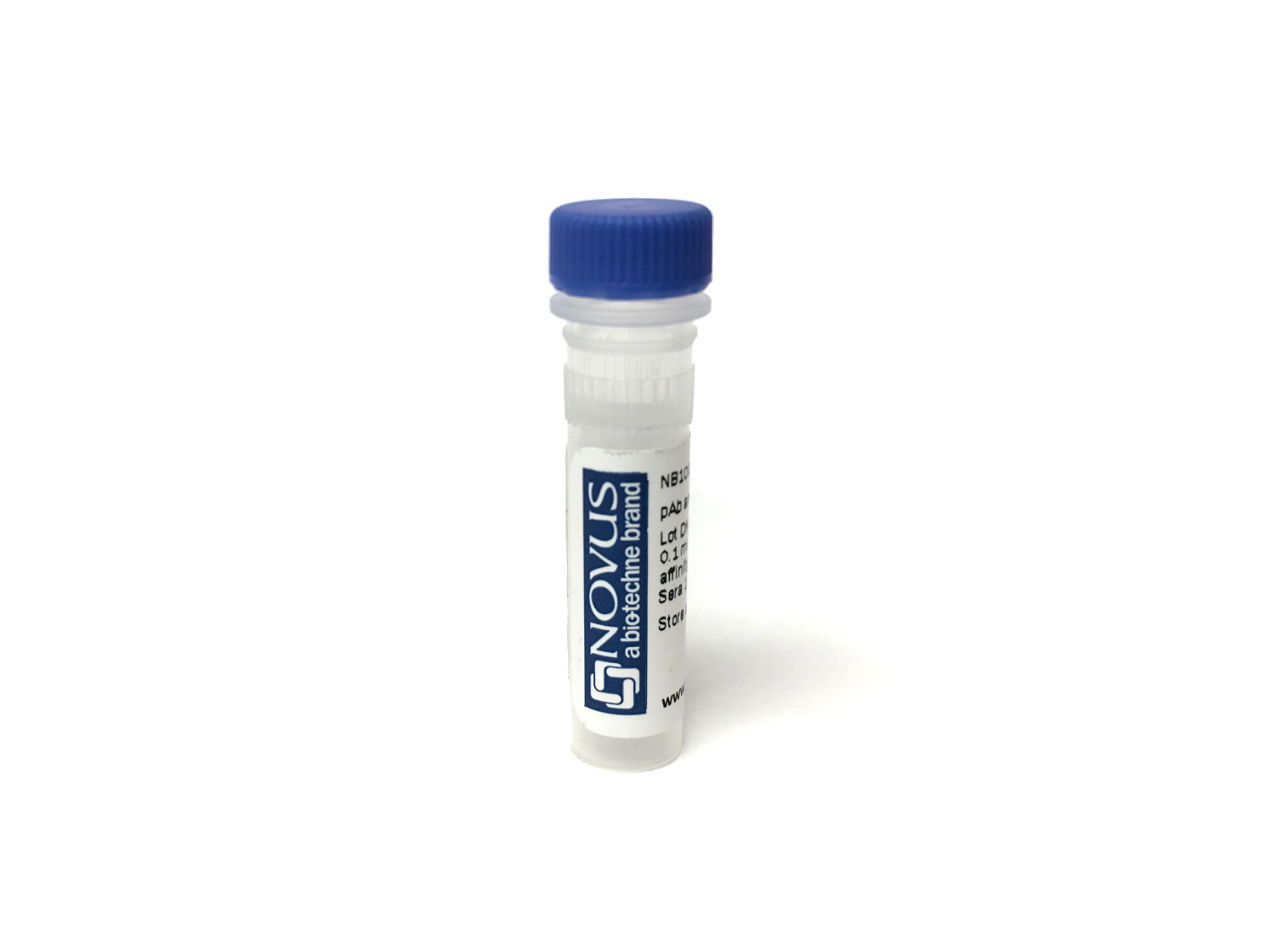
Conjugate
Catalog #
Forumulation
Catalog #
Key Product Details
Species Reactivity
Human
Applications
ELISA, Flow Cytometry, Functional
Label
Allophycocyanin (Excitation = 620-650 nm, Emission = 660-670 nm)
Antibody Source
Recombinant Monoclonal Human IgG1 expressed in CHO
Concentration
Please see the vial label for concentration. If unlisted please contact technical services.
Product Specifications
Immunogen
CALCA / CGRP
Reactivity Notes
Predicted species reactivity: Rat
Clonality
Monoclonal
Host
Human
Isotype
IgG1
Description
This conjugate is made on demand and is not held in inventory. Each order represents a unique lot. All conjugates are generated using validated conjugation protocols and meet strict degree of labeling (F/P) specifications; additional information is available upon request. The antibody concentration is provided on the individual product label.
For specialized conjugation needs, like large quantities, specific concentrations, and defined F/P ratios, bulk and custom antibody conjugation services are available.
For specialized conjugation needs, like large quantities, specific concentrations, and defined F/P ratios, bulk and custom antibody conjugation services are available.
Applications
Application
Recommended Usage
ELISA
Optimal dilutions of this antibody should be experimentally determined.
Flow Cytometry
Optimal dilutions of this antibody should be experimentally determined.
Functional
Optimal dilutions of this antibody should be experimentally determined.
Application Notes
Recommended applications are based on validated applications from the unconjugated base product NBP3-28122. This conjugated antibody is not kept in inventory and is made to order using validated conjugation protocols.
Spectra Viewer
Plan Your Experiments
Use our spectra viewer to interactively plan your experiments, assessing multiplexing options. View the excitation and emission spectra for our fluorescent dye range and other commonly used dyes.
Spectra Viewer
Formulation, Preparation, and Storage
Purification
Protein A purified
Formulation
PBS
Preservative
0.05% Sodium Azide
Concentration
Please see the vial label for concentration. If unlisted please contact technical services.
Shipping
The product is shipped with polar packs. Upon receipt, store it immediately at the temperature recommended below.
Stability & Storage
Store at 4C in the dark.
Background: CGRP1
Signaling of CGRP and its receptor are involved in vasodilation, neurogenic inflammation, and peripheral sensitization of nociceptors, all of which relate to migraine pathophysiology (2-3). Studies have found that CGRP is both released during migraines and can also induce migraines (3-5). Under normal conditions CGRP levels are typical and neurotransmission is relative; however, migraine triggers including light and sound can increase CGRP levels, enhance neurotransmission, and alter the pain and sensory aversions associated with migraines (2). Given its role, CGRP and its receptor have been the target of many migraine therapeutics including small molecule agonists called gepants and monoclonal antibodies (3-5). Ubrogepant and Rimegepant, two small molecule CGRP receptor agonists, have been FDA approved while another agonist, Atogepant, is ongoing in clinical trials (3,5). Additionally, four monoclonal antibodies against either CGRP or its receptor that are used to block signaling have been FDA approved: Eptinezumab, Fremanezumab, Galcanezumab, and Erenumab (3-5).
References
1. Russell, F. A., King, R., Smillie, S. J., Kodji, X., & Brain, S. D. (2014). Calcitonin gene-related peptide: physiology and pathophysiology. Physiological reviews, 94(4), 1099-1142. https://doi.org/10.1152/physrev.00034.2013
2. Russo A. F. (2015). Calcitonin gene-related peptide (CGRP): a new target for migraine. Annual review of pharmacology and toxicology, 55, 533-552. https://doi.org/10.1146/annurev-pharmtox-010814-124701
3. Wattiez, A. S., Sowers, L. P., & Russo, A. F. (2020). Calcitonin gene-related peptide (CGRP): role in migraine pathophysiology and therapeutic targeting. Expert opinion on therapeutic targets, 24(2), 91-100. https://doi.org/10.1080/14728222.2020.1724285
4. Deen, M., Correnti, E., Kamm, K., Kelderman, T., Papetti, L., Rubio-Beltran, E., Vigneri, S., Edvinsson, L., Maassen Van Den Brink, A., & European Headache Federation School of Advanced Studies (EHF-SAS) (2017). Blocking CGRP in migraine patients - a review of pros and cons. The journal of headache and pain, 18(1), 96. https://doi.org/10.1186/s10194-017-0807-1
5. de Vries, T., Villal0n, C. M., & MaassenVanDenBrink, A. (2020). Pharmacological treatment of migraine: CGRP and 5-HT beyond the triptans. Pharmacology & therapeutics, 211, 107528. https://doi.org/10.1016/j.pharmthera.2020.107528
Long Name
Calcitonin Gene Related Peptide I
Alternate Names
a-CGRP, alpha-CGRP, CGRP 1, CGRP alpha, CGRP I
Gene Symbol
CALCA
Additional CGRP1 Products
Product Specific Notices
This product is for research use only and is not approved for use in humans or in clinical diagnosis. Primary Antibodies are guaranteed for 1 year from date of receipt.
Loading...
Loading...
Loading...
Loading...
Loading...