
Calreticulin Antibody (1G6A7) [DyLight 488]
Novus Biologicals, part of Bio-Techne | Catalog # NBP1-47518G

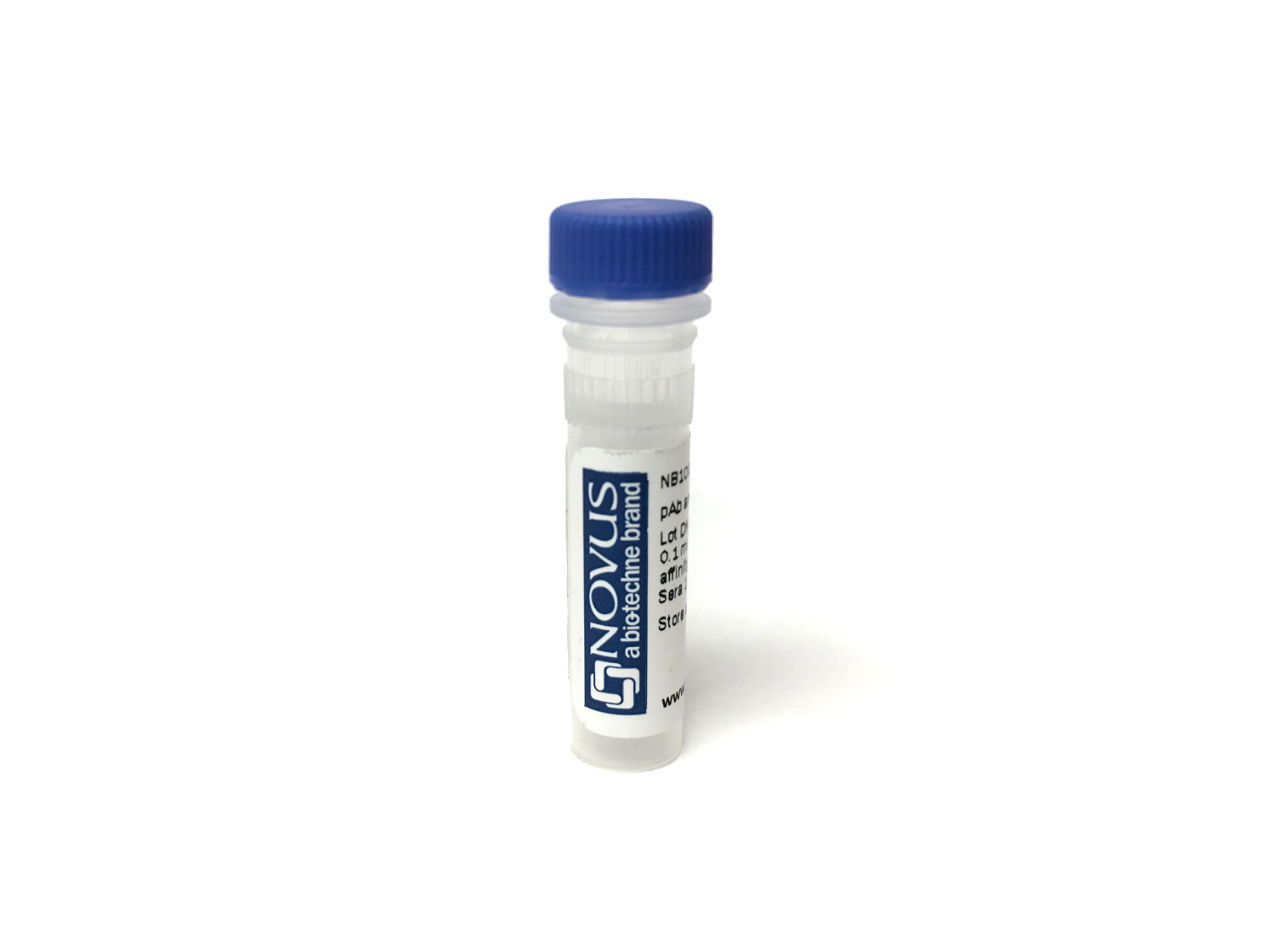
Conjugate
Catalog #
Key Product Details
Species Reactivity
Human, Mouse
Applications
Immunohistochemistry, Immunohistochemistry-Paraffin, Western Blot, ELISA, Flow Cytometry, Flow (Intracellular), Immunocytochemistry/ Immunofluorescence, In vitro assay
Label
DyLight 488 (Excitation = 493 nm, Emission = 518 nm)
Antibody Source
Monoclonal Mouse IgG2A Clone # 1G6A7
Concentration
Please see the vial label for concentration. If unlisted please contact technical services.
Product Specifications
Immunogen
Calreticulin Antibody (1G6A7) was developed against a synthetic peptide corresponding to the C-terminus (EEEDVPGQAKDELC) of human Calreticulin, conjugated to KLH. [UniProt# P27797]
Marker
Endoplasmic Reticulum Marker
Clonality
Monoclonal
Host
Mouse
Isotype
IgG2A
Description
This conjugate is made on demand and is not held in inventory. Each order represents a unique lot. All conjugates are generated using validated conjugation protocols and meet strict degree of labeling (F/P) specifications; additional information is available upon request. The antibody concentration is provided on the individual product label.
For specialized conjugation needs, like large quantities, specific concentrations, and defined F/P ratios, bulk and custom antibody conjugation services are available.
For specialized conjugation needs, like large quantities, specific concentrations, and defined F/P ratios, bulk and custom antibody conjugation services are available.
Applications for Calreticulin Antibody (1G6A7) [DyLight 488]
Application
Recommended Usage
ELISA
Optimal dilutions of this antibody should be experimentally determined.
Flow (Intracellular)
Optimal dilutions of this antibody should be experimentally determined.
Flow Cytometry
Optimal dilutions of this antibody should be experimentally determined.
Immunocytochemistry/ Immunofluorescence
Optimal dilutions of this antibody should be experimentally determined.
Immunohistochemistry
Optimal dilutions of this antibody should be experimentally determined.
Immunohistochemistry-Paraffin
Optimal dilutions of this antibody should be experimentally determined.
In vitro assay
Optimal dilutions of this antibody should be experimentally determined.
Western Blot
Optimal dilutions of this antibody should be experimentally determined.
Application Notes
Recommended applications are based on validated applications from the unconjugated base product NBP1-47518. This conjugated antibody is not kept in inventory and is made to order using validated conjugation protocols.
Spectra Viewer
Plan Your Experiments
Use our spectra viewer to interactively plan your experiments, assessing multiplexing options. View the excitation and emission spectra for our fluorescent dye range and other commonly used dyes.
Spectra Viewer
Formulation, Preparation, and Storage
Purification
Protein A or G purified
Formulation
50mM Sodium Borate
Preservative
0.05% Sodium Azide
Concentration
Please see the vial label for concentration. If unlisted please contact technical services.
Shipping
The product is shipped with polar packs. Upon receipt, store it immediately at the temperature recommended below.
Stability & Storage
Store at 4C in the dark.
Background: Calreticulin
Given its role in multiple biological processes, it makes sense that calreticulin is implicated in both healthy and disease states. Studies have found that calreticulin mutations were present in patients with myeloproliferative neoplasms (MFN) and essential thrombocythaemia (ET) (4). Calreticulin expression is typically upregulated in most cancer lines, however it is downregulated in some tissues including cervical carcinomas, prostate cancer, and human colon adenocarcinoma (3). High expression of calreticulin on cancer cells is related to tumor cell phagocytosis and is often correlated with, and counteracted by, elevated CD47 expression to prevent cancer cell phagocytosis (3). Calreticulin mutations can serve as a major diagnostic biomarker for MFN and ET and additionally the calreticulin gene may be a potential target for cancer therapeutics (3,4).
References
1. Michalak, M., Groenendyk, J., Szabo, E., Gold, L. I., & Opas, M. (2009). Calreticulin, a multi-process calcium-buffering chaperone of the endoplasmic reticulum. The Biochemical Journal. https://doi.org/10.1042/BJ20081847
2. Fucikova, J., Spisek, R., Kroemer, G., & Galluzzi, L. (2021). Calreticulin and cancer. Cell Research. https://doi.org/10.1038/s41422-020-0383-9
3. Sun, J., Mu, H., Dai, K., & Yi, L. (2017). Calreticulin: a potential anti-cancer therapeutic target. Die Pharmazie. https://doi.org/10.1691/ph.2017.7031
4. Prins, D., Gonzalez Arias, C., Klampfl, T., Grinfeld, J., & Green, A. R. (2020). Mutant Calreticulin in the Myeloproliferative Neoplasms. HemaSphere. https://doi.org/10.1097/HS9.0000000000000333
Alternate Names
Autoantigen Ro, CALR, Calregulin, cC1qR, CRT, SSA, Vasostatin
Gene Symbol
CALR
Additional Calreticulin Products
Product Documents for Calreticulin Antibody (1G6A7) [DyLight 488]
Product Specific Notices for Calreticulin Antibody (1G6A7) [DyLight 488]
DyLight (R) is a trademark of Thermo Fisher Scientific Inc. and its subsidiaries.
This product is for research use only and is not approved for use in humans or in clinical diagnosis. Primary Antibodies are guaranteed for 1 year from date of receipt.
Loading...
Loading...
Loading...
Loading...
Loading...