
S100A/B Products
S100 belongs to the family of calcium binding proteins such as calmodulin and troponin C. S100 proteins are localized in the cytoplasm and/or nucleus of a wide range of cells, and involved in the regulation of a number of cellular processes such as cell cycle progression and differentiation. S100 genes include at least 13 members which are located as a cluster on chromosome 1q21. S100A is composed of an alpha and beta chain whereas S100B is composed of two beta chains. S100 protein may function in stimulation of Ca2+ induced Ca2+ release, inhibition of microtubule assembly, and inhibition of protein kinase C mediated phosphorylation. Reduced expression of this protein has been implicated in cardiomyopathies. Immunoreactive S100 protein localizes in the cytoplasm and nuclei of astrocytes, Schwann's cells, ependymomas and astrogliomas. Ganglion cells do not stain for S100 protein. S100 can be detected in almost all benign naevi and malignant melanocytic tumors of the skin, and in Langerhans cells in the skin.
Show More
24 results for "S100A/B" in Products


24 results for "S100A/B" in Products
S100A/B Products
S100 belongs to the family of calcium binding proteins such as calmodulin and troponin C. S100 proteins are localized in the cytoplasm and/or nucleus of a wide range of cells, and involved in the regulation of a number of cellular processes such as cell cycle progression and differentiation. S100 genes include at least 13 members which are located as a cluster on chromosome 1q21. S100A is composed of an alpha and beta chain whereas S100B is composed of two beta chains. S100 protein may function in stimulation of Ca2+ induced Ca2+ release, inhibition of microtubule assembly, and inhibition of protein kinase C mediated phosphorylation. Reduced expression of this protein has been implicated in cardiomyopathies. Immunoreactive S100 protein localizes in the cytoplasm and nuclei of astrocytes, Schwann's cells, ependymomas and astrogliomas. Ganglion cells do not stain for S100 protein. S100 can be detected in almost all benign naevi and malignant melanocytic tumors of the skin, and in Langerhans cells in the skin.
Show More

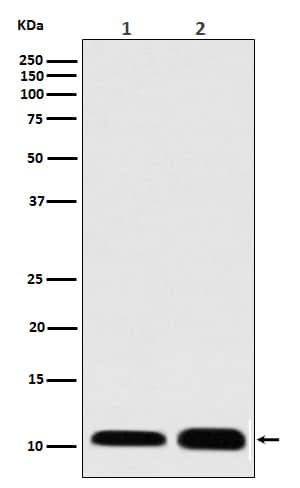
| Reactivity: | Human, Mouse |
| Details: | Rabbit IgG Monoclonal Clone #SR3487 |
| Applications: | IHC, WB, Flow, IP |
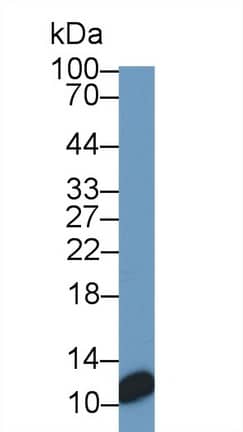
| Reactivity: | Human, Porcine |
| Details: | Mouse IgG1 kappa Monoclonal Clone #C8 |
| Applications: | IHC, WB, ICC/IF |
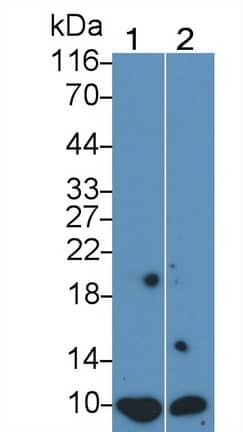
| Reactivity: | Human |
| Details: | Mouse IgG1 kappa Monoclonal Clone #C5 |
| Applications: | WB |
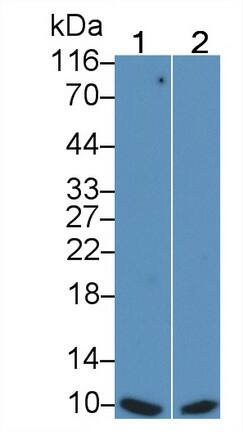
| Reactivity: | Human |
| Details: | Mouse IgG2a Kappa Monoclonal Clone #C10 |
| Applications: | WB, ICC/IF |
| Reactivity: | Human, Rat |
| Details: | Mouse IgG1 kappa Monoclonal Clone #C6 |
| Applications: | WB |
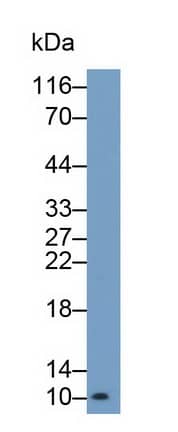
| Reactivity: | Human |
| Details: | Mouse IgG1 kappa Monoclonal Clone #C13 |
| Applications: | WB |
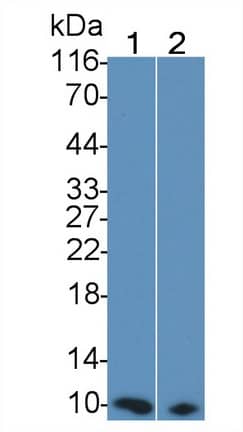

| Reactivity: | Human |
| Details: | Mouse IgG1 Monoclonal Clone #6G1cc |
| Applications: | WB, ELISA, AP |
Conjugate
Catalog #
Forumulation
Catalog #
| Reactivity: | Human |
| Details: | Mouse IgG1 Monoclonal Clone #6G1cc |
| Applications: | WB, ELISA, AP |
Conjugate
Catalog #
Forumulation
Catalog #
| Reactivity: | Human |
| Details: | Mouse IgG1 Monoclonal Clone #6G1cc |
| Applications: | WB, ELISA, AP |
Conjugate
Catalog #
Forumulation
Catalog #
| Reactivity: | Human |
| Details: | Mouse IgG1 Monoclonal Clone #6G1cc |
| Applications: | WB, ELISA, AP |
Conjugate
Catalog #
Forumulation
Catalog #
| Reactivity: | Human |
| Details: | Mouse IgG1 Monoclonal Clone #6G1cc |
| Applications: | WB, ELISA, AP |
Conjugate
Catalog #
Forumulation
Catalog #
| Reactivity: | Human |
| Details: | Mouse IgG1 Monoclonal Clone #6G1cc |
| Applications: | WB, ELISA, AP |
Conjugate
Catalog #
Forumulation
Catalog #
| Reactivity: | Human |
| Details: | Mouse IgG1 Monoclonal Clone #6G1cc |
| Applications: | WB, ELISA, AP |
Conjugate
Catalog #
Forumulation
Catalog #
| Reactivity: | Human |
| Details: | Mouse IgG1 Monoclonal Clone #6G1cc |
| Applications: | WB, ELISA, AP |
Conjugate
Catalog #
Forumulation
Catalog #
| Reactivity: | Human |
| Details: | Mouse IgG1 Monoclonal Clone #6G1cc |
| Applications: | WB, ELISA, AP |
Conjugate
Catalog #
Forumulation
Catalog #
| Reactivity: | Human |
| Details: | Mouse IgG1 Monoclonal Clone #6G1cc |
| Applications: | WB, ELISA, AP |
Conjugate
Catalog #
Forumulation
Catalog #
| Reactivity: | Human |
| Details: | Mouse IgG1 Monoclonal Clone #6G1cc |
| Applications: | WB, ELISA, AP |
Conjugate
Catalog #
Forumulation
Catalog #
| Reactivity: | Human |
| Details: | Mouse IgG1 Monoclonal Clone #6G1cc |
| Applications: | WB, ELISA, AP |
Conjugate
Catalog #
Forumulation
Catalog #
| Reactivity: | Human |
| Details: | Mouse IgG1 Monoclonal Clone #6G1cc |
| Applications: | WB, ELISA, AP |
Conjugate
Catalog #
Forumulation
Catalog #
| Reactivity: | Human |
| Details: | Mouse IgG1 Monoclonal Clone #6G1cc |
| Applications: | WB, ELISA, AP |
Conjugate
Catalog #
Forumulation
Catalog #
| Reactivity: | Human |
| Details: | Mouse IgG1 Monoclonal Clone #6G1cc |
| Applications: | WB, ELISA, AP |
Conjugate
Catalog #
Forumulation
Catalog #
| Reactivity: | Human |
| Details: | Mouse IgG1 Monoclonal Clone #6G1cc |
| Applications: | WB, ELISA, AP |
Conjugate
Catalog #
Forumulation
Catalog #
| Reactivity: | Human |
| Details: | Mouse IgG1 Monoclonal Clone #6G1cc |
| Applications: | WB, ELISA, AP |
Conjugate
Catalog #
Forumulation
Catalog #