
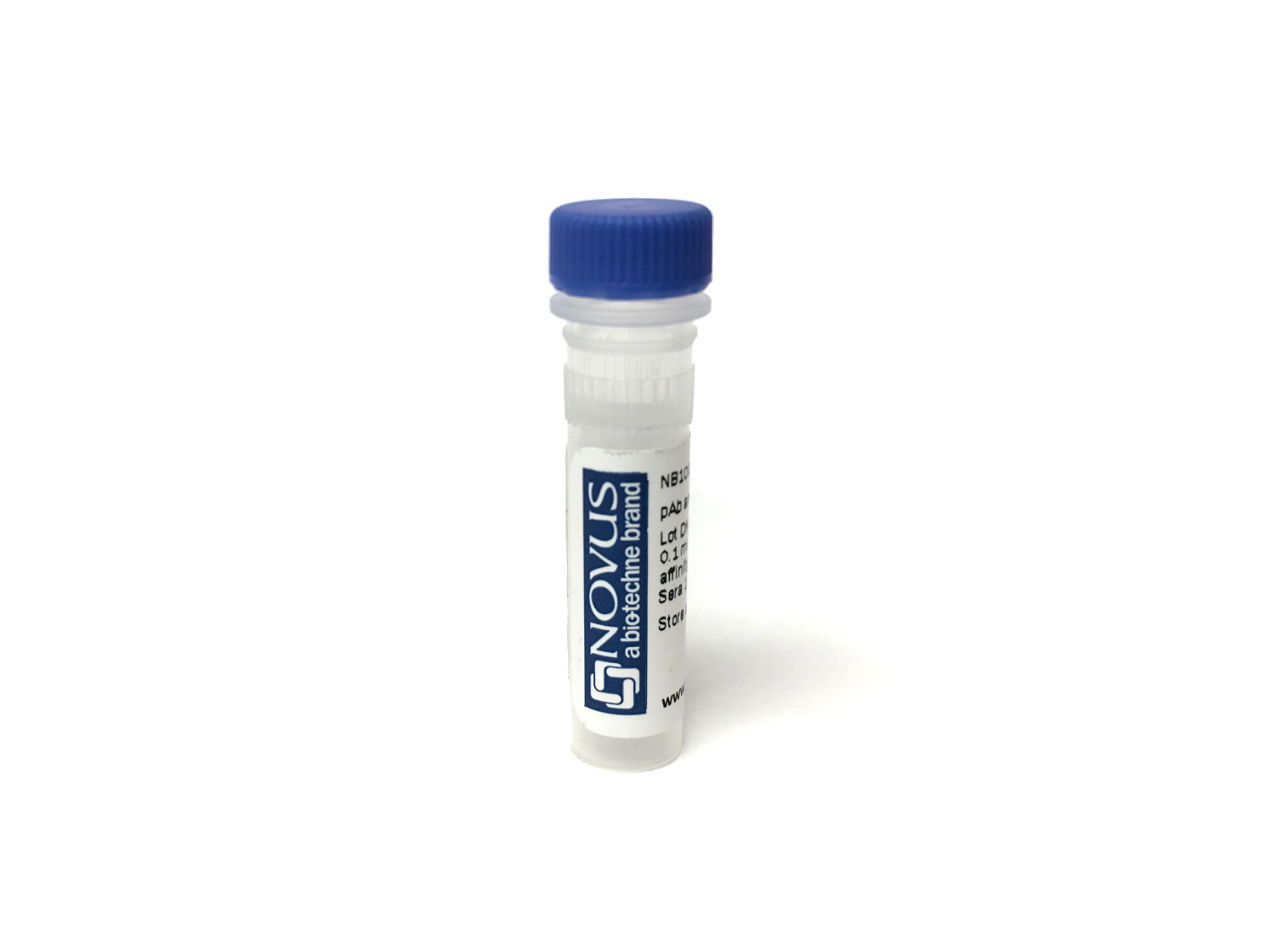
Rabbit anti-Monkey IgG (H+L) Secondary Antibody
Novus Biologicals, part of Bio-Techne | Catalog # NBP2-69407

Conjugate
Catalog #
Key Product Details
Species Reactivity
Monkey
Applications
Immunoelectrophoresis
Label
Unconjugated
Antibody Source
Polyclonal Rabbit
Concentration
LYOPH mg/ml
Product Specifications
Immunogen
Purified normal IgG isolated from pooled rhesus monkey serum. Freund's complete adjuvant is used in the first step of the immunization procedure
Reactivity Notes
Inter-species cross-reactivity is a normal feature of antibodies to immunoglobulins, since Ig of different species frequently share antigenic determinants. Precipitation reactions have been observed with IgG in Serum of other old-world Monkeys, including Cercopithecus, Cynomolgus and Baboon. The conjugate may also react with IgG of other species as has been observed for Chimpanzee and man. Cross-reactivity of this antiserum has been tested in double radial immunodiffusion with the following results: Bovine + Cat + Chicken - Dog + Goat + Guinea Pig + Hamster + Horse + Human ++ Mouse + pigeon - Rat + Sheep + Swine + Turkey -
Specificity
The reactivity of the antiserum is directed to the Fc and Fab subunits of the IgG molecule. It includes a certain degree of reactivity with other immunoglobulins via the common Fab portion. It does not react with any non-Ig protein in monkey serum, as tested by immunoelectrophoresis and double radial immunodiffusion.
Clonality
Polyclonal
Host
Rabbit
Description
The lyophilized antiserum is shipped at ambient temperature and may be stored at 4C; prolonged storage at or below -20C. Working dilutions are prepared by adding sterile phosphate buffered saline (PBS, pH 7.2). Repeated thawing and freezing should be avoided. Working dilutions should be stored at 4C, not refrozen, and preferably used the same day. If a slight precipitation occurs upon storage, this should be removed by centrifugation. It will not affect the performance of the product.
Applications for Rabbit anti-Monkey IgG (H+L) Secondary Antibody
Application
Recommended Usage
Immunoelectrophoresis
Optimal dilutions of this antibody should be experimentally determined.
Application Notes
Precipitation assays. In immunoelectrophoresis use 2 ul or equivalent against 120 ul antiserum. In double radial immunodiffusion (Ouchterlony) use a rosette arrangement with 10 ul antiserum in a 3 mm diameter center well and 2 ul serum samples (neat and diluted) in 2 mm diameter peripheral wells.
Precipitation assays.
Precipitation assays.
Formulation, Preparation, and Storage
Purification
Whole Antiserum
Reconstitution
Reconstitute by adding 1 ml sterile distilled water. Working dilutions are prepared by adding sterile phosphate buffered saline (PBS, pH 7.2).
Formulation
Whole antiserum
Preservative
No Preservative
Concentration
LYOPH mg/ml
Shipping
The product is shipped with polar packs. Upon receipt, store it immediately at the temperature recommended below.
Stability & Storage
Store at 4C short term. Aliquot and store at -20C long term. Avoid freeze-thaw cycles.
Background: IgG (H+L)
The 4 IgG subclasses, sharing 95% amino acid identity, include IgG1, IgG2, IgG3, and IgG4 for humans and IgG1, IgG2a, IgG2b, and IgG3 for mice. The relative abundance of each human subclass is 60% for IgG1, 32% for IgG2, 4% for IgG3, and 4% for IgG4. In an IgG deficiency, there may be a shortage of one or more subclasses (4).
References
1. Painter RH. (1998) Encyclopedia of Immunology (Second Edition). Elsevier. 1208-1211
2. Chapter 9 - Antibodies. (2012) Immunology for Pharmacy. Mosby 70-78
3. Schroeder H, Cavacini, L. (2010) Structure and Function of Immunoglobulins. J Allergy Clin Immunol. 125(2 0 2): S41-S52. PMID: 20176268
4. Vidarsson G, Dekkers G, Rispens T. (2014) IgG subclasses and allotypes: from structure to effector functions. Front Immunol. 5:520. PMID: 25368619
Additional IgG (H+L) Products
Product Documents for Rabbit anti-Monkey IgG (H+L) Secondary Antibody
Product Specific Notices for Rabbit anti-Monkey IgG (H+L) Secondary Antibody
This product is for research use only and is not approved for use in humans or in clinical diagnosis. Secondary Antibodies are guaranteed for 1 year from date of receipt.
Loading...
Loading...
Loading...
Loading...
Loading...