
Mouse GFAP ELISA Kit (Chemiluminescence)
Novus Biologicals, part of Bio-Techne | Catalog # NBP3-49737

Key Product Details
Sample Type & Volume Required Per Well
Serum, plasma and other biological fluids (100 uL)
Sensitivity
4.69 pg/mL
Assay Range
7.81 - 500 pg/mL
Product Specifications
Assay Type
Sandwich ELISA
Kit Type
ELISA Kit (Chemiluminescence)
Reactivity
Mouse
Specificity
This kit recognizes Mouse GFAP in samples. No significant cross-reactivity or interference between Mouse GFAP and analogues was observed
Description
Assay Length: 3 h 30 min
Precision
Intra-Assay Precision (Precision within an assay) CV% < 10
Inter-Assay Precision (Precision between assays) CV% < 10
Recovery for Mouse GFAP ELISA Kit (Chemiluminescence)
Recovery
80 - 120%
Linearity
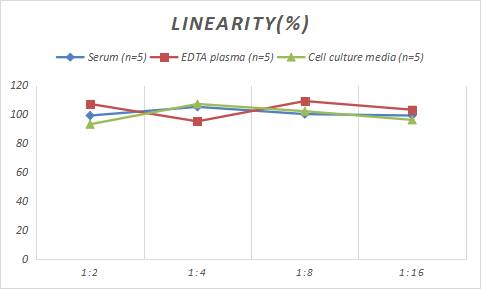
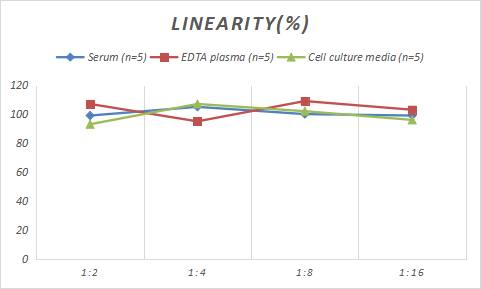
Scientific Data Images for Mouse GFAP ELISA Kit (Chemiluminescence)
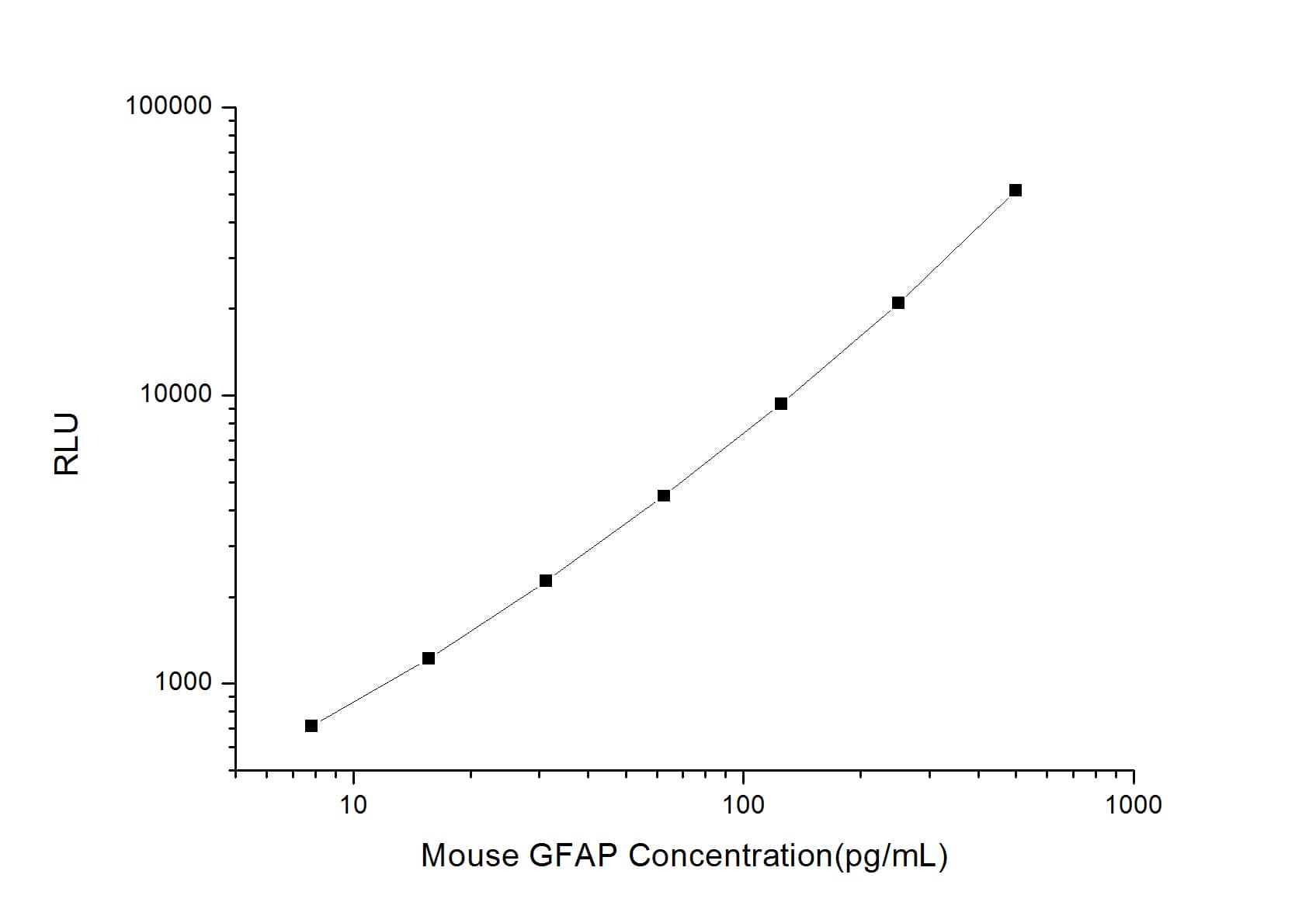
ELISA: Mouse GFAP ELISA Kit (Chemiluminescence) [NBP3-49737]
Standard Curve Reference.Kit Contents for Mouse GFAP ELISA Kit (Chemiluminescence)
- Biotinylated Detection Ab Diluent
- Certificate of Analysis
- Concentrated Biotinylated Detection Ab (100x)
- Concentrated HRP Conjugate(100x)
- Concentrated Wash Buffer (25x)
- HRP Conjugate Diluent
- Micro CLIA Plate (Dismountable)
- Plate Sealer
- Product Description
- Reference Standard
- Reference Standard & Sample Diluent
- Substrate Reagent A
- Substrate Reagent B
Preparation and Storage
Shipping
The product is shipped with polar packs. Upon receipt, store it immediately at the temperature recommended below.
Stability & Storage
Storage of components varies. See protocol for specific instructions.
Background: GFAP
An increase in GFAP levels is often associated with neuroinflammation which results in the activation and proliferation of astroglia cell population (1,2). GFAP expression is also observed in brains of patients with neurodegenerative diseases including Alzheimer's and Parkinson's, epilepsy disorders, and brain injuries (1-4). Lesion sites associated with neurodegeneration can exhibit an array of gliosis characteristics from glial scarring with reduced astrocyte proliferation to activated, GFAP-positive astrocytes surrounding amyloid plaques (2). Furthermore, the GFAP gene is a target of single nucleotide polymorphisms in the coding region, considered a gain-of-function mutation, characterized by astrocytic inclusions, termed Rosenthal fibers, resulting in Alexander Disease (1-4). GFAP is also a center of many post-translational modifications, such as phosphorylation, which can alter various aspects of filament assembly (1,4).
References
1. Yang, Z., & Wang, K. K. (2015). Glial fibrillary acidic protein: from intermediate filament assembly and gliosis to neurobiomarker. Trends in Neurosciences. https://doi.org/10.1016/j.tins.2015.04.003
2. Hol, E. M., & Capetanaki, Y. (2017). Type III Intermediate Filaments Desmin, Glial Fibrillary Acidic Protein (GFAP), Vimentin, and Peripherin. Cold Spring Harbor Perspectives in Biology. https://doi.org/10.1101/cshperspect.a021642
3. Potokar, M., Morita, M., Wiche, G., & Jorgacevski, J. (2020). The Diversity of Intermediate Filaments in Astrocytes. Cells. https://doi.org/10.3390/cells9071604
4. Viedma-Poyatos, a., Pajares, M. A., & Perez-Sala, D. (2020). Type III intermediate filaments as targets and effectors of electrophiles and oxidants. Redox Biology. https://doi.org/10.1016/j.redox.2020.101582
Long Name
Glial Fibrillary Acidic Protein
Alternate Names
ALXDRD, FLJ45472, GFAP, GFAP astrocytes, glial fibrillary acidic protein
Gene Symbol
GFAP
Additional GFAP Products
Product Documents for Mouse GFAP ELISA Kit (Chemiluminescence)
Product Specific Notices for Mouse GFAP ELISA Kit (Chemiluminescence)
This product is for research use only and is not approved for use in humans or in clinical diagnosis. ELISA Kits are guaranteed for 6 months from date of receipt.
Loading...
Loading...
Loading...
Loading...