
PDE6D Antibody (HL1359)
Novus Biologicals, part of Bio-Techne | Catalog # NBP3-48654
Recombinant Monoclonal Antibody

Key Product Details
Species Reactivity
Human, Mouse, Rat, Canine, Feline, Zebrafish
Applications
Immunohistochemistry, Immunohistochemistry-Paraffin, Western Blot, Immunocytochemistry/ Immunofluorescence
Label
Unconjugated
Antibody Source
Recombinant Monoclonal Rabbit IgG Clone # HL1359
Concentration
Concentrations vary lot to lot. See vial label for concentration. If unlisted please contact technical services.
Product Specifications
Immunogen
Full length human PDE6D Recombinant protein
Reactivity Notes
Japanese Medaka (100%).
Clonality
Monoclonal
Host
Rabbit
Isotype
IgG
Theoretical MW
17 kDa.
Disclaimer note: The observed molecular weight of the protein may vary from the listed predicted molecular weight due to post translational modifications, post translation cleavages, relative charges, and other experimental factors.
Disclaimer note: The observed molecular weight of the protein may vary from the listed predicted molecular weight due to post translational modifications, post translation cleavages, relative charges, and other experimental factors.
Scientific Data Images for PDE6D Antibody (HL1359)
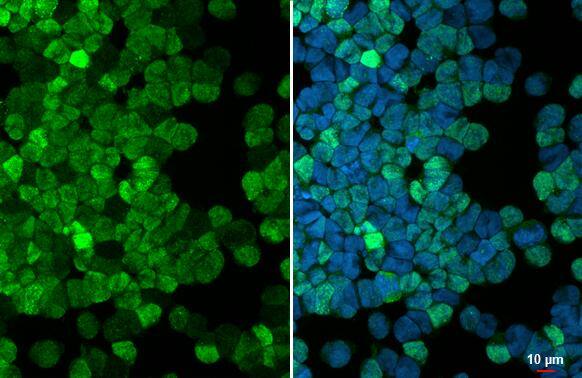
Immunocytochemistry/ Immunofluorescence: PDE6D Antibody (HL1359) [NBP3-48654] -
PDE6D antibody [HL1359] detects PDE6D protein at nucleus by immunofluorescent analysis.Sample: MOLT-4 cells were fixed in 4% paraformaldehyde at RT for 15 min.
Green: PDE6D stained by PDE6D antibody [HL1359] (NBP3-48654) diluted at 1:500.
Blue: Fluoroshield with DAPI .
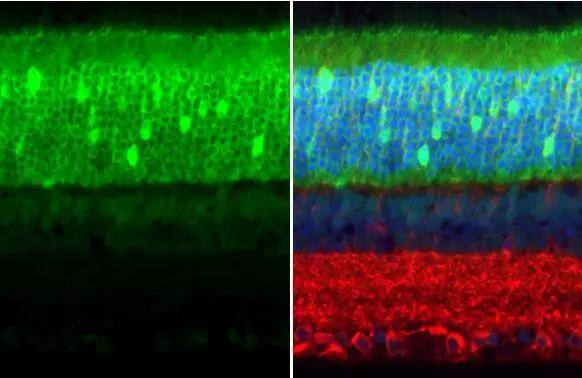
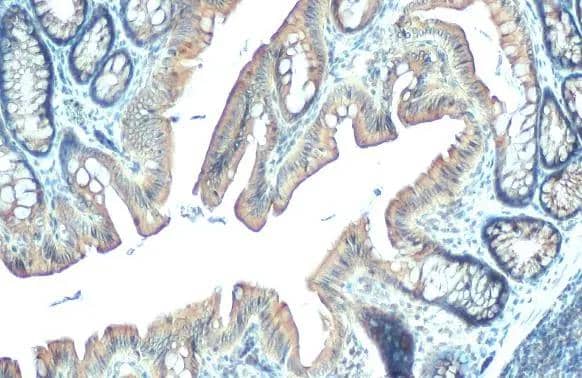
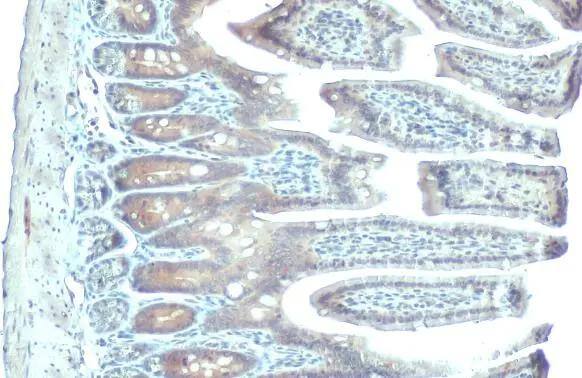
Immunohistochemistry-Paraffin: PDE6D Antibody (HL1359) [NBP3-48654] -
PDE6D antibody [HL1359] detects PDE6D protein at cytoplasm by immunohistochemical analysis.Sample: Paraffin-embedded mouse eye.
Green: PDE6D stained by PDE6D antibody [HL1359] (NBP3-48654) diluted at 1:100.
Red: beta Tubulin 3/ Tuj1, a neural marker, stained by beta Tubulin 3/ Tuj1 antibody [GT11710] diluted at 1:500.
Blue: Fluoroshield with DAPI .
Antigen Retrieval: Citrate buffer, pH 6.0, 15 min
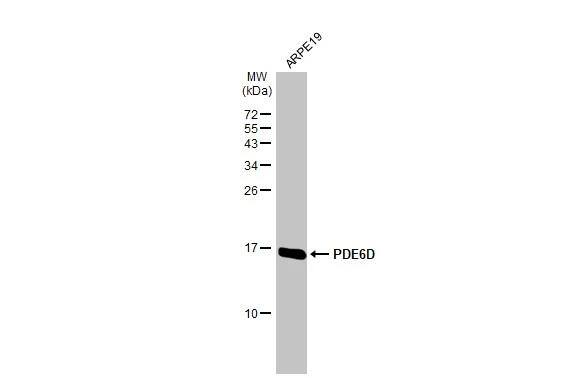
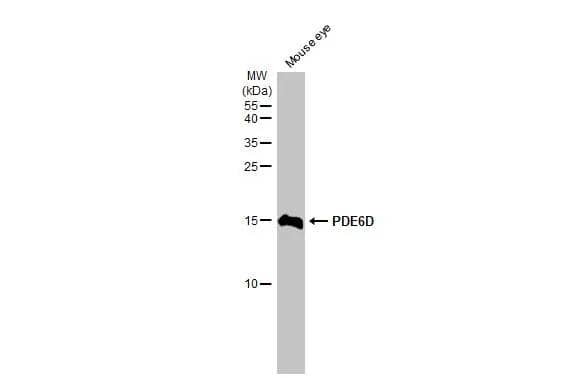
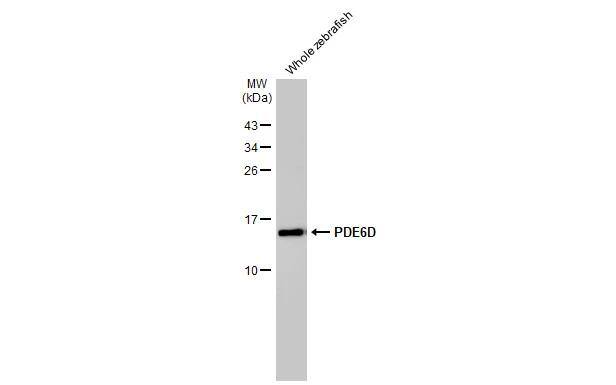
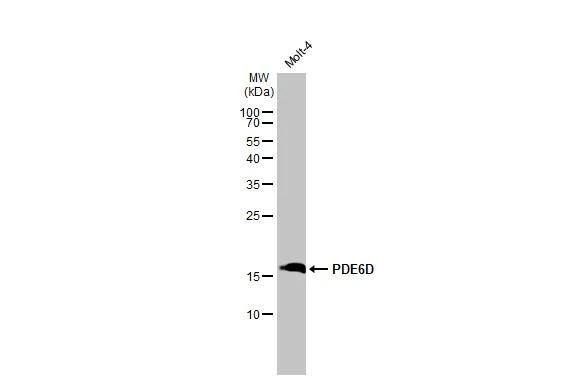
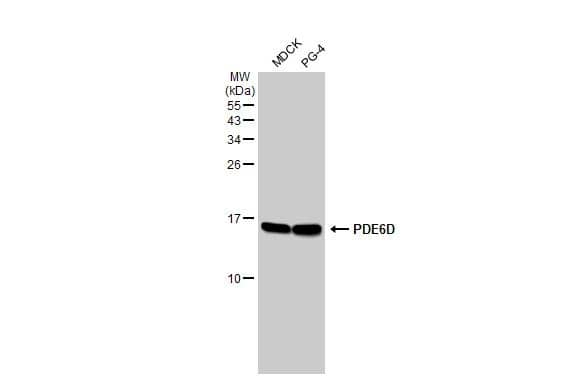
Western Blot: PDE6D Antibody (HL1359) [NBP3-48654] -
Whole cell extract (30 ug) was separated by 15% SDS-PAGE, and the membrane was blotted with PDE6D antibody [HL1359] (NBP3-48654) diluted at 1:1000. The HRP-conjugated anti-rabbit IgG antibody was used to detect the primary antibody.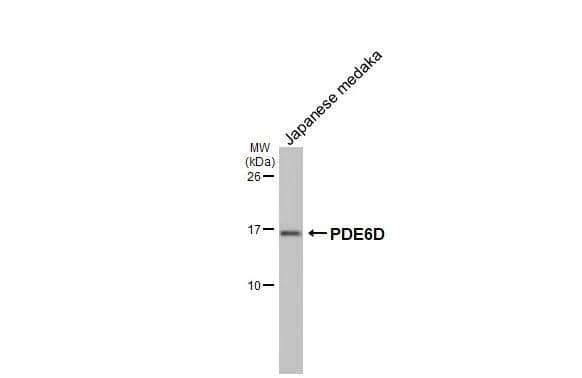
Applications for PDE6D Antibody (HL1359)
Application
Recommended Usage
Immunocytochemistry/ Immunofluorescence
Assay dependent
Immunohistochemistry
Assay dependent
Immunohistochemistry-Paraffin
Assay dependent
Western Blot
1:500-1:3000
Formulation, Preparation, and Storage
Purification
Protein A purified
Formulation
PBS
Preservative
No Preservative
Concentration
Concentrations vary lot to lot. See vial label for concentration. If unlisted please contact technical services.
Shipping
The product is shipped with polar packs. Upon receipt, store it immediately at the temperature recommended below.
Stability & Storage
Store at 4C short term. Aliquot and store at -20C long term. Avoid freeze-thaw cycles.
Background: PDE6D
Long Name
Retinal rod rhodopsin-sensitive cGMP 3',5'-cyclic phosphodiesterase subunit delta
Alternate Names
GMP-PDE delta, PDED, Protein p17
Gene Symbol
PDE6D
Additional PDE6D Products
Product Documents for PDE6D Antibody (HL1359)
Product Specific Notices for PDE6D Antibody (HL1359)
This product is for research use only and is not approved for use in humans or in clinical diagnosis. Primary Antibodies are guaranteed for 1 year from date of receipt.
Loading...
Loading...
Loading...
Loading...