
CD57 Antibody (1088014) [DyLight 488]
Novus Biologicals, part of Bio-Techne | Catalog # FAB11708K

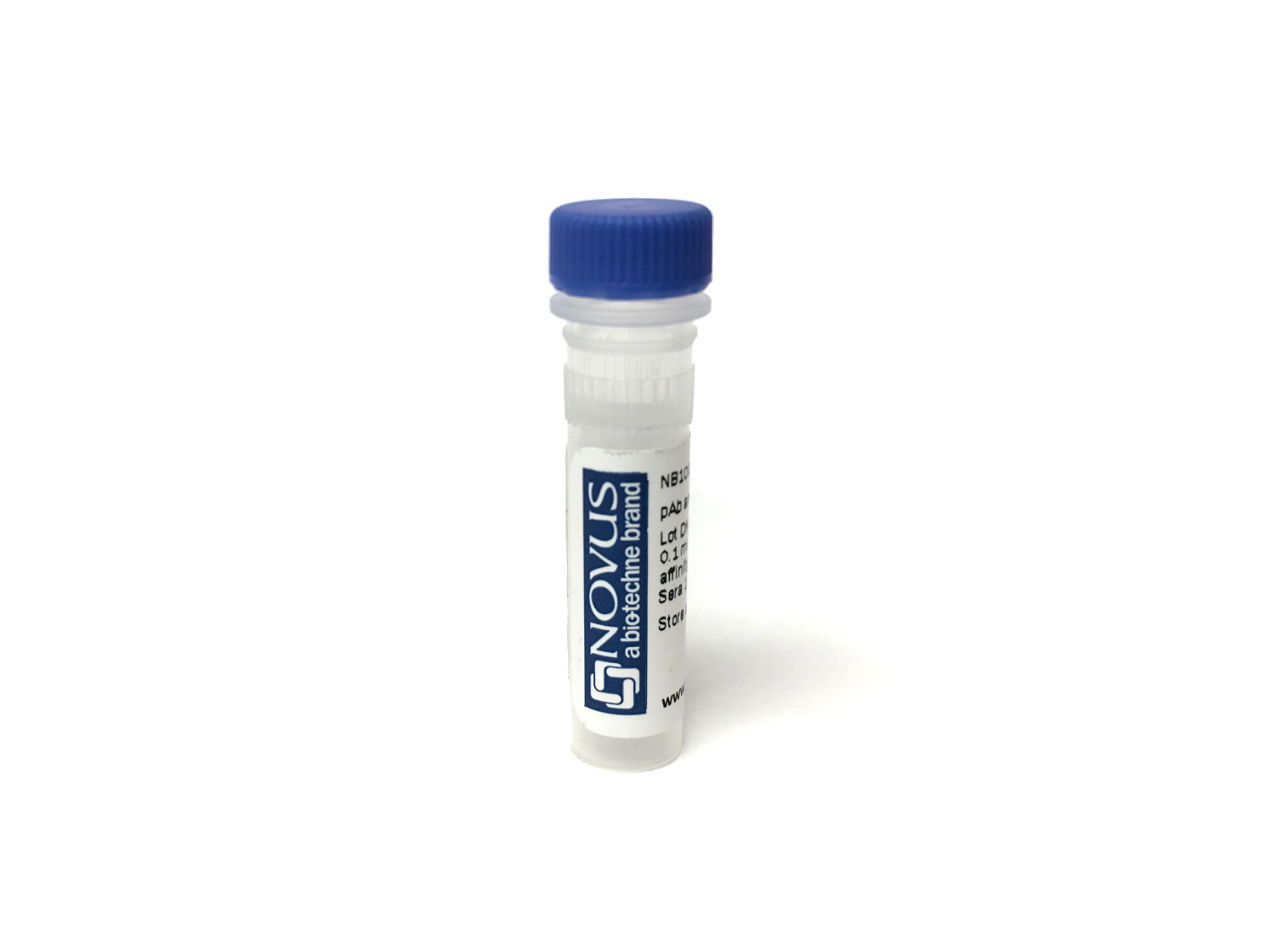
Conjugate
Catalog #
Key Product Details
Species Reactivity
Human
Applications
Immunohistochemistry, Flow Cytometry
Label
DyLight 488 (Excitation = 493 nm, Emission = 518 nm)
Antibody Source
Monoclonal Mouse IgG2B Clone # 1088014
Concentration
Please see the vial label for concentration. If unlisted please contact technical services.
Product Specifications
Immunogen
Whole Cell
Accession # Q9P2W7
Accession # Q9P2W7
Specificity
Detects the CD57 carbohydrate epitope in Human PBMCs
Clonality
Monoclonal
Host
Mouse
Isotype
IgG2B
Description
This conjugate is made on demand and is not held in inventory. Each order represents a unique lot. All conjugates are generated using validated conjugation protocols and meet strict degree of labeling (F/P) specifications; additional information is available upon request. The antibody concentration is provided on the individual product label.
For specialized conjugation needs, like large quantities, specific concentrations, and defined F/P ratios, bulk and custom antibody conjugation services are available.
For specialized conjugation needs, like large quantities, specific concentrations, and defined F/P ratios, bulk and custom antibody conjugation services are available.
Applications for CD57 Antibody (1088014) [DyLight 488]
Application
Recommended Usage
Flow Cytometry
Optimal dilutions of this antibody should be experimentally determined.
Immunohistochemistry
Optimal dilutions of this antibody should be experimentally determined.
Application Notes
Recommended applications are based on validated applications from the unconjugated base product MAB11708. This conjugated antibody is not kept in inventory and is made to order using validated conjugation protocols.
Spectra Viewer
Plan Your Experiments
Use our spectra viewer to interactively plan your experiments, assessing multiplexing options. View the excitation and emission spectra for our fluorescent dye range and other commonly used dyes.
Spectra Viewer
Formulation, Preparation, and Storage
Purification
Protein A or G purified from hybridoma culture supernatant
Formulation
50mM Sodium Borate
Preservative
0.05% Sodium Azide
Concentration
Please see the vial label for concentration. If unlisted please contact technical services.
Shipping
The product is shipped with polar packs. Upon receipt, store it immediately at the temperature recommended below.
Stability & Storage
Store at 4C in the dark.
Background: CD57
CD57 expression has become a common pathological marker. CD57+ CD8+ T cell expression is observed in various cancers and is often linked to reduced survival (3). On the other hand, CD57+ NK cell expression is associated with less severe disease and better prognosis in cancer patients (3). CD57 is also associated with immune dysfunction and autoimmune disease (3,4). For example, T cell immunosenescence is characterized by an upregulation of CD57 along with KLRG-1 and a loss of CD27 and CD28 expression (4). Expanded autoreactive T cells are also related to diseases including multiple sclerosis (MS) and rheumatoid arthritis (RA) (3). Conversely, reduced numbers of CD57+ NK cells and NK cell cytotoxicity is observed in various autoimmune diseases such as apoptotic dermatitis and sjogren's syndrome (3).
References
1. Focosi D, Bestagno M, Burrone O, Petrini M. CD57+ T lymphocytes and functional immune deficiency. J Leukoc Biol. 2010;87(1):107-116. https://doi.org/10.1189/jlb.0809566
2. Morise J, Takematsu H, Oka S. The role of human natural killer-1 (HNK-1) carbohydrate in neuronal plasticity and disease. Biochim Biophys Acta Gen Subj. 2017;1861(10):2455-2461. https://doi.org/10.1016/j.bbagen.2017.06.025
3. Nielsen CM, White MJ, Goodier MR, Riley EM. Functional Significance of CD57 Expression on Human NK Cells and Relevance to Disease. Front Immunol. 2013;4:422. Published 2013 Dec 9. https://doi.org/10.3389/fimmu.2013.00422
4. Lian J, Yue Y, Yu W, Zhang Y. Immunosenescence: a key player in cancer development. J Hematol Oncol. 2020;13(1):151. Published 2020 Nov 10. https://doi.org/10.1186/s13045-020-00986-z6
Long Name
Cluster of Differentiation 57
Alternate Names
Human Natural Killer-1, L2, LEU-7
Additional CD57 Products
Product Documents for CD57 Antibody (1088014) [DyLight 488]
Product Specific Notices for CD57 Antibody (1088014) [DyLight 488]
DyLight (R) is a trademark of Thermo Fisher Scientific Inc. and its subsidiaries.
This product is for research use only and is not approved for use in humans or in clinical diagnosis. Primary Antibodies are guaranteed for 1 year from date of receipt.
Loading...
Loading...
Loading...
Loading...
Loading...