Western Blot: c-Myc Antibody [NB600-336]
Western Blot: c-Myc Antibody [NB600-336] - Lane 1: control HEK293 cell lysate. Lane 2: CMYC over-expression in HEK293 cell lysate. WB image submitted by a verified customer review.
Immunohistochemistry: c-Myc Antibody [NB600-336]
Immunohistochemistry: c-Myc Antibody [NB600-336] - Analysis of c-Myc in mouse prostate using DAB with hematoxylin counterstain.
Western Blot: c-Myc Antibody [NB600-336]
Western Blot: c-Myc Antibody [NB600-336] - c-Myc in MOLT-4 cells. WB image submitted by a verified customer review.
Western Blot: c-Myc Antibody [NB600-336]
Western Blot: c-Myc Antibody [NB600-336] - Analysis of whole cell lysate (WCL) of Jurkat cells using anti-cMyc antibody (NB600-336) at 1:1000 dilution. HRP conjugated goat anti-rabbit IgG (H+L) cross adsorbed secondary antibody was used with ECL substrate for the detection of c-Myc antibody bound to the blotted protein. This c-Myc antibody detected the c-Myc specific band at its expected position (48-50kDa). The signal below 10 kDa in this blot is potentially the degraded protein and we have not characterized this band.
Western Blot: c-Myc Antibody [NB600-336]
Western Blot: c-Myc Antibody [NB600-336] - Analysis using the HRP conjugate of NB600-336. Detection of c-Myc in NIH/3T3 cell lysates (30ug and 45ug per lane) using anti-c-Myc antibody. WB image submitted by a verified customer review.
Immunocytochemistry/ Immunofluorescence: c-Myc Antibody [NB600-336]
Immunocytochemistry/Immunofluorescence: c-Myc Antibody [NB600-336] - Detection of c-myc Tagged Plakoglobin by Immunofluorescence. Samples: Human microvascular endothelial cells expressing c-myc tagged plakoglobin following transient transfection.
Simple Western: c-Myc Antibody [NB600-336]
Simple Western: c-Myc Antibody [NB600-336] - Lane view shows a specific band for c-Myc in 0.05 mg/ml of Jurkat lysate. This experiment was performed under reducing conditions using the 12-230 kDa separation system.
Western Blot: c-Myc Antibody - BSA Free [NB600-336] -
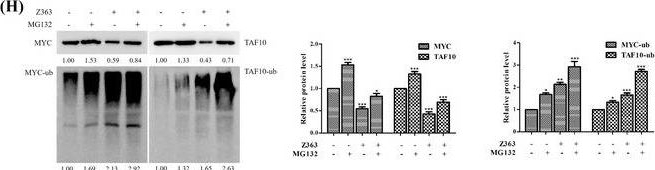
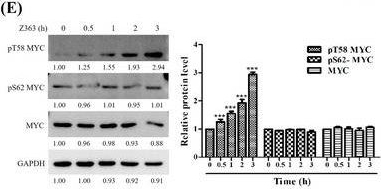
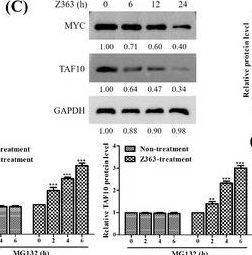
Z363 promotes MYC and TAF10 degradation. (A) Identification of small inhibitory molecules for MYC. (B) MCF7 cells were treated with Z363 (0, 2.5, 7.5 and 15 μg/ml) for 24 h. The protein levels of MYC and TAF10 were analysed by Western blotting. (C) MCF7 cells were treated with Z363 (7.5 μg/ml) for 0, 6, 12 and 24 h. Furthermore, the protein levels of MYC and TAF10 were analysed by Western blotting. (D) MCF7 cells were treated with 25 μM MG132 at the indicated time points, followed by treatment with or without Z363 (7.5 μg/ml) for 24 h, and MYC and TAF10 expressions were analysed by Western blotting. (E) Western blots for MYC, phosphorylated MYC T58 and S62 in MCF7 cells treated with Z363 at the times indicated. (F) Ratios of pT58 or pS62 to total MYC protein levels from the experiment (E). (G) IF staining for Ki67 and pT58 in Z363‐treated MCF7 cells, scale bar, 10 μm. (H) MCF7 cells were treated with 25 μM MG132 for 2 h, followed by Z363 treatment (7.5 μg/ml) for 24 h. Expressions of MYC and TAF10 were assessed using Western blot analysis. Data shown in F were analysed by two‐way ANOVA. Fluorescence images and blots were representative of three independent experiments. All data are presented as the mean +/- SEM of n = 3. ***p < .001, ns, no significance Image collected and cropped by CiteAb from the following open publication (https://pubmed.ncbi.nlm.nih.gov/36639831), licensed under a CC-BY license. Not internally tested by Novus Biologicals.
Western Blot: c-Myc Antibody - BSA Free [NB600-336] -
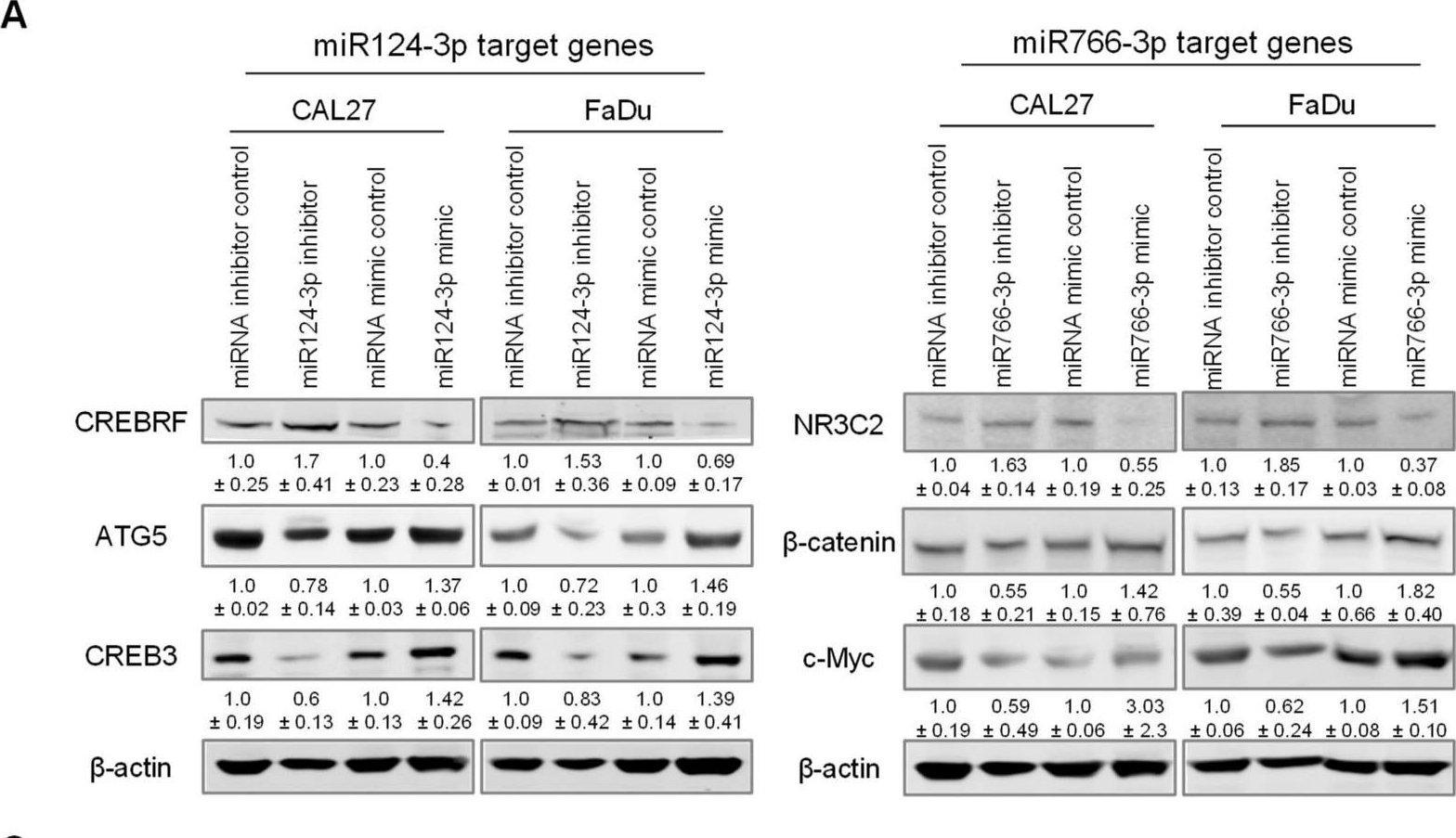
The role of miR124-3p and miR766-3p target genes in HNSCC drug resistance. (A) Expression analysis of miR124-3p and miR766-3p direct target genes and downstream target genes by Western blot in HNSCC cell lines (CAL27 and FaDu), with or without transfection with miRNA inhibitors or miRNA mimics. Left: Western blotting showed the expression of miR124-3p target gene (CREBRF) and CREBRF target genes (ATG5 and CREB3). Right: Western blotting showed the expression of miR766-3p target gene (NR3C2) and NR3C2 target genes ( beta-catenin and c-Myc). Quantitative data (relative expression levels after beta-actin-corrected) from three independent experiments are disclosed below each protein band. Data represent the mean +/- SD (n = 3). (B) Target gene analysis in sensitive (CAL27) vs. resistant (CAL27/FP-R) HNSCC cell lines. Quantitative data (relative expression levels after beta-actin-corrected) is shown below each protein band. (C) The effect of NR3C2 and/or CREBRF knockdown on drug-induced cytotoxicity in CAL27 and FaDu. Cells were transfected by 10 nM siRNA (single or combined) for 24 h followed by 72 h exposure to the indicated drug. Cytotoxicity was determined by MTT assay. IC50 values are listed in Table S7. (D) Measurement of apoptosis in CAL27 or FaDu cells in response to cisplatin or 5-FU +/- 24 h prior transfection with 10 nM siRNA. After 24 h of drug treatments, cells were labeled with anti-annexin V-FITC antibody and PI and then analyzed with flow cytometry. A two-way ANOVA with Bonferroni’s correction for multiple comparisons was used to analyze group comparisons, and data are presented as means +/- SD (n = 3). * p < 0.05, *** p < 0.001 (vs. control siRNA), and ### p < 0.001 (vs. untreated). Image collected and cropped by CiteAb from the following open publication (https://pubmed.ncbi.nlm.nih.gov/36358691), licensed under a CC-BY license. Not internally tested by Novus Biologicals.
Western Blot: c-Myc Antibody - BSA Free [NB600-336] -
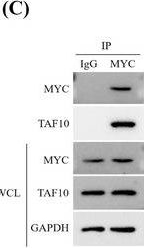
TAF10 promotes cancer cell proliferation and migration. (A and B) MCF7 cells were transfected with Flag‐labelled MYC and HA‐labelled TAF10, and the interaction between MYC and TAF10 was detected by Co‐IP. (C) Endogenous interaction of MYC and TAF10 was tested in MCF7 cells. (D) Schematic representation of MYC mutants. (E) Schematic representation of TAF10 mutants. Co‐IP was used to detect the interaction between the TAF10 mutants and MYC in MCF7 cells. Co‐IP was used to detect the interaction. (G) Interaction between the MYC mutants and TAF10 in MCF7 cells was detected using Co‐IP. (H) MCF7 cells were co‐transfected with empty vector (Vec) and HA‐labelled TAF10 wild‐type (HA‐TAF10 WT) or mutants (HA‐TAF10 delta1‐116, HA‐TAF10 delta116‐206, HA‐TAF10 delta206‐218). The MYC promoter activity was analysed using the dual luciferase reporter assay 24 h later. (I) Overexpression of TAF10 assessed the capacity for colony formation. MCF7 cells were transfected with either Control‐vec or HA‐TAF10. The ability of cells to form colonies was measured using crystal violet staining. (J) Overexpression of TAF10 measured the migration capacity of cells. MCF7 cells were transfected with either Control‐vec or HA‐TAF10. Transwell assays were used to assess the migration capacity of cells. Scale bar, 20 μm. Data shown in H were analysed by one‐way ANOVA. Data shown in I and J were analysed by t‐test. The blots represented three independent experiments. All data are presented as the mean +/- SEM of n = 3. ***p < .001, **p < .01, ns, no significance Image collected and cropped by CiteAb from the following open publication (https://pubmed.ncbi.nlm.nih.gov/36639831), licensed under a CC-BY license. Not internally tested by Novus Biologicals.
Western Blot: c-Myc Antibody - BSA Free [NB600-336] -
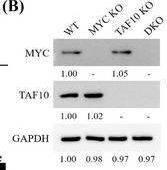
Co‐inhibition of MYC and TAF10 causes synergistic reduction of cell proliferation and tumour growth. (A) Cells (WT, TAF10 KO) were treated with different doses of Z363 for 24 h. Cell proliferation was determined by the CCK‐8 assay. (B) Knockout reliability was detected by Western blotting. (C) The proliferation of wild‐type cells (WT), single and double KO cells (MYC KO, TAF10 KO, DKO) and Z363‐treated cells were detected by Ki67 ELISA kit. (D) The apoptosis of wild‐type cells (WT), single and double KO cells (MYC KO, TAF10 KO, DKO) and Z363‐treated cells were detected by flow cytometry. (E) Cell apoptosis‐related proteins levels were detected by Western blotting. (F) The migration of wild‐type cells (WT), single and double KO cells (MYC KO, TAF10 KO, DKO), and Z363‐treated cells were detected by a Transwell migration assay. Scale bar, 20 μm. (G) Representative images showing xenograft tumours at day 28 post‐subcutaneous injection (n = 5). (H and I) Tumours were measured and depicted as tumour volume (H) or tumour weight (I). Data shown in A were analysed by two‐way ANOVA. Data shown in C, D, F, H and I were analysed by one‐way ANOVA. Flow cytometry, transwell and blots were representative of three independent experiments. All data are presented as the mean +/- SEM of n = 3. ***p < .001, **p < .01, *p < .05 Image collected and cropped by CiteAb from the following open publication (https://pubmed.ncbi.nlm.nih.gov/36639831), licensed under a CC-BY license. Not internally tested by Novus Biologicals.
Western Blot: c-Myc Antibody - BSA Free [NB600-336] -
Z363 promotes MYC and TAF10 degradation. (A) Identification of small inhibitory molecules for MYC. (B) MCF7 cells were treated with Z363 (0, 2.5, 7.5 and 15 μg/ml) for 24 h. The protein levels of MYC and TAF10 were analysed by Western blotting. (C) MCF7 cells were treated with Z363 (7.5 μg/ml) for 0, 6, 12 and 24 h. Furthermore, the protein levels of MYC and TAF10 were analysed by Western blotting. (D) MCF7 cells were treated with 25 μM MG132 at the indicated time points, followed by treatment with or without Z363 (7.5 μg/ml) for 24 h, and MYC and TAF10 expressions were analysed by Western blotting. (E) Western blots for MYC, phosphorylated MYC T58 and S62 in MCF7 cells treated with Z363 at the times indicated. (F) Ratios of pT58 or pS62 to total MYC protein levels from the experiment (E). (G) IF staining for Ki67 and pT58 in Z363‐treated MCF7 cells, scale bar, 10 μm. (H) MCF7 cells were treated with 25 μM MG132 for 2 h, followed by Z363 treatment (7.5 μg/ml) for 24 h. Expressions of MYC and TAF10 were assessed using Western blot analysis. Data shown in F were analysed by two‐way ANOVA. Fluorescence images and blots were representative of three independent experiments. All data are presented as the mean +/- SEM of n = 3. ***p < .001, ns, no significance Image collected and cropped by CiteAb from the following open publication (https://pubmed.ncbi.nlm.nih.gov/36639831), licensed under a CC-BY license. Not internally tested by Novus Biologicals.
Western Blot: c-Myc Antibody - BSA Free [NB600-336] -
Z363 promotes MYC and TAF10 degradation. (A) Identification of small inhibitory molecules for MYC. (B) MCF7 cells were treated with Z363 (0, 2.5, 7.5 and 15 μg/ml) for 24 h. The protein levels of MYC and TAF10 were analysed by Western blotting. (C) MCF7 cells were treated with Z363 (7.5 μg/ml) for 0, 6, 12 and 24 h. Furthermore, the protein levels of MYC and TAF10 were analysed by Western blotting. (D) MCF7 cells were treated with 25 μM MG132 at the indicated time points, followed by treatment with or without Z363 (7.5 μg/ml) for 24 h, and MYC and TAF10 expressions were analysed by Western blotting. (E) Western blots for MYC, phosphorylated MYC T58 and S62 in MCF7 cells treated with Z363 at the times indicated. (F) Ratios of pT58 or pS62 to total MYC protein levels from the experiment (E). (G) IF staining for Ki67 and pT58 in Z363‐treated MCF7 cells, scale bar, 10 μm. (H) MCF7 cells were treated with 25 μM MG132 for 2 h, followed by Z363 treatment (7.5 μg/ml) for 24 h. Expressions of MYC and TAF10 were assessed using Western blot analysis. Data shown in F were analysed by two‐way ANOVA. Fluorescence images and blots were representative of three independent experiments. All data are presented as the mean +/- SEM of n = 3. ***p < .001, ns, no significance Image collected and cropped by CiteAb from the following open publication (https://pubmed.ncbi.nlm.nih.gov/36639831), licensed under a CC-BY license. Not internally tested by Novus Biologicals.
Western Blot: c-Myc Antibody - BSA Free [NB600-336] -
Z363 promotes MYC and TAF10 degradation. (A) Identification of small inhibitory molecules for MYC. (B) MCF7 cells were treated with Z363 (0, 2.5, 7.5 and 15 μg/ml) for 24 h. The protein levels of MYC and TAF10 were analysed by Western blotting. (C) MCF7 cells were treated with Z363 (7.5 μg/ml) for 0, 6, 12 and 24 h. Furthermore, the protein levels of MYC and TAF10 were analysed by Western blotting. (D) MCF7 cells were treated with 25 μM MG132 at the indicated time points, followed by treatment with or without Z363 (7.5 μg/ml) for 24 h, and MYC and TAF10 expressions were analysed by Western blotting. (E) Western blots for MYC, phosphorylated MYC T58 and S62 in MCF7 cells treated with Z363 at the times indicated. (F) Ratios of pT58 or pS62 to total MYC protein levels from the experiment (E). (G) IF staining for Ki67 and pT58 in Z363‐treated MCF7 cells, scale bar, 10 μm. (H) MCF7 cells were treated with 25 μM MG132 for 2 h, followed by Z363 treatment (7.5 μg/ml) for 24 h. Expressions of MYC and TAF10 were assessed using Western blot analysis. Data shown in F were analysed by two‐way ANOVA. Fluorescence images and blots were representative of three independent experiments. All data are presented as the mean +/- SEM of n = 3. ***p < .001, ns, no significance Image collected and cropped by CiteAb from the following open publication (https://pubmed.ncbi.nlm.nih.gov/36639831), licensed under a CC-BY license. Not internally tested by Novus Biologicals.
Western Blot: c-Myc Antibody - BSA Free [NB600-336] -
The role of miR124-3p and miR766-3p target genes in HNSCC drug resistance. (A) Expression analysis of miR124-3p and miR766-3p direct target genes and downstream target genes by Western blot in HNSCC cell lines (CAL27 and FaDu), with or without transfection with miRNA inhibitors or miRNA mimics. Left: Western blotting showed the expression of miR124-3p target gene (CREBRF) and CREBRF target genes (ATG5 and CREB3). Right: Western blotting showed the expression of miR766-3p target gene (NR3C2) and NR3C2 target genes ( beta-catenin and c-Myc). Quantitative data (relative expression levels after beta-actin-corrected) from three independent experiments are disclosed below each protein band. Data represent the mean +/- SD (n = 3). (B) Target gene analysis in sensitive (CAL27) vs. resistant (CAL27/FP-R) HNSCC cell lines. Quantitative data (relative expression levels after beta-actin-corrected) is shown below each protein band. (C) The effect of NR3C2 and/or CREBRF knockdown on drug-induced cytotoxicity in CAL27 and FaDu. Cells were transfected by 10 nM siRNA (single or combined) for 24 h followed by 72 h exposure to the indicated drug. Cytotoxicity was determined by MTT assay. IC50 values are listed in Table S7. (D) Measurement of apoptosis in CAL27 or FaDu cells in response to cisplatin or 5-FU +/- 24 h prior transfection with 10 nM siRNA. After 24 h of drug treatments, cells were labeled with anti-annexin V-FITC antibody and PI and then analyzed with flow cytometry. A two-way ANOVA with Bonferroni’s correction for multiple comparisons was used to analyze group comparisons, and data are presented as means +/- SD (n = 3). * p < 0.05, *** p < 0.001 (vs. control siRNA), and ### p < 0.001 (vs. untreated). Image collected and cropped by CiteAb from the following open publication (https://pubmed.ncbi.nlm.nih.gov/36358691), licensed under a CC-BY license. Not internally tested by Novus Biologicals.
Western Blot: c-Myc Antibody - BSA Free [NB600-336] -
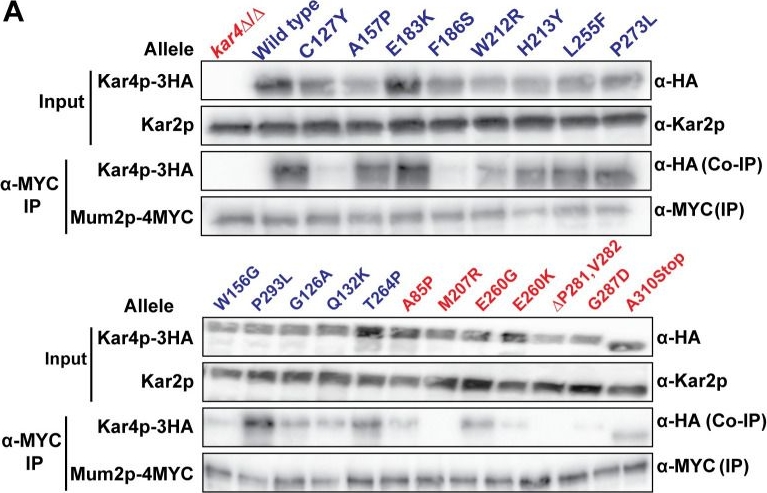
Kar4p interacts with the MIS complex components Mum2p and Slz1p.(A) Western blots of total protein and co-IPs between Mum2p-4MYC and the alleles of Kar4p-3HA. (MY 16256 and 16257) (Top) Total protein samples from the extracts that were used for the Co-IPs. Kar2p is used as a loading control. Alleles proficient for Kar4p’s meiotic function (Mei+) are in blue and alleles in red are defective (Mei-). (Bottom) Co-IPs where Mum2p-4MYC was purified and the co-purification of Kar4p-3HA was assayed. (B) Western blots of total protein and Co-IPs between Slz1p-3HA and Kar4p-9MYC. (MY 16405 and 16409) (Left) Total protein samples from the extracts that were used for the co-IPs. “*" indicates a non-specific band. (Right) Co-IPs where Slz1p-3HA was purified and the co-purification of Kar4p-13MYC was assayed. “‡" indicates the heavy chain of IgG from the anti-HA magnetic beads used for the Co-IP. (C) Western blots of total protein and Co-IPs between Kar4p-9MYC and Slz1p-3HA. (Left) Total protein samples from the extracts that were used for the Co-IPs. (Right) Co-IPs where Kar4p-9MYC was purified and the co-purification of Slz1-3HA was assayed. Image collected and cropped by CiteAb from the following open publication (https://pubmed.ncbi.nlm.nih.gov/37603553), licensed under a CC-BY license. Not internally tested by Novus Biologicals.
Western Blot: c-Myc Antibody - BSA Free [NB600-336] -
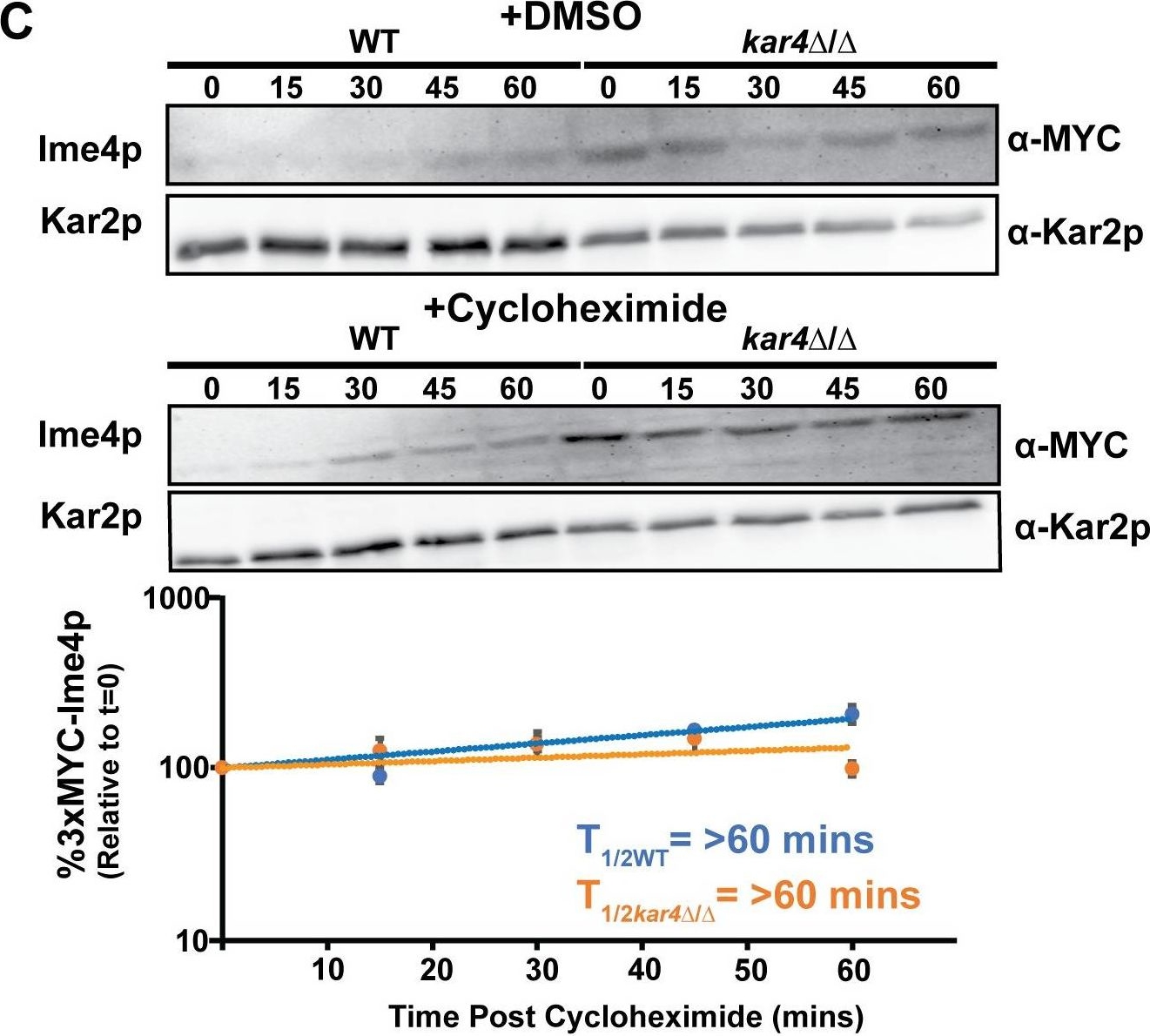
Kar4p is required for mRNA m6A methylation.(A) mRNA m6A levels measured using an ELISA-like assay. The indicated mutations were made in the SK1 strain background (MY 16325, 16326, 16351, 16353, and 16356) and samples were harvested after four hours of exposure to meiosis inducing conditions. Experiments were run in three biological replicates for each strain and error bars represent standard deviation. (B) Western Blot of 3xFLAG-Rme1p in wild type (MY 16563) and kar4 delta/ delta (MY 16569) across a time course of meiosis. Kar2p is used as a loading control. (C) Western blot of 3xMYC-Ime4p after four hours in meiosis inducing media with either 100 μM cycloheximide or an equivalent amount of DMSO in both wild type (Say914) and kar4 delta/ delta (MY 16543). (Top) 3xMYC-Ime4p levels with DMSO. (Middle) 3xMYC-Ime4p levels with cycloheximide. (Bottom) Quantification of three biological replicates of the cycloheximide chase experiment. The strains used are in the SK1 background. Kar2p is used as a loading control. Image collected and cropped by CiteAb from the following open publication (https://pubmed.ncbi.nlm.nih.gov/37603553), licensed under a CC-BY license. Not internally tested by Novus Biologicals.
Immunohistochemistry: c-Myc Antibody - BSA Free [NB600-336] -
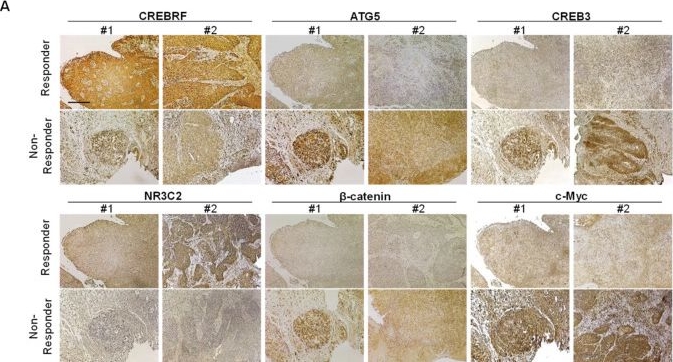
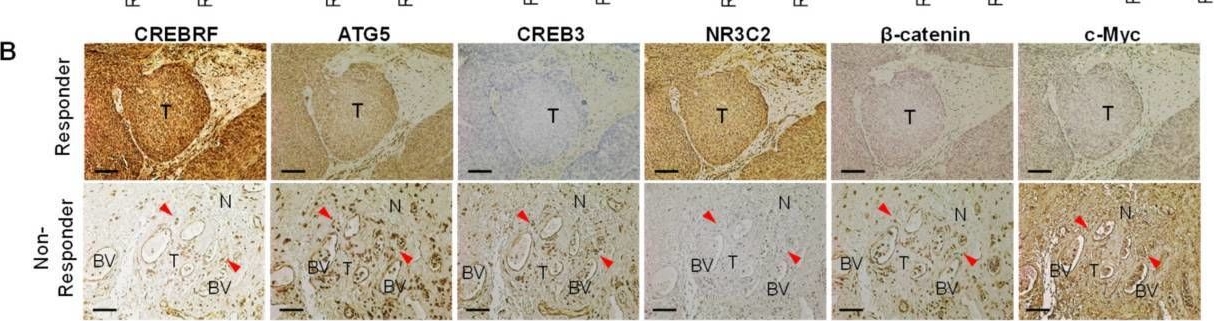
Downregulation of CREBRF and NR3C2 increase poor prognosis in HNSCC. (A) Histological analysis of miR124-3p and miR766-3p target gene expression (CREBRF-ATG5/CREB3, NR3C2-beta -catenin/c-Myc) in Responder vs. Non-Responder HNSCC clinical samples. Magnification, x100. Scale bar, 210 um. The quantitative data from all specimens are shown in the bar chart. Each dot in the graph represents an individual clinical sample. Two-sided unpaired Student t test was used to analyze comparisons, and data are presented as means +/- SEM. * p < 0.05 and *** p < 0.001. (B) Histological analysis of tumor morphology in relation to miR124-3p and miR766-3p target gene expression. Representative images of CREBRF, ATG5, CREB3, NR3C2, beta-catenin, and c-Myc expression in the serial section of responder and non-responder HNSCC specimens. BV: Blood Vessel. T: Tumor. N: Normal tissue. The invasive cancer cells are indicated by red arrowhead. Magnification, ×200. Scale bar, 100 um. (C) Summary of resistance mechanisms regulated by miR124-3p and miR766-3p. Our data indicated that upon acquired resistance in HNSCC cells or in non-responder HNSCC tumors, the levels of miR124-3p and miR766-3p go up, which in turn down-regulate its direct target genes: CREBRF and NR3C2, and consequently the expression of downstream targets of CREBRF (ATG5/CREB3) and NR3C2 ( beta-catenin/c-Myc) increased in resistant tumors, which are positively correlated with poor prognosis. Thus, by enhancing the CREBRF-ATG5/CREB3 and NR3C2-beta -catenin/c-Myc axis, miR124-3p and miR766-3p support aggressive HNSCC progression. Image collected and cropped by CiteAb from the following open publication (https://pubmed.ncbi.nlm.nih.gov/36358691), licensed under a CC-BY license. Not internally tested by Novus Biologicals.
Immunohistochemistry: c-Myc Antibody - BSA Free [NB600-336] -
Downregulation of CREBRF and NR3C2 increase poor prognosis in HNSCC. (A) Histological analysis of miR124-3p and miR766-3p target gene expression (CREBRF-ATG5/CREB3, NR3C2-beta -catenin/c-Myc) in Responder vs. Non-Responder HNSCC clinical samples. Magnification, x100. Scale bar, 210 um. The quantitative data from all specimens are shown in the bar chart. Each dot in the graph represents an individual clinical sample. Two-sided unpaired Student t test was used to analyze comparisons, and data are presented as means +/- SEM. * p < 0.05 and *** p < 0.001. (B) Histological analysis of tumor morphology in relation to miR124-3p and miR766-3p target gene expression. Representative images of CREBRF, ATG5, CREB3, NR3C2, beta-catenin, and c-Myc expression in the serial section of responder and non-responder HNSCC specimens. BV: Blood Vessel. T: Tumor. N: Normal tissue. The invasive cancer cells are indicated by red arrowhead. Magnification, ×200. Scale bar, 100 um. (C) Summary of resistance mechanisms regulated by miR124-3p and miR766-3p. Our data indicated that upon acquired resistance in HNSCC cells or in non-responder HNSCC tumors, the levels of miR124-3p and miR766-3p go up, which in turn down-regulate its direct target genes: CREBRF and NR3C2, and consequently the expression of downstream targets of CREBRF (ATG5/CREB3) and NR3C2 ( beta-catenin/c-Myc) increased in resistant tumors, which are positively correlated with poor prognosis. Thus, by enhancing the CREBRF-ATG5/CREB3 and NR3C2-beta -catenin/c-Myc axis, miR124-3p and miR766-3p support aggressive HNSCC progression. Image collected and cropped by CiteAb from the following open publication (https://pubmed.ncbi.nlm.nih.gov/36358691), licensed under a CC-BY license. Not internally tested by Novus Biologicals.