
Summary
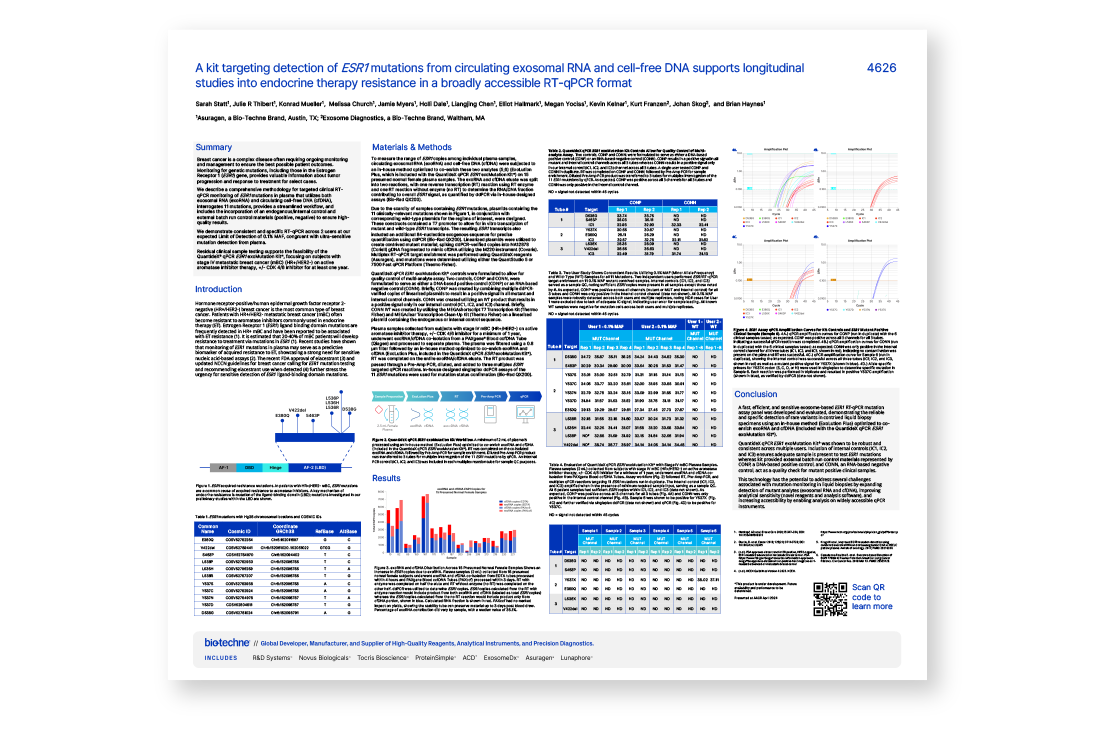
The most prevalent subtype of breast cancer is HR+/HER2- (positive for hormone receptor, negative for human epidermal growth factor receptor 2). For metastatic breast cancer (mBC), a frequent occurrence is resistance to the aromatase inhibitors used in endocrine therapy (ET). Resistance is mediated through mutations in the ligand binding domain of estrogen receptor 1 (ESR1). Approval of elacestrant, a second-line agent for HR+/HER2-/ESR1 mutated mBC , underscores the need for early detection of ESR1 resistance mutations. We have developed sensitive RT-qPCR reagents for targeted longitudinal studies into the emergence of ESR1 resistance mutations in plasma. This all-inclusive kit analyzes circulating exosomal RNA (exoRNA) and cell-free DNA (cfDNA) to accurately identify low copy number mutations with a rapid turnaround time.
Request Literature
To access this literature content please fill out the form below.