
Expert Insights: Pioneering ADC Development and Analysis
"The primary advantage of MauriceFlex from the perspective of LC-MS analysis is the sample compatibility. The charge variants of interest are fractionated within an ammonium acetate matrix. This reduces the sample preparation time compared to other charge variant separation techniques such as ion exchange chromatography, where buffer exchange is often required due to the salt content present from the mobile phase."
- David Richards, PhD, Scientist, MilliporeSigma
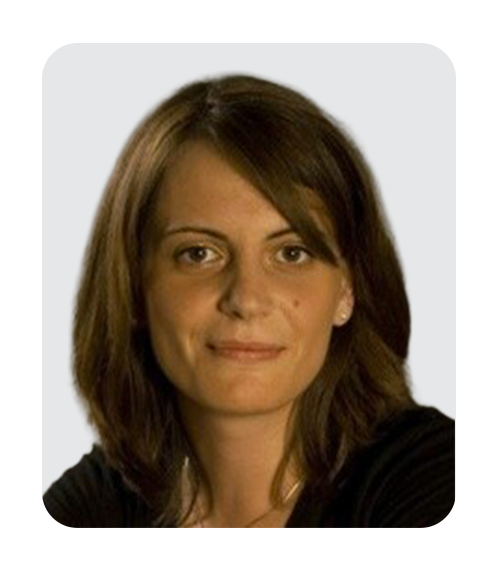
Jana Stockel, PhD
Manager, Bioprocess and Analytical Development
MilliporeSigma

David Richards, PhD
Scientist, MilliporeSigma
1. Your company was originally known as a leader in filtration and Lab Supplies. How did the MilliporeSigma evolve to be such a powerhouse in CDMO and Testing Services to support drug development? [Jana]
The company behind the work we do is Merck KGaA, Darmstadt, Germany, one of the largest pharmaceutical and life science company globally. In the US and Canada, the Life Science business operates as MilliporeSigma. MilliporeSigma is deeply involved in the development and manufacturing of cutting-edge technologies and therapies, including antibody drug conjugates, also known as ADCs. Our St. Louis facilities have supported therapeutic programs from Phase 1 through Phase 3 and into commercial production for more than 15 years. Our bioconjugation expertise is broad and extends beyond ADCs to antibody oligo conjugates and antibody chelator conjugates. We work with a wide range of conjugation strategies, payloads, linker chemistries, and antibody formats which allow us to support both process and analytical development for traditional and emerging bioconjugate modalities.
2. What are your roles and responsibilities at MilliporeSigma, and how do you work together? [Jana]
I lead the bioanalytical team in the Process and Analytical Development group at our Cherokee site in St Louis. I oversee the bioanalytical work to support ADC development while remaining partially active in the lab. My hands-on focus is on charge-based characterization using icIEF, including method development, troubleshooting, and charge variant fractionation on the MauriceFlex. In my group we support ADC development using a range of complementary techniques including CE-SDS, ELISA, SPR, and LC-MS. David is focused on LC-MS characterization, where he works at the molecular level to identify the root cause behind the heterogeneity we observe. We use icIEF to define and separate the charge variants and LC-MS to further characterize those differences.
3. Tell us how you are using the MauriceFlex system for your analysis work [Jana]
At this stage, we primarily use the MauriceFlex for troubleshooting and deeper investigation of charge heterogeneity. When we observe changes in a charge profile during process development of an ADC, we can fractionate specific variants and further characterize them to better understand how those changes relate to the product and process.
4. Can you comment on downstream LC-MS methods you are using with the charge variant fractions, and what additional insights these methods are providing? [David]
The primary advantage of MauriceFlex from the perspective of LC-MS analysis is the sample compatibility. The charge variants of interest are fractionated within an ammonium acetate matrix. This reduces the sample preparation time compared to other charge variant separation techniques such as ion exchange chromatography, where buffer exchange is often required due to the salt content present from the mobile phase. Intact and subunit LC-MS analysis can therefore be readily performed to identify and characterize mass differences that correspond to various charge variations.
5. Did the Maurice Systems replace other methods or technologies that were being used in the lab, and why? [Jana]
Yes, the Maurice system has largely replaced our previous icIEF platform, the iCE3. The transition was driven by practical advantages, including the ease of use, higher throughput, and the onboard mixing capability, which simplifies method execution and improves consistency. Those benefits make a clear difference in our workflow, and we have almost completely transitioned to Maurice for icIEF based charge variant analysis.
6. Your group has been able to create and study ADCs and present your own data rather than clients’ results, due to their proprietary nature. As ADC experts, how do you see the market growing from the number of clinical trials and registered products? [Jana]
MilliporeSigma has been involved with bioconjugates and ADCs for about two decades, so we have seen the field evolve in stages, often driven by specific linker and payload technologies. What we are seeing now is a much broader and more diverse ADC pipeline. While the number of clinical trials continues to grow, the more significant change is the increasing complexity of the modalities themselves with different linkers, payloads, conjugation strategies, along with higher expectations for characterization. From an analytical perspective, that complexity is driving demand for deeper, orthogonal analytical approaches earlier in development. Looking forward, we expect continued growth in the ADC space, coupled with stronger emphasis on robustness, comparability, and manufacturability as more programs advance to late-stage development and commercialization.
7. Tell us about the poster you presented at World ADC and the feedback you received from attendees. [David]
At World ADC in San Diego, we presented a poster focused on our analytical approach to ADC characterization, particularly how combining complementary techniques can provide a more complete picture of heterogeneity. Most of the discussion that followed was very technical. Attendees asked detailed questions about method sensitivity, what specific species could and could not be resolved, and how different techniques compared in terms of practical trade-offs. A lot of the interest centered on real ADC samples rather than model systems, which led to useful conversations about where each method adds the most value and where its limitations are.
8. How have trends evolved over the past 5 years? Where do you see the field going over the next 5? [Jana]
Over the past 5 years, one clear trend has been the shift from largely random conjugation strategies, which tend to produce highly heterogeneous ADCs, toward more targeted conjugation approaches designed to better control the drug to antibody ratio and overall heterogeneity. That shift has changed the analytical questions we are being asked. It is no longer just about measuring heterogeneity, but about understanding where it comes from, how well it is controlled, and how sensitive our methods need to be. Looking ahead, we expect continued development toward more controlled conjugation strategies, paired with increasing expectations for detailed, orthogonal characterization. Even as heterogeneity is reduced, the analytical bar continues to rise.
9. What analytical challenges do you face in the characterization of new therapeutic modalities? [David]
A key challenge is the increasing complexity of new modalities and the need to interpret subtle analytical differences with confidence. From a charge variant perspective, that means resolving small changes in charge profiles and assessing whether these changes are significant. This requires sensitive and reproducible methods, used in conjunction with orthogonal techniques such as LC-MS and functional assays.
10. Please describe other areas of expertise within your group. [David]
Beyond the charge-based methods, our group supports Tier 2 analytics required for product characterization and quality assessment, using techniques such as CE-based methods, ELISA, SPR, and LC-MS. The value comes from integrating these data sets so that charge, structural, and functional information can be interpreted together to provide a coherent assessment of product quality.