
PNGase F N-glycan Releasing Kit
R&D Systems, part of Bio-Techne | Catalog # EA006
100 Test per Kit

Key Product Details
Key Benefits
Learn more about Fluorescent Glycan Labeling and Detection
Species
Multi-Species
Product Summary for PNGase F N-glycan Releasing Kit
The PNGase F N-glycan Releasing Kit (Catalog # EA006) provides PNGase F and necessary buffers for gel analysis as well as mass spectrometry analysis. The receptor binding domain of SARS-CoV-2 spike protein that is fluorescently labeled on N-glycans is provided as a convenient control, allowing for monitoring of the deglycosylation process in gel through fluorescent imaging.
PNGase F N-glycan Releasing Kit
Features
- Gel and mass spectrometry analysis of N‑glycans
- Cy5-RBD fluorescent control to monitor the deglycosylation process through fluorescent imaging via gel electrophoresis
- Protocols are provided to guide further assay optimization
- Removes N-linked glycans from Glycoproteins
- Guaranteed Enzymatic Activity: Enzymatic activity tested in a deglycosylation assay
Kit Contents
Store the unopened kit at ≤ -70 °C. Do not use past kit expiration date.- PNGase F Protein
- Cy5-Neu5Ac Labeled RBD Protein (Cy5-RBD)
- PNGase F Assay Buffer
- Denaturing Buffer
- Renaturing Buffer
- 6X SDS Gel Loading Dye
Other Reagents Required
- 37°C incubator
- Microcentrifuge tubes or equivalent
- Pipettes and pipette tips
- Deionized or distilled water
- Equipment to run SDS-PAGE gel
- Fluorescent imager
- Mass Spectrometry Instrumentation
Preparation and Storage
Stability & Storage
Store the unopened product at ≤ -70 °C. Use a manual defrost freezer and avoid repeated freeze-thaw cycles. Do not use past expiration date.
Background: PNGase F
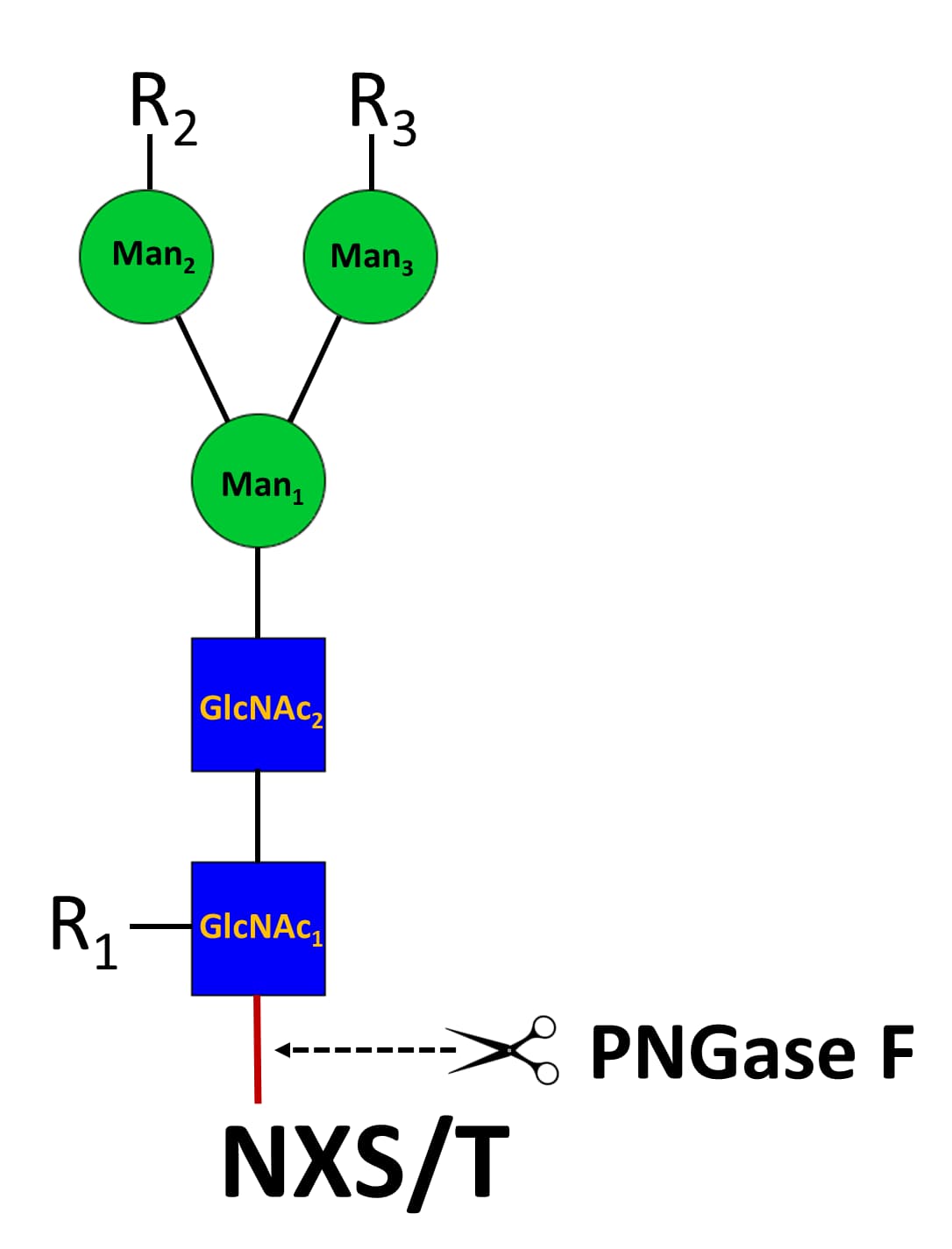
N-Glycosylation found on the asparagine residue of the sequon NXT/S is one of the most commonposttranslational modifications of proteins in eukaryotic cells. N‑glycans are initiated as high-mannose glycan, which are converted to hybrid and complex N‑glycans during the maturation process in the Golgi apparatus. N‑glycosylation involves in myriad of biological functions such as receptor binding, cell signaling, immune recognition, inflammation, and pathogenicity.
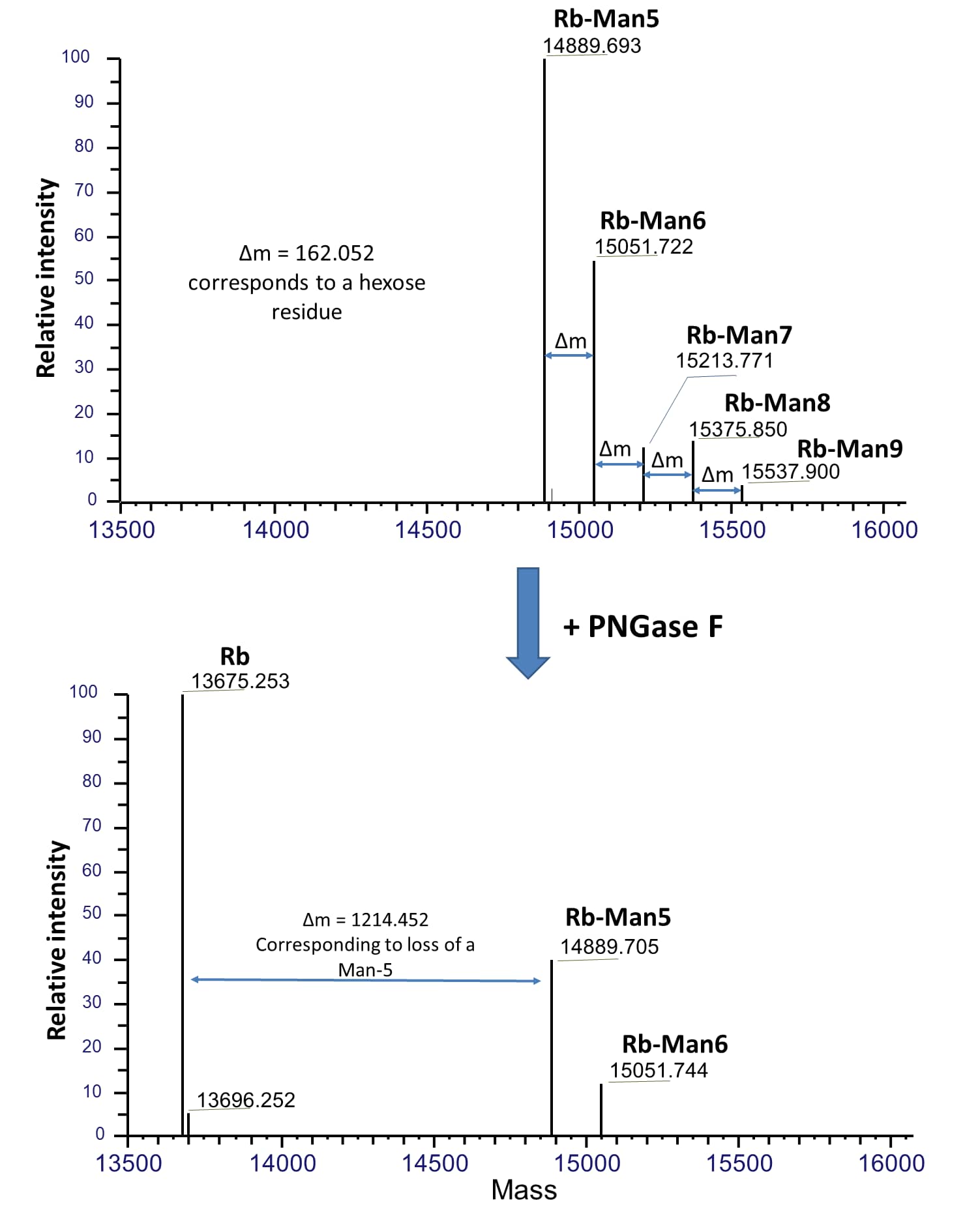
To study these N-glycans, it is essential to release them from proteins. PNGase F is a peptide N‑glycosidase F from Flavobacterium meningosepticum and the most used enzyme to extensively release various N‑glycans, including high-mannose, hybrid and complex types of N‑Glycans, except those N‑glycans with the innermost GlcNAc modified with a core‑3 linked fucose. PNGase F digestion results in the release of entire N‑glycans and conversion of the underlying asparagine residue (N) to an aspartic residue (D), allowing identification of the glycosylation site by mass spectrometry.
Scientific Data Images for PNGase F N-glycan Releasing Kit
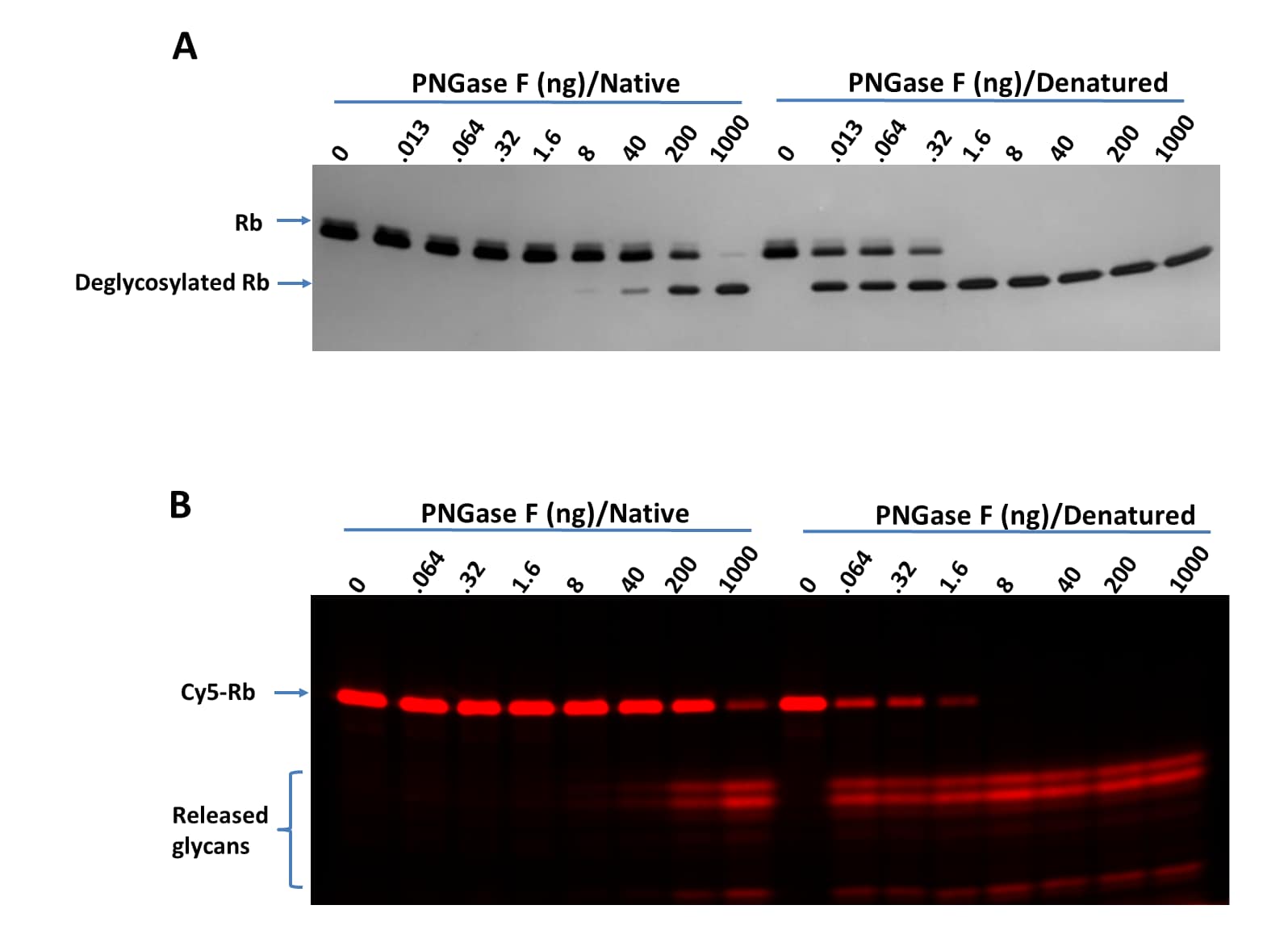
Titration of PNGase F on RNase B (Rb) and Cy5-Labeled RNase B (Cy5-Rb) using bothnative and denaturing assay protocols.
Deglycosylation of Rb (A) and Cy5-Rb (B) with PNGase F N-glycan Releasing Kit(Catalog # EA006) using both the native and denaturing assay protocols. >95%deglycosylation was achieved with 1000 ng and 1.6 ng of PNGase F under native and denaturingconditions, respectively. Digested samples were separated on 17% SDS gel. A. Rb (1 μg perdigestion) was digested with indicated amounts of PNGase F and imaged with silver staining.B. Cy5-Rb (0.2 μg for digestion) was digested with indicated amounts of PNGase F and visualized with fluorescent imaging. Labeling on RNase B was introduced by serial treatment with Recombinant HumanN-Acetylglucosaminyltransferase1/MGAT1 (8334-GT), UDP-GlcNAc,Recombinant Human B4GalT1 Protein (3609-GT), UDP-Gal, Recombinant HumanST6GAL1 (aa44-406) Protein (7620-GT), CMP-Cy5-Sialic Acid (ES302)(Wu, Z. et al. (2020) Glycobiology 30:970). Denaturing increased the PNGase F sensitivity by 500-fold.
Titration of PNGase F on Cy5-Neu5Ac Labeled RBD Protein (Cy5-RBD) using both native and denaturing assay protocols.
Deglycosylation of Cy5-RBD with PNGase F N-glycan Releasing Kit (Catalog # EA006) using both the native and denaturing assay protocols. Cy5-RBD (1 µg per digestion) was treated with indicated amounts of PNGase F in 20 µL under both denaturing and native conditions at 37 °C for 60 minutes then separated on 17% SDS gel and imaged by trichloroethanol (TCE) staining (top panel, only proteins were visible, and the lower portion wascropped out) and fluorescent imaging (lower panel). >95% deglycosylation was achieved with 200 ng and 1.6 ng of PNGase F under native and denaturing conditions, respectively.
Titration of PNGase F on Cy5-Neu5Ac Labeled ACE-2 (Cy5-ACE-2) using both native and denaturing assay protocols.
Deglycosylation of Cy5-ACE-2 with PNGase F N-glycan Releasing Kit (Catalog # EA006) using both the native and denaturing assay protocols Cy5-ACE-2. (1 µg for each digestion) was treated with indicated amounts of PNGase F in 20 µL under both denaturing and native conditions at 37 °C for 30 minutes then separated on 17% SDS gel and imaged by TCE staining (top panel, only proteins were visible, and the lower portion was cropped out) and fluorescent imaging (lower panel). Multiple bands are visible for the released glycans suggesting the complicated nature of the glycosylation on ACE-2. >90% deglycosylation was achieved with 2000 ng and 0.2 ng of PNGase F under native and denaturing conditions, respectively.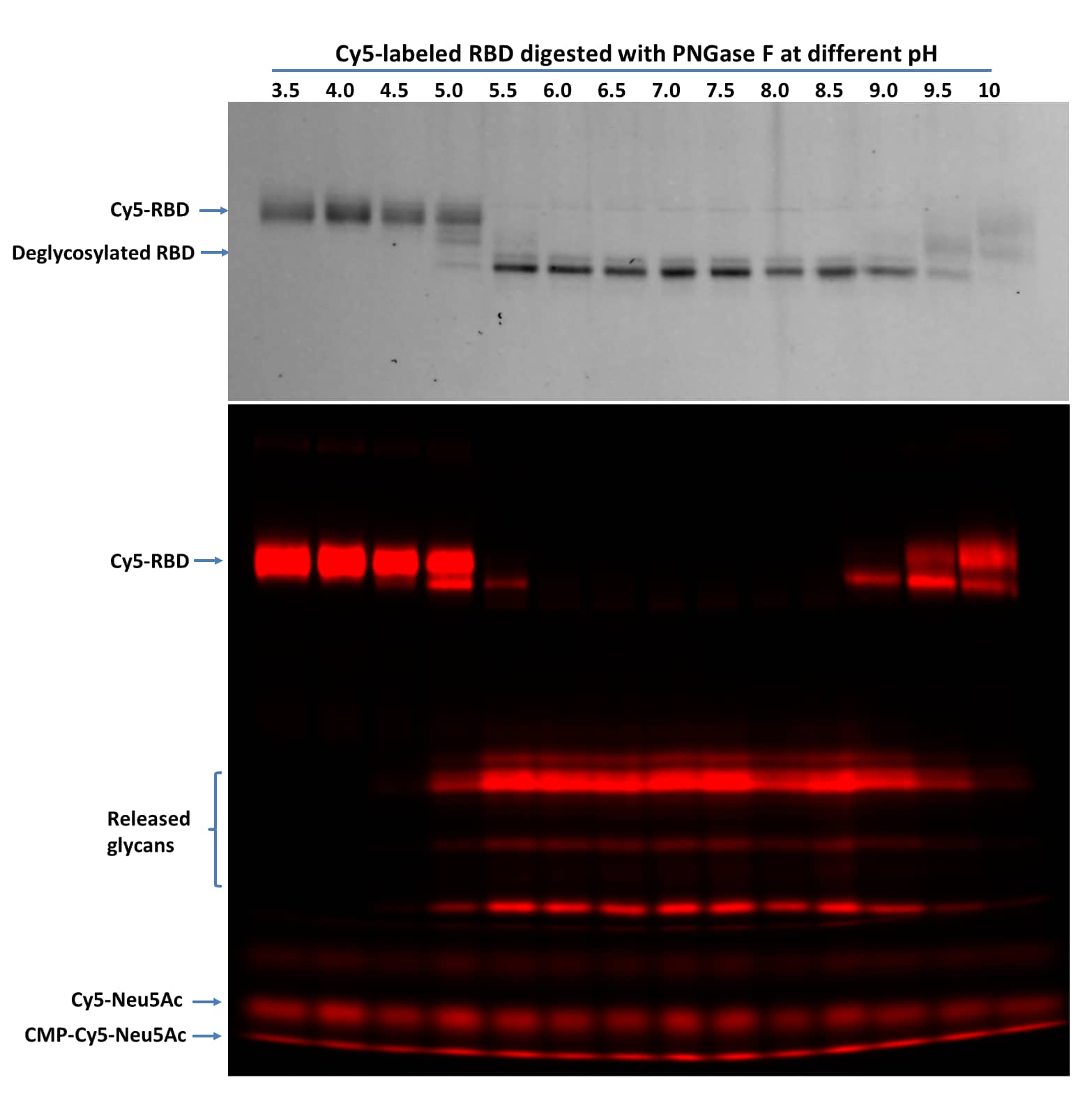
Formulation, Preparation, and Storage
Shipping
The product is shipped with dry ice or equivalent. Upon receipt, store it immediately at the temperature recommended below.
Storage
Store the unopened product at -70 °C. Use a manual defrost freezer and avoid repeated freeze-thaw cycles. Do not use past expiration date.
Background: PNGase F
Long Name
Peptide-N4-(N-acetyl-beta-D-glucosaminyl)asparagine Amidase F
Alternate Names
PNGF
Additional PNGase F Products
Product Documents for PNGase F N-glycan Releasing Kit
Product Specific Notices for PNGase F N-glycan Releasing Kit
For research use only
Loading...
Loading...
Loading...
Loading...