
Human SGK1 Antibody
R&D Systems, part of Bio-Techne | Catalog # AF3200


Scientific images may be resized, cropped, or adjusted for brightness or contrast for presentation purposes. These updates are limited to presentation and do not affect the underlying scientific interpretation of the data. Where available, additional source data may be provided upon request.
Conjugate
Catalog #
Key Product Details
Species Reactivity
Human
Applications
Immunohistochemistry, Western Blot
Label
Unconjugated
Antibody Source
Polyclonal Rabbit IgG
Product Specifications
Immunogen
E. coli-derived recombinant human SGK1
Met1-Leu431
Accession # O00141
Met1-Leu431
Accession # O00141
Specificity
Detects human SGK1 in ELISA. In direct ELISA's, less than 1% cross-reactivity with recombinant human (rh) SGK2 and rhSGK3 is observed.
Clonality
Polyclonal
Host
Rabbit
Isotype
IgG
Scientific Data Images for Human SGK1 Antibody
Detection of Human SGK1 by Western Blot.
Western blot shows lysates of CHO Chinese hamster ovary cell line non-transfected and transfected with human SGK1. PVDF membrane was probed with 1 µg/mL Rabbit Anti-Human SGK1 Antigen Affinity-purified Polyclonal Antibody (Catalog # AF3200) followed by HRP-conjugated Anti-Rabbit IgG Secondary Antibody (HAF008). A specific band for SGK1 was detected at approximately 54 kDa (as indicated). For additional reference, recombinant human SGK1, SGK2, and SGK3 were included. This experiment was conducted under reducing conditions and using Immunoblot Buffer Group 1.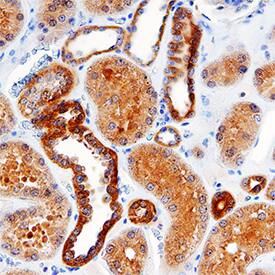
Detection of SKG1 in Human Kidney.
SKG1 was detected in paraffin-embedded sections of human kidney using Rabbit Anti-Human SGK1 Antigen Affinity-purified Polyclonal Antibody (Catalog # AF3200) at 3 μg/mL for 1 hour at room temperature followed by incubation for 30 minutes at room temperature with Anti-Rabbit IgG VisUCyte HRP Polymer Antibody (VC003). Tissue was stained with DAB (brown color) and counterstained with hematoxylin (blue color).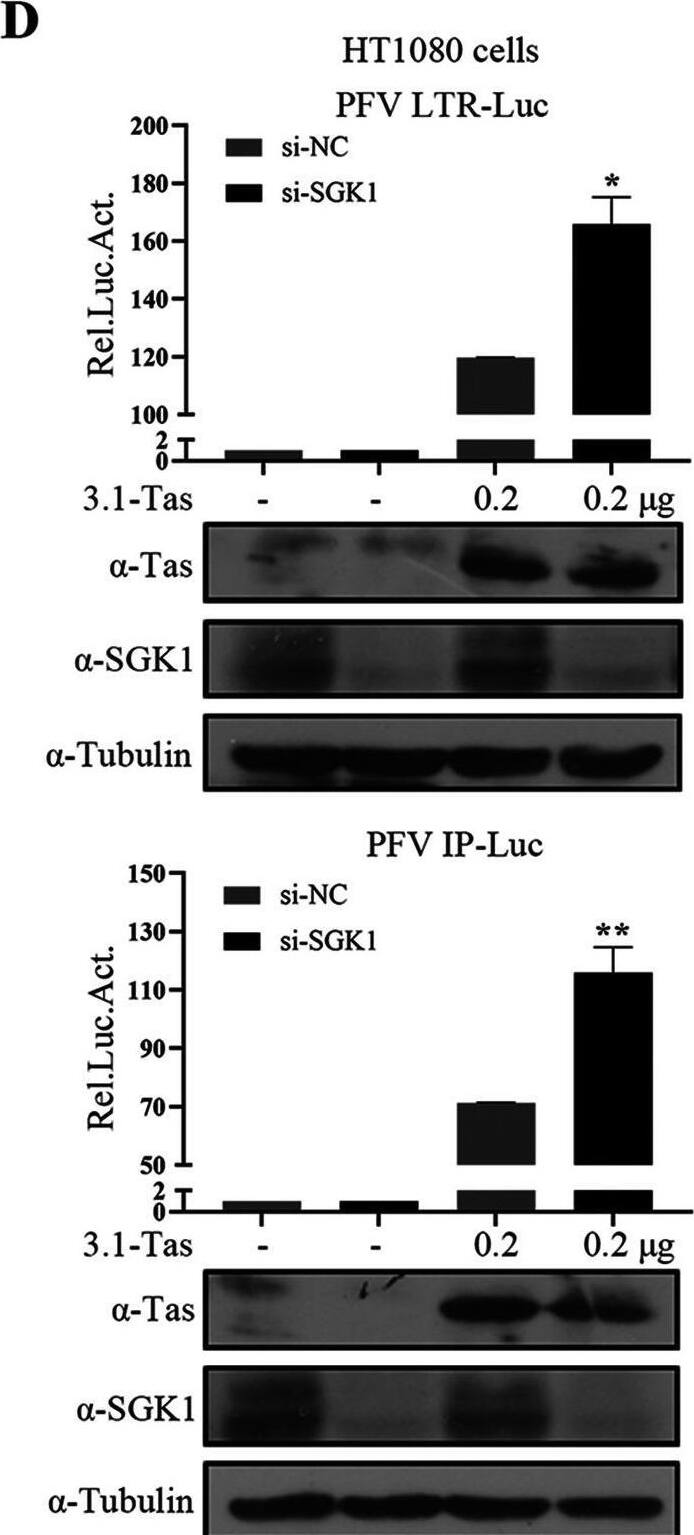
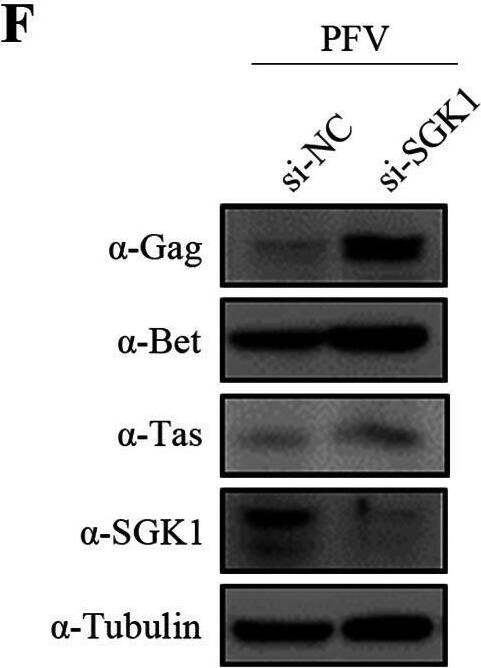
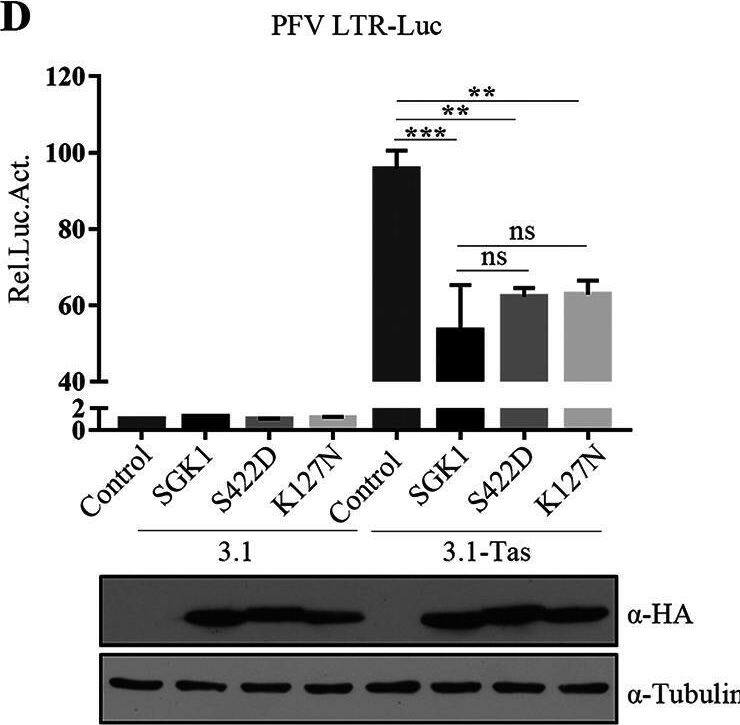
Detection of Human SGK1 by Western Blot
SGK1 inhibits Tas from transactivating PFV LTR and IP promoters. Levels of integrated proviral DNA were measured using semiquantitative PCR (A) and real-time PCR (B). (C) HT1080 cells (1 × 10⁵) were transfected with LTR-Luc (0.05 μg) or IP-Luc (0.025 μg), combined with 3.1-Tas and empty vector or SGK1. At the same time, pCMV-beta -gal (0.05 μg) was transfected to normalize the transfection efficiency. At 48 h posttransfection, luciferase activities were measured and corrected by beta-gal catalytic activities. The remaining cell lysates were used for Western blotting. (D) HT1080-siControl and HT1080-siSGK1 cells (1 × 10⁵) were transfected with LTR-Luc (0.05 μg) or IP-Luc (0.025 μg) and 3.1-Tas. At the same time, pCMV-beta -gal (0.05 μg) was transfected to normalize transfection efficiency. At 48 h posttransfection, luciferase activities were measured and corrected by beta-gal catalytic activities. The remaining cell lysates were used for Western blotting. Data are expressed as the means ± standard deviations. Data are representative of three independent experiments. One-way ANOVA was used to perform the statistical test. *, P < 0.05; **, P < 0.01; ***, P < 0.001; and ns for P > 0.05. Image collected and cropped by CiteAb from the following open publication (https://pubmed.ncbi.nlm.nih.gov/35438526), licensed under a CC-BY license. Not internally tested by R&D Systems.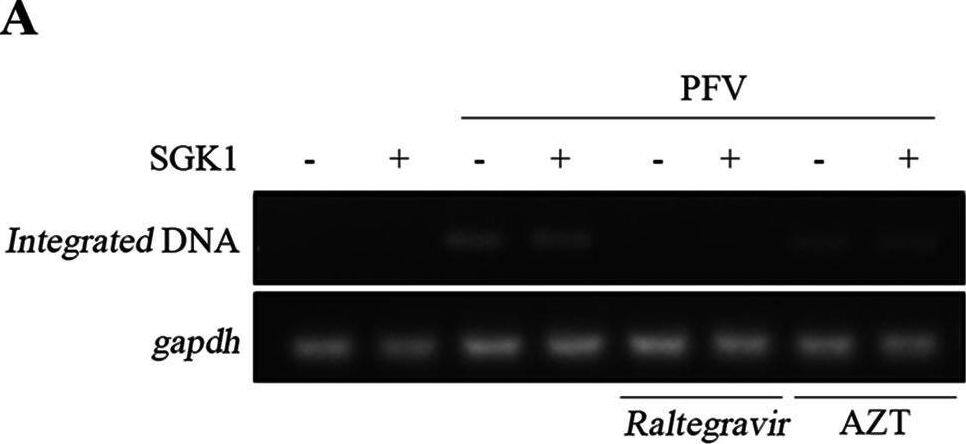
Applications for Human SGK1 Antibody
Application
Recommended Usage
Immunohistochemistry
3-15 µg/mL
Sample: Paraffin-embedded sections of human kidney
Sample: Paraffin-embedded sections of human kidney
Western Blot
1 µg/mL
Sample: CHO Chinese hamster ovary cell line transfected with human SGK1
Sample: CHO Chinese hamster ovary cell line transfected with human SGK1
Formulation, Preparation, and Storage
Purification
Antigen Affinity-purified
Reconstitution
Reconstitute at 0.2 mg/mL in sterile PBS. For liquid material, refer to CoA for concentration.
Formulation
Lyophilized from a 0.2 μm filtered solution in PBS with Trehalose. See Certificate of Analysis for details.
*Small pack size (-SP) is supplied either lyophilized or as a 0.2 µm filtered solution in PBS.
*Small pack size (-SP) is supplied either lyophilized or as a 0.2 µm filtered solution in PBS.
Shipping
Lyophilized product is shipped at ambient temperature. Liquid small pack size (-SP) is shipped with polar packs. Upon receipt, store immediately at the temperature recommended below.
Stability & Storage
Use a manual defrost freezer and avoid repeated freeze-thaw cycles.
- 12 months from date of receipt, -20 to -70 °C as supplied.
- 1 month, 2 to 8 °C under sterile conditions after reconstitution.
- 6 months, -20 to -70 °C under sterile conditions after reconstitution.
Background: SGK1
Serum- and glucocorticoid-regulated protein kinase 1 (SGK1) is a member of the AGC family of serine/threonine kinases. In addition to serum and glucocorticoids, insulin, IGF-I, osmotic shock, and mineralocorticoids have been demonstrated to activate SGK1. Expressed at low levels, SGK1 appears to function as a regulator of epithelial ion transport. Sustained high levels of SGK1 activation have been implicated in hypertension and diabetic nephropathy.
Long Name
Serum/Glucocorticoid Regulated Kinase 1
Alternate Names
SGK
Gene Symbol
SGK1
UniProt
Additional SGK1 Products
Product Documents for Human SGK1 Antibody
Product Specific Notices for Human SGK1 Antibody
For research use only
Loading...
Loading...
Loading...
Loading...
Loading...