cAMP: Small Molecules and Peptides

cAMP (adenosine 3’5’-cyclic monophosphate) is a ubiquitous intracellular second messenger that mediates a diverse range of cellular processes in all organisms from bacteria to higher eukaryotes. It is converted from adenosine triphosphate (ATP) by adenylyl cyclases (ACs), and is inactivated by phosphodiesterases (PDEs) which catalyze its hydrolysis to 5’-AMP.

In mammals, upon interaction with extracellular ligands, G protein coupled receptors (GPCRs) linked to Gαs activate the family of nine transmembrane ACs to increase intracellular cAMP. In contrast, GPCRs associated with Gαi/o inhibit the synthesis of cAMP by transmembrane ACs. cAMP binds and activates protein kinase A (PKA), the guanine nucleotide exchange factors Epac1/2, and cyclic nucleotide-gated ion channels. It can be released extracellularly where it is converted to adenosine by phosphodiesterases and nucleotidases.

Products:

Show More

6 results for "cAMP Small Molecules and Peptides" in Products

6 results for "cAMP Small Molecules and Peptides" in Products

cAMP: Small Molecules and Peptides

cAMP (adenosine 3’5’-cyclic monophosphate) is a ubiquitous intracellular second messenger that mediates a diverse range of cellular processes in all organisms from bacteria to higher eukaryotes. It is converted from adenosine triphosphate (ATP) by adenylyl cyclases (ACs), and is inactivated by phosphodiesterases (PDEs) which catalyze its hydrolysis to 5’-AMP.

In mammals, upon interaction with extracellular ligands, G protein coupled receptors (GPCRs) linked to Gαs activate the family of nine transmembrane ACs to increase intracellular cAMP. In contrast, GPCRs associated with Gαi/o inhibit the synthesis of cAMP by transmembrane ACs. cAMP binds and activates protein kinase A (PKA), the guanine nucleotide exchange factors Epac1/2, and cyclic nucleotide-gated ion channels. It can be released extracellularly where it is converted to adenosine by phosphodiesterases and nucleotidases.

Products:

Show More

Cell-permeable cAMP analog

Alternate Names: Bucladesine sodium
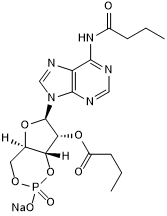
Chemical Name: N6,O2'-Dibutyryladenosine 3',5'-cyclic monophosphate sodium salt
Purity: ≥98% (HPLC)
Cell-permeable cAMP analog

Cell-permeable cAMP analog

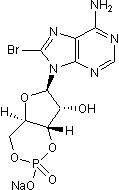
Chemical Name: 8-Bromoadenosine-3',5'-cyclic monophosphate sodium salt
Purity: ≥99% (HPLC)
Cell-permeable cAMP analog

cAMP antagonist

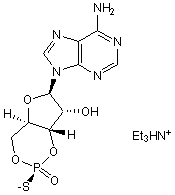
Chemical Name: (R)-Adenosine, cyclic 3',5'-(hydrogenphosphorothioate) triethylammonium
Purity: ≥98% (HPLC)
cAMP antagonist

Cell permeable cAMP analog

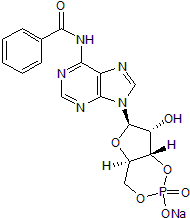
Chemical Name: N-Benzoyladenosine cyclic 3',5'-(hydrogen phosphate) monosodium salt
Purity: ≥98% (HPLC)
Cell permeable cAMP analog

Cell-permeable cAMP analog

Chemical Name: (S)-Adenosine, cyclic 3',5'-(hydrogenphosphorothioate) triethylammonium
Purity: ≥98% (HPLC)
Cell-permeable cAMP analog

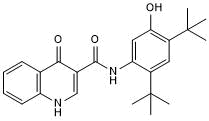
Potent and selective CFTR potentiator

Chemical Name: N-[2,4-Bis(1,1-dimethylethyl)-5-hydroxyphenyl]-1,4-dihydro-4-oxo-3-quinolinecarboxamide
Purity: ≥98% (HPLC)
Potent and selective CFTR potentiator
Results Per Page
5 10 25 50
/ 1