
2 results for "PTGDR Small Molecules and Peptides" in Products
PTGDR: Small Molecules and Peptides
PTGDR is a G protein-coupled receptor that has been shown to function as a prostanoid DP receptor. PTGDR is expressed in retinal choroid, ciliary epithelium, longitudinal and circular ciliary muscles, iris, small intestine and platelet membranes. The activity of this receptor is mainly mediated by G-S proteins that stimulate adenylate cyclase resulting in an elevation of intracellular cAMP and Ca2+. Knockout studies in mice suggest that the ligand of PTGDR, prostaglandin D2 (PGD2), functions as ...

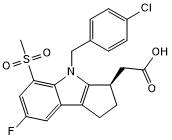
Potent and selective prostaglandin D2 receptor antagonist
| Chemical Name: | (3R)-4-[(4-Chlorophenyl)methyl]-7-fluoro-1,2,3,4-tetrahydro-5-(methylsulfonyl)cyclopent[b]indole-3-acetic acid |
| Purity: | ≥98% (HPLC) |
Dual TP/DP2 (CRTH2) receptor antagonist
| Alternate Names: | Ramatroban |
| Chemical Name: | (3R)-3-[[(4-Fluorophenyl)sulfonyl]amino]-1,2,3,4-tetrahydro-9H-carbazole-9-propanoic acid |
| Purity: | ≥98% (HPLC) |
