1 result for "Amyloid beta Fluorescent Probes and Dyes" in Products
Amyloid beta: Fluorescent Probes and Dyes
Amyloid Precursor Protein (APP) is a type I transmembrane protein that is ubiquitously expressed on cell surfaces. It undergoes complex proteolytic processing and is cleaved by alpha-, beta-, and gamma-Secretases to generate soluble APP alpha, soluble APP beta, and Amyloid beta (A beta) fragments of several lengths. One of these fragments, A beta 42, generated by beta- and gamma-Secretase activities, has been implicated in Alzheimer's disease. Aberrantly high levels of this peptide form and accumulate in the brains of Alzheimer's disease patients to create the senile plaques characteristic of the disease.

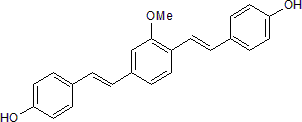
Brain penetrant fluorescent amyloid β probe. Used for: detection and quantification of plaques, tangles and cerebrovascular amyloid. Application: confocal microscopy, suitable for in vivo imaging
| Chemical Name: | 4,4'-[(2-methoxy-1,4-phenylene)di-(1E)-2,1-ethenediyl]bisphenol |
| Purity: | ≥98% (HPLC) |