
Having trouble trying to find the right product? Chat with our scientists below - we're here to help!





Select a category to see relevant filters and products
35 results for "Mesenchymal Stem Cells" in Products
Mesenchymal Stem Cells Products
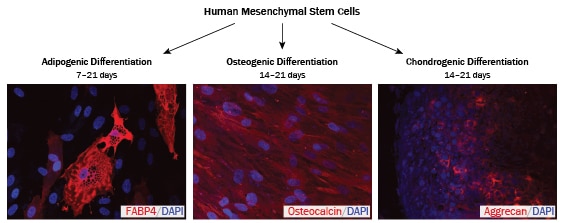
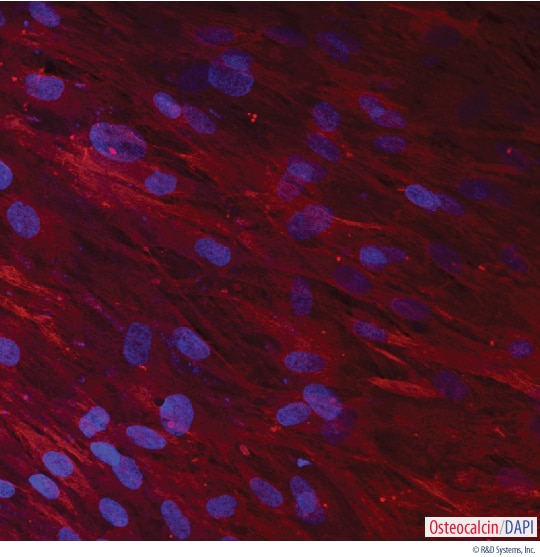
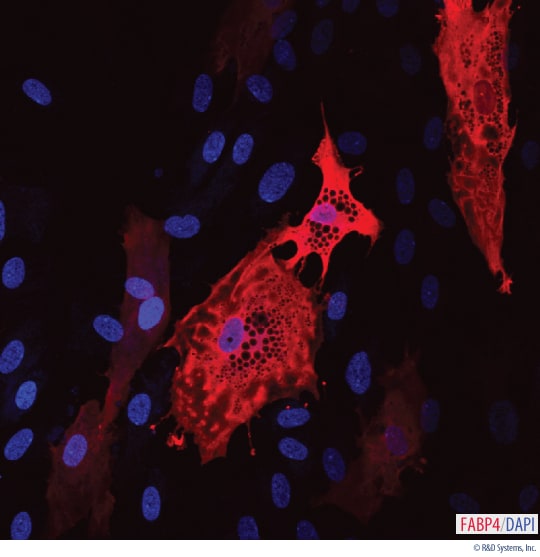
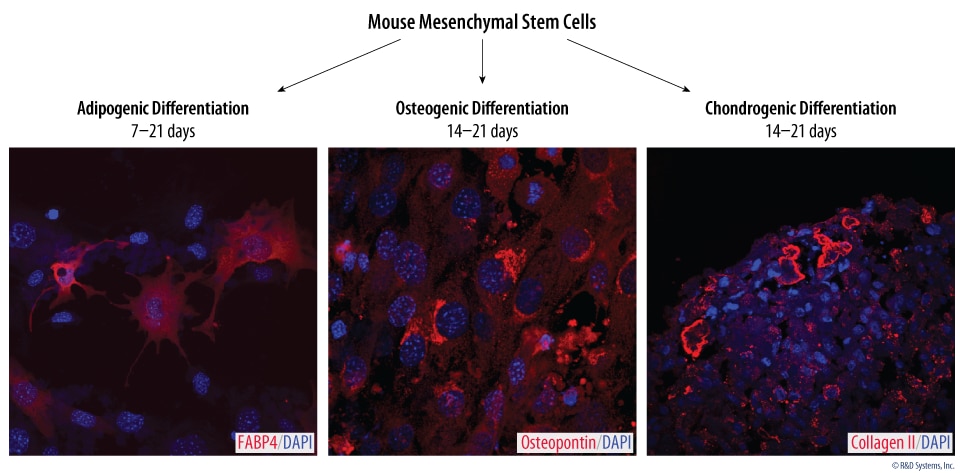
The term 'mesenchymal stem cells' (MSCs) is most commonly used to describe multipotent self-renewing cells that can be differentiated in vitro to generate adipocytes, chondrocytes, and osteoblasts. However, because these biological properties and hierarchical relationships remain to be clearly demonstrated in vivo, the term 'multipotent mesenchymal stromal cells' is often used to distinguish cultured cells from their in vivo precursors. Originally discovered in mouse bone marrow, multipotent ...

Reactivity:
Human
Assay Range:
15.6-1000 pg/mL (Cell Culture Supernates, Serum, EDTA Plasma, Heparin Plasma, Citrate Plasma)
Applications:
ELISA

Reactivity:
Mouse, Rat
Assay Range:
31.3-2000 pg/mL (Cell Culture Supernates, Tissue Homogenates, Mouse Serum, Rat Serum, Mouse EDTA Plasma, Rat EDTA Plasma, Mouse Heparin Plasma, Rat Heparin Plasma)
Applications:
ELISA

Reactivity:
Human
Assay Range:
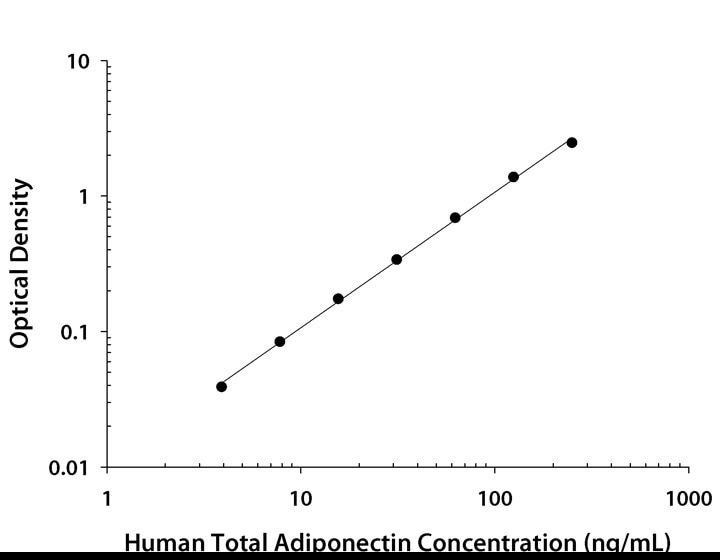
3.9-250 ng/mL (Cell Culture Supernates, Serum, EDTA Plasma, Heparin Plasma)
Applications:
ELISA
Reactivity:
Mouse
Assay Range:
0.16-10 ng/mL (Cell Culture Supernates, Tissue Homogenates, Serum, EDTA Plasma, Heparin Plasma)
Applications:
ELISA

Reactivity:
Human
Assay Range:
0.312-20 ng/mL (Cell Culture Supernates, EDTA Plasma, Heparin Plasma, Urine, Human Milk)
Applications:
ELISA

Reactivity:
Human
Assay Range:
31.2-2000 pg/mL
Applications:
ELISA

Reactivity:
Mouse, Rat
Assay Range:
39-2500 pg/mL (Cell Culture Supernates, Serum, EDTA Plasma, Heparin Plasma, Urine)
Applications:
ELISA

Reactivity:
Human, Mouse, Rat

Reactivity:
Mouse
Assay Range:
31.2-2000 pg/mL
Applications:
ELISA

Reactivity:
Human, Mouse, Rat
Reactivity:
Human
Assay Range:
31.2-2000 pg/mL
Applications:
ELISA

Reactivity:
Mouse
Assay Range:
125-8000 pg/mL
Applications:
ELISA

Reactivity:
Human
Assay Range:
62.5-4000 pg/mL
Applications:
ELISA

Reactivity:
Human, Mouse, Rat
Reactivity:
Human, Mouse, Rat
Reactivity:
Human
Assay Range:
62.5-4000 pg/mL
Applications:
ELISA

Reactivity:
Rat
Assay Range:
0.156-10 ng/mL (Cell Culture Supernates, Tissue Homogenates, Serum, EDTA Plasma, Heparin Plasma, Urine)
Applications:
ELISA


Reactivity:
Mouse
Assay Range:
15.6-1000 pg/mL
Applications:
ELISA

Reactivity:
Mouse
Reactivity:
Mouse