Glypican 3: Proteins and Enzymes

The glypicans (GPC) constitute a family of glycosylphosphatidylinositol (GPI)-anchored, heparan sulfate proteoglycans. Six members of this family have been identified in mammals (GPC1-GPC6). All glypican core proteins contain an N-terminal signal peptide, a large globular cysteine-rich domain (CRD) with 14 invariant cysteine residues, a stalk-like region containing the heparan sulfate attachment sites, and a C-terminal GPI attachment site.

Mutations in Glypican 3 cause a rare disorder in humans, Simpson-Golabi-Behmel Syndrome, which is characterized by pre- and postnatal overgrowth of multiple tissues and organs and an increased risk for developing embryonic tumors. These features are also present in the mouse knock-out of Glypican 3 indicating that Glypican 3 regulates cell survival and inhibits cell proliferation during development. Glypican 3 has been implicated in regulating many different signaling pathways including: IGF, FGF, BMP and Wnt. An endoproteolytic processing of Glypican 3 by proprotein convertases is required for the modulation of Wnt signaling. Direct interaction of Glypican 3 with FGF-basic has been observed and is mediated by the heparan sulfate chains.

Show More

9 results for "Glypican 3 Proteins and Enzymes" in Products

9 results for "Glypican 3 Proteins and Enzymes" in Products

Glypican 3: Proteins and Enzymes

The glypicans (GPC) constitute a family of glycosylphosphatidylinositol (GPI)-anchored, heparan sulfate proteoglycans. Six members of this family have been identified in mammals (GPC1-GPC6). All glypican core proteins contain an N-terminal signal peptide, a large globular cysteine-rich domain (CRD) with 14 invariant cysteine residues, a stalk-like region containing the heparan sulfate attachment sites, and a C-terminal GPI attachment site.

Mutations in Glypican 3 cause a rare disorder in humans, Simpson-Golabi-Behmel Syndrome, which is characterized by pre- and postnatal overgrowth of multiple tissues and organs and an increased risk for developing embryonic tumors. These features are also present in the mouse knock-out of Glypican 3 indicating that Glypican 3 regulates cell survival and inhibits cell proliferation during development. Glypican 3 has been implicated in regulating many different signaling pathways including: IGF, FGF, BMP and Wnt. An endoproteolytic processing of Glypican 3 by proprotein convertases is required for the modulation of Wnt signaling. Direct interaction of Glypican 3 with FGF-basic has been observed and is mediated by the heparan sulfate chains.

Show More
Source: NS0
Accession #: P51654.1
Applications: Bind
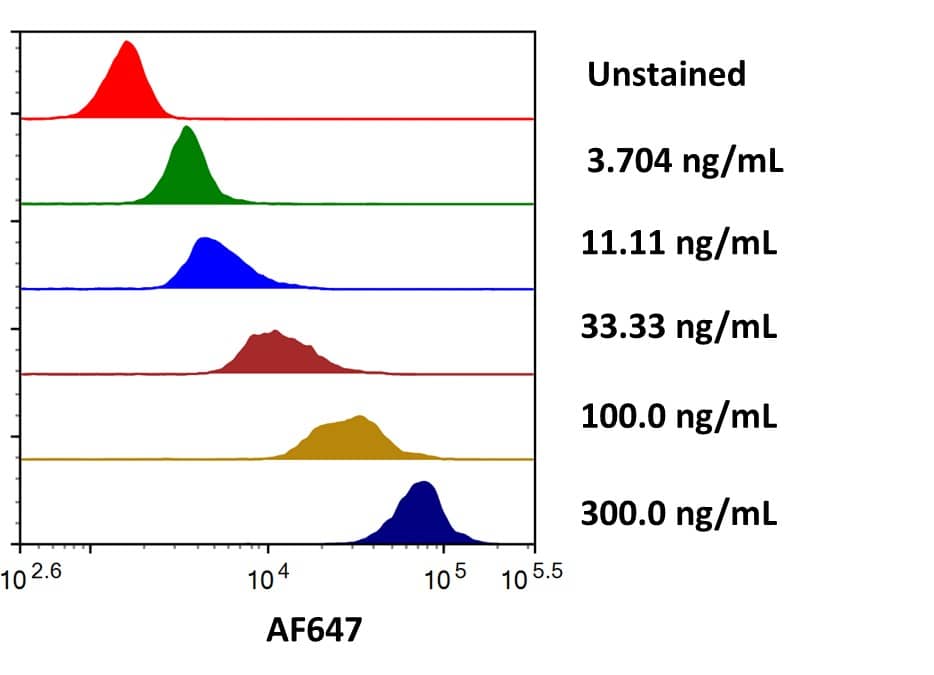
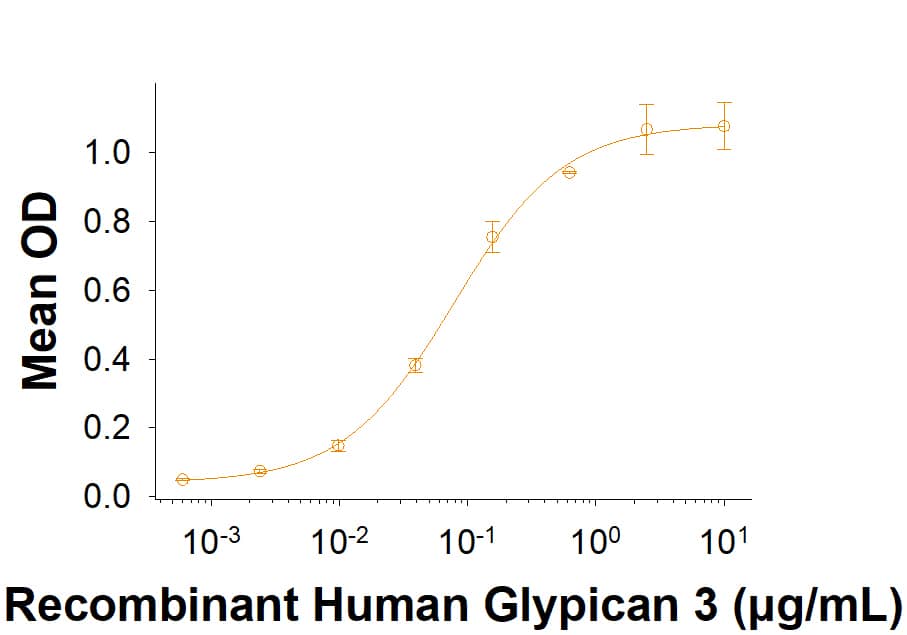
Graph showing bioactivity of human Glypican-3 protein

His-tag

Source: NS0
Accession #: P51654.1
Applications: BA

Biotinylated

Source: CHO
Accession #: P51654.1
Applications: BA
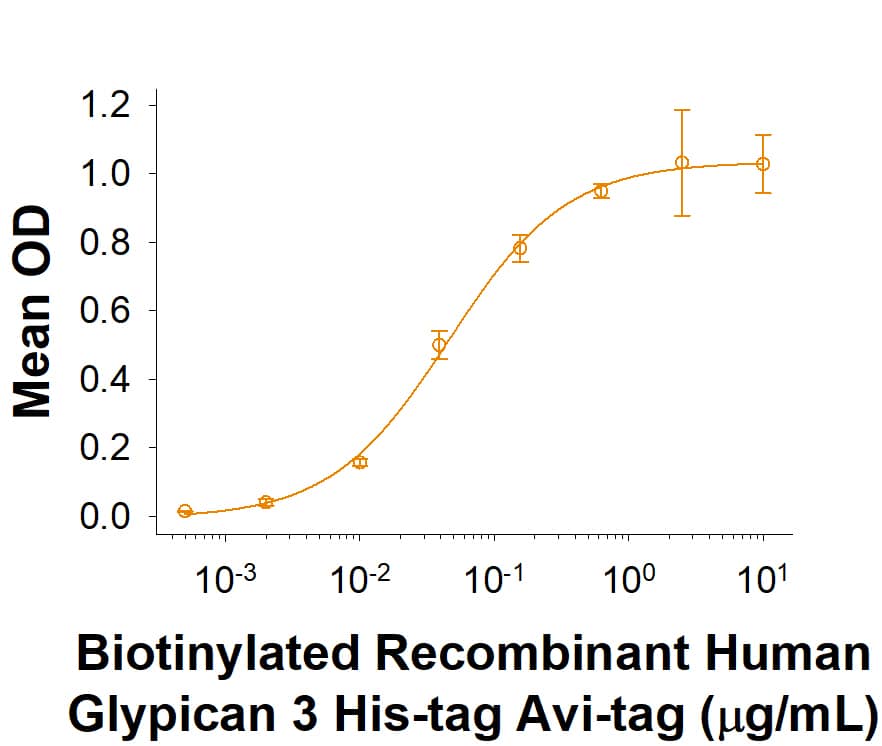
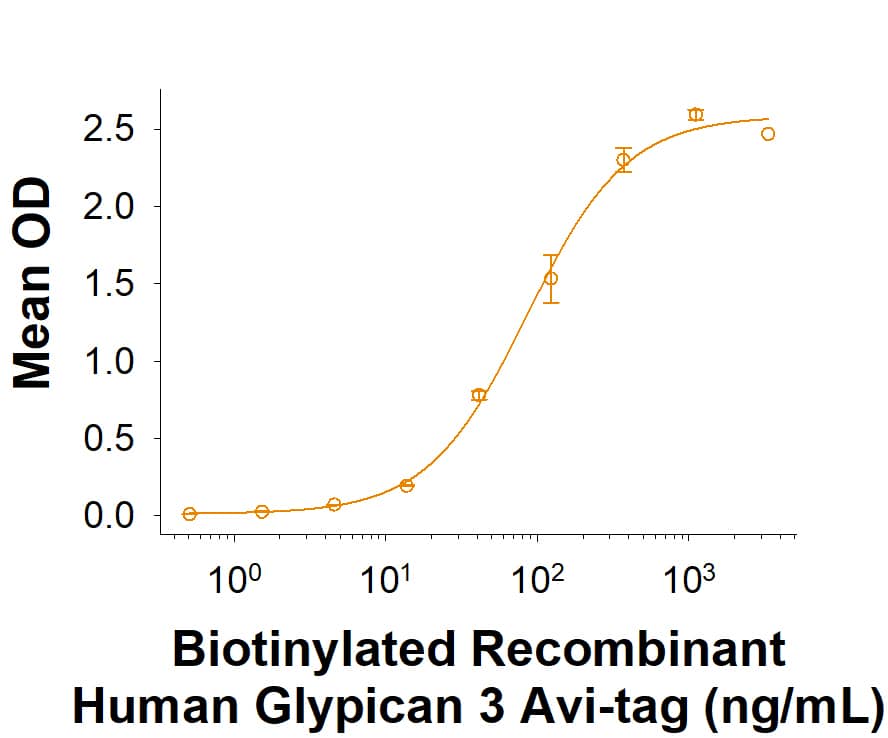
Recombinant Human Glypican 3 His-tag Avi-tag Protein Binding Activity
Source: NS0
Accession #: AAH36126
Applications: BA
R&D Systems Recombinant Proteins and Enzymes
Source: HEK293
Accession #: XP_005594665.1
Applications: BA
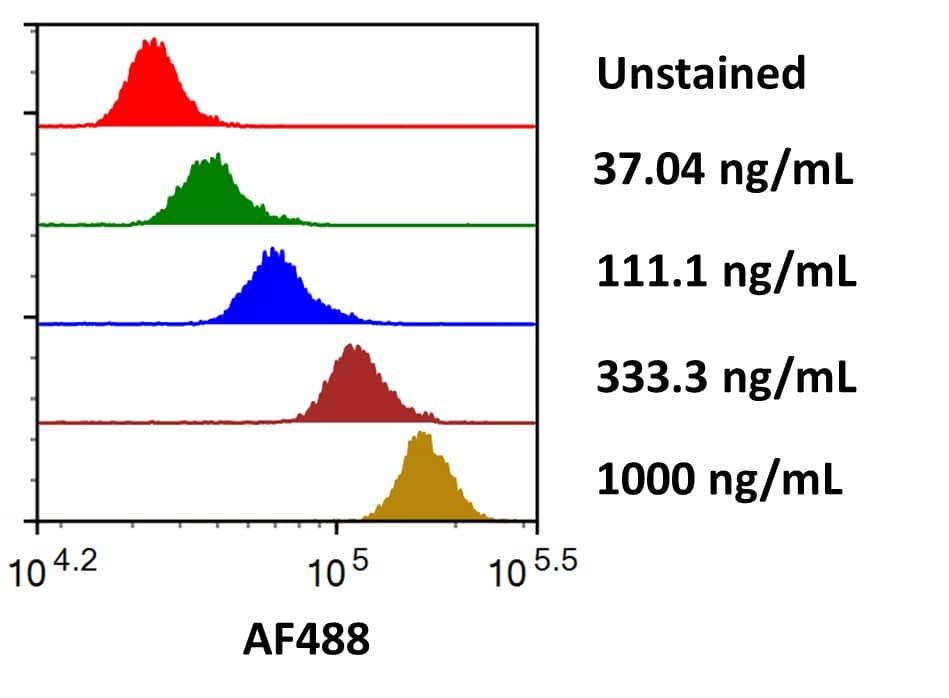
Recombinant Cynomolgus/Rhesus Glypican 3 His-tag Protein Binding Activity
Source: CHO
Applications: BA
(2)
Source: HEK293
Accession #: P51654.1
Applications: BA

His-tag

Source: NS0
Accession #: P51654.1
Applications: BA
Applications: AC
Results Per Page
5 10 25 50
/ 1