
GALE Products
GALE encodes UDP-galactose-4-epimerase which catalyzes two distinct but analogous reactions: the epimerization of UDP-glucose to UDP-galactose, and the epimerization of UDP-N-acetylglucosamine to UDP-N-acetylgalactosamine. The bifunctional nature of the enzyme has the important metabolic consequence that mutant cells (or individuals) are dependent not only on exogenous galactose, but also on exogenous N-acetylgalactosamine as a necessary precursor for the synthesis of glycoproteins and glycolipids. Mutations in this gene result in epimerase-deficiency galactosemia, also referred to as galactosemia type 3, a disease characterized by liver damage, early-onset cataracts, deafness and mental retardation, with symptoms ranging from mild ('peripheral' form) to severe ('generalized' form). Multiple alternatively spliced transcripts encoding the same protein have been identified.
Show More
104 results for "GALE" in Products


104 results for "GALE" in Products
GALE Products
GALE encodes UDP-galactose-4-epimerase which catalyzes two distinct but analogous reactions: the epimerization of UDP-glucose to UDP-galactose, and the epimerization of UDP-N-acetylglucosamine to UDP-N-acetylgalactosamine. The bifunctional nature of the enzyme has the important metabolic consequence that mutant cells (or individuals) are dependent not only on exogenous galactose, but also on exogenous N-acetylgalactosamine as a necessary precursor for the synthesis of glycoproteins and glycolipids. Mutations in this gene result in epimerase-deficiency galactosemia, also referred to as galactosemia type 3, a disease characterized by liver damage, early-onset cataracts, deafness and mental retardation, with symptoms ranging from mild ('peripheral' form) to severe ('generalized' form). Multiple alternatively spliced transcripts encoding the same protein have been identified.
Show More

| Reactivity: | Human, Mouse, Rat |
| Details: | Rabbit IgG Polyclonal |
| Applications: | IHC, WB, ICC/IF |
![Immunocytochemistry/ Immunofluorescence: GALE Antibody [NBP1-87066]](https://resources.bio-techne.com/images/products/GALE-Antibody-Immunocytochemistry-Immunofluorescence-NBP1-87066-img0008.jpg "Immunocytochemistry/ Immunofluorescence: GALE Antibody [NBP1-87066]")
| Reactivity: | Human |
| Details: | Mouse IgG1 kappa Monoclonal Clone #6G10 |
| Applications: | WB, ELISA, ICC/IF |
![Western Blot: GALE Antibody (6G10)BSA Free [NBP2-59421]](https://resources.bio-techne.com/images/products/GALE-Antibody-6G10-Western-Blot-NBP2-59421-img0001.jpg "Western Blot: GALE Antibody (6G10)BSA Free [NBP2-59421]")
| Reactivity: | Human, Mouse, Rat, Canine, Monkey, +1 More |
| Details: | Mouse IgG1 Monoclonal Clone #OTI1C4 |
| Applications: | IHC, WB |
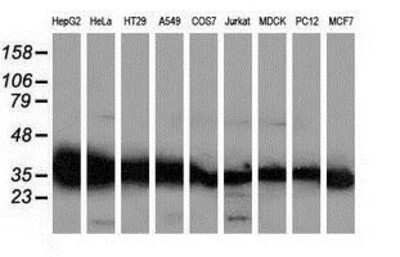
| Reactivity: | Human, Mouse, Rat, Canine, Monkey, +1 More |
| Details: | Mouse IgG1 Monoclonal Clone #OTI1C4 |
| Applications: | IHC, WB |
![Western Blot: GALE Antibody (OTI1C4)Azide and BSA Free [NBP2-70793]](https://resources.bio-techne.com/images/products/GALE-Antibody-OTI1C4-Azide-and-BSA-Free-Western-Blot-NBP2-70793-img0002.jpg "Western Blot: GALE Antibody (OTI1C4)Azide and BSA Free [NBP2-70793]")
| Reactivity: | Human, Mouse, Rat |
| Details: | Rabbit IgG Polyclonal |
| Applications: | IHC, WB, ELISA |
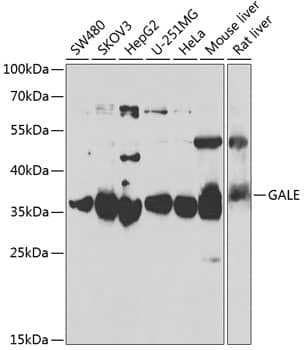
| Reactivity: | Human, Mouse, Rat, Canine, Monkey, +1 More |
| Details: | Mouse IgG1 Monoclonal Clone #OTI1C4 |
| Applications: | IHC, WB |
![GALE Antibody (OTI1C4) [CoraFluor™ 1]](https://resources.bio-techne.com/images/products/nbp2-70793cl1_mouse-gale-mab-oti1c4-corafluor-1-249202516431111.png "Product Feature: CoraFluor Probes for TR-FRET")
| Reactivity: | Human |
| Details: | Rabbit IgG Polyclonal |
| Applications: | ICC/IF |
![GALE Antibody Immunocytochemistry/Immunofluorescence: GALE Antibody [NBP3-24859]](https://resources.bio-techne.com/images/products/nbp3-24859_rabbit-gale-pab-2012202314593085.jpg "Immunocytochemistry/Immunofluorescence: GALE Antibody [NBP3-24859]")
| Reactivity: | Human |
| Details: | Rabbit IgG Polyclonal |
| Applications: | WB |
![Western Blot: GALE Antibody [NBP2-16579]](https://resources.bio-techne.com/images/products/GALE-Antibody-Western-Blot-NBP2-16579-img0001.jpg "Western Blot: GALE Antibody [NBP2-16579]")
Catalog #:
NBP3-51879
| Reactivity: | Human, Mouse, Rat |
| Details: | Mouse IgG1 Monoclonal Clone #24GB13050 |
| Applications: | WB, Mycoplasma |
![Western Blot: GALE Overexpression Lysate [NBL1-10947]](https://resources.bio-techne.com/images/products/GALE-Overexpression-Lysate-Adult-Normal-Western-Blot-NBL1-10947-img0002.jpg "Western Blot: GALE Overexpression Lysate [NBL1-10947]")
![Western Blot: GALE Overexpression Lysate [NBP2-09454]](https://resources.bio-techne.com/images/products/GALE-Overexpression-Lysate-Adult-Normal-Western-Blot-NBP2-09454-img0001.jpg "Western Blot: GALE Overexpression Lysate [NBP2-09454]")
![Western Blot: GALE Overexpression Lysate [NBL1-10946]](https://resources.bio-techne.com/images/products/GALE-Overexpression-Lysate-Adult-Normal-Western-Blot-NBL1-10946-img0002.jpg "Western Blot: GALE Overexpression Lysate [NBL1-10946]")
| Applications: | PAGE |
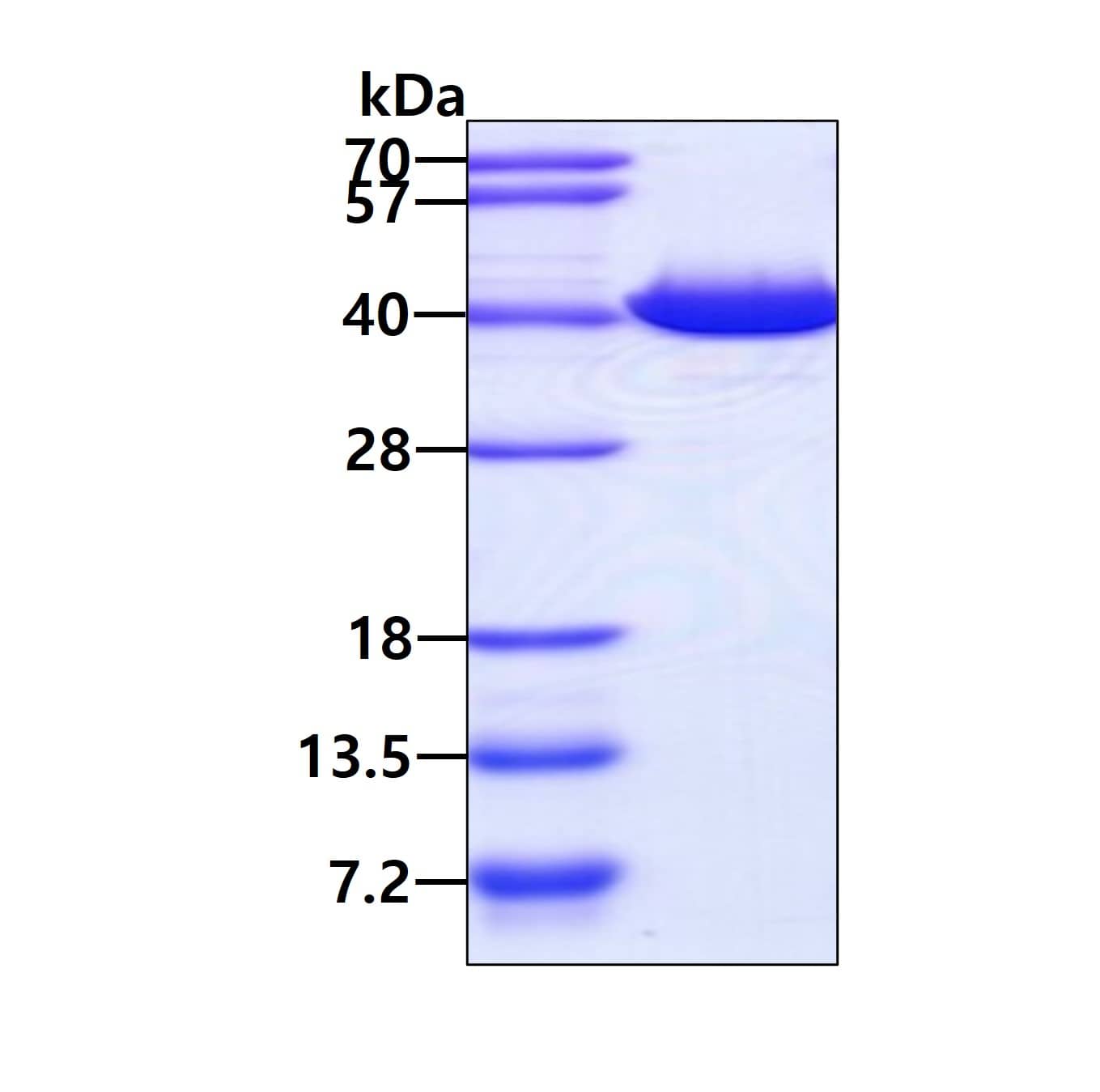
| Reactivity: | Human |
| Details: | Mouse IgG1 kappa Monoclonal Clone #6G10 |
| Applications: | WB, ELISA, ICC/IF |
| Reactivity: | Human, Mouse, Rat, Canine, Monkey, +1 More |
| Details: | Mouse IgG1 Monoclonal Clone #OTI1C4 |
| Applications: | IHC, WB |
| Reactivity: | Human |
| Details: | Rabbit IgG Polyclonal |
| Applications: | IHC, ELISA |
| Reactivity: | Human, Mouse, Rat, Canine, Monkey, +1 More |
| Details: | Mouse IgG1 Monoclonal Clone #OTI1C4 |
| Applications: | IHC, WB |
| Reactivity: | Human |
| Details: | Rabbit IgG Polyclonal |
| Applications: | IHC, ELISA |
| Reactivity: | Human |
| Details: | Mouse IgG1 kappa Monoclonal Clone #6G10 |
| Applications: | WB, ELISA, ICC/IF |
![GALE Antibody (6G10) [CoraFluor™ 1]](https://resources.bio-techne.com/images/products/nb120-13600cl1_mouse-rad9-mab-93a535-corafluor-1-71020251630593.png "Product Feature: CoraFluor Probes for TR-FRET")
| Reactivity: | Human |
| Details: | Rabbit IgG Polyclonal |
| Applications: | IHC, ELISA |
![GALE Antibody [CoraFluor™ 1]](https://resources.bio-techne.com/images/products/nbp2-96978cl1_rabbit-gale-pab-corafluor-1-10920251136721.png "Product Feature: CoraFluor Probes for TR-FRET")
| Reactivity: | Human |
| Details: | Mouse IgG1 kappa Monoclonal Clone #6G10 |
| Applications: | WB, ELISA, ICC/IF |
| Reactivity: | Human |
| Details: | Mouse IgG1 kappa Monoclonal Clone #6G10 |
| Applications: | WB, ELISA, ICC/IF |
| Reactivity: | Human, Mouse, Rat, Canine, Monkey, +1 More |
| Details: | Mouse IgG1 Monoclonal Clone #OTI1C4 |
| Applications: | IHC, WB |