
HLA-DR Antibody (4Y9Y8)
Novus Biologicals, part of Bio-Techne | Catalog # NBP3-15337
Recombinant Monoclonal Antibody

Key Product Details
Species Reactivity
Human
Applications
Immunohistochemistry, Immunohistochemistry-Paraffin, Western Blot, ELISA
Label
Unconjugated
Antibody Source
Recombinant Monoclonal Rabbit IgG Clone # 4Y9Y8 expressed in HEK293
Concentration
Please see the vial label for concentration. If unlisted please contact technical services.
Product Specifications
Immunogen
A synthetic peptide corresponding to a sequence within amino acids 100-200 of human HLA-DR (P01903). KRSNYTPITNVPPEVTVLTNSPVELREPNVLICFIDKFTPPVVNVTWLRNGKPVTTGVSETVFLPREDHLFRKFHYLPFLPSTEDVYDCRVEHWGLDEPLL
Clonality
Monoclonal
Host
Rabbit
Isotype
IgG
Theoretical MW
29 kDa.
Disclaimer note: The observed molecular weight of the protein may vary from the listed predicted molecular weight due to post translational modifications, post translation cleavages, relative charges, and other experimental factors.
Disclaimer note: The observed molecular weight of the protein may vary from the listed predicted molecular weight due to post translational modifications, post translation cleavages, relative charges, and other experimental factors.
Scientific Data Images for HLA-DR Antibody (4Y9Y8)
![Western Blot: HLA-DR Antibody (4Y9Y8) [NBP3-15337]](https://resources.bio-techne.com/images/products/HLA-DR-Antibody-4Y9Y8-Western-Blot-NBP3-15337-img0002.jpg "Western Blot: HLA-DR Antibody (4Y9Y8) [NBP3-15337]")
Western Blot: HLA-DR Antibody (4Y9Y8) [NBP3-15337]
Western Blot: HLA-DR Antibody (4Y9Y8) [NBP3-15337] - Analysis of extracts of Raji cells, using HLA-DR Rabbit mAb (NBP3-15337) at 1:1000 dilution. Secondary antibody: HRP Goat Anti-Rabbit IgG (H+L) at 1:10000 dilution. Lysates/proteins: 25ug per lane. Blocking buffer: 3% nonfat dry milk in TBST. Detection: ECL Basic Kit. Exposure time: 1s.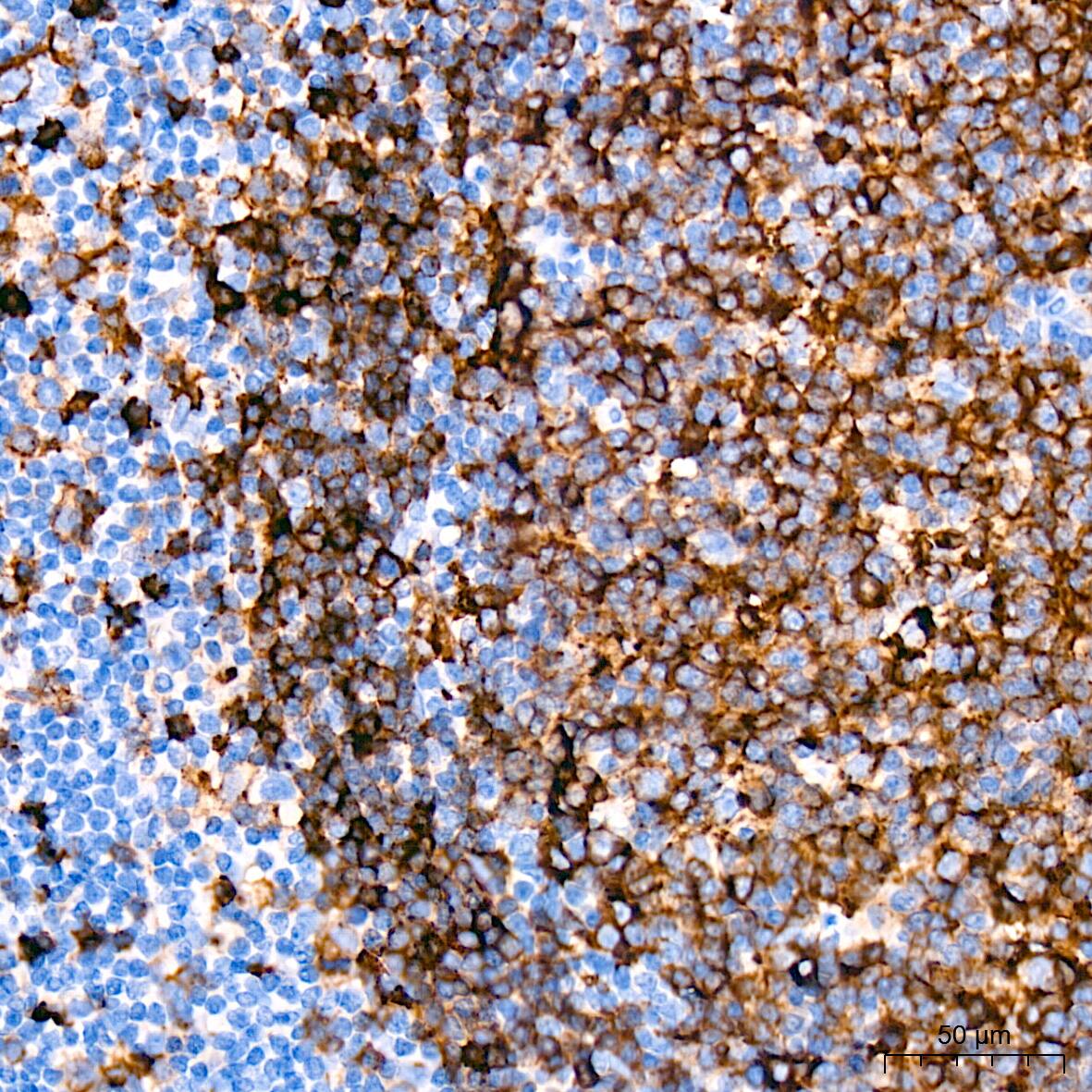
Immunohistochemistry: HLA-DR Antibody (4Y9Y8) [HLA-DR] -
Immunohistochemistry: HLA-DR Antibody (4Y9Y8) [HLA-DR] - Immunohistochemistry analysis of HLA-DR in paraffin-embedded human tonsil tissue using HLA-DR Rabbit mAb at a dilution of 1:1600 (40x lens). High pressure antigen retrieval was performed with 0.01 M citrate buffer (pH 6.0) prior to IHC staining.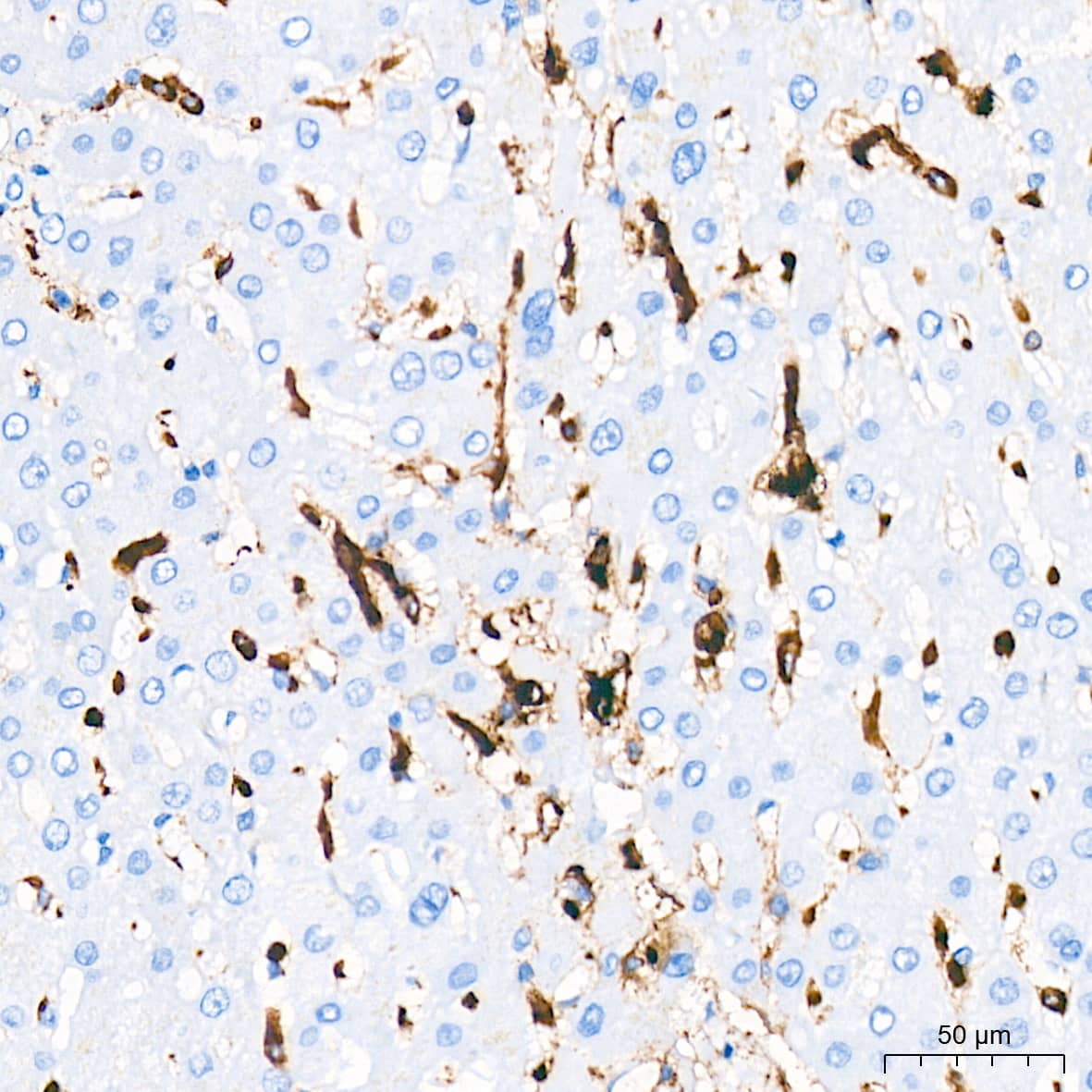
Immunohistochemistry: HLA-DR Antibody (4Y9Y8) [HLA-DR] -
Immunohistochemistry: HLA-DR Antibody (4Y9Y8) [HLA-DR] - Immunohistochemistry analysis of HLA-DR in paraffin-embedded human liver tissue using HLA-DR Rabbit mAb at a dilution of 1:1600 (40x lens). High pressure antigen retrieval was performed with 0.01 M citrate buffer (pH 6.0) prior to IHC staining.Applications for HLA-DR Antibody (4Y9Y8)
Application
Recommended Usage
ELISA
Recommended starting concentration is 1 μg/mL.
Immunohistochemistry
1:1000 - 1:5000
Immunohistochemistry-Paraffin
1:1000 - 1:5000
Western Blot
1:500 - 1:2000
Formulation, Preparation, and Storage
Purification
Affinity purified
Formulation
PBS (pH 7.3), 50% glycerol, 0.05% BSA
Preservative
0.02% Sodium Azide
Concentration
Please see the vial label for concentration. If unlisted please contact technical services.
Shipping
The product is shipped with polar packs. Upon receipt, store it immediately at the temperature recommended below.
Stability & Storage
Store at -20C. Avoid freeze-thaw cycles.
Background: HLA-DR
Given the role in adaptive immunity, HLA-DR allele polymorphisms, gene misexpression, and dysfunction has been implicated in many diseases ranging from autoimmune disorders to cancer (2). HLA-DR is also a classical biomarker for disease, including sepsis where reduced expression of HLA-DR molecules on monocytes, as measured by flow cytometry, indicates diagnosis and prognosis (4,5). Immunosuppression observed with sepsis results in decreased surface expression of HLA-DR and concurrent increase in expression of programmed death 1 (PD-1), cytotoxic T-lymphocyte antigen 4 (CTLA-4), and B and T lymphocyte attenuator (BTLA) (4). This altered expression results in poor T cell response and apoptosis, along with reduced interferon-gamma (IFN-gamma) production and increased pro-inflammatory cytokine release (4). Furthermore, the decrease in HLA-DR expression is also correlated with the decrease in CD14lowCD16+ inflammatory monocytes (5). Interestingly, COVID-19 patients also exhibit a reduction in HLA-DR that correlates with disease severity and immunosuppression (5).
References
1. Andersson G. (1998). Evolution of the human HLA-DR region. Frontiers in bioscience : a journal and virtual library. https://doi.org/10.2741/a317
2. Shiina, T., Hosomichi, K., Inoko, H., & Kulski, J. K. (2009). The HLA genomic loci map: expression, interaction, diversity and disease. Journal of human genetics. https://doi.org/10.1038/jhg.2008.5
3. Stern, L. J., & Calvo-Calle, J. M. (2009). HLA-DR: molecular insights and vaccine design. Current pharmaceutical design. https://doi.org/10.2174/138161209789105171
4. Zhuang, Y., Peng, H., Chen, Y., Zhou, S., & Chen, Y. (2017). Dynamic monitoring of monocyte HLA-DR expression for the diagnosis, prognosis, and prediction of sepsis. Frontiers in bioscience (Landmark edition). https://doi.org/10.2741/4547
5. Benlyamani, I., Venet, F., Coudereau, R., Gossez, M., & Monneret, G. (2020). Monocyte HLA-DR Measurement by Flow Cytometry in COVID-19 Patients: An Interim Review. Cytometry. Part A : the journal of the International Society for Analytical Cytology. https://doi.org/10.1002/cyto.a.24249
Long Name
Major Histocompatibility Complex Class II DR
Alternate Names
HLA-DRA, HLADR, MHC Class II DR
Gene Symbol
HLA-DRA
Additional HLA-DR Products
Product Documents for HLA-DR Antibody (4Y9Y8)
Product Specific Notices for HLA-DR Antibody (4Y9Y8)
This product is for research use only and is not approved for use in humans or in clinical diagnosis. Primary Antibodies are guaranteed for 1 year from date of receipt.
Loading...
Loading...
Loading...
Loading...