
c-Fos Antibody (CL6381) [Alexa Fluor™ Plus 488]
Novus Biologicals, part of Bio-Techne | Catalog # NBP3-44425AFP488

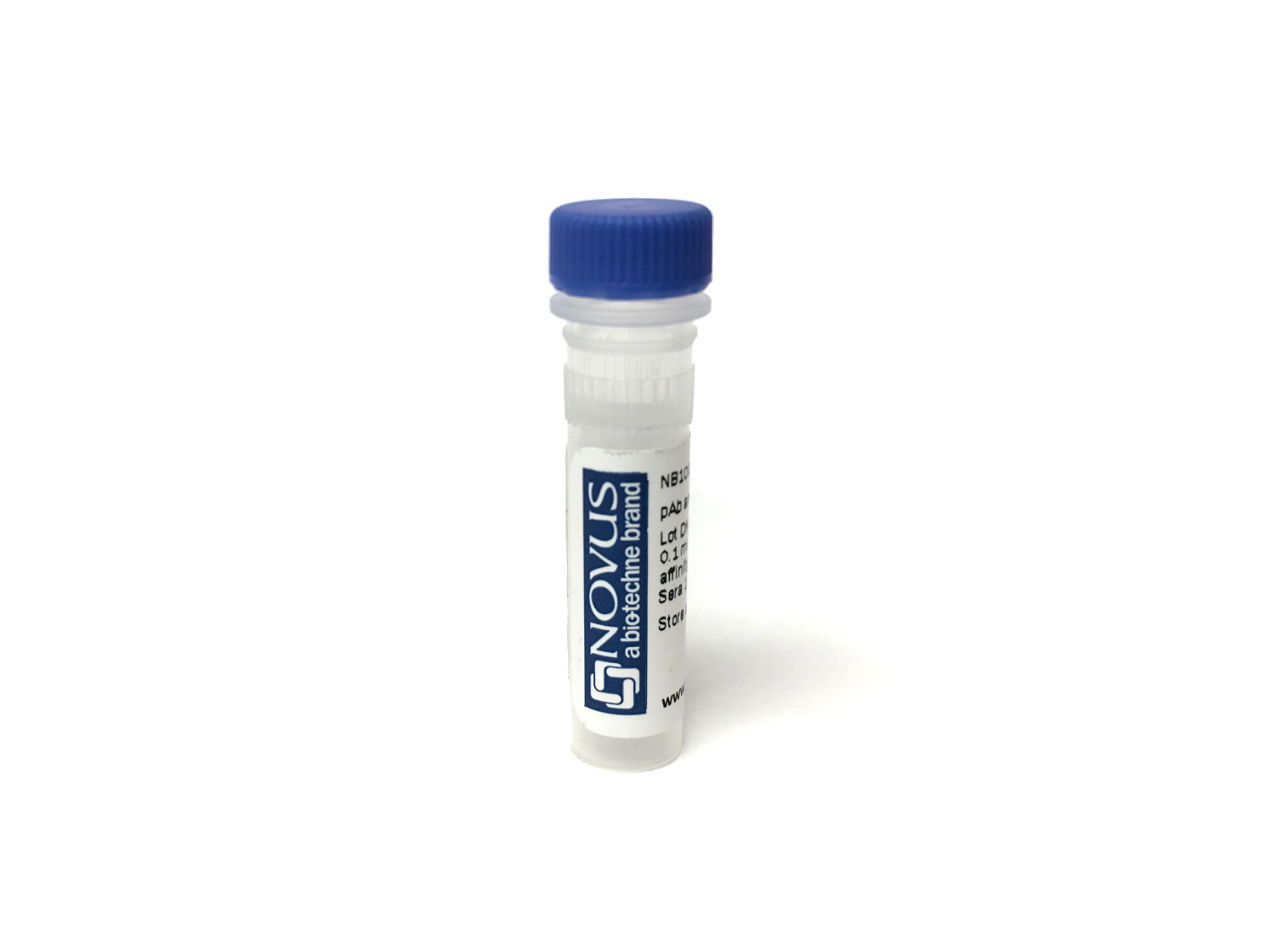
Conjugate
Catalog #
Key Product Details
Species Reactivity
Human
Applications
Western Blot
Label
Alexa Fluor Plus 488 (Excitation = 493 nm, Emission = 518 nm)
Antibody Source
Monoclonal Mouse IgG1 Clone # CL6381
Concentration
Concentrations vary lot to lot. See vial label for concentration. If unlisted please contact technical services.
Product Specifications
Immunogen
This antibody was generated using a synthetic peptide of P01100, with the exact immunogen sequence remaining proprietary.
Clonality
Monoclonal
Host
Mouse
Isotype
IgG1
Applications for c-Fos Antibody (CL6381) [Alexa Fluor™ Plus 488]
Application
Recommended Usage
Western Blot
Optimal dilutions of this antibody should be experimentally determined.
Application Notes
Optimal dilution of this antibody should be experimentally determined.
Formulation, Preparation, and Storage
Purification
Protein A purified
Formulation
50mM Sodium Borate
Preservative
0.05% Sodium Azide
Concentration
Concentrations vary lot to lot. See vial label for concentration. If unlisted please contact technical services.
Shipping
The product is shipped with polar packs. Upon receipt, store it immediately at the temperature recommended below.
Stability & Storage
Store at 4C in the dark.
Background: c-Fos
In response to stimuli, c-Fos, which is encoded by protooncogenes, has a role in cell proliferation, differentiation, and transformation (3,6). A variety of stimuli can increase c-Fos expression such as growth factors, proinflammatory cytokines, UV radiation, neurotransmitters, hormones, injury, and stress (1,6). c-Fos has long been used as a marker for neuronal activity and is associated with neural and behavioral responses following stimuli (1-3, 6-7). Mouse studies have revealed that c-Fos is important for efficient neurogenesis and cortical development (3). Additionally, c-Fos signal can be used as a molecular marker for learning and memory, such as recognition and fear (2,7). Studies have found that repeated positive stimuli result in increased Fos expression while, conversely, repeated negative value stimuli are indicated by decreased signal (7). Intermediate early genes have also been implicated in neuropsychiatric disorders including showing altered c-Fos expression in a schizophrenia animal model (2). Furthermore, antipsychotics and antidepressants are both capable of impacting c-Fos expression (2).
References
1. Kovacs K. J. (1998). c-Fos as a transcription factor: a stressful (re)view from a functional map. Neurochemistry International. https://doi.org/10.1016/s0197-0186(98)00023-0
2. Gallo, F. T., Katche, C., Morici, J. F., Medina, J. H., & Weisstaub, N. V. (2018). Immediate Early Genes, Memory and Psychiatric Disorders: Focus on c-Fos, Egr1 and Arc. Frontiers in Behavioral Neuroscience. https://doi.org/10.3389/fnbeh.2018.00079
3. Velazquez, F. N., Caputto, B. L., & Boussin, F. D. (2015). c-Fos importance for brain development. Aging. https://doi.org/10.18632/aging.100862
4. Uniprot (P01100)
5. Wu, Z., Nicoll, M., & Ingham, R. J. (2021). AP-1 family transcription factors: a diverse family of proteins that regulate varied cellular activities in classical hodgkin lymphoma and ALK+ ALCL. Experimental Hematology & Oncology. https://doi.org/10.1186/s40164-020-00197-9
6. Shaulian, E., & Karin, M. (2001). AP-1 in cell proliferation and survival. Oncogene. https://doi.org/10.1038/sj.onc.1204383
7. Chung L. (2015). A Brief Introduction to the Transduction of Neural Activity into Fos Signal. Development & Reproduction. https://doi.org/10.12717/DR.2015.19.2.061
Long Name
FBJ/Finkel–Biskis–Jinkins Murine Osteosarcoma Viral Oncogene Homolog
Alternate Names
cFos, FOS, G0S7
Gene Symbol
FOS
Additional c-Fos Products
Product Documents for c-Fos Antibody (CL6381) [Alexa Fluor™ Plus 488]
Product Specific Notices for c-Fos Antibody (CL6381) [Alexa Fluor™ Plus 488]
This product is provided under an intellectual property license from Life Technologies Corporation. The transfer of this product is conditioned on the buyer using the purchased product solely in research conducted by the buyer, excluding contract research or any fee for service research, and the buyer must not (1) use this product or its components for (a) diagnostic, therapeutic or prophylactic purposes; (b) testing, analysis or screening services, or information in return for compensation on a per-test basis; or (c) manufacturing or quality assurance or quality control, and/or (2) sell or transfer this product or its components for resale, whether or not resold for use in research. For information on purchasing a license to this product for purposes other than as described above, contact Life Technologies Corporation, 5781 Van Allen Way, Carlsbad, CA 92008 USA or outlicensing@thermofisher.com. This conjugate is made on demand. Actual recovery may vary from the stated volume of this product. The volume will be greater than or equal to the unit size stated on the datasheet.
This product is for research use only and is not approved for use in humans or in clinical diagnosis. Primary Antibodies are guaranteed for 1 year from date of receipt.
Loading...
Loading...
Loading...
Loading...
Loading...