


6 results for "DUSP7" in Products
DUSP7 Products
Dual-specificity phosphatases (DUSPs) constitute a large heterogeneous subgroup of the type I cysteine-basedprotein-tyrosine phosphatase superfamily. DUSPs are characterized by their ability to dephosphorylate both tyrosineand serine/threonine residues. DUSP7 belongs to a class of DUSPs, designated MKPs, that dephosphorylate MAPK(mitogen-activated protein kinase) proteins ERK (see MIM 601795), JNK (see MIM 601158), and p38 (see MIM 600289) withspecificity distinct from that of individual MKP ...

| Reactivity: | Human |
| Details: | Rabbit IgG Polyclonal |
| Applications: | IHC, WB, ICC/IF |
![Western Blot: DUSP7 Antibody [NBP1-31232]](https://resources.bio-techne.com/images/products/DUSP7-Antibody-Western-Blot-NBP1-31232-img0005.jpg "Western Blot: DUSP7 Antibody [NBP1-31232]")
| Reactivity: | Human |
| Details: | Mouse IgG Polyclonal |
| Applications: | WB |
![Western Blot: DUSP7 Antibody [H00001849-B01P]](https://resources.bio-techne.com/images/products/DUSP7-Antibody-Western-Blot-H00001849-B01P-img0002.jpg "Western Blot: DUSP7 Antibody [H00001849-B01P]")
| Reactivity: | Human |
| Details: | Rabbit IgG Polyclonal |
| Applications: | IHC |
![Immunohistochemistry-Paraffin: DUSP7 Antibody [NBP3-17836]](https://resources.bio-techne.com/images/products/DUSP7-Antibody-Immunohistochemistry-Paraffin-NBP3-17836-img0001.jpg "Immunohistochemistry-Paraffin: DUSP7 Antibody [NBP3-17836]")
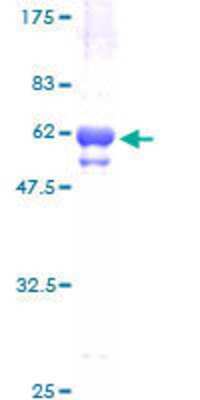
| Applications: | WB, ELISA, MA, AP |
| Reactivity: | Human |
| Details: | Rabbit IgG Polyclonal |
| Applications: | WB |
![Western Blot: DUSP7 Antibody [H00001849-D01P]](https://resources.bio-techne.com/images/products/DUSP7-Antibody-Western-Blot-H00001849-D01P-img0001.jpg "Western Blot: DUSP7 Antibody [H00001849-D01P]")