
Summary
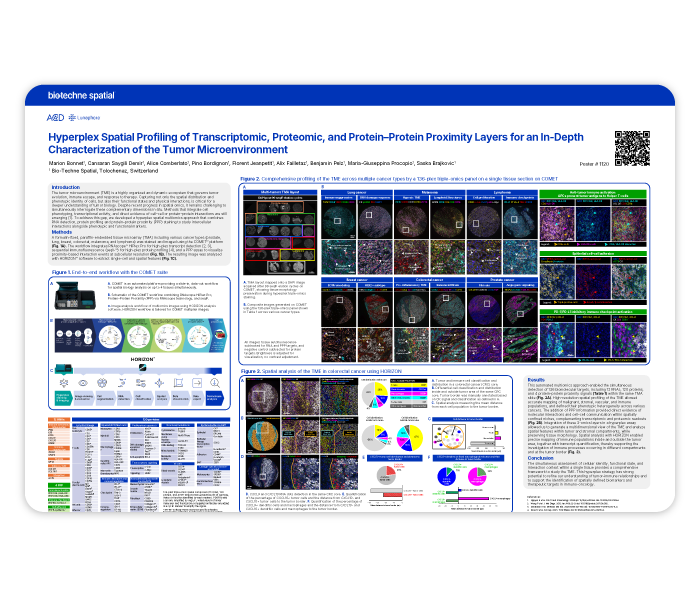
The tumor microenvironment (TME) is a highly organized and dynamic ecosystem that governs tumor evolution, immune escape, and response to therapy. Capturing not only the spatial distribution and phenotypic identity of cells, but also their functional states and physical interactions, is critical for a deeper understanding of tumor biology. Despite recent progress in spatial omics, it remains challenging to simultaneously interrogate these complementary dimensions in situ.
We developed a hyperplex spatial multiomics approach that combines RNA detection, protein profiling and protein–protein proximity (PPP) staining to study intercellular interactions alongside phenotypic and functional markers.
The simultaneous assessment of cellular identity, functional state, and interaction context within a single tissue provides a comprehensive framework to study the TME. This hyperplex strategy has strong potential to refine our understanding of tumor–immune relationships and to support the identification of spatially defined biomarkers and therapeutic targets in immuno-oncology.
This poster was presented at the SITC 2026 meeting.
Request Literature
To access this literature content please fill out the form below.