
SIGNR1/CD209b Antibody (143) - Azide and BSA Free
Novus Biologicals, part of Bio-Techne | Catalog # NBP2-90609
Recombinant Monoclonal Antibody

Conjugate
Catalog #
Key Product Details
Species Reactivity
Mouse
Applications
Immunocytochemistry/ Immunofluorescence
Label
Unconjugated
Antibody Source
Recombinant Monoclonal Rabbit IgG Clone # 143 expressed in HEK293
Format
Azide and BSA Free
Concentration
Please see the vial label for concentration. If unlisted please contact technical services.
Product Specifications
Immunogen
This antibody was obtained from a rabbit immunized with purified, recombinant Mouse SIGNR1/CD209b (Accession#: NP_081248.2; Gln74-Gly325).
Clonality
Monoclonal
Host
Rabbit
Isotype
IgG
Description
This antibody can be stored at 2C-8C for one month without detectable loss of activity. Antibody products are stable for twelve months from date of receipt when stored at -20C to -80C. Avoid repeated freeze-thaw cycles.
Scientific Data Images for SIGNR1/CD209b Antibody (143) - Azide and BSA Free
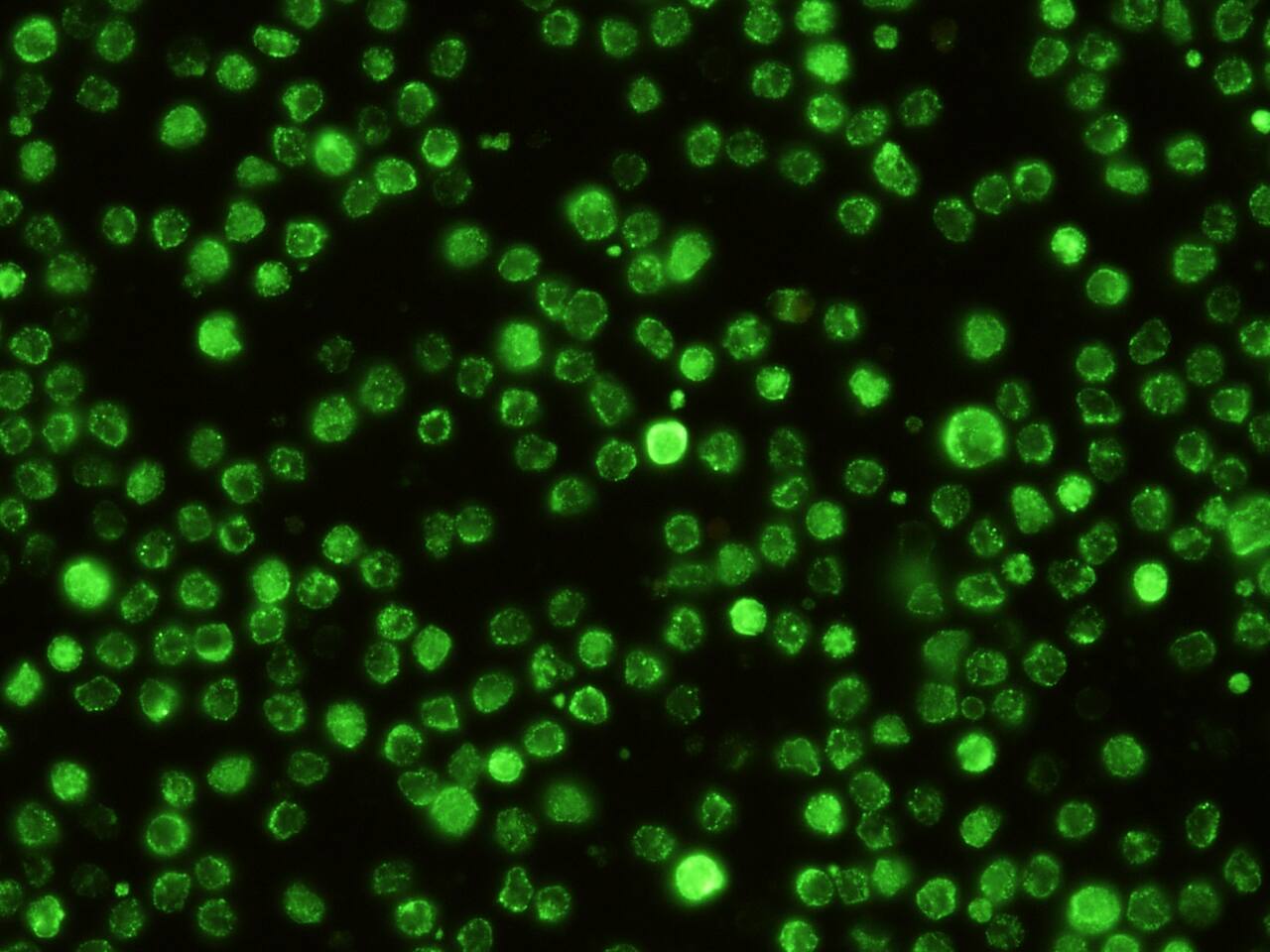
Immunocytochemistry/Immunofluorescence: SIGNR1/CD209b Antibody (143) [NBP2-90609] -
Immunocytochemistry/Immunofluorescence: SIGNR1/CD209b Antibody (143) [NBP2-90609] - Immunofluorescence staining of mouse SIGNR1/CD209b in mouse splenocytes. Cells were fixed with 4% PFA, blocked with 10% serum, and incubated with NBP2-90609 antibody (1:60) at 37C 1 hour. Then cells were stained with the Alexa Fluor(R) 488-conjugated Goat Anti-rabbit IgG Secondary antibody (green).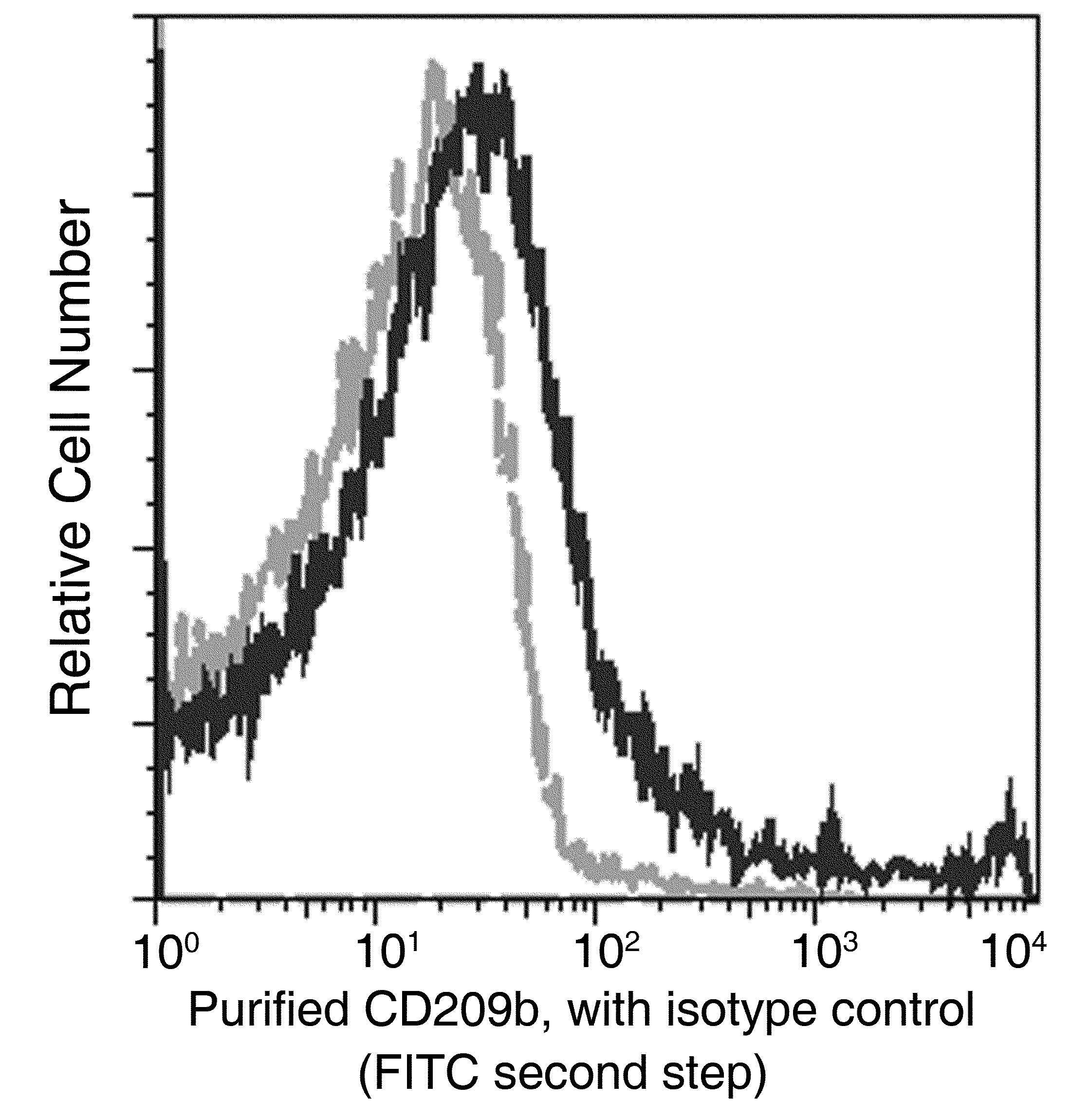
Flow Cytometry: SIGNR1/CD209b Antibody (143) [NBP2-90609] -
Flow Cytometry: SIGNR1/CD209b Antibody (143) [NBP2-90609] - Flow cytometric analysis of Mouse SIGNR1/CD209b expression on BABL/c splenocytes. Cells were stained with NBP2-90609, then a FITC-conjugated second step antibody. The fluorescence histograms were derived from gated events with the forward and side light-scatter characteristics of intact cells.Applications for SIGNR1/CD209b Antibody (143) - Azide and BSA Free
Application
Recommended Usage
Immunocytochemistry/ Immunofluorescence
1:20-1:100
Formulation, Preparation, and Storage
Purification
Protein A purified
Formulation
0.2 um filtered solution in PBS
Format
Azide and BSA Free
Preservative
No Preservative
Concentration
Please see the vial label for concentration. If unlisted please contact technical services.
Shipping
The product is shipped with polar packs. Upon receipt, store it immediately at the temperature recommended below.
Stability & Storage
Store at 4C short term. Aliquot and store at -20C long term. Avoid freeze-thaw cycles.
Background: SIGNR1/CD209b
Mouse SIGNR1 is a type II transmembrane protein that is a homolog of human DCSIGN (R). It is a C-type lectin expressed by marginal zone macrophages and by medullary and subcapsular macrophages in lymph nodes. SIGN R1 binds and mediates the uptake of dextran via mannose and fucose binding sites.
Long Name
SIGN-related 1
Alternate Names
CD209b
Gene Symbol
Cd209a
Additional SIGNR1/CD209b Products
Product Documents for SIGNR1/CD209b Antibody (143) - Azide and BSA Free
Product Specific Notices for SIGNR1/CD209b Antibody (143) - Azide and BSA Free
This product is for research use only and is not approved for use in humans or in clinical diagnosis. Primary Antibodies are guaranteed for 1 year from date of receipt.
Loading...
Loading...
Loading...
Loading...