Immunoprecipitation: MSX1 Antibody (1E2) [H00004487-M11]
Immunoprecipitation: MSX1 Antibody (1E2) [H00004487-M11] - Analysis of MSX1 transfected lysate using anti-MSX1 monoclonal antibody and Protein A Magnetic Bead, and immunoblotted with MSX1 rabbit polyclonal antibody.
Western Blot: MSX1 Antibody (1E2) - Azide and BSA Free [H00004487-M11] -
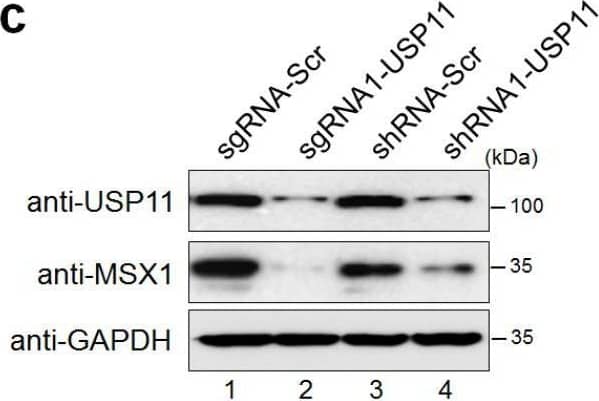
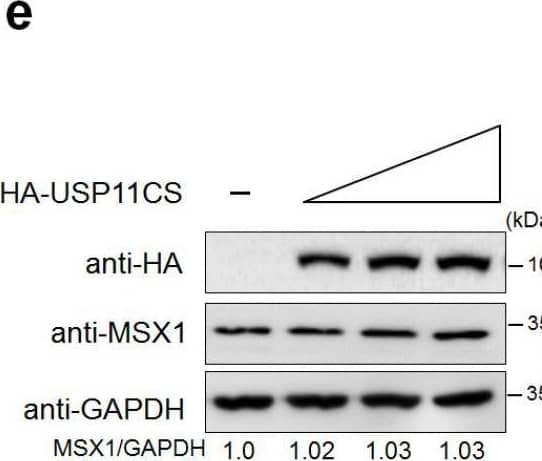
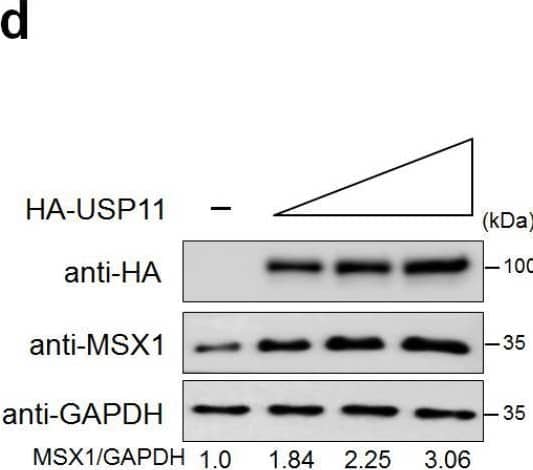
USP11 increases MSX1 protein level. (a) The efficiencies of sgRNA1 and sgRNA2 targeting the USP11 gene and regulating endogenous MSX1 protein levels were determined in hMSCs. (b) The efficiencies of shRNA1 and shRNA2 targeting the USP11 gene and regulating endogenous MSX1 protein levels were determined in hMSCs. (c) hMSCs were transfected with the best sgRNA (sgRNA1) and shRNA (shRNA1) targeting USP11 for the evaluation of endogenous USP11 and MSX1 levels using the respective endogenous antibodies. (d) hMSCs were transfected with an increasing amount of HA-USP11 (0, 1, 2, and 3 ug), and the endogenous expression of MSX1 protein was analyzed using Western blot. The protein band intensities were estimated using ImageJ software with reference to the GAPDH control band (MSX1/GAPDH). (e) hMSCs were transfected with increasing amounts of catalytically inactive HA-USP11CS (0, 1, 2, and 3 ug), and the endogenous expression of MSX1 protein was analyzed using Western blot. The protein band intensities were estimated using ImageJ software with reference to the GAPDH control band (MSX1/GAPDH). (f) Reconstitution effect of USP11 on endogenous MSX1 in USP11-depleted cells. Protein expression was analyzed by Western blotting using the indicated antibodies. GAPDH was used as the loading control. Image collected and cropped by CiteAb from the following open publication (https://pubmed.ncbi.nlm.nih.gov/35055037), licensed under a CC-BY license. Not internally tested by Novus Biologicals.
Western Blot: MSX1 Antibody (1E2) - Azide and BSA Free [H00004487-M11] -
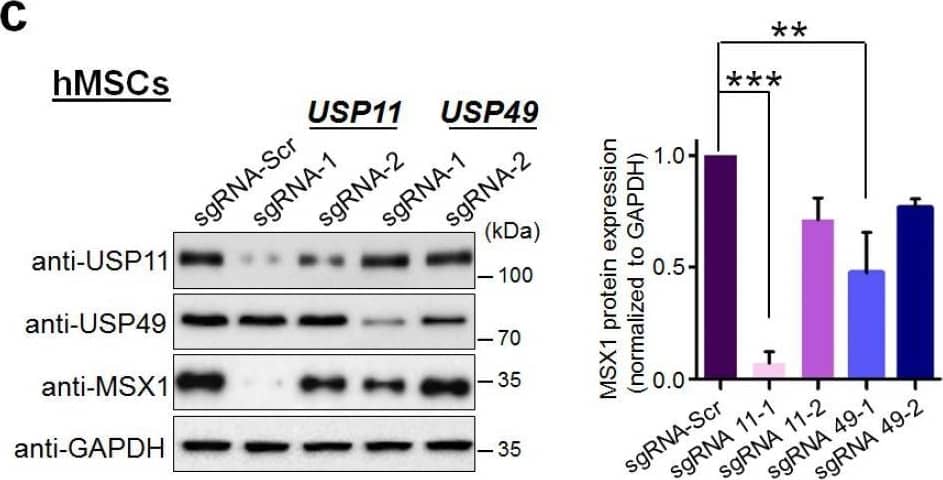
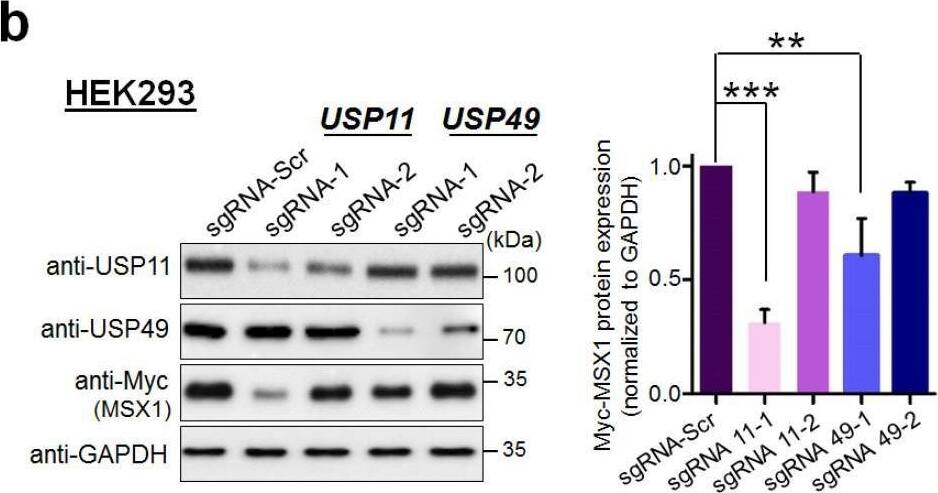
CRISPR-based genome-scale screening of USP sub-family proteins exhibiting a reduction in MSX1 protein levels. (a) Screening for DUBs regulating MSX1 was performed using a CRISPR/Cas9-based DUBKO sgRNA kit. HEK293 cells were transfected with Myc-MSX1 and the indicated sgRNAs along with Cas9. Equal concentrations of proteins from the sgRNA kit transfected HEK293 cells were subjected to Western blot analyses. The protein band intensities were estimated using ImageJ software with reference to the GAPDH control band for each individual sgRNA (Myc-MSX1/GAPDH). The loss of USPs leading to the downregulation of the MSX1 protein level is marked in red. (b) Myc-MSX1, sgRNAs targeting USP11, or sgRNAs targeting USP49 were transfected in HEK293 cells. The protein band intensity of HEK293 cells transfected with sgRNA1 targeting USP11 showed the highest reduction in MSX1. This experiment was performed in triplicates and band intensities were estimated using ImageJ software with reference to the GAPDH control band and are graphically represented. One-way ANOVA followed by Tukey’s post hoc test was used. Error bars represent +/- SD, ** p < 0.001 and *** p < 0.0001. (c) The sgRNAs targeting USP11 or sgRNAs targeting USP49, which potentially regulate endogenous MSX1 protein levels, were transfected in hMSCs along with Cas9. The protein band intensity of hMSCs transfected with sgRNA1 targeting USP11 showed the highest reduction in MSX1. This experiment was performed in triplicates and band intensities were estimated using ImageJ software with reference to the GAPDH control band and are graphically represented. One-way ANOVA followed by Tukey’s post hoc test was used. Error bars represent +/- SD, ** p < 0.001, and *** p < 0.0001. Image collected and cropped by CiteAb from the following open publication (https://pubmed.ncbi.nlm.nih.gov/35055037), licensed under a CC-BY license. Not internally tested by Novus Biologicals.
Western Blot: MSX1 Antibody (1E2) - Azide and BSA Free [H00004487-M11] -
CRISPR-based genome-scale screening of USP sub-family proteins exhibiting a reduction in MSX1 protein levels. (a) Screening for DUBs regulating MSX1 was performed using a CRISPR/Cas9-based DUBKO sgRNA kit. HEK293 cells were transfected with Myc-MSX1 and the indicated sgRNAs along with Cas9. Equal concentrations of proteins from the sgRNA kit transfected HEK293 cells were subjected to Western blot analyses. The protein band intensities were estimated using ImageJ software with reference to the GAPDH control band for each individual sgRNA (Myc-MSX1/GAPDH). The loss of USPs leading to the downregulation of the MSX1 protein level is marked in red. (b) Myc-MSX1, sgRNAs targeting USP11, or sgRNAs targeting USP49 were transfected in HEK293 cells. The protein band intensity of HEK293 cells transfected with sgRNA1 targeting USP11 showed the highest reduction in MSX1. This experiment was performed in triplicates and band intensities were estimated using ImageJ software with reference to the GAPDH control band and are graphically represented. One-way ANOVA followed by Tukey’s post hoc test was used. Error bars represent +/- SD, ** p < 0.001 and *** p < 0.0001. (c) The sgRNAs targeting USP11 or sgRNAs targeting USP49, which potentially regulate endogenous MSX1 protein levels, were transfected in hMSCs along with Cas9. The protein band intensity of hMSCs transfected with sgRNA1 targeting USP11 showed the highest reduction in MSX1. This experiment was performed in triplicates and band intensities were estimated using ImageJ software with reference to the GAPDH control band and are graphically represented. One-way ANOVA followed by Tukey’s post hoc test was used. Error bars represent +/- SD, ** p < 0.001, and *** p < 0.0001. Image collected and cropped by CiteAb from the following open publication (https://pubmed.ncbi.nlm.nih.gov/35055037), licensed under a CC-BY license. Not internally tested by Novus Biologicals.
Western Blot: MSX1 Antibody (1E2) - Azide and BSA Free [H00004487-M11] -
USP11 increases MSX1 protein level. (a) The efficiencies of sgRNA1 and sgRNA2 targeting the USP11 gene and regulating endogenous MSX1 protein levels were determined in hMSCs. (b) The efficiencies of shRNA1 and shRNA2 targeting the USP11 gene and regulating endogenous MSX1 protein levels were determined in hMSCs. (c) hMSCs were transfected with the best sgRNA (sgRNA1) and shRNA (shRNA1) targeting USP11 for the evaluation of endogenous USP11 and MSX1 levels using the respective endogenous antibodies. (d) hMSCs were transfected with an increasing amount of HA-USP11 (0, 1, 2, and 3 ug), and the endogenous expression of MSX1 protein was analyzed using Western blot. The protein band intensities were estimated using ImageJ software with reference to the GAPDH control band (MSX1/GAPDH). (e) hMSCs were transfected with increasing amounts of catalytically inactive HA-USP11CS (0, 1, 2, and 3 ug), and the endogenous expression of MSX1 protein was analyzed using Western blot. The protein band intensities were estimated using ImageJ software with reference to the GAPDH control band (MSX1/GAPDH). (f) Reconstitution effect of USP11 on endogenous MSX1 in USP11-depleted cells. Protein expression was analyzed by Western blotting using the indicated antibodies. GAPDH was used as the loading control. Image collected and cropped by CiteAb from the following open publication (https://pubmed.ncbi.nlm.nih.gov/35055037), licensed under a CC-BY license. Not internally tested by Novus Biologicals.
Western Blot: MSX1 Antibody (1E2) - Azide and BSA Free [H00004487-M11] -
USP11 increases MSX1 protein level. (a) The efficiencies of sgRNA1 and sgRNA2 targeting the USP11 gene and regulating endogenous MSX1 protein levels were determined in hMSCs. (b) The efficiencies of shRNA1 and shRNA2 targeting the USP11 gene and regulating endogenous MSX1 protein levels were determined in hMSCs. (c) hMSCs were transfected with the best sgRNA (sgRNA1) and shRNA (shRNA1) targeting USP11 for the evaluation of endogenous USP11 and MSX1 levels using the respective endogenous antibodies. (d) hMSCs were transfected with an increasing amount of HA-USP11 (0, 1, 2, and 3 ug), and the endogenous expression of MSX1 protein was analyzed using Western blot. The protein band intensities were estimated using ImageJ software with reference to the GAPDH control band (MSX1/GAPDH). (e) hMSCs were transfected with increasing amounts of catalytically inactive HA-USP11CS (0, 1, 2, and 3 ug), and the endogenous expression of MSX1 protein was analyzed using Western blot. The protein band intensities were estimated using ImageJ software with reference to the GAPDH control band (MSX1/GAPDH). (f) Reconstitution effect of USP11 on endogenous MSX1 in USP11-depleted cells. Protein expression was analyzed by Western blotting using the indicated antibodies. GAPDH was used as the loading control. Image collected and cropped by CiteAb from the following open publication (https://pubmed.ncbi.nlm.nih.gov/35055037), licensed under a CC-BY license. Not internally tested by Novus Biologicals.
Immunocytochemistry/ Immunofluorescence: MSX1 Antibody (1E2) - Azide and BSA Free [H00004487-M11] -
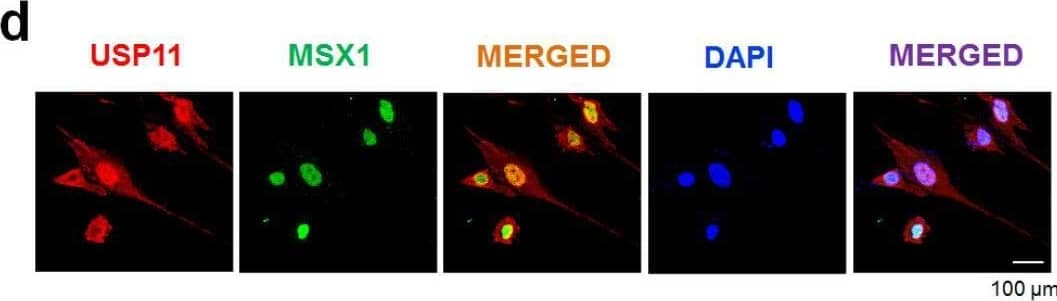
USP11 interacts and deubiquitinates MSX1 protein. (a,b) Interaction between endogenous USP11 and MSX1 proteins was evaluated in hMSCs. Cell lysates from hMSCs were immunoprecipitated with specific MSX1 (a) or USP11 antibodies (b) and immunoblotted with the indicated antibodies. (c) Myc-MSX1 and HA-USP11 were co-transfected in HEK293 cells. Samples were immunoprecipitated using anti-Myc or anti-HA antibodies and immunoblotted using the indicated antibodies. GAPDH was used as a loading control. (d) An immunofluorescence assay was performed to determine the localization of MSX1 and USP11 proteins. DAPI was used as a nuclear stain. (e) The endogenous deubiquitination of MSX1 was analyzed by transfecting hMSCs with Flag-USP11, Flag-USP11CS, and sgRNA targeting USP11, followed by immunoprecipitation with anti-MSX1 antibody and immunoblotting with anti-MSX1 or anti-ubiquitin antibodies. The cells were treated with MG132 for 6 h prior to harvest for all experiments. Image collected and cropped by CiteAb from the following open publication (https://pubmed.ncbi.nlm.nih.gov/35055037), licensed under a CC-BY license. Not internally tested by Novus Biologicals.