
LAG-3 Antibody (874501) [DyLight 594]
Novus Biologicals, part of Bio-Techne | Catalog # FAB23193M

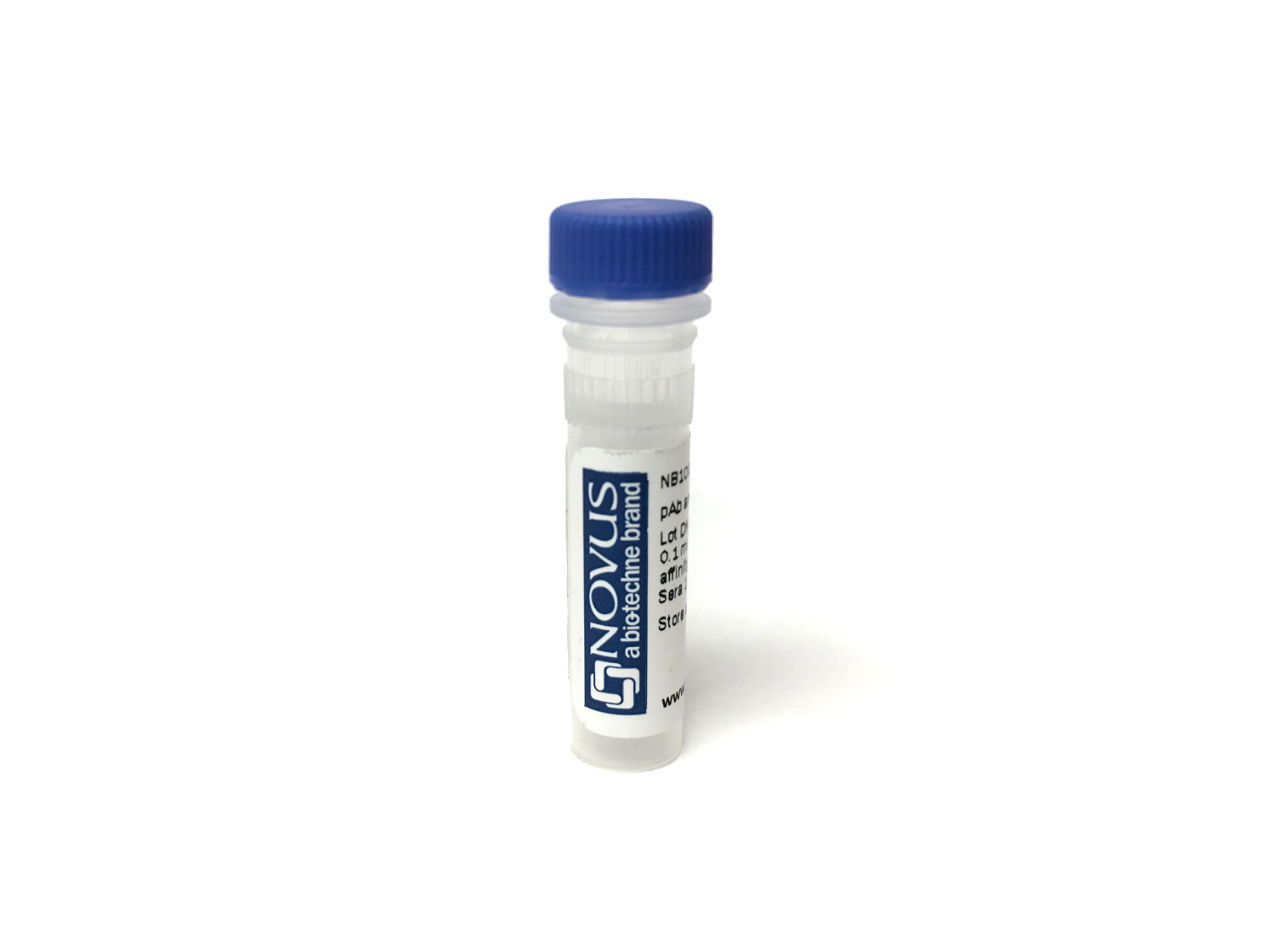
Key Product Details
Species Reactivity
Human
Applications
Western Blot, Flow Cytometry, CyTOF-reported
Label
DyLight 594 (Excitation = 593 nm, Emission = 618 nm)
Antibody Source
Monoclonal Mouse IgG1 Clone # 874501
Concentration
Please see the vial label for concentration. If unlisted please contact technical services.
Product Specifications
Immunogen
Mouse myeloma cell line NS0-derived recombinant human LAG-3 Leu23-Leu450 Accession # P18627
Specificity
Recognizes the epsilon-chain of the CD3/T cell antigen receptor complex (McMichael, A.J. et al. (1987) Leucocyte Typing III: White Cell Differentiation Antigens, Oxford University Press, New York; Knapp, W. et al. (1989) Leucocyte Typing IV: White Cell Differentiation Antigens, Oxford University Press, New York; Schlossman, S. et al. (1995) Leucocyte Typing V: White Cell Differentiation Antigens, Oxford University Press, New York).
Clonality
Monoclonal
Host
Mouse
Isotype
IgG1
Applications for LAG-3 Antibody (874501) [DyLight 594]
Application
Recommended Usage
CyTOF-reported
Optimal dilutions of this antibody should be experimentally determined.
Flow Cytometry
Optimal dilutions of this antibody should be experimentally determined.
Western Blot
Optimal dilutions of this antibody should be experimentally determined.
Application Notes
Optimal dilution of this antibody should be experimentally determined.
Formulation, Preparation, and Storage
Purification
Protein A or G purified from hybridoma culture supernatant
Formulation
50mM Sodium Borate
Preservative
0.05% Sodium Azide
Concentration
Please see the vial label for concentration. If unlisted please contact technical services.
Shipping
The product is shipped with polar packs. Upon receipt, store it immediately at the temperature recommended below.
Stability & Storage
Store at 4C in the dark.
Background: LAG-3
LAG-3 is an activation-induced molecule, expressed on activated T cells and NK cells, but not on resting T cells. Studies using LAG-3 ^-/- mice have shown significant delay of T cell apoptosis following antigen stimulation and increased size of memory T cells pool following infection (3, 4). It also has been reported that anti-LAG-3 antibodies up-regulate T cell activation by blocking interaction of LAG-3 and MHC class II. The study has demonstrated that LAG-3 is selectively expressed on activated CD4^+CD25^+ T_Reg cells and plays a role in their suppressive activity (5). This evidence indicated, unlike the interaction of CD4 with MHC class II that plays a positive role in T cell activation, LAG-3 binds to MHC class II and negatively regulates T cell activation through LAG-3 signaling. On the other hand, studies have shown that binding of LAG-3 to MHC class II molecules on antigen presenting cells induce maturation of dendritic cells and cytokine secretion by monocytes through MHC class II signal transduction (6). Taken together, LAG-3 may have two major functions, it negatively regulates T cells activation through LAG-3 signaling and stimulates antigen presenting cells which express MHC class II.
References
- Beverly, P.C.L. and R.E. Callard (1981) Eur. J. Immunol. 11:329.
Long Name
Lymphocyte-activation Gene 3
Alternate Names
CD223, LAG3
Gene Symbol
LAG3
Additional LAG-3 Products
Product Documents for LAG-3 Antibody (874501) [DyLight 594]
Product Specific Notices for LAG-3 Antibody (874501) [DyLight 594]
DyLight (R) is a trademark of Thermo Fisher Scientific Inc. and its subsidiaries.
This product is for research use only and is not approved for use in humans or in clinical diagnosis. Primary Antibodies are guaranteed for 1 year from date of receipt.
Loading...
Loading...
Loading...
Loading...
Loading...
Loading...