
FAT10 Antibody - BSA Free
Novus Biologicals, part of Bio-Techne | Catalog # NBP2-13498

![FAT10 Antibody - BSA Free Western Blot: FAT10 Antibody - BSA Free [NBP2-13498]](https://resources.bio-techne.com/images/products/nbp2-13498_rabbit-polyclonal-fat10-antibody-295202516264510.jpg "Western Blot: FAT10 Antibody - BSA Free [NBP2-13498]")
Key Product Details
Species Reactivity
Human
Applications
Validated:
Immunohistochemistry, Western Blot, Immunocytochemistry/ Immunofluorescence
Cited:
IF/IHC
Label
Unconjugated
Antibody Source
Polyclonal Rabbit IgG
Format
BSA Free
Concentration
Concentrations vary lot to lot. See vial label for concentration. If unlisted please contact technical services.
Product Specifications
Immunogen
This antibody was developed against a recombinant protein corresponding to the amino acids: NASCLCVHVRSEEWDLMTFDANPYDSVKKIKEHVRSKTKVPVQDQVLLLGSKILKPRRSLSSYGIDKEKTIHLTLKVVKP
Clonality
Polyclonal
Host
Rabbit
Isotype
IgG
Scientific Data Images for FAT10 Antibody - BSA Free
![Western Blot: FAT10 Antibody [NBP2-13498]](https://resources.bio-techne.com/images/products/FAT10-Antibody-Western-Blot-NBP2-13498-img0001.jpg "Western Blot: FAT10 Antibody [NBP2-13498]")
Western Blot: FAT10 Antibody [NBP2-13498]
Western Blot: FAT10 Antibody [NBP2-13498] - Analysis in control (vector only transfected HEK293T lysate) and UBD over-expression lysate (Co-expressed with a C-terminal myc-DDK tag (~3.1 kDa) in mammalian HEK293T cells).![Immunocytochemistry/ Immunofluorescence: FAT10 Antibody [NBP2-13498]](https://resources.bio-techne.com/images/products/FAT10-Antibody-Immunocytochemistry-Immunofluorescence-NBP2-13498-img0002.jpg "Immunocytochemistry/ Immunofluorescence: FAT10 Antibody [NBP2-13498]")
Immunocytochemistry/ Immunofluorescence: FAT10 Antibody [NBP2-13498]
Immunocytochemistry/Immunofluorescence: FAT10 Antibody [NBP2-13498] - Staining of human cell line Hep G2 shows localization to nucleus. Antibody staining is shown in green.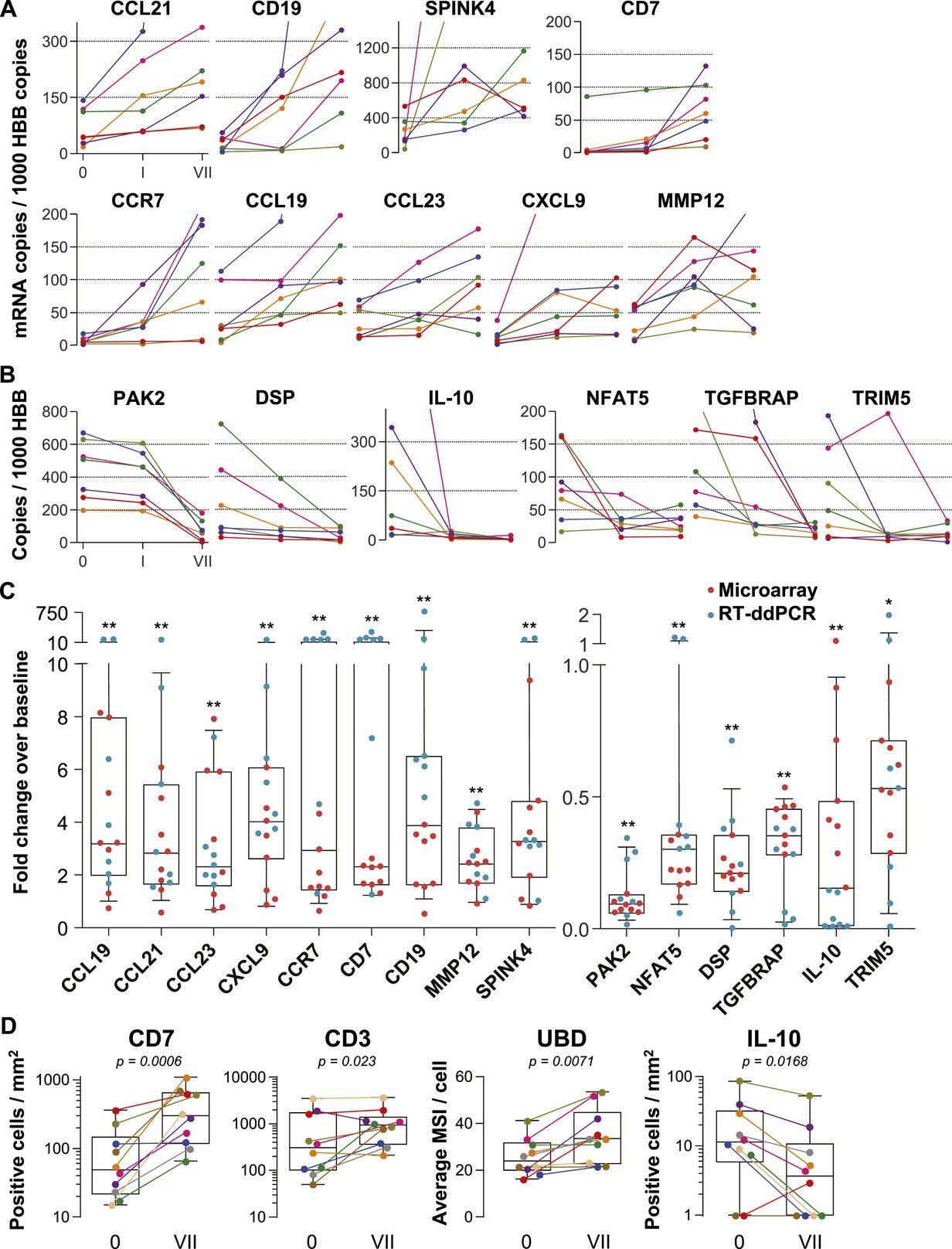
Immunohistochemistry: FAT10 Antibody [NBP2-13498] -
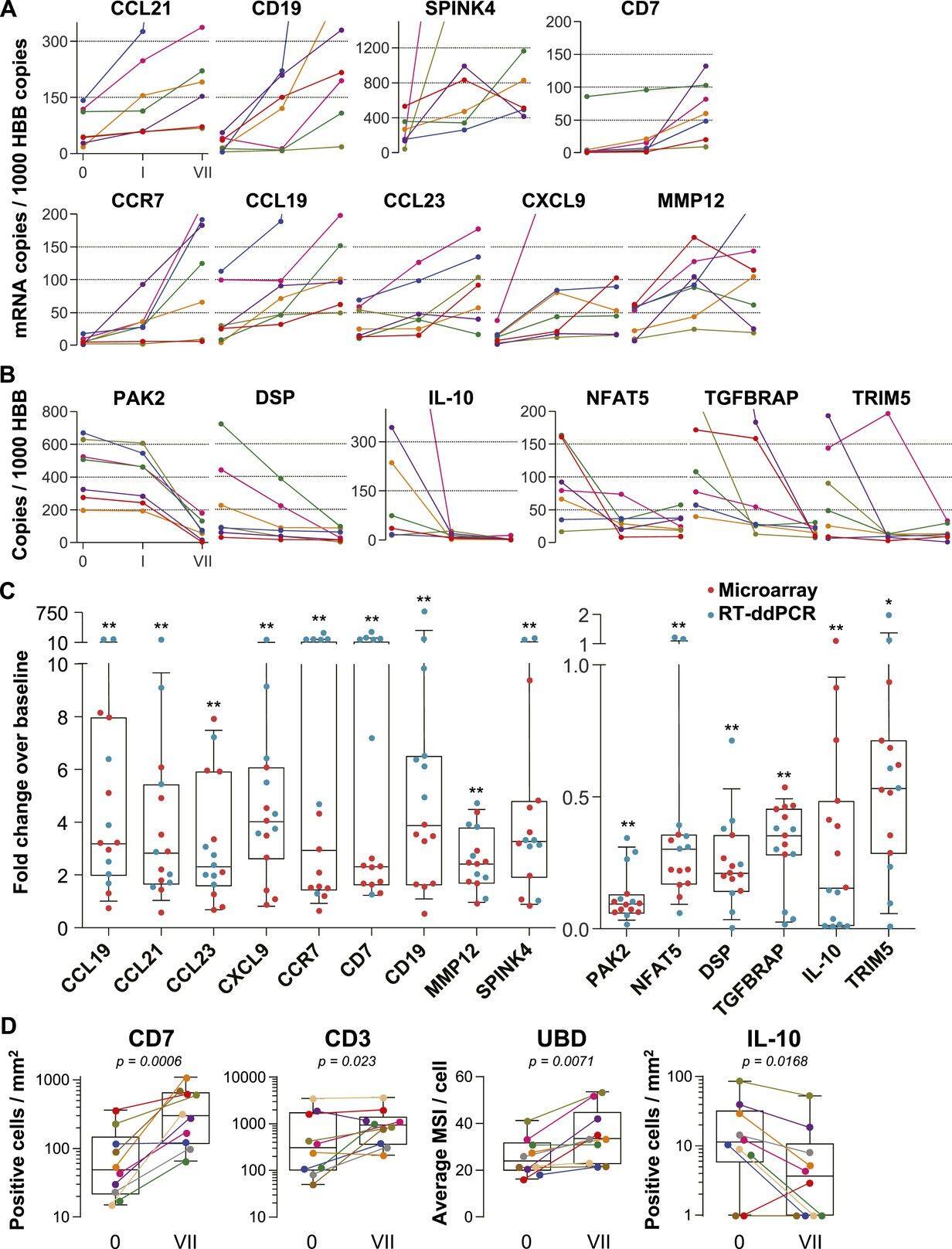
Immunohistochemistry for IL-10 and ubiquitin D (UBD) in rectal biopsies before (0) and after 7 days (VII) of daily tenofovir 1% gel use.Individual study participants are designated by letters. Blue indicates nuclei, brown indicates IL-10 or UBD.DOI:https://dx.doi.org/10.7554/eLife.04525.008Applications for FAT10 Antibody - BSA Free
Application
Recommended Usage
Immunocytochemistry/ Immunofluorescence
0.25-2 ug/ml
Western Blot
0.04-0.4 ug/ml
Application Notes
ICC/IF, Fixation Permeabilization: Use PFA/Triton X-100. Use in IHC reported in scientific literature (PMID: 25647729).
Formulation, Preparation, and Storage
Purification
Affinity purified
Formulation
PBS (pH 7.2) and 40% Glycerol
Format
BSA Free
Preservative
0.02% Sodium Azide
Concentration
Concentrations vary lot to lot. See vial label for concentration. If unlisted please contact technical services.
Shipping
The product is shipped with polar packs. Upon receipt, store it immediately at the temperature recommended below.
Stability & Storage
Store at 4C short term. Aliquot and store at -20C long term. Avoid freeze-thaw cycles.
Background: FAT10
Human Leukocyte Antigen-F Associated Transcript 10 (FAT10), also known as Ubiquitin D (UBD), is a 165 amino acid (aa) member of the Ubiquitin-like family of proteins. Human FAT10 has a predicted molecular weight of 18.5 kDa and shares 69% aa sequence identity with mouse FAT10. Human FAT10 mRNA is expressed as a single transcript in lymphoblastoid lines and dendritic cells, but more than one mRNA transcript has been identified for murine FAT10. FAT10 can also be induced by IFN-gamma and TNF-alpha in some cell lines. Structurally, FAT10 consists of two Ubiquitin-like domains that are connected by a short linker. Like Ubiquitin, FAT10 has a C-terminal glycine residue that can be used to form isopeptide bonds with target proteins. FAT10-conjugated proteins are targeted to the proteasome where the 26S Proteasome subunit S5a/Angiocidin binds to FAT10 and enables subsequent degradation of the conjugated protein. In addition to S5a/Angiocidin, FAT10 has been shown to interact with Huntingtin, Ataxin-1, MAD2, and NUB1L. FAT10 has been implicated in a number of biological processes such as cell cycle control, antigen presentation, and cytokine response.
Alternate Names
UBD
Gene Symbol
UBD
Additional FAT10 Products
Product Documents for FAT10 Antibody - BSA Free
Product Specific Notices for FAT10 Antibody - BSA Free
This product is for research use only and is not approved for use in humans or in clinical diagnosis. Primary Antibodies are guaranteed for 1 year from date of receipt.
Loading...
Loading...
Loading...
Loading...