
CD38 Antibody (MSVA-038R)
Novus Biologicals, part of Bio-Techne | Catalog # NBP3-57220
Recombinant Monoclonal Antibody

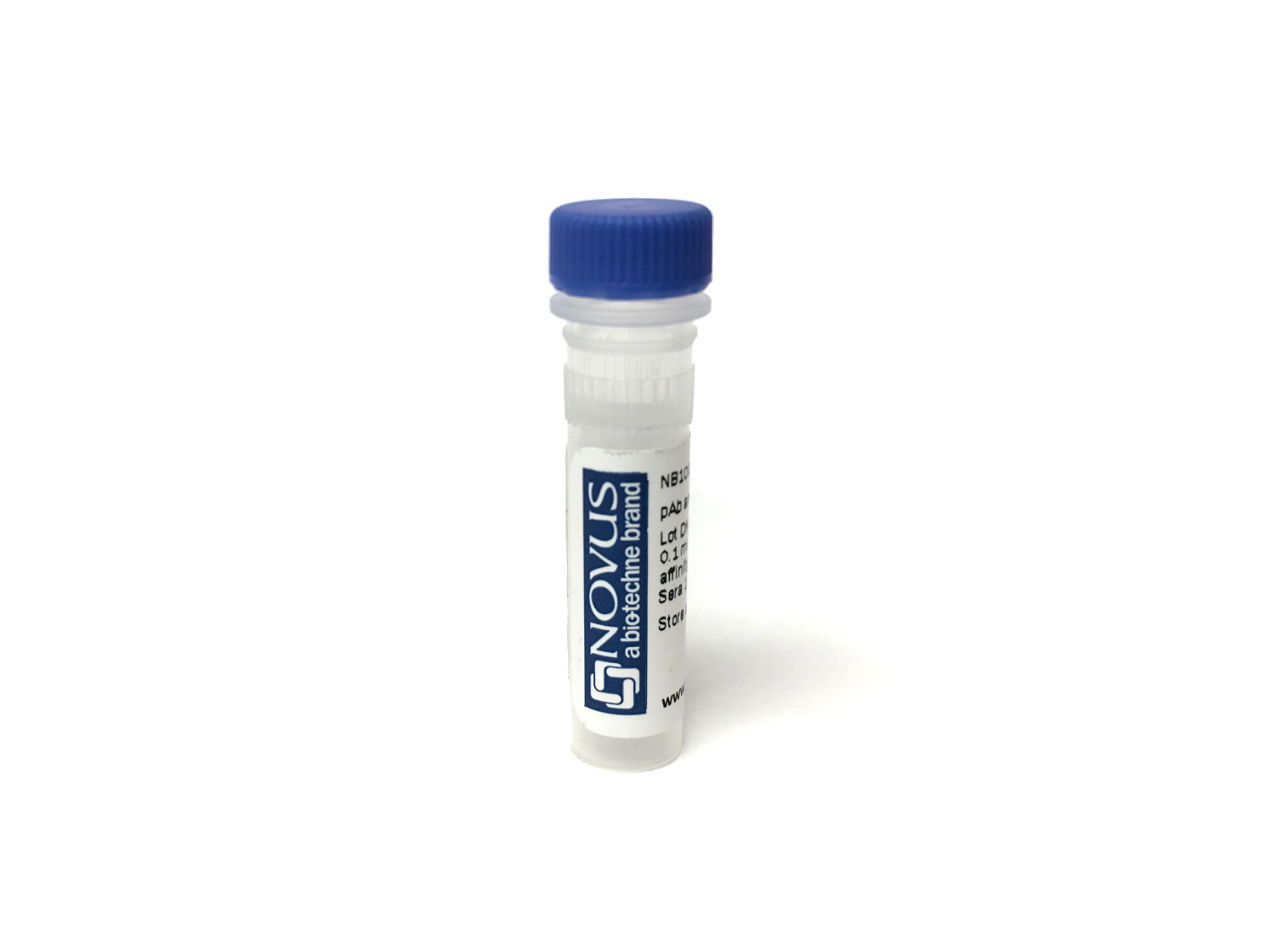
Key Product Details
Species Reactivity
Human
Applications
Immunohistochemistry, Immunohistochemistry-Paraffin
Label
Unconjugated
Antibody Source
Monoclonal Rabbit IgG Clone # MSVA-038R
Concentration
Please see the vial label for concentration. If unlisted please contact technical services.
Product Specifications
Immunogen
Synthetic peptide corresponding to residues within aa 190-310 of human CD38 (exact sequence is proprietary) Swissprot P28907
Localization
Membrane
Clonality
Monoclonal
Host
Rabbit
Isotype
IgG
Description
This antibody is highly specific and optimized for use in Immunohistochemistry.
It has been validated on TMAs covering 76 normal tissues and numerous cancer tissues.
The antibody concentration is optimized for dilution within dilution range using commercially available antibody diluent for immunohistochemistry.
Positive Control
Postive control:Prostate: A strong CD38 positivity of epithelial cells should be seen..
Negative Control
Negitve control:Colon: Epithelial cells must be CD38 negative.
Storage
Antibody can be stored at 4degC. For extended storage, aliquot and store at -20degC. Avoid repeated freeze-thaw cycles.
Applications for CD38 Antibody (MSVA-038R)
Application
Recommended Usage
Immunohistochemistry-Paraffin
1:50 1:100
Application Notes
Manual Protocol: Freshly cut sections should be used (less than 10 days between cutting and staining). Heat-induced antigen retrieval for 5 minutes in an autoclave at 121C in pH 7,8 Target Retrieval Solution buffer. Apply the antibody at a dilution of 1:150 at 37C for 60 minutes. Visualization of bound antibody by the EnVision Kit (Dako, Agilent) according to the manufacturer's directions.
Formulation, Preparation, and Storage
Purification
Protein A or G purified
Formulation
10mM PBS
Preservative
0.1% Sodium Azide
Concentration
Please see the vial label for concentration. If unlisted please contact technical services.
Shipping
The product is shipped with polar packs. Upon receipt, store it immediately at the temperature recommended below.
Stability & Storage
Store at 4C.
Background: CD38
As described above, CD38 is highly expressed in plasma cells and, as a result, is a target for treating multiple myeloma (MM), the cancer of white blood cells (4,6). The anti-CD38 monoclonal antibody daratumumab is one specific treatment for MM (4,6). Daratumumab has been shown to target MM cells through antibody-dependent cellular cytotoxicity and antibody dependent cellular phagocytosis (4). Additionally, CD38 has a potential role in neurodegenerative disorders and neuroinflammation as elucidated CD38's high expression in neurons, astrocytes, and microglia along with its enzymatic role in NAD degradation (3). Reduced NAD levels is a consequence of aging and occurs during neurodegeneration (3). Furthermore, murine studies have found that CD38 deletion inhibits neuroinflammation and neurodegeneration and therefore might be a potential therapeutic target (3). Similarly, CD38 inhibitors, like quercetin and luteolin, are used to treat age-related diseases and metabolic disorders (7).
References
1. Malavasi, F., Funaro, A., Alessio, M., DeMonte, L. B., Ausiello, C. M., Dianzani, U., Lanza, F., Magrini, E., Momo, M., & Roggero, S. (1992). CD38: a multi-lineage cell activation molecule with a split personality. International journal of clinical & laboratory research. https://doi.org/10.1007/BF02591400
2. Malavasi, F., Deaglio, S., Funaro, A., Ferrero, E., Horenstein, A. L., Ortolan, E., Vaisitti, T., & Aydin, S. (2008). Evolution and function of the ADP ribosyl cyclase/CD38 gene family in physiology and pathology. Physiological reviews. https://doi.org/10.1152/physrev.00035.2007
3. Guerreiro, S., Privat, A. L., Bressac, L., & Toulorge, D. (2020). CD38 in Neurodegeneration and Neuroinflammation. Cells. https://doi.org/10.3390/cells9020471
4. van de Donk, N., Richardson, P. G., & Malavasi, F. (2018). CD38 antibodies in multiple myeloma: back to the future. Blood. https://doi.org/10.1182/blood-2017-06-740944
5. Lund, F. E., Cockayne, D. A., Randall, T. D., Solvason, N., Schuber, F., & Howard, M. C. (1998). CD38: a new paradigm in lymphocyte activation and signal transduction. Immunological reviews. https://doi.org/10.1111/j.1600-065x.1998.tb01573.x
6. Glaria, E., & Valledor, A. F. (2020). Roles of CD38 in the Immune Response to Infection. Cells. https://doi.org/10.3390/cells9010228
7. Rajman, L., Chwalek, K., & Sinclair, D. A. (2018). Therapeutic Potential of NAD-Boosting Molecules: The In Vivo Evidence. Cell metabolism. https://doi.org/10.1016/j.cmet.2018.02.011
Long Name
Cluster of Differentiation 38
Alternate Names
ADP-ribosyl Cyclase, CD38, Cyclic ADP-ribose Hydrolase
Gene Symbol
CD38
Additional CD38 Products
Product Specific Notices for CD38 Antibody (MSVA-038R)
This product is for research use only and is not approved for use in humans or in clinical diagnosis. Primary Antibodies are guaranteed for 1 year from date of receipt.
Loading...
Loading...
Loading...
Loading...
Loading...