
3713 results for "IgG (H+L) Secondary Antibodies" in Products
IgG (H+L): Secondary Antibodies
Antibodies, also known as immunoglobulins (Igs) are critical for immunity and are grouped into five primary classes: IgG, IgM, IgA, IgD, and IgE. The most abundant antibody isotype is immunoglobulin G (IgG) with concentrations ranging from 7.5-22 mg/ml in human serum and has a molecular weight of 150 kDa. The major effector functions of IgG include neutralization, opsonization, complement fixation and antibody dependent cell-mediated cytotoxicity (ADCC). This monomeric immunoglobulin, expressed ...

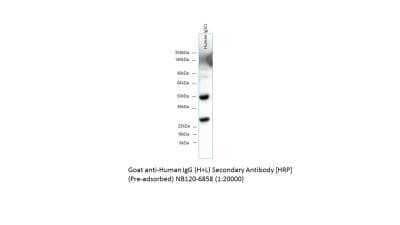
| Reactivity: | Human |
| Details: | Goat IgG Polyclonal |
| Applications: | IHC, WB, ELISA, DB |
| Reactivity: | Rabbit |
| Details: | Goat IgG Polyclonal |
| Applications: | IHC, WB, ELISA, ICC/IF |

| Reactivity: | Mouse |
| Details: | Goat IgG Polyclonal |
| Applications: | IHC, WB, ELISA, ICC/IF, Flow |
![Western Blot: Goat anti-Mouse IgG (H+L) Secondary Antibody [NB7535]](https://resources.bio-techne.com/images/products/Goat-anti-Mouse-IgG-H+L-Secondary-Antibody-Western-Blot-NB7535-img0010.jpg "Western Blot: Goat anti-Mouse IgG (H+L) Secondary Antibody [NB7535]")
| Reactivity: | Llama |
| Details: | Goat IgG Polyclonal |
| Applications: | IHC, WB, ELISA |
| Reactivity: | Monkey |
| Details: | Goat IgG Polyclonal |
| Applications: | IHC, WB, ELISA, ICC/IF |
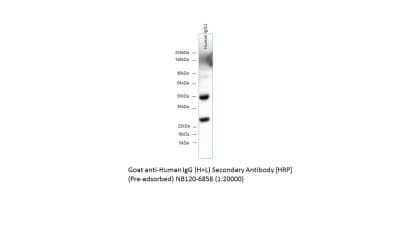
| Reactivity: | Human |
| Details: | Goat IgG Polyclonal |
| Applications: | IHC, WB, ELISA, DB |
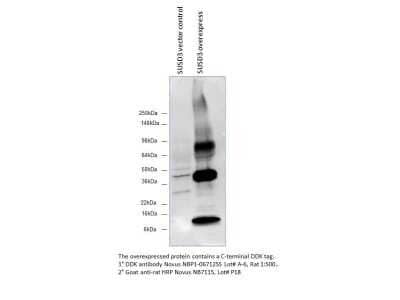
| Reactivity: | Rat |
| Details: | Goat IgG Polyclonal |
| Applications: | IHC, WB, ELISA, ICC/IF |
| Reactivity: | Mouse |
| Details: | Donkey IgG Polyclonal |
| Applications: | IHC, WB, ELISA, ICC/IF, Flow |
| Reactivity: | Llama |
| Details: | Goat IgG Polyclonal |
| Applications: | IHC, WB, ELISA, ICC/IF |
| Reactivity: | Human |
| Details: | Goat IgG Polyclonal |
| Applications: | IHC, WB, ELISA, ICC/IF |
| Reactivity: | Mouse |
| Details: | Goat IgG Polyclonal |
| Applications: | IHC, WB, ELISA, ICC/IF |

| Reactivity: | Sheep |
| Details: | Donkey IgG Polyclonal |
| Applications: | IHC, WB, ELISA, ICC/IF |
| Reactivity: | Rabbit |
| Details: | Goat IgG Polyclonal |
| Applications: | Flow |
| Reactivity: | Rabbit |
| Details: | Goat IgG Polyclonal |
| Applications: | IHC, WB, ELISA, ICC/IF, Flow |
| Reactivity: | Rabbit |
| Details: | Guinea Pig IgG Polyclonal |
| Applications: | IHC, WB, ELISA |
![Western Blot: Guinea Pig anti-Rabbit IgG (H+L) Secondary Antibody (Pre-adsorbed) [NBP1-72763]](https://resources.bio-techne.com/images/products/Guinea-Pig-anti-Rabbit-IgG-H+L-Secondary-Antibody-Pre-adsorbed-Western-Blot-NBP1-72763-img0009.jpg "Western Blot: Guinea Pig anti-Rabbit IgG (H+L) Secondary Antibody (Pre-adsorbed) [NBP1-72763]")
| Reactivity: | Mouse |
| Details: | Goat IgG Polyclonal |
| Applications: | IHC, ICC/IF, Flow |
| Reactivity: | Rabbit |
| Details: | Goat IgG Polyclonal |
| Applications: | IHC, WB, ELISA, ICC/IF, IP, +1 More |
| Reactivity: | Mouse |
| Details: | Goat IgG Polyclonal |
| Applications: | IHC, WB, ELISA, ICC/IF |
| Reactivity: | Mouse |
| Details: | Goat IgG Polyclonal |
| Applications: | IHC, WB, ELISA, ICC/IF, Flow |
| Reactivity: | Mouse |
| Details: | Goat IgG Polyclonal |
| Applications: | IHC, WB, ELISA, IP, Func |
| Reactivity: | Rabbit |
| Details: | Sheep IgG Polyclonal |
| Applications: | WB, ELISA, ICC/IF |
| Reactivity: | Mouse |
| Details: | Goat IgG Polyclonal |
| Applications: | IHC, WB, ELISA, IP, Func |
| Reactivity: | Canine |
| Details: | Goat IgG Polyclonal |
| Applications: | IHC, WB, ELISA, ICC/IF |
| Reactivity: | Guinea Pig |
| Details: | Goat IgG Polyclonal |
| Applications: | IHC, WB, ELISA, ICC/IF |
| Reactivity: | Rabbit |
| Details: | Goat IgG Polyclonal |
| Applications: | IHC, WB, ELISA, ICC/IF, IP, +1 More |