
Human Fc gamma RIIIA/CD16a Antibody
R&D Systems, part of Bio-Techne | Catalog # MAB11728

Conjugate
Catalog #
Key Product Details
Species Reactivity
Human
Applications
Multiplex Immunofluorescence, Immunohistochemistry, Western Blot, COMET
Label
Unconjugated
Antibody Source
Monoclonal Mouse IgG1 Clone # 1105901
Product Specifications
Immunogen
Synthetic Peptide
Accession # P08637
Accession # P08637
Specificity
Detects a synthetic peptide specific for human FC gammaR3A around amino acid 55 in Direct ELISA.
Clonality
Monoclonal
Host
Mouse
Isotype
IgG1
Scientific Data Images for Human Fc gamma RIIIA/CD16a Antibody
Detection of CD16a in Human Spleen via seqIF™ staining on COMET™
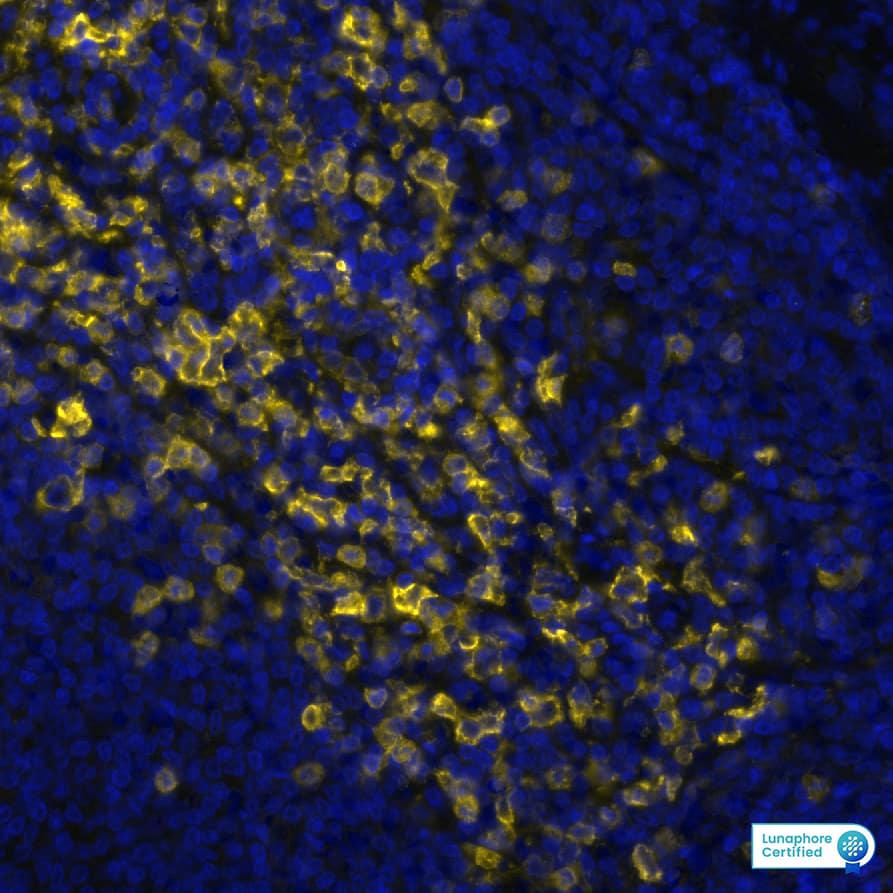
CD16a was detected in immersion fixed paraffin-embedded sections of human Spleen using Mouse Anti-Human CD16a, Monoclonal Antibody (Catalog # MAB11728) at 5ug/mL at 37 ° Celsius for 4 minutes. Before incubation with the primary antibody, tissue underwent an all-in-one dewaxing and antigen retrieval preprocessing using PreTreatment Module (PT Module) and Dewax and HIER Buffer H (pH 9; Epredia Catalog # TA-999-DHBH). Tissue was stained using the Alexa Fluor™ Plus 647 Goat anti-Mouse IgG Secondary Antibody at 1:200 at 37° Celsius for 4 minutes. (Yellow; Lunaphore Catalog # DR647MS) and counterstained with DAPI (blue; Lunaphore Catalog # DR100). Specific staining was localized to the membrane. Protocol available in COMET™ Panel Builder.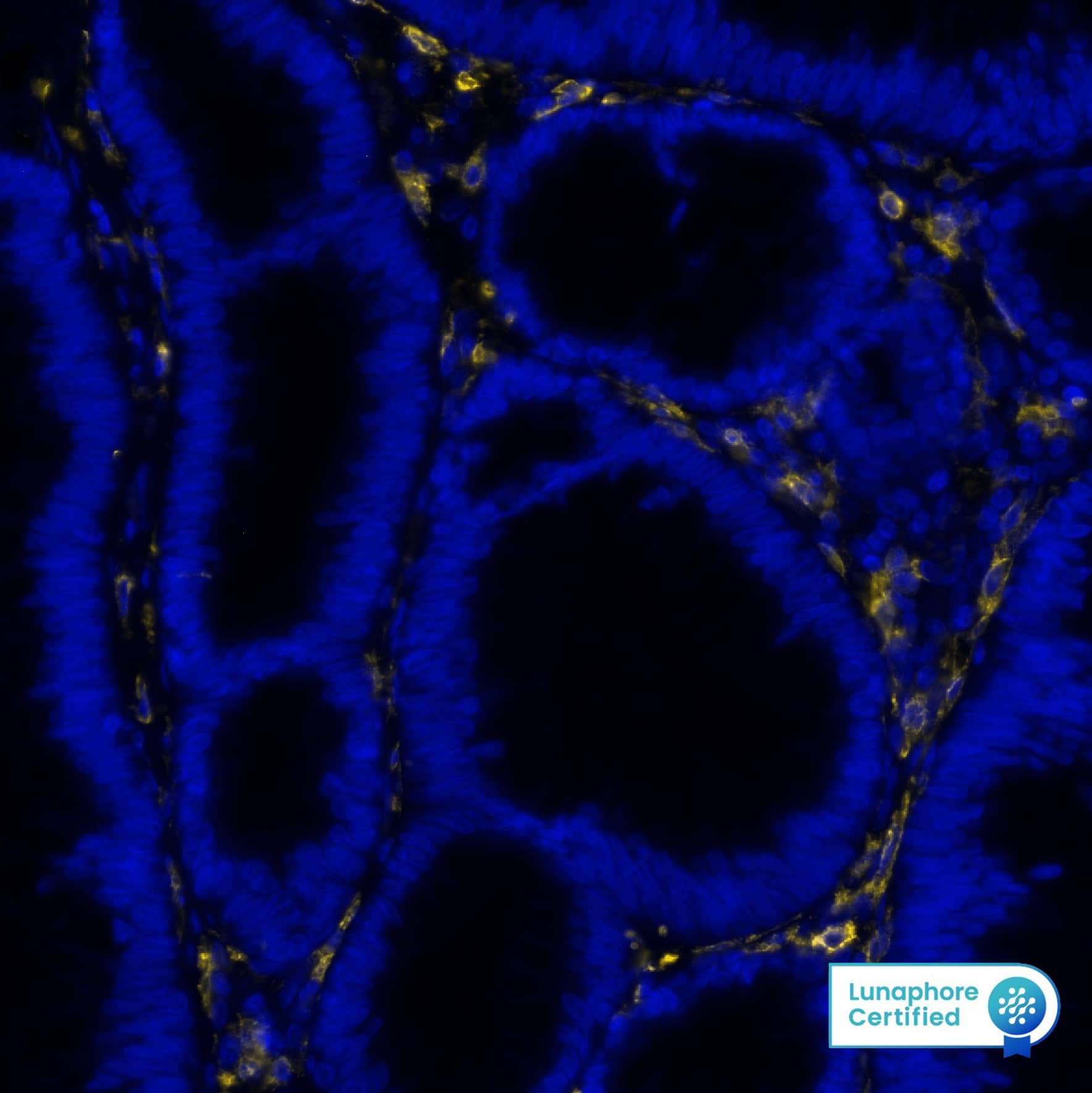
Detection of CD16a in Human Colon via seqIF™ staining on COMET™
CD16a was detected in immersion fixed paraffin-embedded sections of human Colon using Mouse Anti-Human CD16a, Monoclonal Antibody (Catalog # MAB11728) at 5ug/mL at 37 ° Celsius for 4 minutes. Before incubation with the primary antibody, tissue underwent an all-in-one dewaxing and antigen retrieval preprocessing using PreTreatment Module (PT Module) and Dewax and HIER Buffer H (pH 9; Epredia Catalog # TA-999-DHBH). Tissue was stained using the Alexa Fluor™ Plus 647 Goat anti-Mouse IgG Secondary Antibody at 1:200 at 37° Celsius for 4 minutes. (Yellow; Lunaphore Catalog # DR647MS) and counterstained with DAPI (blue; Lunaphore Catalog # DR100). Specific staining was localized to the membrane. Protocol available in COMET™ Panel Builder.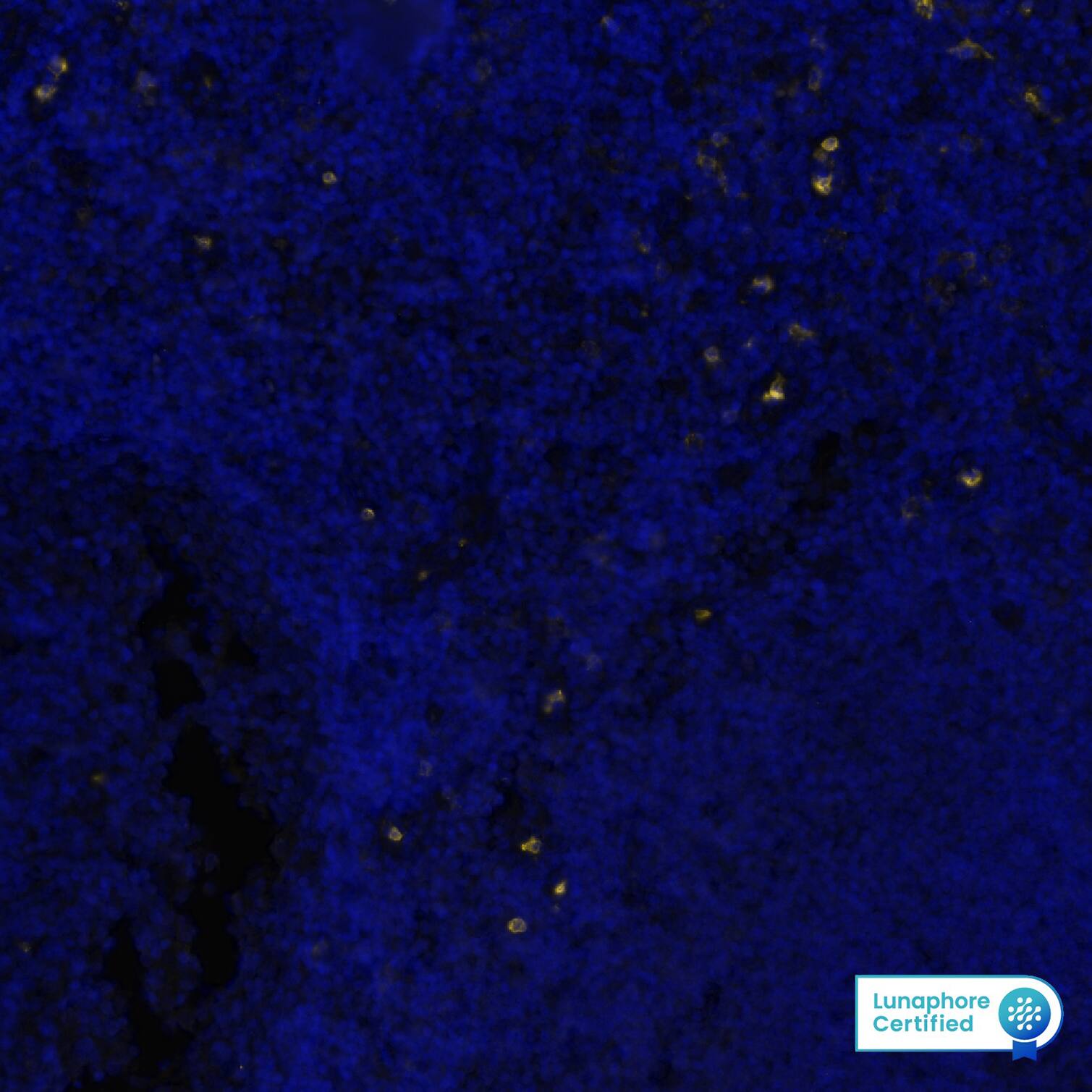
Detection of CD16a in Human Lymph Node via seqIF™ staining on COMET™
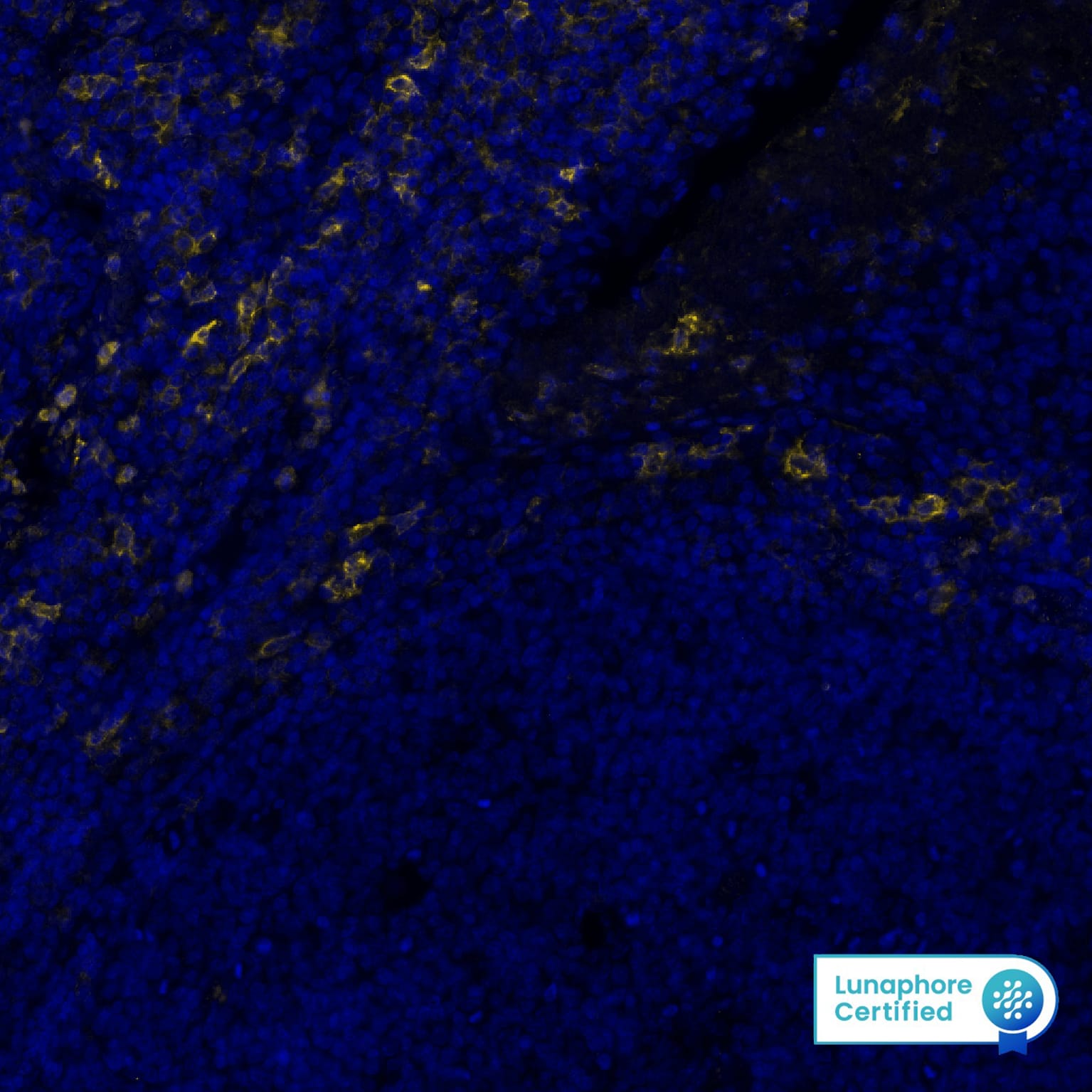
CD16a was detected in immersion fixed paraffin-embedded sections of human Lymph Node using Mouse Anti-Human CD16a, Monoclonal Antibody (Catalog # MAB11728) at 5ug/mL at 37° Celsius for 4 minutes. Before incubation with the primary antibody, tissue underwent an all-in-one dewaxing and antigen retrieval preprocessing using PreTreatment Module (PT Module) and Dewax and HIER Buffer H (pH 9; Epredia Catalog # TA-999-DHBH). Tissue was stained using the Alexa Fluor™ Plus 647 Goat anti-Mouse IgG Secondary Antibody at 1:200 at 37° Celsius for 4 minutes. (Yellow; Lunaphore Catalog # DR647MS) and counterstained with DAPI (blue; Lunaphore Catalog # DR100). Specific staining was localized to the membrane. Protocol available in COMET™ Panel Builder.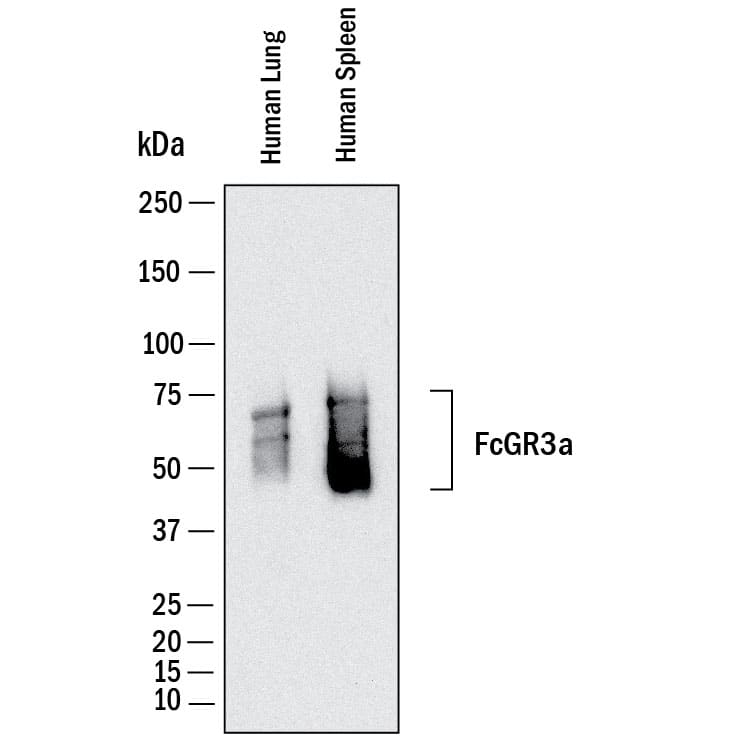
Applications for Human Fc gamma RIIIA/CD16a Antibody
Application
Recommended Usage
COMET
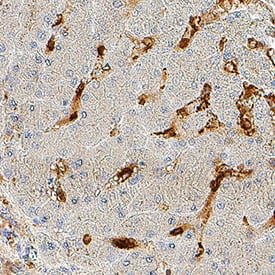
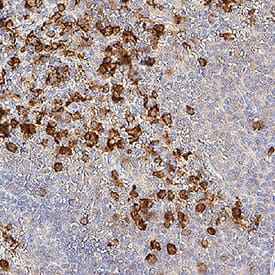
Immunohistochemistry
0.5-15 µg/mL
Sample: Immersion fixed paraffin-embedded sections of human liver and spleen
Sample: Immersion fixed paraffin-embedded sections of human liver and spleen
Multiplex Immunofluorescence
5 µg/mL
Sample: Immersion fixed paraffin-embedded sections of human spleen
Sample: Immersion fixed paraffin-embedded sections of human spleen
Western Blot
1 µg/mL
Sample: Human lung tissue and human spleen tissue
Sample: Human lung tissue and human spleen tissue
Formulation, Preparation, and Storage
Purification
Protein A or G purified from cell culture supernatant
Reconstitution
Reconstitute lyophilized material at 0.2 mg/ml in sterile PBS. For liquid material, refer to CoA for concentration.
Formulation
Lyophilized from a 0.2 μm filtered solution in PBS with Trehalose.
Shipping
Lyophilized product is shipped at ambient temperature. Liquid small pack size (-SP) is shipped with polar packs. Upon receipt, store immediately at the temperature recommended below.
Stability & Storage
Use a manual defrost freezer and avoid repeated freeze-thaw cycles.
- 12 months from date of receipt, -20 to -70 °C as supplied.
- 1 month, 2 to 8 °C under sterile conditions after reconstitution.
- 6 months, -20 to -70 °C under sterile conditions after reconstitution.
Background: Fc gamma RIIIA/CD16a
Fc gamma RIIIa is a low/intermediate affinity receptor for polyvalent immune-complexed IgG. It is involved in phagocytosis, secretion of enzymes and inflammatory mediators, antibody-dependent cytotoxicity and clearance of immune complexes (1, 2). In humans, it is a 50-70 kDa type I transmembrane activating receptor expressed by NK cells, T cells, monocytes, and macrophages (1). Fc gamma RIIIb is highly related, sharing 97% amino acid (aa) identity within the extracellular domain (ECD), but is a GPI-linked receptor expressed on human neutrophils and eosinophils (1, 2). The ECD of Fc gamma RIIIa shares 63%, 61%, 65%, 59% and 58% aa identity with mouse Fc gamma RIV, rat Fc gamma RIIIa, feline CD16, bovine CD16 and porcine Fc gamma RIIIb paralogs, respectively. The Fc gamma RIIIa cDNA encodes 254 aa including a 16 aa signal sequence, 191 aa ECD with two C2-type Ig-like domains and five potential N-glycosylation sites, a 22 aa transmembrane (TM) sequence and a 25 aa cytoplasmic domain. In humans, a single nucleotide polymorphism creates high binding (176V) and low binding (176F) forms that, when homozygous, may influence susceptibility to autoimmune diseases or response to therapeutic IgG antibodies (3, 4). Catalog # 4325-FC is expressed as the 176V isoform of Fc gamma RIIIa. Fc gamma RIIIa surface expression requires interaction of an accessory chain, either the common gamma-chain or CD3 zeta (5, 6). Glycosylation patterns, electrophoretic mobility and binding affinity appear to differ between NK cell and monocyte Fc gamma RIIIa (7). The ECD of both Fc gamma RIIIa and b can be proteolytically cleaved and retain binding activity in soluble form (8-11). In monocytes and macrophages, activation and phagocytosis can trigger Fc gamma RIIIa release (11). Soluble Fc gamma RIII can be detected in normal plasma and is increased in rheumatoid arthritis and in coronary artery diseases (9, 10).
References
- Nimmerjahn, F. and J.V. Ravetch (2006) Immunity 24:19.
- Ravetch, J.V. and B. Perussia (1989) J. Exp. Med. 170:481.
- Wu, J. et al. (1997) J. Clin. Invest. 100:1059.
- Dall’Ozzo, S. et al. (2004) Cancer Res. 64:4664.
- Kim, M.-K. et al. (2003) Blood 101:4479.
- Lanier, L.L. et al. (1989) Nature 342:803.
- Edberg, J.C. and R.P. Kimberley (1997) J. Immunol. 159:3849.
- Li, P. et al. (2007) J. Biol. Chem. 282:6210.
- Masuda, M. et al. (2003) J. Rheumatol. 30:1911.
- Masuda, M. et al. (2006) Atherosclerosis 188:377.
- Webster, N.L. et al. (2006) J. Leukoc. Biol. 79:294.
Long Name
Fc gamma Receptor III A
Alternate Names
CD16a, FCGR3A, FcgRIIIA
Gene Symbol
FCGR3A
UniProt
Additional Fc gamma RIIIA/CD16a Products
Product Documents for Human Fc gamma RIIIA/CD16a Antibody
Product Specific Notices for Human Fc gamma RIIIA/CD16a Antibody
For research use only
Loading...
Loading...
Loading...
Loading...
Loading...