
CRY1 Antibody [PerCP]
Novus Biologicals, part of Bio-Techne | Catalog # AF3764C

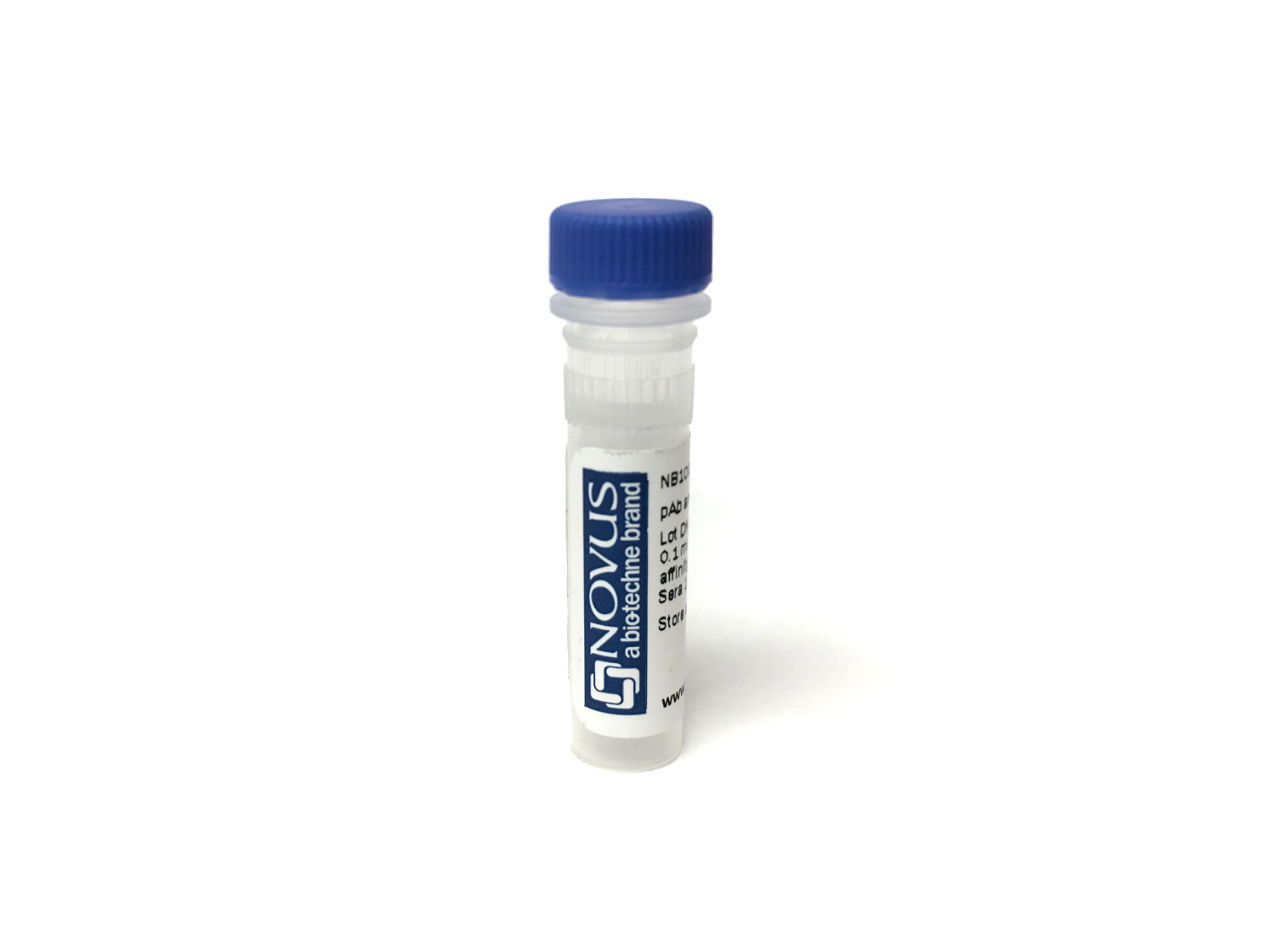
Conjugate
Catalog #
Key Product Details
Species Reactivity
Human, Mouse
Applications
Immunohistochemistry, Western Blot, Immunocytochemistry
Label
PerCP (Excitation = 490 nm, Emission = 675 nm)
Antibody Source
Polyclonal Goat IgG
Concentration
Please see the vial label for concentration. If unlisted please contact technical services.
Product Specifications
Immunogen
E. coli-derived recombinant human CRY1
Lys115-His224
Accession # Q16526
Lys115-His224
Accession # Q16526
Specificity
Detects human and mouse CRY1 in direct ELISAs.
Clonality
Polyclonal
Host
Goat
Isotype
IgG
Applications for CRY1 Antibody [PerCP]
Application
Recommended Usage
Immunocytochemistry
Optimal dilutions of this antibody should be experimentally determined.
Immunohistochemistry
Optimal dilutions of this antibody should be experimentally determined.
Western Blot
Optimal dilutions of this antibody should be experimentally determined.
Application Notes
Optimal dilution of this antibody should be experimentally determined.
Formulation, Preparation, and Storage
Purification
Antigen Affinity-purified
Formulation
PBS
Preservative
0.05% Sodium Azide
Concentration
Please see the vial label for concentration. If unlisted please contact technical services.
Shipping
The product is shipped with polar packs. Upon receipt, store it immediately at the temperature recommended below.
Stability & Storage
Store at 4C in the dark.
Background: CRY1
Long Name
Cryptochrome 1
Alternate Names
Cryptochrome I, PHLL1
Gene Symbol
CRY1
Additional CRY1 Products
Product Documents for CRY1 Antibody [PerCP]
Product Specific Notices for CRY1 Antibody [PerCP]
This product is for research use only and is not approved for use in humans or in clinical diagnosis. Primary Antibodies are guaranteed for 1 year from date of receipt.
Loading...
Loading...
Loading...
Loading...