
Mouse HIF-2 alpha/EPAS1 ELISA Kit (Colorimetric)
Novus Biologicals, part of Bio-Techne | Catalog # NBP3-49778

Key Product Details
Sensitivity
0.19 ng/mL
Assay Range
0.31 - 20 ng/mL
Product Specifications
Assay Type
Sandwich ELISA
Kit Type
ELISA Kit (Colorimetric)
Reactivity
Mouse
Description
Assay Length: 3 h 30 min
Precision
Intra-Assay Precision (Precision within an assay) CV% < 10
Inter-Assay Precision (Precision between assays) CV% < 10
Recovery for Mouse HIF-2 alpha/EPAS1 ELISA Kit (Colorimetric)
Recovery
80 - 120%
Linearity
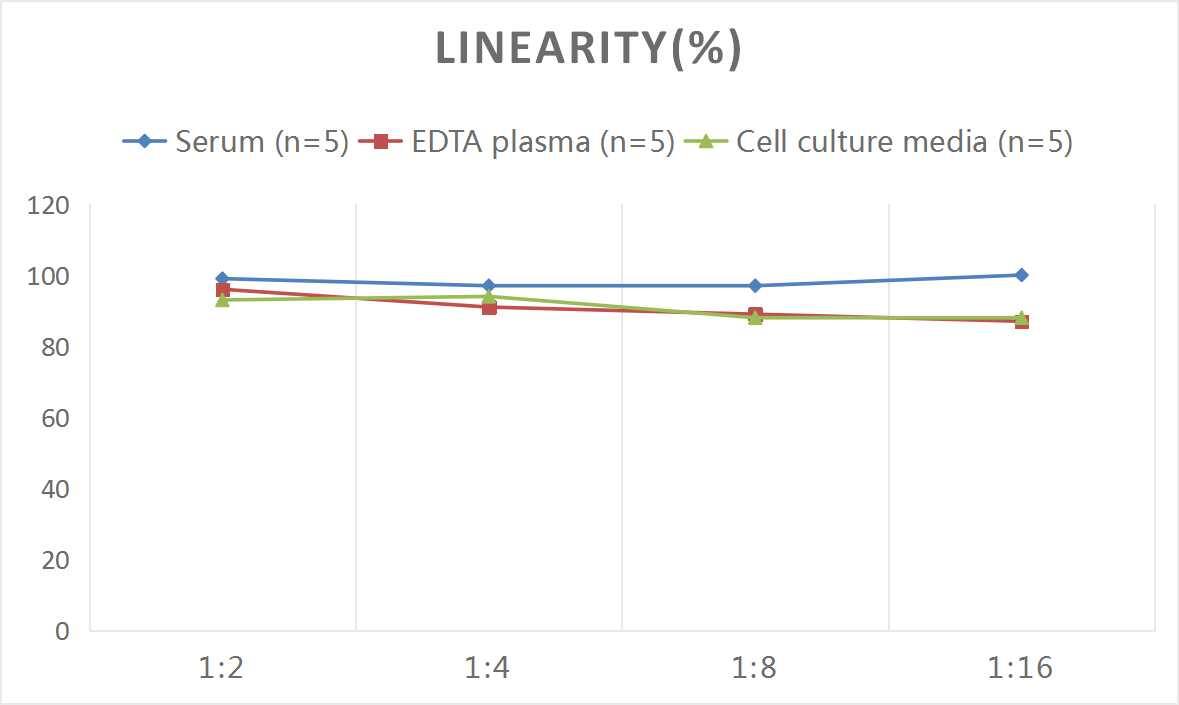
Scientific Data Images for Mouse HIF-2 alpha/EPAS1 ELISA Kit (Colorimetric)
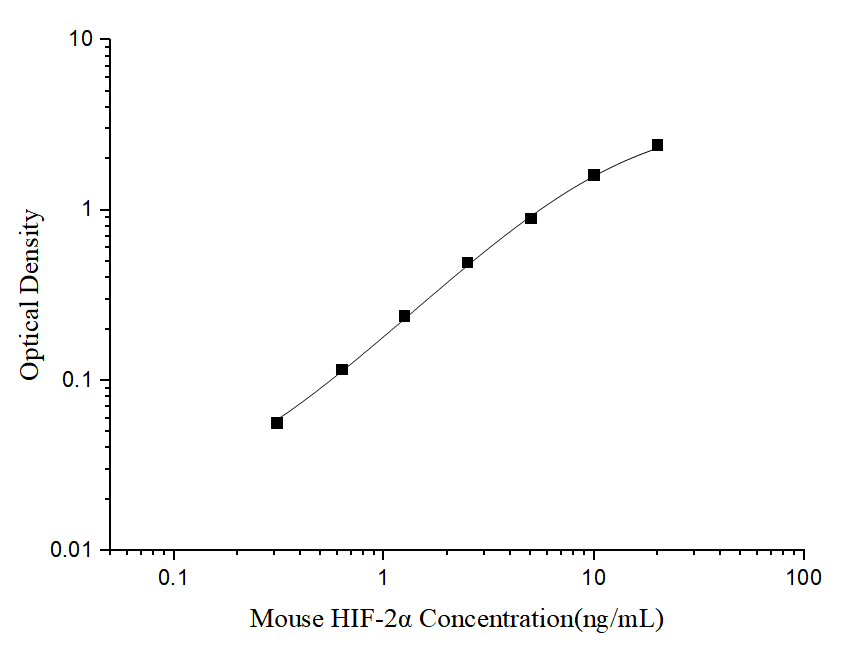
ELISA: Mouse HIF-2 alpha/EPAS1 ELISA Kit (Colorimetric) [NBP3-49778]
Standard Curve Reference.Kit Contents for Mouse HIF-2 alpha/EPAS1 ELISA Kit (Colorimetric)
- Biotinylated Detection Ab Diluent
- Certificate of Analysis
- Concentrated Biotinylated Detection Ab (100x)
- Concentrated HRP Conjugate (100x)
- Concentrated Wash Buffer (25x)
- HRP Conjugate Diluent
- Micro ELISA Plate (Dismountable)
- Plate Sealer
- Product Description
- Reference Standard
- Reference Standard & Sample Diluent
- Stop Solution
- Substrate Reagent
Preparation and Storage
Shipping
The product is shipped with polar packs. Upon receipt, store it immediately at the temperature recommended below.
Stability & Storage
Storage of components varies. See protocol for specific instructions.
Background: HIF-2 alpha/EPAS1
HIF-1 or hypoxia inducible factor 1, is a transcription factor commonly referred to as a "master regulator of the hypoxic response" for its central role in the regulation of cellular adaptations to hypoxia. Similarly, HIF-2 alpha plays a role in cellular responses to hypoxia, but whereas HIF-1 alpha is ubiquitously expressed, HIF-2 alpha is predominantly expressed in the vascular endothelium at embryonic stages and after birth in select cells and tissue types (e.g., fibroblasts, hepatocytes and myocytes at 96kDa) (4). Following a similar mechanism to HIF-1 alpha, HIF-2 alpha is stabilized under hypoxic conditions by the formation of a heterodimer with an ARNT/HIF-1 beta subunit. Stable HIF-2 alpha-ARNT/HIF-1 beta heterodimers engage p300/CBP in the nucleus for binding to hypoxic response elements (HREs), inducing transcription, and thus regulation of genes (e.g., EPO, VEGFA). HIF-1 predominantly transactivates genes involved in glycolytic control and pro- apoptotic genes (e.g., LDHA and BNIP3), and HIF-2 regulates the expression of genes involved in invasion and stemness (e.g., MMP2, and OCT4). Common gene targets for HIF-1 and HIF-2 include VEGFA and GLUT1 (5).
The HIF-2 alpha subunit is rapidly targeted and degraded by the ubiquitin proteasome system under normoxic conditions. This process is mediated by oxygen-sensing enzymes, prolyl hydroxylase domain enzymes (PHDs), which catalyze the hydroxylation of key proline residues (Pro-405 and Pro-531) within the oxygen-dependent degradation domain of HIF-2 alpha (5). Once hydroxylated, HIF-2 alpha binds the von Hippel-Lindau tumor suppressor protein (pVHL) for subsequent ubiquitination and proteasomal degradation (5,6).
References
1. Semenza, G. L., Agani, F., Feldser, D., Iyer, N., Kotch, L., Laughner, E., & Yu, A. (2000). Hypoxia, HIF-1, and the pathophysiology of common human diseases. Advances in Experimental Medicine and Biology.
2.Muz, B., de la Puente, P., Azab, F., & Azab, A. K. (2015). The role of hypoxia in cancer progression, angiogenesis, metastasis, and resistance to therapy. Hypoxia. https://doi.org/10.2147/hp.s93413
3. Huang, Y., Lin, D., & Taniguchi, C. M. (2017). Hypoxia inducible factor (HIF) in the tumor microenvironment: friend or foe? Science China Life Sciences. https://doi.org/10.1007/s11427-017-9178-y
4. Hu, C.-J., Wang, L.-Y., Chodosh, L. A., Keith, B., & Simon, M. C. (2003). Differential Roles of Hypoxia-Inducible Factor 1 (HIF-1) and HIF-2 in Hypoxic Gene Regulation. Molecular and Cellular Biology. https://doi.org/10.1128/mcb.23.24.9361-9374.2003
5. Koh, M. Y., & Powis, G. (2012). Passing the baton: The HIF switch. Trends in Biochemical Sciences. https://doi.org/10.1016/j.tibs.2012.06.004
6. Koyasu, S., Kobayashi, M., Goto, Y., Hiraoka, M., & Harada, H. (2018). Regulatory mechanisms of hypoxia-inducible factor 1 activity: Two decades of knowledge. Cancer Science. https://doi.org/10.1111/cas.13483
Long Name
Hypoxia-inducible Transcription Factor 2 alpha
Alternate Names
EPAS1, HIF 2A, HIF2 alpha, HIF2A, HLF, MOP2
Gene Symbol
EPAS1
Additional HIF-2 alpha/EPAS1 Products
Product Documents for Mouse HIF-2 alpha/EPAS1 ELISA Kit (Colorimetric)
Product Specific Notices for Mouse HIF-2 alpha/EPAS1 ELISA Kit (Colorimetric)
This product is for research use only and is not approved for use in humans or in clinical diagnosis. ELISA Kits are guaranteed for 6 months from date of receipt.
Loading...
Loading...
Loading...
Loading...