
S100B Antibody (EP1576Y)
Novus Biologicals, part of Bio-Techne | Catalog # NB110-57478

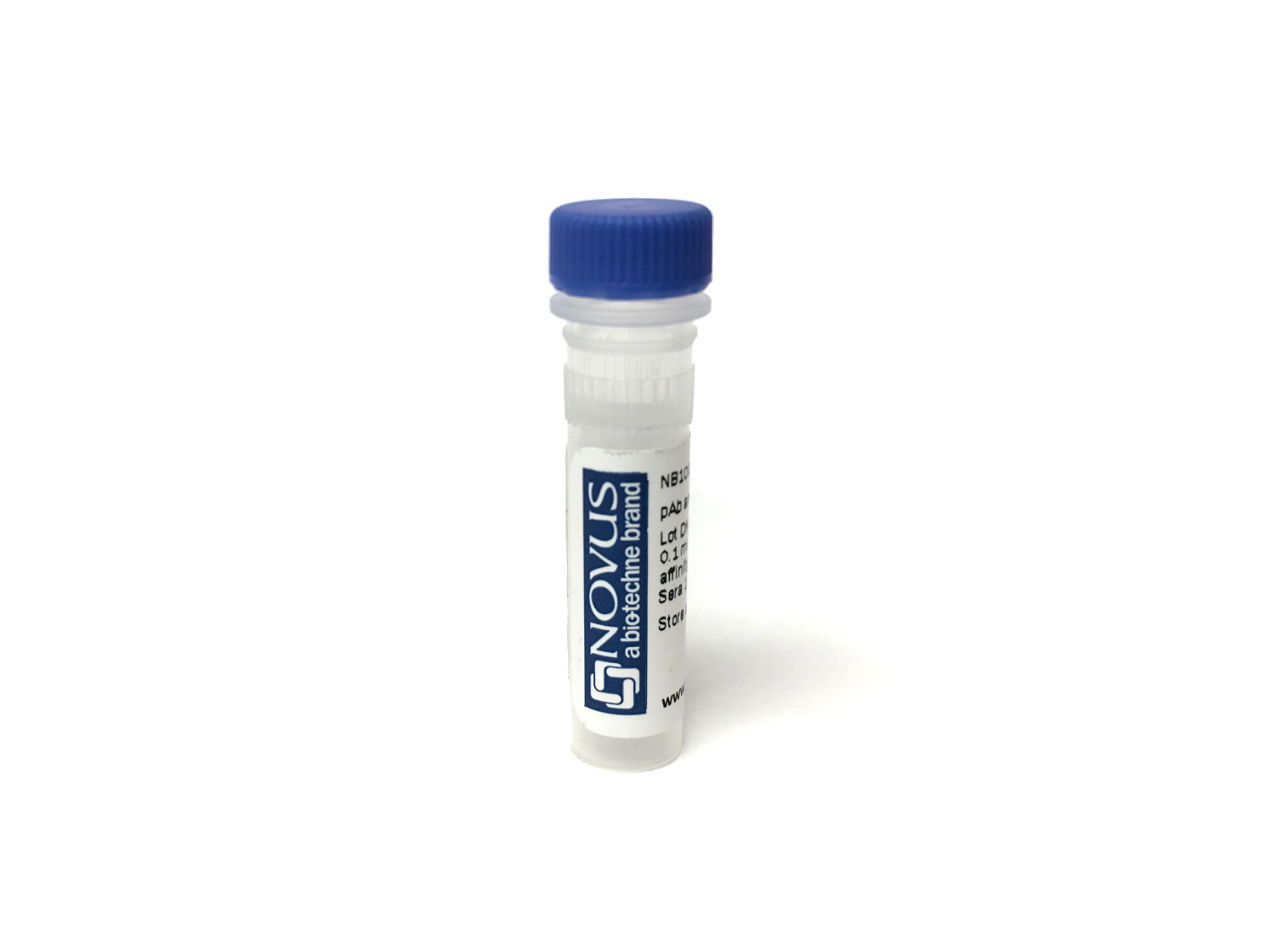
Discontinued Product
NB110-57478 has been discontinued.
View all S100B products.
Key Product Details
Species Reactivity
Validated:
Human, Mouse, Rat, Goat, Rhesus Macaque, Zebrafish
Cited:
Human, Mouse, Rat
Applications
Validated:
Immunohistochemistry, Immunohistochemistry-Paraffin, Immunohistochemistry-Frozen, Western Blot, Immunocytochemistry/ Immunofluorescence, Immunoprecipitation
Cited:
Immunohistochemistry-Frozen, Western Blot, Immunocytochemistry/ Immunofluorescence, IF/IHC
Label
Unconjugated
Antibody Source
Monoclonal Rabbit IgG Clone # EP1576Y
Concentration
Please see the vial label for concentration. If unlisted please contact technical services.
Product Specifications
Immunogen
A synthetic peptide corresponding to residues on the C-terminus of human S100-Beta was used as an immunogen.
Marker
Astrocyte Marker
Clonality
Monoclonal
Host
Rabbit
Isotype
IgG
Theoretical MW
11 kDa.
Disclaimer note: The observed molecular weight of the protein may vary from the listed predicted molecular weight due to post translational modifications, post translation cleavages, relative charges, and other experimental factors.
Disclaimer note: The observed molecular weight of the protein may vary from the listed predicted molecular weight due to post translational modifications, post translation cleavages, relative charges, and other experimental factors.
Applications for S100B Antibody (EP1576Y)
Application
Recommended Usage
Immunocytochemistry/ Immunofluorescence
1:10-1:500
Immunohistochemistry
1:10-1:500
Immunohistochemistry-Frozen
1:10-1:500
Immunohistochemistry-Paraffin
1:250-500
Immunoprecipitation
1:40
Western Blot
1:1000
Application Notes
Mouse cross reactivity tested by western blot and IHC. Rat cross reactivity tested by western blot and IHC. Use in ICC/IF was reported in the scientific literature (PMID: 20649577) Use in Immunohistochemistry-Frozen reported in scientific literature (PMID 24626220)
Reviewed Applications
Read 2 reviews rated 4 using NB110-57478 in the following applications:
Formulation, Preparation, and Storage
Purification
Protein A purified
Formulation
59% PBS (pH 7.2), 0.05% BSA and 40% Glycerol
Preservative
0.01% Sodium Azide
Concentration
Please see the vial label for concentration. If unlisted please contact technical services.
Shipping
The product is shipped with polar packs. Upon receipt, store it immediately at the temperature recommended below.
Stability & Storage
Store at -20C. Avoid freeze-thaw cycles.
Background: S100B
References
1. Yardan, T., Erenler, A. K., Baydin, A., Aydin, K., & Cokluk, C. (2011). Usefulness of S100B protein in neurological disorders. JPMA. The Journal of the Pakistan Medical Association, 61(3), 276-281.
2. Langeh, U., & Singh, S. (2021). Targeting S100B Protein as a Surrogate Biomarker and its Role in Various Neurological Disorders. Current neuropharmacology, 19(2), 265-277. https://doi.org/10.2174/1570159X18666200729100427
3. Thelin, E. P., Nelson, D. W., & Bellander, B. M. (2017). A review of the clinical utility of serum S100B protein levels in the assessment of traumatic brain injury. Acta neurochirurgica, 159(2), 209-225. https://doi.org/10.1007/s00701-016-3046-3
4. Wang, K. K., Yang, Z., Zhu, T., Shi, Y., Rubenstein, R., Tyndall, J. A., & Manley, G. T. (2018). An update on diagnostic and prognostic biomarkers for traumatic brain injury. Expert review of molecular diagnostics, 18(2), 165-180. https://doi.org/10.1080/14737159.2018.1428089
Long Name
S100 Calcium Binding Protein B
Alternate Names
beta (neural), NEF, S100, S100 beta, S100 calcium binding protein B, S100 calcium-binding protein B, S100 calcium-binding protein, beta (neural), S-100 calcium-binding protein, beta chain, 10protein S100-B, S-100 protein beta chain, S-100 protein subunit beta, S100beta
Gene Symbol
S100B
UniProt
Additional S100B Products
Product Documents for S100B Antibody (EP1576Y)
Product Specific Notices for S100B Antibody (EP1576Y)
Produced using Abcam's RabMab® technology. RabMab® technology is covered by the following U.S. Patents, No. 5,675,063 and/or 7,429,487.
This product is for research use only and is not approved for use in humans or in clinical diagnosis. Primary Antibodies are guaranteed for 1 year from date of receipt.
Loading...
Loading...
Loading...
Loading...