
PINK1 Antibody - BSA Free Best Seller
Novus Biologicals, part of Bio-Techne | Catalog # BC100-494



Conjugate
Catalog #
Key Product Details
Validated by
Knockout/Knockdown, Biological Validation
Species Reactivity
Validated:
Human, Mouse, Rat, Rabbit
Cited:
Human, Mouse, Rat, Insect - Drosophila
Applications
Validated:
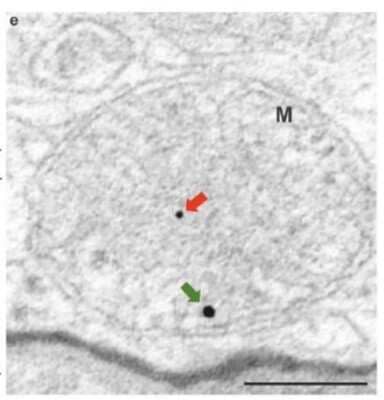
Knockout Validated, Immunohistochemistry, Immunohistochemistry-Paraffin, Immunohistochemistry-Frozen, Western Blot, Immunoblotting, Peptide ELISA, Immunocytochemistry/ Immunofluorescence, Immunoprecipitation, Electron Microscopy, Knockdown Validated, SDS-PAGE
Cited:
Knockout Validated, Immunohistochemistry-Paraffin, Western Blot, Immunocytochemistry/ Immunofluorescence, Immunoprecipitation, IF/IHC, IHC-F, Knockdown, Knockdown Validated
Label
Unconjugated
Antibody Source
Polyclonal Rabbit IgG
Format
BSA Free
Concentration
1.0 mg/ml
Product Specifications
Immunogen
PINK1 antibody was developed using a synthetic peptide made to the human PINK1 protein sequence (between residues 175-250). [Swiss-Prot Q9BXM7]
Reactivity Notes
Use in Mouse reported in scientific literature (PMID:33775690). All species in which poly(GP) peptides are synthesized. Human reactivity reported in multiple pieces of scientific literature.
Localization
Localizes mostly in mitochondrion and the 2 proteolytic processed fragments (Topological domain 111-581) of 55 kDa and 48 kDa localize mainly in cytosol.
Specificity
Human PINK1 Antibody will be reactive to isoform 2.
Clonality
Polyclonal
Host
Rabbit
Isotype
IgG
Theoretical MW
62.7 kDa.
Disclaimer note: The observed molecular weight of the protein may vary from the listed predicted molecular weight due to post translational modifications, post translation cleavages, relative charges, and other experimental factors.
Disclaimer note: The observed molecular weight of the protein may vary from the listed predicted molecular weight due to post translational modifications, post translation cleavages, relative charges, and other experimental factors.
Scientific Data Images for PINK1 Antibody - BSA Free
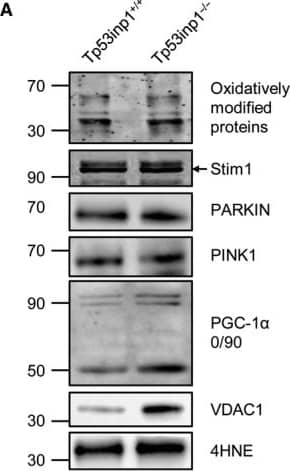
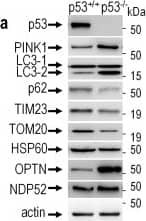
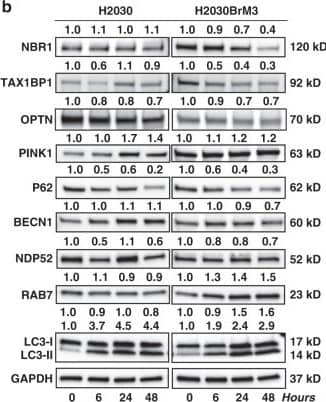
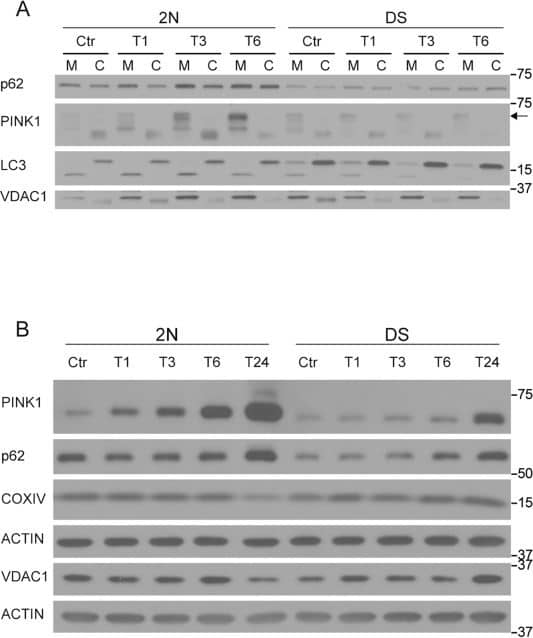
Western Blot Detection of PINK1 in Mitochondrial and Cytosolic Fractions
PINK1/Parkin-mediated mitophagy. Western Blot of mitochondrial and cytosolic fractions for PINK1, Parkin, and ubiquitin. E Quantitation of protein levels, normalized to VDAC and GAPDH, Ubiquitin: n = 6, PINK1: n = 5, Parkin: n = 8. R, post-reoxygenation. Image collected and cropped by CiteAb from the following publication (//pubmed.ncbi.nlm.nih.gov/33980811/) licensed under a CC-BY license.
Immunocytochemistry/Immunofluorescence Staining of PINK1 in Treated HeLa Cells
Immunocytochemistry of PINK1 antibody (BC100-494 Lot G). HeLa cells were treated with valinomycin (1 uM for 24h) prior to being fixed in 10% buffered formalin for 10 min and permeabilized in 0.1% Triton X-100 in PBS for 10 min. Cells were incubated with BC100-494 at 20 ug/mL for 1h at room temperature, washed 3x in PBS and incubated with Alexa Fluor488 anti-rabbit secondary antibody. PINK1 (Green) was detected at the mitochondria. Tubulin (Red) was detected using an anti-tubulin antibody with an anti-mouse DyLight 550 secondary antibody. DNA (Blue) was counterstained with DAPI. Note: mitochondria staining might not be easily observed without treatment with valinomycin or CCCP.



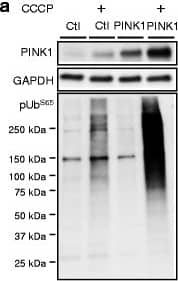
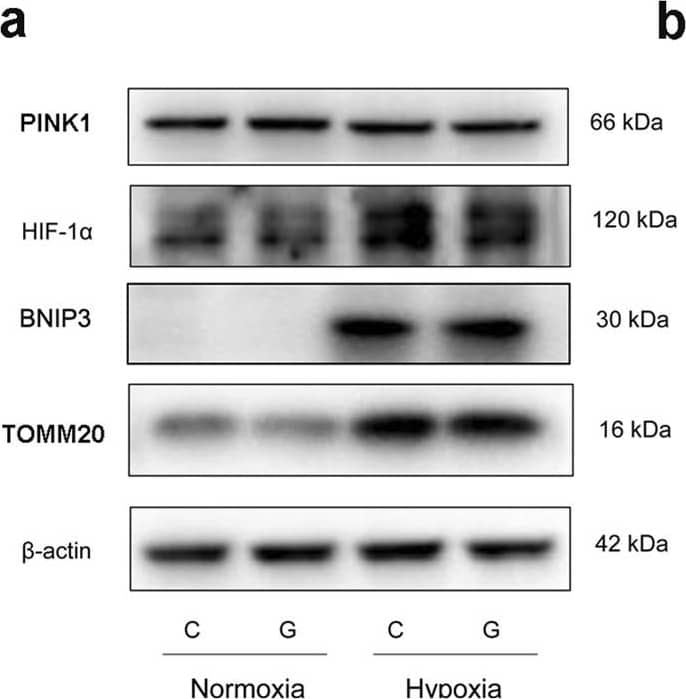
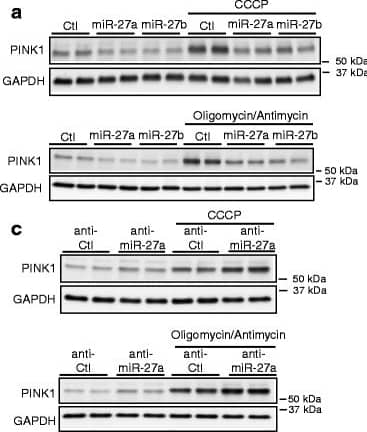

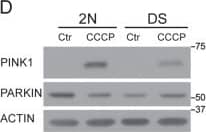
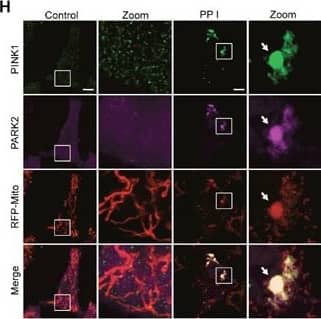
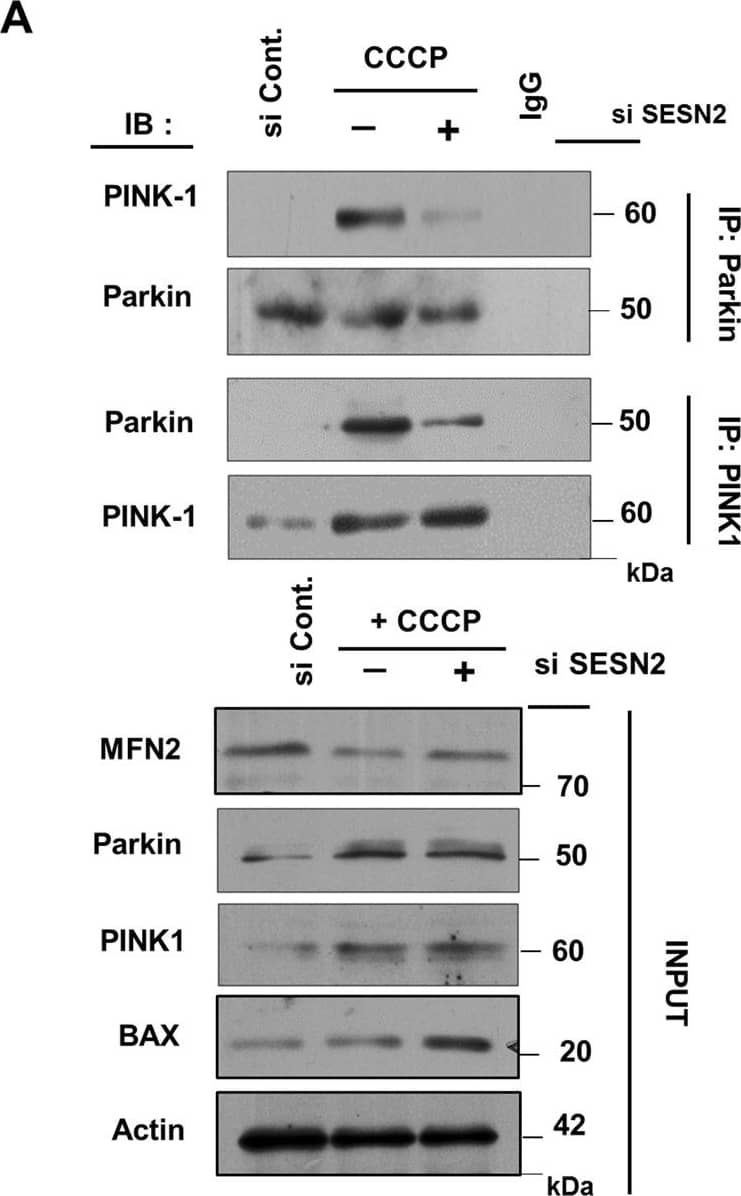
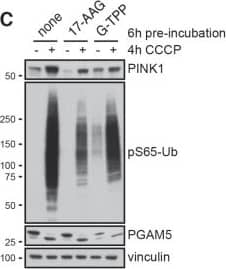
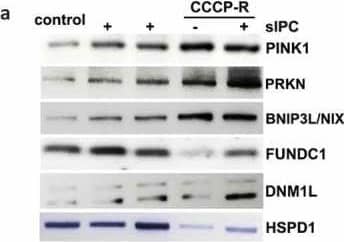
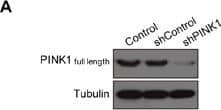
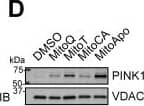
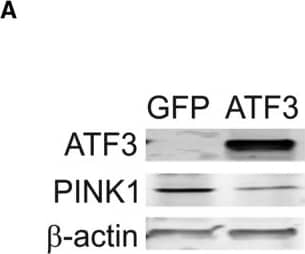
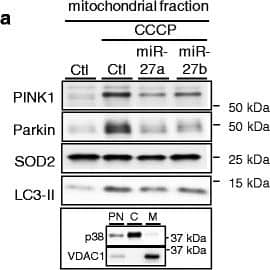
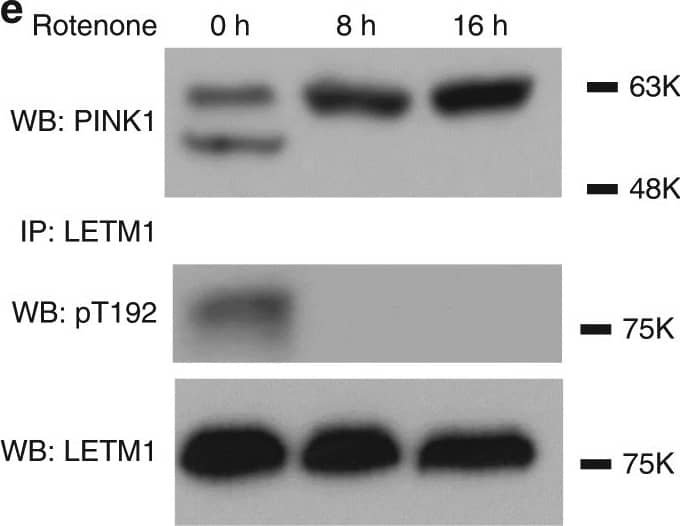
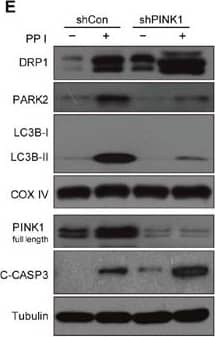
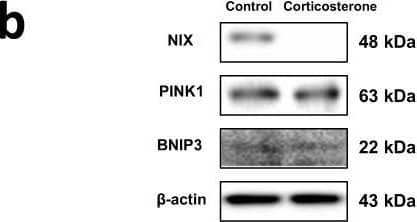
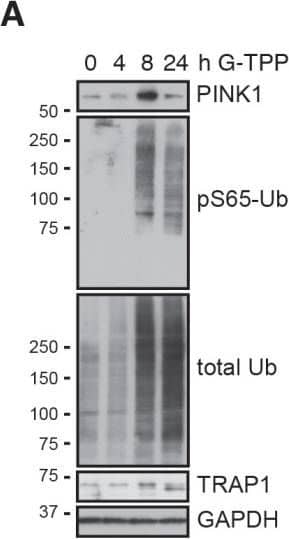
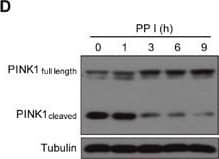
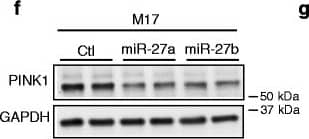
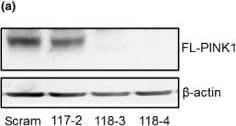
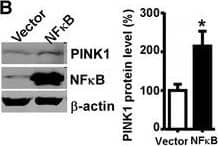

Applications for PINK1 Antibody - BSA Free
Application
Recommended Usage
Immunoblotting
reported in multiple pieces of scientific literature
Immunocytochemistry/ Immunofluorescence
1:50 - 1:200
Immunohistochemistry-Frozen
reported in scientific literature (PMID 31908016)
Immunohistochemistry-Paraffin
reported in scientific literature (PMID 25083992)
Immunoprecipitation
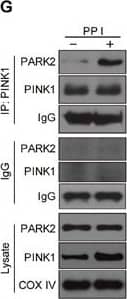
reported in scientific literature (PMID 22078885)
Knockout Validated
reported in scientific literature (PMID 31066324)
Peptide ELISA
1:100 - 1:2000
SDS-PAGE
reported in scientific literature (PMID 27846363)
Western Blot
1:500 - 1:2000
Application Notes
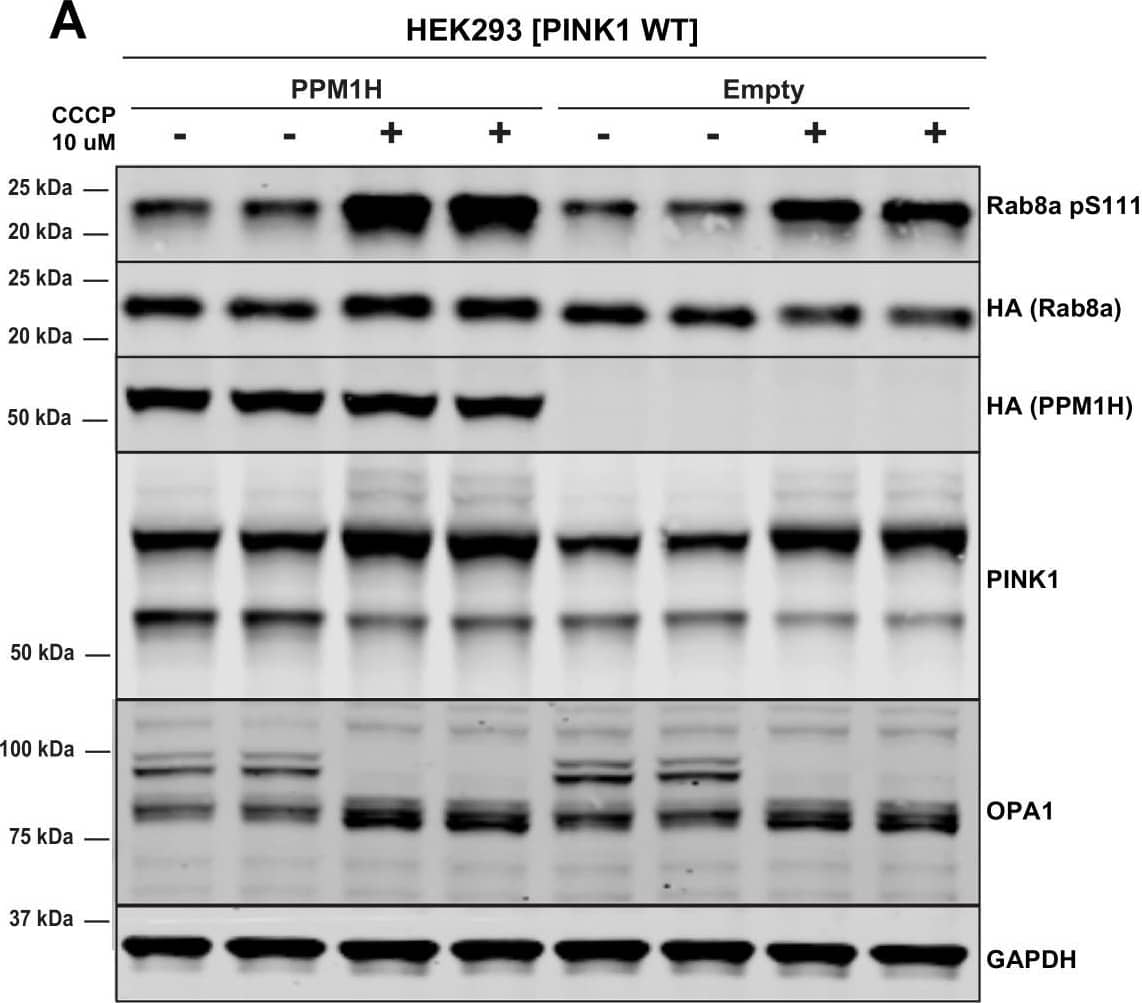
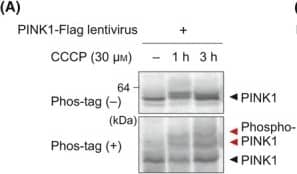
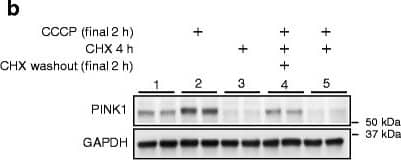
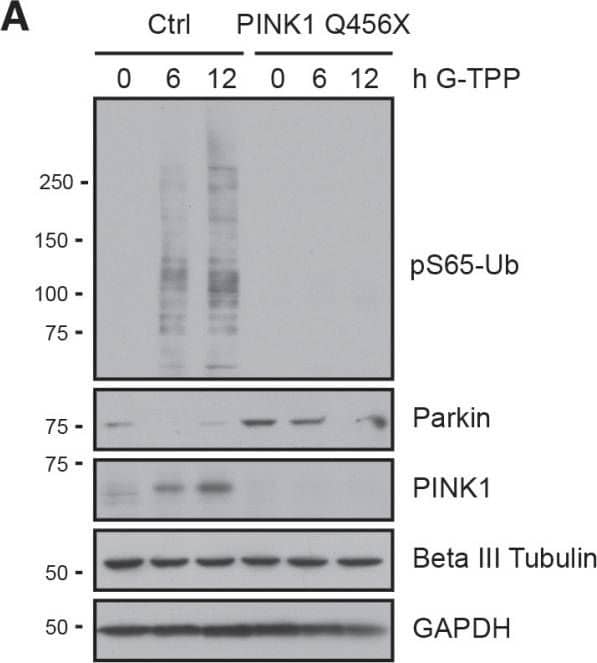
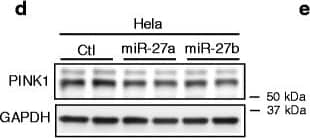
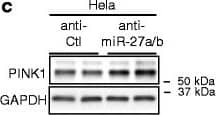
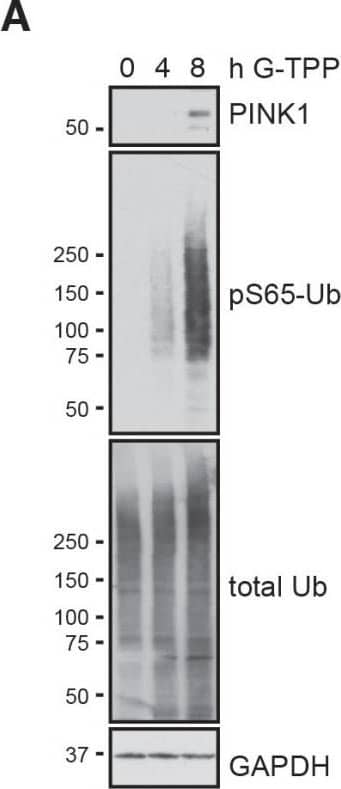
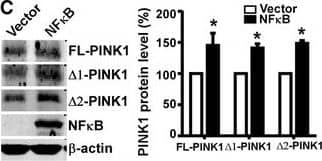
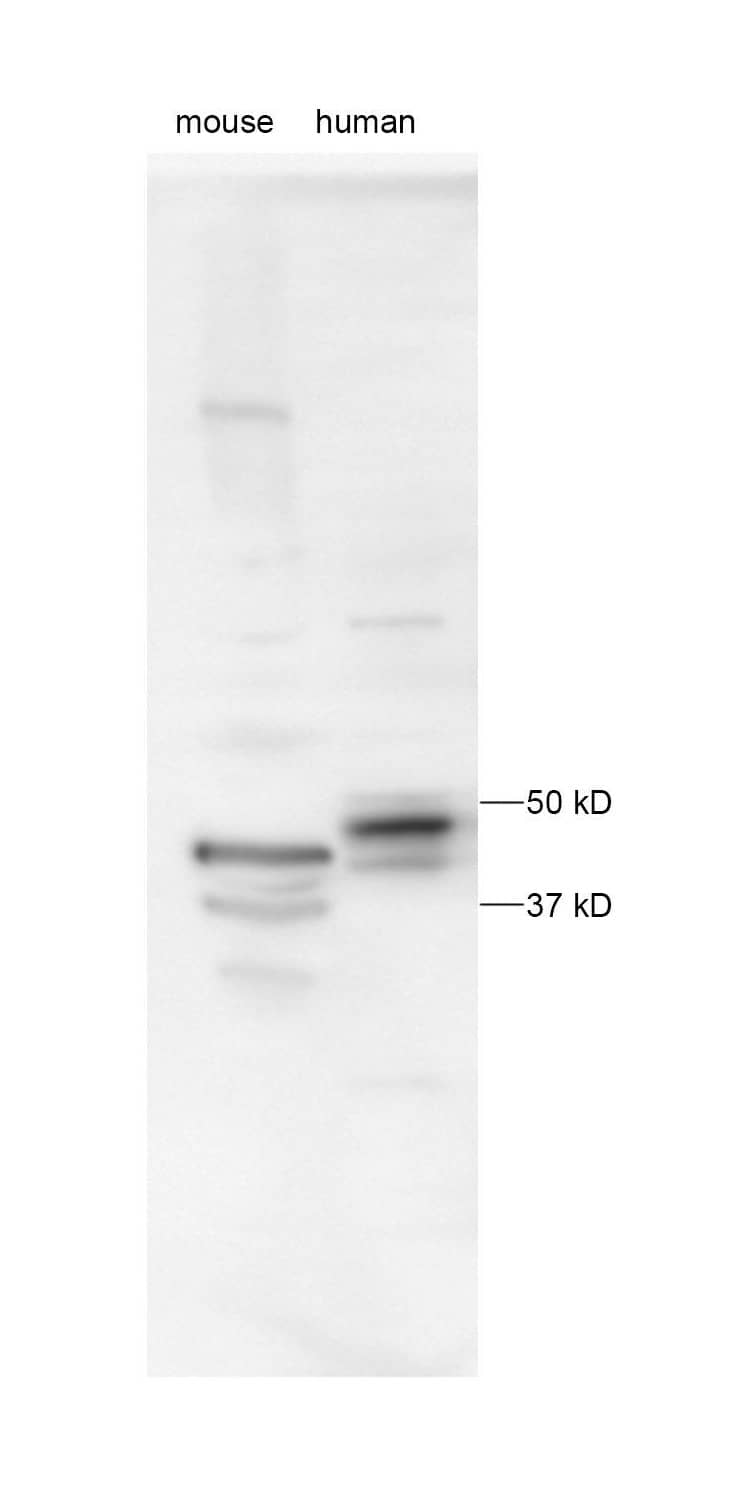
NOTE: It's recomended to use 1-5% w/v BSA in TBS with 0.1% Tween-20 for all incubations in WB. Specific bands are seen at 48, 55 and 63 kDa in Western Blot. In WB, this antibody has been used in valinomycin and CCCP treated HeLa whole cell lysate.
Reviewed Applications
Read 16 reviews rated 4.1 using BC100-494 in the following applications:
Formulation, Preparation, and Storage
Purification
Immunogen affinity purified
Formulation
PBS
Format
BSA Free
Preservative
0.02% Sodium Azide
Concentration
1.0 mg/ml
Shipping
The product is shipped with polar packs. Upon receipt, store it immediately at the temperature recommended below.
Stability & Storage
Store at 4C short term. Aliquot and store at -20C long term. Avoid freeze-thaw cycles.
Background: PINK1
PINK1 (PTEN induced putative kinase 1) protein contains a N-terminal mitochondrial targeting sequence, putative transmembrane helix, linker region, serine (Ser65)/threonine (Thr257) kinase domain and C-terminal segment. PINK1 is translated in the cytosol, then translocated to the outer mitochondrial membrane where it is rapidly cleaved and degraded as a part of normal mitochondrial function. In damaged (depolarized) mitochondria, PINK1 becomes stabilized and accumulates, resulting in the subsequent phosphorylation of numerous proteins on the mitochondrial surface.
When PINK1 is imported into the cell, mitochondrial processing peptidase, presenilin-associated rhomboid-like protease and AFG3L2 cleave PINK1 and tag it for the ubiquitin-proteasome pathway, keeping low PINK1 protein expression at basal conditions (1,2). Accumulation of PINK1 in mitochondria indicate damage. PINK1 maintains mitochondrial function/integrity, provides protection against mitochondrial dysfunction during cellular stress, and is involved in the clearance of damaged mitochondria via selective autophagy (mitophagy) (3). PINK1 has a theoretical molecular weight of 63 kDa and undergoes proteolytic processing to generate at least two cleaved forms (55 kDa and 42 kDa).
Ultimately PARK2 (E3 Ubiquitin Ligase Parkin) is recruited to the damaged mitochondria where it is activated by 1) PINK-mediated phosphorylation of PARK2 at serine 65, and 2) PARK2 interaction with phosphorylated ubiquitin (also phosphorylated by PINK1 on serine 65) (4,5). There is a strong interplay between Parkin and PINK1, where loss-of-function of human PINK1 results in mitochondrial pathology and can be rescued by Parkin (2,4,5). Mutations in either Parkin or PINK1 alter mitochondrial turnover, resulting in the accumulation of defective mitochondria and, ultimately, neurodegeneration in Parkinson's disease. Mutations in the PINK1 gene located within the PARK6 locus on chromosome 1p35-p36 have been identified in patients with early-onset Parkinson's disease (6).
References
1.Rasool, S., Soya, N., Truong, L., Croteau, N., Lukacs, G. L., & Trempe, J. F. (2018). PINK1 autophosphorylation is required for ubiquitin recognition. EMBO Rep, 19(4). doi:10.15252/embr.201744981
2.Shiba-Fukushima, K., Arano, T., Matsumoto, G., Inoshita, T., Yoshida, S., Ishihama, Y., . . . Imai, Y. (2014). Phosphorylation of mitochondrial polyubiquitin by PINK1 promotes Parkin mitochondrial tethering. PLoS Genet, 10(12), e1004861. doi:10.1371/journal.pgen.1004861
3.Vives-Bauza, C., Zhou, C., Huang, Y., Cui, M., de Vries, R. L., Kim, J., . . . Przedborski, S. (2010). PINK1-dependent recruitment of Parkin to mitochondria in mitophagy. Proc Natl Acad Sci U S A, 107(1), 378-383. doi:10.1073/pnas.0911187107
4.McWilliams, T. G., Barini, E., Pohjolan-Pirhonen, R., Brooks, S. P., Singh, F., Burel, S., . . . Muqit, M. M. K. (2018). Phosphorylation of Parkin at serine 65 is essential for its activation in vivo. Open Biol, 8(11). doi:10.1098/rsob.180108
5.Exner, N., Treske, B., Paquet, D., Holmstrom, K., Schiesling, C., Gispert, S., . . . Haass, C. (2007). Loss-of-function of human PINK1 results in mitochondrial pathology and can be rescued by parkin. J Neurosci, 27(45), 12413-12418. doi:10.1523/jneurosci.0719-07.2007
6.Valente, E. M., Bentivoglio, A. R., Dixon, P. H., Ferraris, A., Ialongo, T., Frontali, M., . . . Wood, N. W. (2001). Localization of a novel locus for autosomal recessive early-onset parkinsonism, PARK6, on human chromosome 1p35-p36. Am J Hum Genet, 68(4), 895-900. doi:10.1086/319522
Long Name
PTEN-induced Putative Kinase 1
Alternate Names
BRPK, PARK6, Anti-PINK1 Antibody, BRPK Antibody, Mitochondrial Antibody, PINK1 Antibody, PINK1 mouse, PINK1 polyclonal
Entrez Gene IDs
65018 (Human)
Gene Symbol
PINK1
UniProt
Additional PINK1 Products
Product Documents for PINK1 Antibody - BSA Free
Product Specific Notices for PINK1 Antibody - BSA Free
This product is for research use only and is not approved for use in humans or in clinical diagnosis. Primary Antibodies are guaranteed for 1 year from date of receipt.
Loading...
Loading...
Loading...
Loading...
Loading...