
L-Selectin/CD62L Antibody (MEL-14)
Novus Biologicals, part of Bio-Techne | Catalog # NBP2-00260

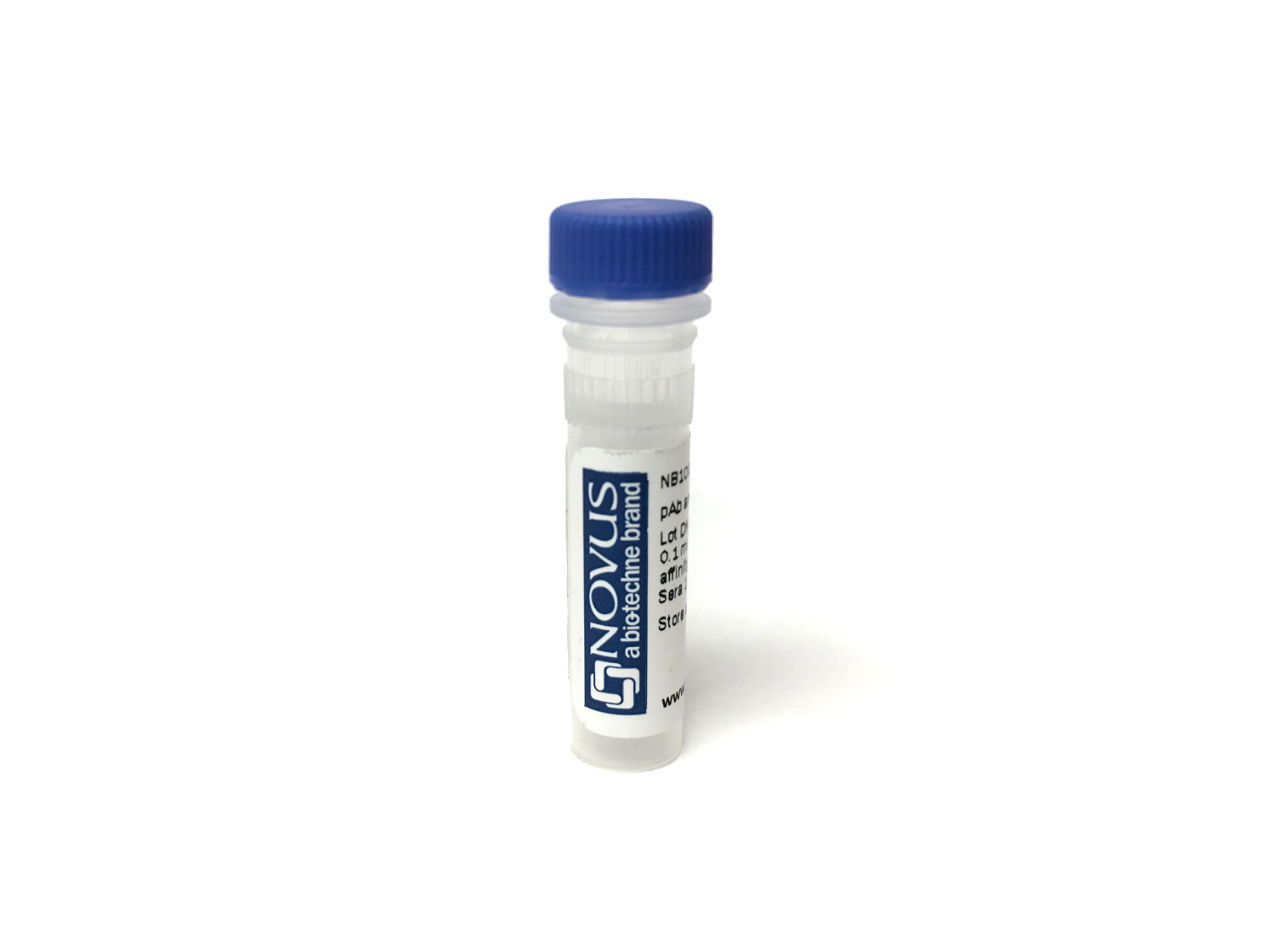
Discontinued Product
NBP2-00260 has been discontinued.
View all L-Selectin/CD62L products.
Key Product Details
Species Reactivity
Mouse
Applications
Immunohistochemistry, Immunohistochemistry-Paraffin, Flow Cytometry, Immunoprecipitation
Label
Unconjugated
Antibody Source
Monoclonal Rat IgG2a Kappa Clone # MEL-14
Concentration
0.5 mg/ml
Product Specifications
Immunogen
The immunogen for this antibody is L-selectin.
Clonality
Monoclonal
Host
Rat
Isotype
IgG2a Kappa
Applications for L-Selectin/CD62L Antibody (MEL-14)
Application
Recommended Usage
Flow Cytometry
0.5 ug/10^6 cells in 100 ul
Immunohistochemistry
1:10-1:500
Immunohistochemistry-Paraffin
1:10-1:500
Immunoprecipitation
1:10-1:500
Formulation, Preparation, and Storage
Purification
Protein A or G purified
Formulation
PBS (pH 7.2) with 0.1% gelatin
Preservative
0.09% Sodium Azide
Concentration
0.5 mg/ml
Shipping
The product is shipped with polar packs. Upon receipt, store it immediately at the temperature recommended below.
Stability & Storage
Store at 4C in the dark.
Background: L-Selectin/CD62L
L-selectin expressed on leukocytes binds to ligands expressed by endothelial cells where it plays a role in lymphocyte homing to secondary lymphoid organs (2-5). L-selectin specifically recognizes and binds to sulfated sialyl-Lewis epitopes of O-linked glycans (2-4). Ligands for L-selectin include glycosylation-dependent cell adhesion molecule-1 (GlyCAM-1), CD34, mucosal vascular addressin cell adhesion molecule-1 (MAdCAM-1), and P-selectin glycoprotein ligand-1 (PSGL-1) (2,4). Elevated levels of selectin ligands on tumor cells are associated with cancer progression and metastasis (3). High levels of L-selectin and soluble L-selectin (sL-selectin) has been implicated in a number of pathologies from viral infection and allergies, to sepsis and multiple sclerosis (2,4,5). For example, L-selectin has been shown to play a role in human immunodeficiency virus (HIV) infection. HIV envelope glycans, such as gp120, binds to L-selectin/CD62L on CD4+ T cells, facilitating viral adhesion (2,5). A disintegrin and metalloproteinase (ADAM)17 is the primary enzyme responsible for L-selectin shedding in leukocytes, which is triggered in response to inflammatory signals (1,2,5). AMAD17 inhibitors block L-selectin shedding and reduce viral release (2,5). Given their role in cancer and other diseases, selectins and their ligands are potential targets for therapeutic intervention (3,5). For instance, murine models have shown that anti-L-selectin antibodies can delay onset of graft versus host disease (5).
References
1. Ivetic A. (2018). A head-to-tail view of L-selectin and its impact on neutrophil behaviour. Cell and Tissue Research, 371(3), 437-453. https://doi.org/10.1007/s00441-017-2774-x
2. Ivetic, A., Hoskins Green, H. L., & Hart, S. J. (2019). L-selectin: a major regulator of leukocyte adhesion, migration and signaling. Frontiers in Immunology, 10, 1068. https://doi.org/10.3389/fimmu.2019.01068
3. Borsig L. (2018). Selectins in cancer immunity. Glycobiology, 28(9), 648-655. https://doi.org/10.1093/glycob/cwx105
4. Kneuer, C., Ehrhardt, C., Radomski, M. W., & Bakowsky, U. (2006). Selectins-potential pharmacological targets?. Drug Discovery Today, 11(21-22), 1034-1040. https://doi.org/10.1016/j.drudis.2006.09.004
5. Segura, J., He, B., Ireland, J., Zou, Z., Shen, T., Roth, G., & Sun, P. D. (2021). The role of L-Selectin in HIV infection. Frontiers in Microbiology, 12, 725741. https://doi.org/10.3389/fmicb.2021.725741
Alternate Names
CD62L, hLHRc, LAM1, LECAM1, Leu-8, LNHR, LSEL, Lyam-1, LYAM1, PLNHR, SELL, TQ1
Gene Symbol
SELL
Additional L-Selectin/CD62L Products
Product Documents for L-Selectin/CD62L Antibody (MEL-14)
Product Specific Notices for L-Selectin/CD62L Antibody (MEL-14)
This product is for research use only and is not approved for use in humans or in clinical diagnosis. Primary Antibodies are guaranteed for 1 year from date of receipt.
Loading...
Loading...
Loading...
Loading...
Loading...