
CD11b Antibody (3A33)
Novus Biologicals, part of Bio-Techne | Catalog # NBP1-27874

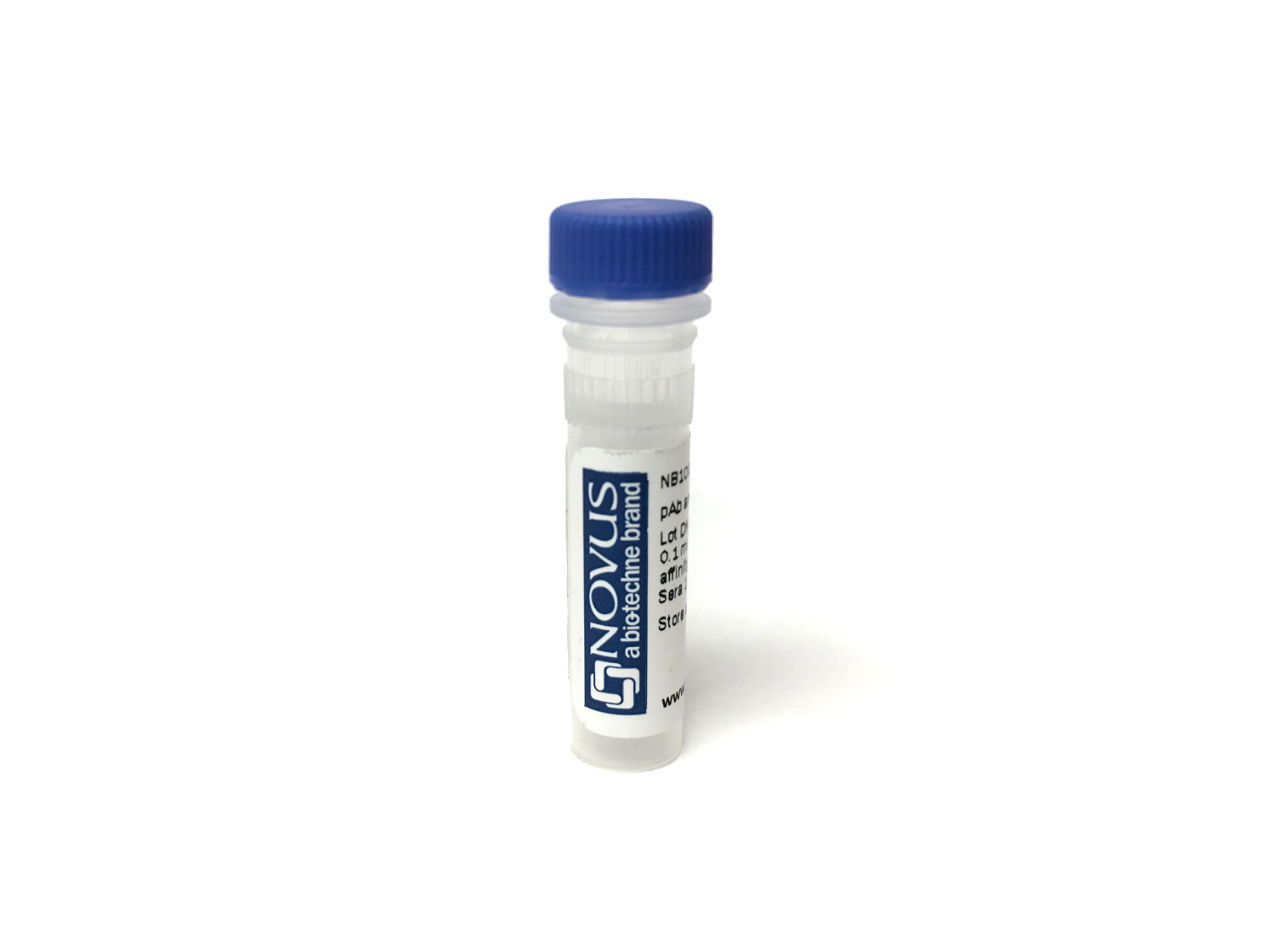
Discontinued Product
NBP1-27874 has been discontinued.
View all CD11b/Integrin alpha M products.
Key Product Details
Species Reactivity
Mouse
Applications
Flow Cytometry, Immunoprecipitation
Label
Unconjugated
Antibody Source
Monoclonal Rat IgG2a Kappa Clone # 3A33
Concentration
0.5 mg/ml
Product Specifications
Immunogen
Rat Monoclonal CD11b Antibody (3A33) was generated by immunizing host with peritoneal macrophages from B6D2 hybrid mice.
Reactivity Notes
Mouse.
Specificity
alpha M subunit (Mr 170 kDa) of the CD11b/CD18 heterodimer
Marker
Microglia Marker, Macrophage Marker
Clonality
Monoclonal
Host
Rat
Isotype
IgG2a Kappa
Applications for CD11b Antibody (3A33)
Application
Recommended Usage
Flow Cytometry
<= 1 ug/10^6 cells
Immunoprecipitation
1:10-1:500
Formulation, Preparation, and Storage
Purification
Protein A or G purified
Formulation
0.1M BBS (pH 8.2)
Preservative
No Preservative
Concentration
0.5 mg/ml
Shipping
The product is shipped with polar packs. Upon receipt, store it immediately at the temperature recommended below.
Stability & Storage
Store at 4C. Do not freeze.
Background: CD11b/Integrin alpha M
References
1. Rosetti, F., & Mayadas, T. N. (2016). The many faces of Mac-1 in autoimmune disease. Immunol Rev, 269(1), 175-193. doi:10.1111/imr.12373
2. Kim, D., Kim, T. H., Wu, G., Park, B. K., Ha, J. H., Kim, Y. S., . . . Kwon, H. J. (2016). Extracellular Release of CD11b by TLR9 Stimulation in Macrophages. PLoS One, 11(3), e0150677. doi:10.1371/journal.pone.0150677
3. Christensen, J. E., Andreasen, S. O., Christensen, J. P., & Thomsen, A. R. (2001). CD11b expression as a marker to distinguish between recently activated effector CD8(+) T cells and memory cells. Int Immunol, 13(4), 593-600. doi:10.1093/intimm/13.4.593
4. Nath, S. K., Han, S., Kim-Howard, X., Kelly, J. A., Viswanathan, P., Gilkeson, G. S., . . . Harley, J. B. (2008). A nonsynonymous functional variant in integrin-alpha(M) (encoded by ITGAM) is associated with systemic lupus erythematosus. Nat Genet, 40(2), 152-154. doi:10.1038/ng.71
Alternate Names
CD11b, Integrin alpha M, ITGAM
Gene Symbol
ITGAM
Additional CD11b/Integrin alpha M Products
Product Documents for CD11b Antibody (3A33)
Product Specific Notices for CD11b Antibody (3A33)
Inquire about low endotoxin, azide-free CD11b antibody
This product is for research use only and is not approved for use in humans or in clinical diagnosis. Primary Antibodies are guaranteed for 1 year from date of receipt.
Loading...
Loading...
Loading...
Loading...
Loading...
Loading...