
Human/Mouse/Rat ERK1/ERK2 Antibody
R&D Systems, part of Bio-Techne | Catalog # AF1576


Conjugate
Catalog #
Key Product Details
Validated by
Biological Validation
Species Reactivity
Validated:
Human, Mouse, Rat
Cited:
Human, Mouse, Rat, Transgenic Rat
Applications
Validated:
Western Blot, Simple Western
Cited:
Immunohistochemistry, Western Blot, Simple Western
Label
Unconjugated
Antibody Source
Polyclonal Rabbit IgG
Product Specifications
Immunogen
E. coli-derived recombinant human ERK1/ERK2
XM_055766 and NM_138957, respectively
XM_055766 and NM_138957, respectively
Specificity
Detects human, mouse and rat ERK1/ERK2.
Clonality
Polyclonal
Host
Rabbit
Isotype
IgG
Scientific Data Images for Human/Mouse/Rat ERK1/ERK2 Antibody
Detection of Human/Mouse/Rat ERK1/ERK2 by Western Blot.
Western blot shows lysates of Jurkat human acute T cell leukemia cell line, C2C12 mouse myoblast cell line myoblast cell line, and C6 rat glioma cell line. PVDF membrane was probed with 0.2 µg/mL Rabbit Anti-Human/Mouse/Rat ERK1/ERK2 Antigen Affinity-purified Polyclonal Antibody (Catalog # AF1576) followed by HRP-conjugated Anti-Rabbit IgG Secondary Antibody (Catalog # HAF008). For additional reference, Recombinant Human Active ERK1 (Catalog # 1879-KS) and Recombinant Human Active ERK2 (Catalog # 1230-KS) (2 ng/lane) were included. A specific band for ERK1/ERK2 was detected at approximately 44 kDa (as indicated). This experiment was conducted under reducing conditions and using Immunoblot Buffer Group 1.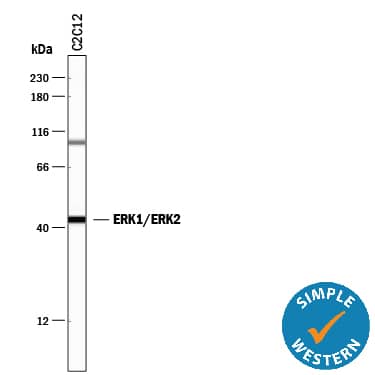
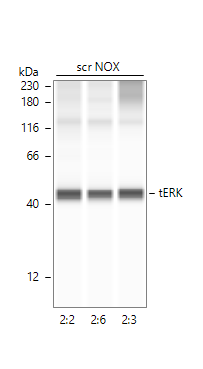
Detection of Mouse ERK1/ERK2 by Simple WesternTM.
Simple Western lane view shows lysates of C2C12 mouse myoblast cell line, loaded at 0.2 mg/mL. A specific band was detected for ERK1/ERK2 at approximately 44 kDa (as indicated) using 10 µg/mL of Rabbit Anti-Human/Mouse/Rat ERK1/ERK2 Antigen Affinity-purified Polyclonal Antibody (Catalog # AF1576). This experiment was conducted under reducing conditions and using the 12-230 kDa separation system.
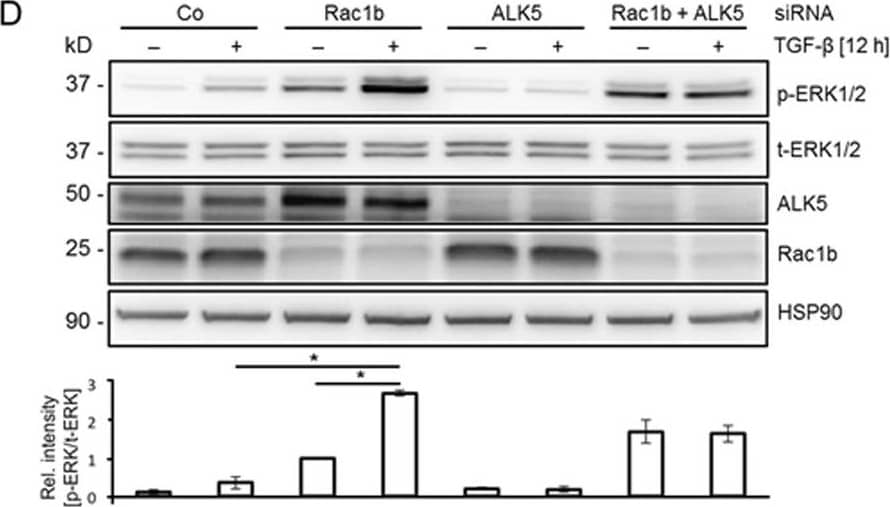
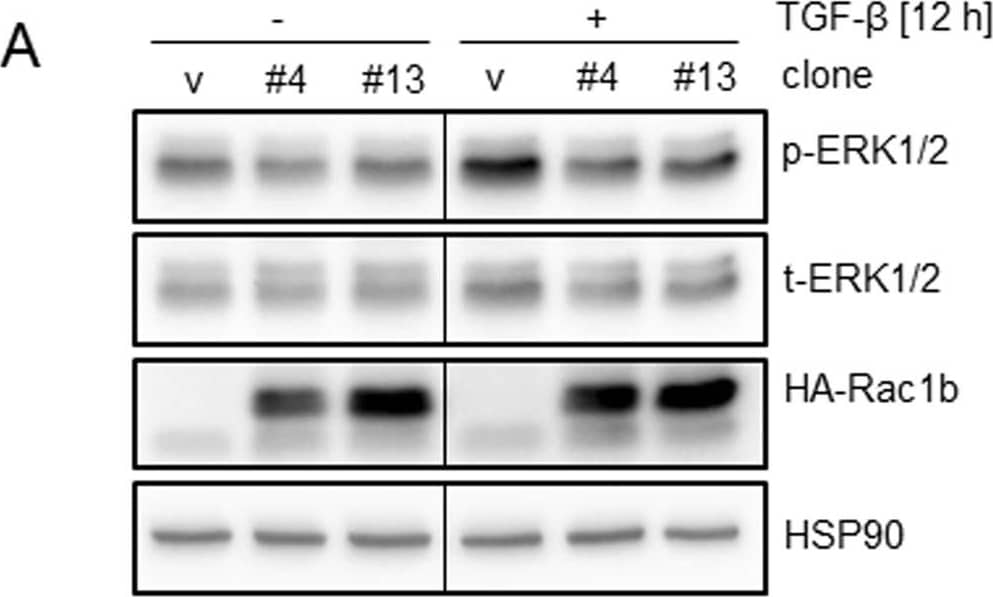
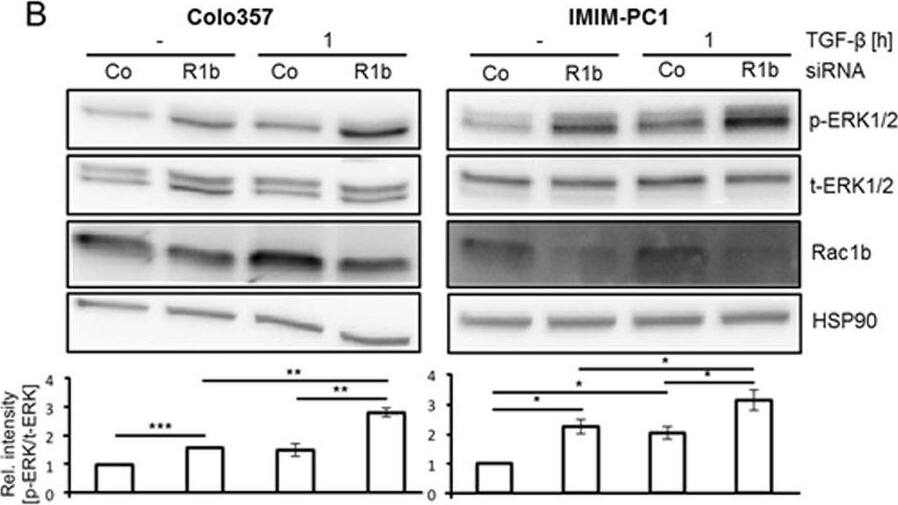
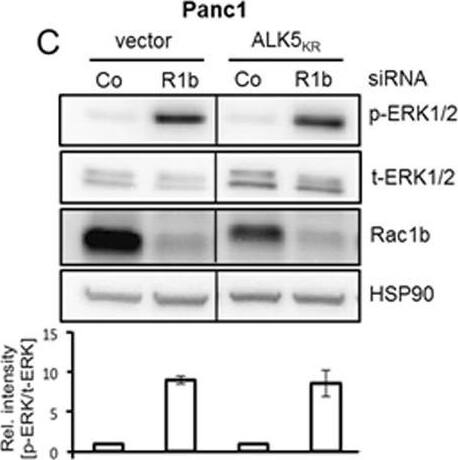
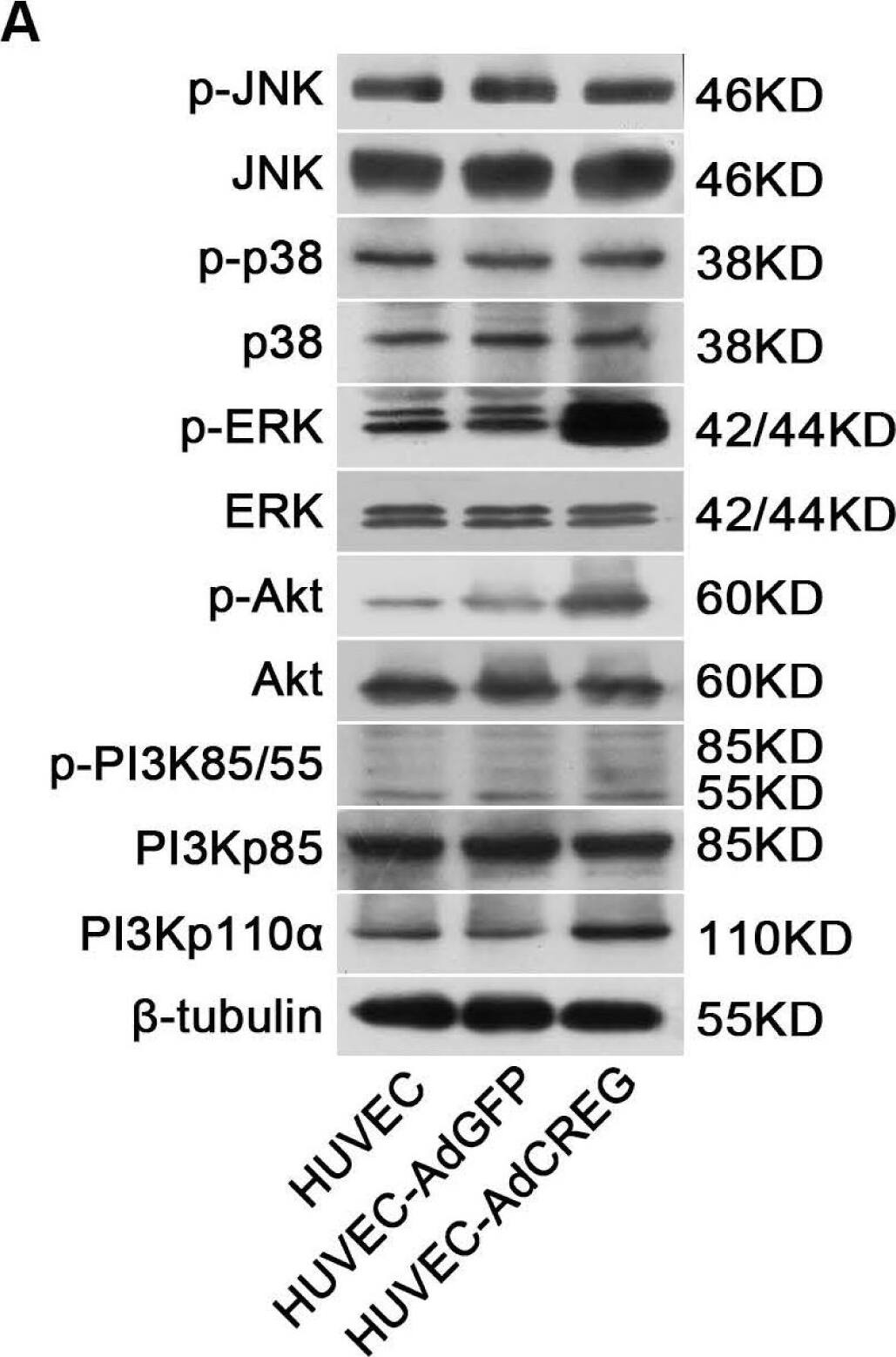
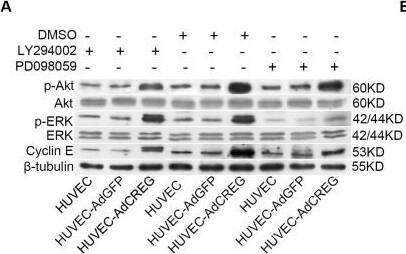
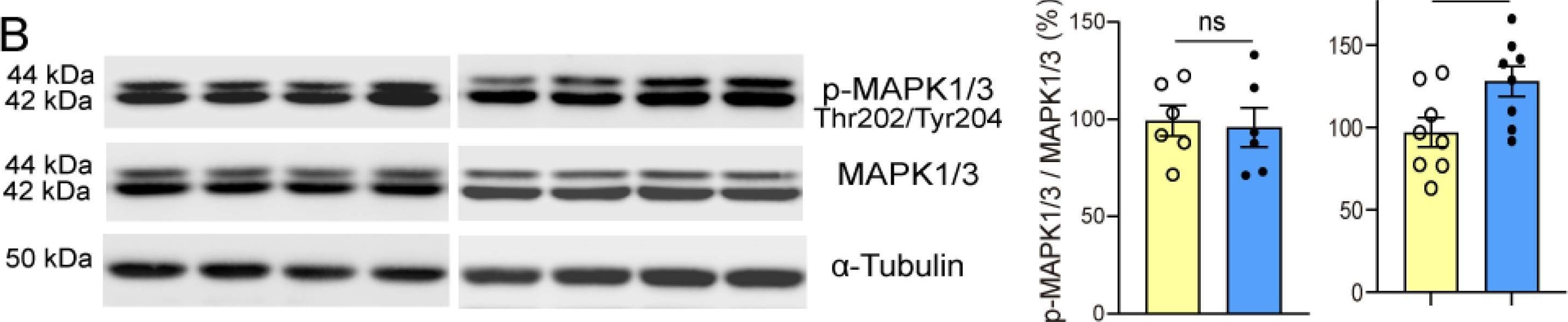
Detection of Human ERK1/ERK2 by Western Blot
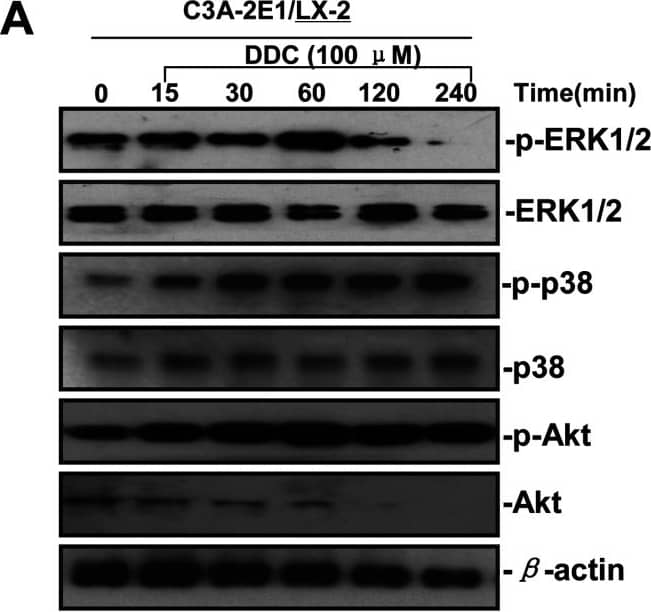
Phospho-proteome profiling results of LX-2 cells co-cultured with C3A–CYP2E1 cells with or without DDC treatment and detection of the effect of DDC on intracellular kinases in LX-2 cells of co-cultures200 μg of total cell lysates from LX-2 cells co-cultured with C3A-2E1 cells with or without 100 μM DDC for 1 h were incubated with membranes of the human phospho-MAPK Array Kit according to the manufacturer's instructions. Phospho MAPK Array data were developed on X-ray films following exposure to chemiluminescent reagents. 20 μg aliquots of total cell lysates from LX-2 cells were subjected to Western blotting analysis. (A) Template showing the location of MAPK antibodies spotted onto the human phospho-MAPK Array Kit. (B) The activation status of ERK1/2 in LX-2 cells co-cultured with C3A-2E1 cells after DDC treatment. (C) The activation status of p38 in LX-2 cells co-cultured with C3A-2E1 cells after DDC treatment. (D) The activation status of Akt in LX-2 cells co-cultured with C3A-2E1 cells after DDC treatment. (E) The activation status of ERK1/2, p38 and Akt in LX-2 cells co-cultured with C3A cells after DDC treatment. Image collected and cropped by CiteAb from the following publication (https://pubmed.ncbi.nlm.nih.gov/23577625), licensed under a CC-BY license. Not internally tested by R&D Systems.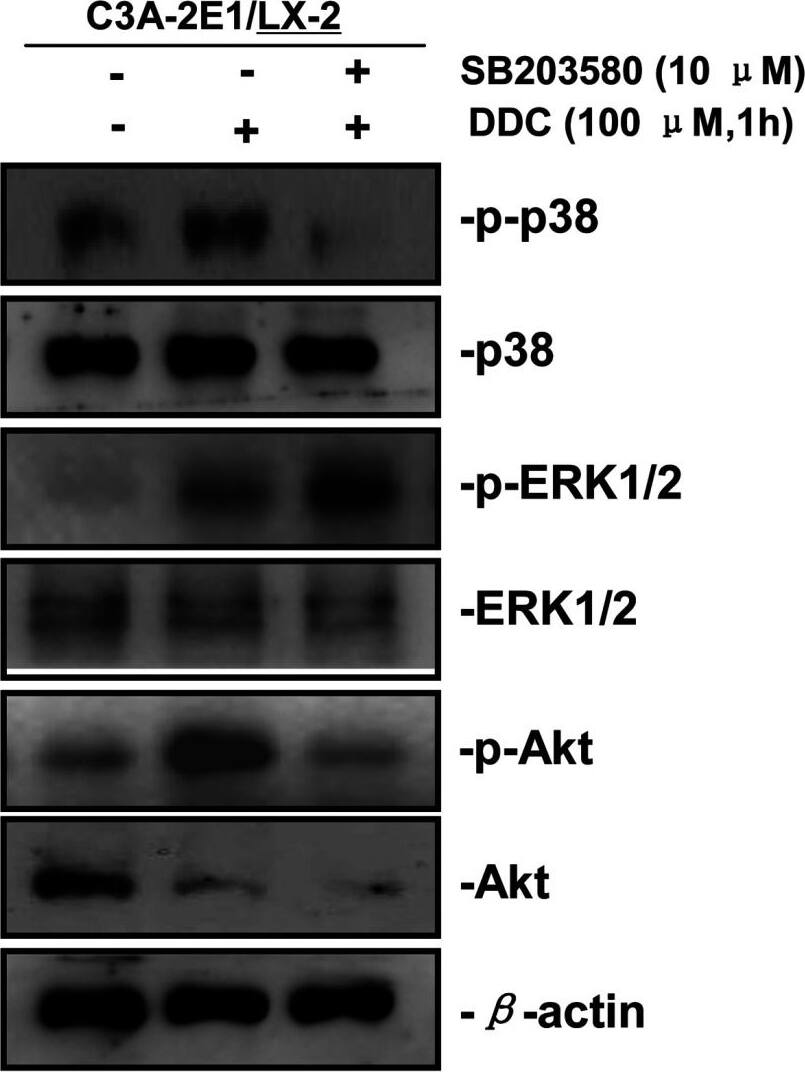

Applications for Human/Mouse/Rat ERK1/ERK2 Antibody
Application
Recommended Usage
Simple Western
10 µg/mL
Sample: C2C12 mouse myoblast cell line
Sample: C2C12 mouse myoblast cell line
Western Blot
0.2 µg/mL
Sample: Jurkat human acute T cell leukemia cell line, C2C12 mouse myoblast cell line myoblast cell line, and C6 rat glioma cell line
Sample: Jurkat human acute T cell leukemia cell line, C2C12 mouse myoblast cell line myoblast cell line, and C6 rat glioma cell line
Reviewed Applications
Read 4 reviews rated 4.8 using AF1576 in the following applications:
Formulation, Preparation, and Storage
Purification
Antigen Affinity-purified
Reconstitution
Reconstitute at 0.2 mg/mL in sterile PBS. For liquid material, refer to CoA for concentration.
Formulation
Lyophilized from a 0.2 μm filtered solution in PBS with Trehalose. *Small pack size (SP) is supplied either lyophilized or as a 0.2 µm filtered solution in PBS.
Shipping
Lyophilized product is shipped at ambient temperature. Liquid small pack size (-SP) is shipped with polar packs. Upon receipt, store immediately at the temperature recommended below.
Stability & Storage
Use a manual defrost freezer and avoid repeated freeze-thaw cycles.
- 12 months from date of receipt, -20 to -70 °C as supplied.
- 1 month, 2 to 8 °C under sterile conditions after reconstitution.
- 6 months, -20 to -70 °C under sterile conditions after reconstitution.
Background: ERK1/ERK2
ERK1 and ERK2 (also known as MAPK3 and MAPK1) are 44 and 42 kDa Ser/Thr kinases, respectively. They are part of the Ras-Raf-ERK signal transduction cascade often found downstream of growth factor receptor activation. ERK1 and ERK2 were initially isolated and cloned as kinases activated in response to insulin and NGF. They are expressed in most, if not all, mammalian tissues. Dual threonine and tyrosine phosphorylation activate both ERKs, at Thr202/Tyr204 for human ERK1 and Thr185/Tyr187 for human ERK2.
ERK5, also known as Big Mitogen-activated Protein Kinase 1 (BMK1) and MAPK7, is activated by several mechanisms, including receptor tyrosine kinases, G protein-coupled receptors, and osmotic stress. Like ERK1 and ERK2, ERK5 contains the conserved Thr-Glu-Tyr activation motif in its activation loop. Unlike these ERKs, however, ERK5 contains a unique C-terminal domain that regulates its activation and nuclear translocation.
Long Name
Extracellular Signal-regulated Kinase 1/2
Alternate Names
ERK1, ERK-1, ERT2, Extracellular signal-regulated kinase 1, extracellular signal-related kinase 1, HS44KDAP, HUMKER1A, Insulin-stimulated MAP2 kinase, MAPK 1, Microtubule-associated protein 2 kinase, mitogen-activated protein kinase 3, p44erk1, p44-ERK1, p44mapk, p44-MAPK, PRKM3
Additional ERK1/ERK2 Products
Product Documents for Human/Mouse/Rat ERK1/ERK2 Antibody
Product Specific Notices for Human/Mouse/Rat ERK1/ERK2 Antibody
For research use only
Loading...
Loading...
Loading...
Loading...
Loading...