
Cytomegalovirus p65 Antibody (rCMV/9827)
Novus Biologicals, part of Bio-Techne | Catalog # NBP3-44629
Recombinant Monoclonal Antibody

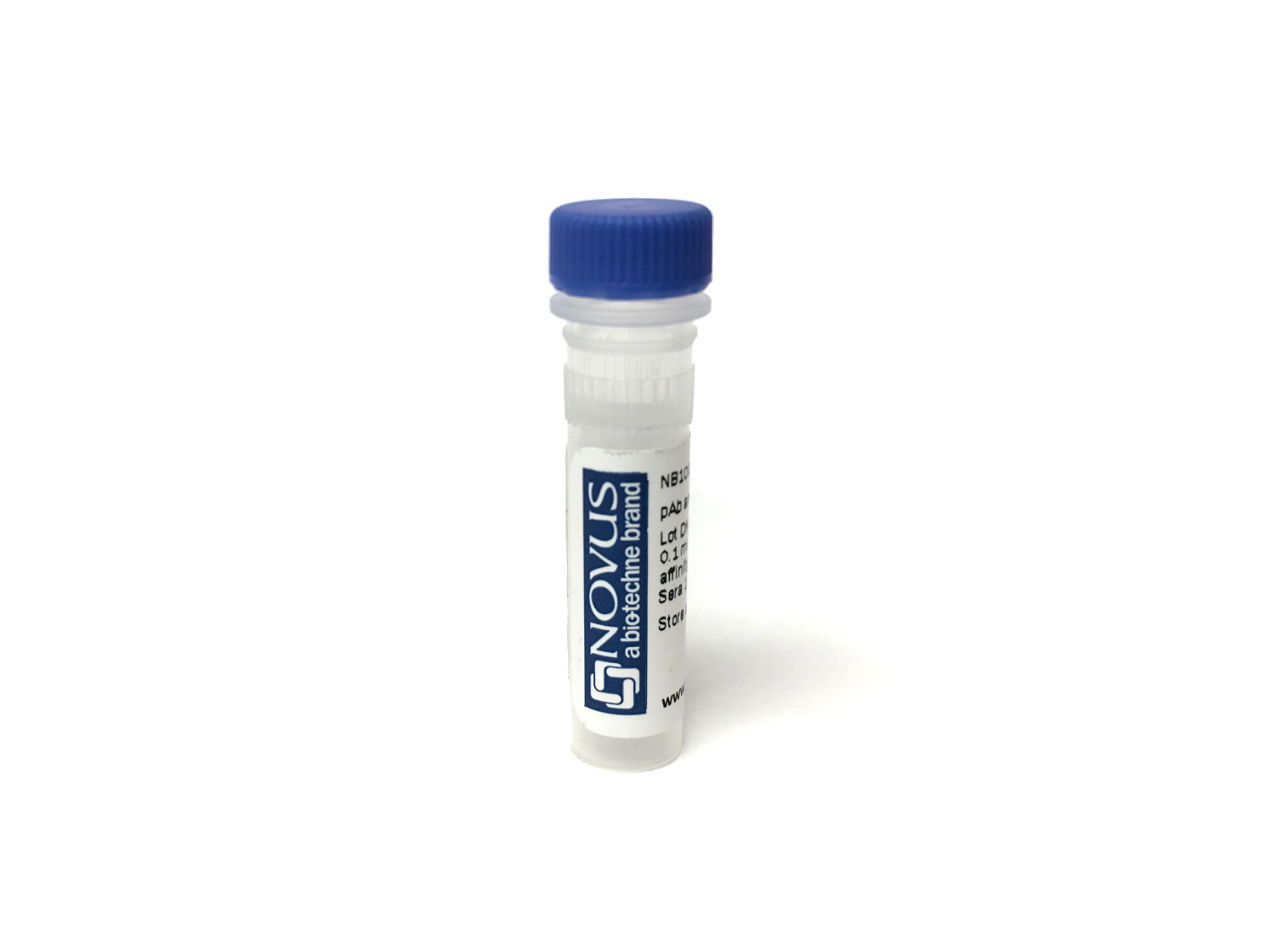
Key Product Details
Species Reactivity
Cytomegalovirus
Applications
Immunohistochemistry, ELISA
Label
Unconjugated
Antibody Source
Recombinant Monoclonal Mouse IgG2b Kappa Clone # rCMV/9827
Concentration
0.2 mg/ml
Product Specifications
Immunogen
Recombinant Cytomegalovirus p65 protein (Uniprot: P06725). Exact sequence is proprietary.
Localization
Host cytoplasm, Host nucleus, Virion tegument
Clonality
Monoclonal
Host
Mouse
Isotype
IgG2b Kappa
Theoretical MW
65 kDa.
Disclaimer note: The observed molecular weight of the protein may vary from the listed predicted molecular weight due to post translational modifications, post translation cleavages, relative charges, and other experimental factors.
Disclaimer note: The observed molecular weight of the protein may vary from the listed predicted molecular weight due to post translational modifications, post translation cleavages, relative charges, and other experimental factors.
Description
200ug/ml of Ab produced in CHO cell mammalian-based expression system.. Prepared in 10 mM PBS with 0.05% BSA & 0.05% azide. Also available WITHOUT BSA & azide at 1.0 mg/ml.
Antibody with azide - store at 2 to 8C. Antibody without azide - store at -20 to -80C. Non-hazardous. No MSDS required.
Antibody with azide - store at 2 to 8C. Antibody without azide - store at -20 to -80C. Non-hazardous. No MSDS required.
Applications for Cytomegalovirus p65 Antibody (rCMV/9827)
Application
Recommended Usage
Immunohistochemistry
1-2ug/ml
Application Notes
Immunohistochemistry: 30 min at RT. Staining of formalin-fixed tissues requires heating tissue sections in 10mM Tris with 1mM EDTA, pH 9.0, for 45 min at 95C followed by cooling at RT for 20 minutes.
Formulation, Preparation, and Storage
Purification
Protein A or G purified
Formulation
10 mM PBS with 0.05% BSA
Preservative
0.05% Sodium Azide
Concentration
0.2 mg/ml
Shipping
The product is shipped with polar packs. Upon receipt, store it immediately at the temperature recommended below.
Stability & Storage
Store at 4C.
Background: Cytomegalovirus p65
Cytomegalovirus is a common virus, infecting ~60% of adults in developed countries and over 90% in developing countries, as indicated by presence of specific IgG antibodies (2-4). Although a majority of people infected remain asymptomatic, immunocompromised people, organ transplant recipients, and fetuses and newborns are more susceptible to HCMV-associated diseases (1-4). Annually, up to 2% of newborns are born with HCMV, making it the most common congenital infection (2-4). Cytomegalovirus is known to cause sensorineural hearing loss (SNHL), mental retardation, chorioretinitis, skin lesions, as well as end organ disease (3,5). There are a few CMV therapeutics approved by FDA including valganciclovir and letermovir; however, despite some benefits, there is the need for new antivirals and combination therapies (5). Potential new treatment options include monoclonal antibodies and sirtuins (5).
References
1. Connolly SA, Jardetzky TS, Longnecker R. The structural basis of herpesvirus entry. Nat Rev Microbiol. 2021;19(2):110-121. https://doi.org/10.1038/s41579-020-00448-w
2. Griffiths P, Reeves M. Pathogenesis of human cytomegalovirus in the immunocompromised host. Nat Rev Microbiol. 2021;19(12):759-773. https://doi.org/10.1038/s41579-021-00582-z
3. Krstanovic F, Britt WJ, Jonjic S, Brizic I. Cytomegalovirus Infection and Inflammation in Developing Brain. Viruses. 2021;13(6):1078. Published 2021 Jun 4. https://doi.org/10.3390/v13061078
4. Griffiths P, Baraniak I, Reeves M. The pathogenesis of human cytomegalovirus. J Pathol. 2015;235(2):288-297. https://doi.org/10.1002/path.4437
5. Acosta E, Bowlin T, Brooks J, et al. Advances in the Development of Therapeutics for Cytomegalovirus Infections. J Infect Dis. 2020;221(Suppl 1):S32-S44. https://doi.org/10.1093/infdis/jiz493
Alternate Names
CMV, p65
Additional Cytomegalovirus p65 Products
Product Documents for Cytomegalovirus p65 Antibody (rCMV/9827)
Product Specific Notices for Cytomegalovirus p65 Antibody (rCMV/9827)
This product is for research use only and is not approved for use in humans or in clinical diagnosis. Primary Antibodies are guaranteed for 1 year from date of receipt.
Loading...
Loading...
Loading...
Loading...