
CD3 Antibody (MSVA-003R) - Azide and BSA Free
Novus Biologicals, part of Bio-Techne | Catalog # NBP3-57300
Recombinant Monoclonal Antibody

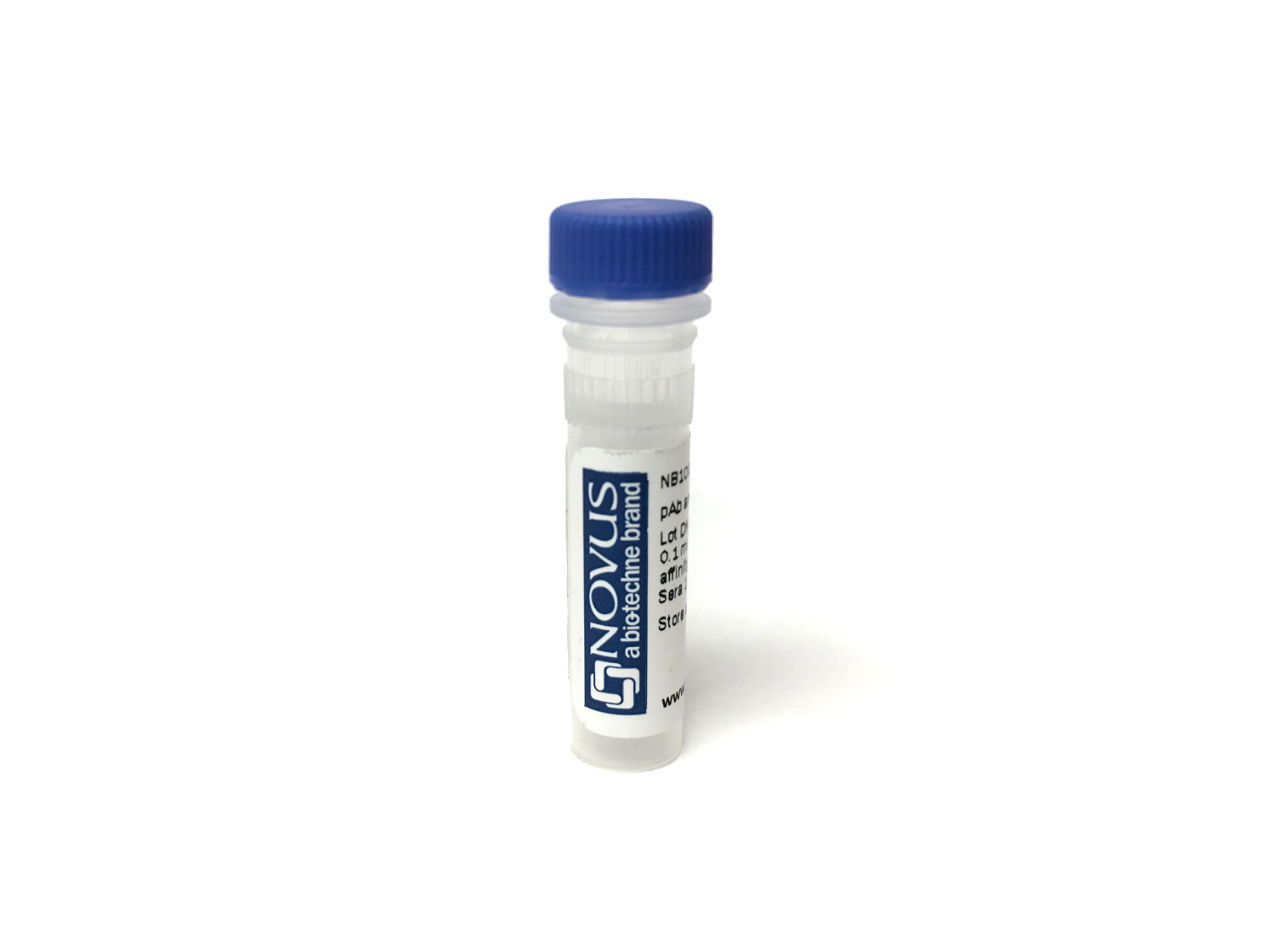
Key Product Details
Species Reactivity
Human
Applications
Immunohistochemistry, Immunohistochemistry-Paraffin
Label
Unconjugated
Antibody Source
Monoclonal Rabbit IgG Clone # MSVA-003R
Format
Azide and BSA Free
Concentration
1 mg/ml
Product Specifications
Immunogen
A synthetic peptide from human CD3e protein (around aa 20-40) (exact sequence is proprietary) Swissprot P07766
Localization
Cell surface. Cytoplasm
Clonality
Monoclonal
Host
Rabbit
Isotype
IgG
Description
This antibody is highly specific and optimized for use in Immunohistochemistry.
It has been validated on TMAs covering 76 normal tissues and numerous cancer tissues.
Positive Control
Postive control:Tonsil: A moderate to strong membranous staining should be seen in all T-cells in the interfollicular T-zones and in the germinal centres (few cells).
Negative Control
Negitve control:Tonsil: All epithelial structures and B-cells should not show any CD3 immunostaining.
Applications for CD3 Antibody (MSVA-003R) - Azide and BSA Free
Application
Recommended Usage
Immunohistochemistry
Optimal dilutions of this antibody should be experimentally determined.
Immunohistochemistry-Paraffin
Optimal dilutions of this antibody should be experimentally determined.
Application Notes
Manual Protocol: Freshly cut sections should be used (less than 10 days between cutting and staining). Heat-induced antigen retrieval for 5 minutes in an autoclave at 121C in pH 7,8 Target Retrieval Solution buffer. Apply the antibody at a dilution of 1:150 at 37C for 60 minutes. Visualization of bound antibody by the EnVision Kit (Dako, Agilent) according to the manufacturer's directions.
Formulation, Preparation, and Storage
Purification
Protein A or G purified
Format
Azide and BSA Free
Preservative
No Preservative
Concentration
1 mg/ml
Shipping
The product is shipped with polar packs. Upon receipt, store it immediately at the temperature recommended below.
Stability & Storage
Store at 4C short term. Aliquot and store at -20C long term. Avoid freeze-thaw cycles.
Background: CD3
CD3 proteins are expressed on the surface of thymocytes during thymocyte development, proliferation, and maturation to T-cells (4, 6, 7). During T-cell development CD4-CD8- double negative (DN) cells differentiate to CD4+CD8+ double positive (DP) cells before progressing to single positive (SP) CD4+ helper T-cells or CD8+ cytotoxic T-cells (4, 6, 7). As CD3 plays an important role in thymocyte development, it is understandable that CD3 defects and mutations in CD3 protein chains cause severe combined immunodeficiencies (SCIDs) (8). Additionally, a subset of CD3+ T-cells that co-express CD20 are described in a variety of diseases including rheumatoid arthritis, multiple sclerosis, CD20+ T-cell leukemia/lymphoma, and HIV (9). Clinical trials and animal models have shown that anti-CD3 monoclonal antibodies are a promising treatment modality for inflammatory disorders and autoimmune diseases, such as type I diabetes (10).
References
1. Chetty, R., & Gatter, K. (1994). CD3: structure, function, and role of immunostaining in clinical practice. The Journal of pathology. https://doi.org/10.1002/path.1711730404
2. Mariuzza, R. A., Agnihotri, P., & Orban, J. (2020). The structural basis of T-cell receptor (TCR) activation: An enduring enigma. The Journal of biological chemistry. https://doi.org/10.1074/jbc.REV119.009411
3. Kuhns, M. S., Davis, M. M., & Garcia, K. C. (2006). Deconstructing the form and function of the TCR/CD3 complex. Immunity. https://doi.org/10.1016/j.immuni.2006.01.006
4. Clevers, H., Alarcon, B., Wileman, T., & Terhorst, C. (1988). The T cell receptor/CD3 complex: a dynamic protein ensemble. Annual review of immunology. https://doi.org/10.1146/annurev.iy.06.040188.003213
5. Uniprot: CD3-delta (P04234), CD3-epsilon (P07766), CD3-gamma (P09693), CD3-zeta (P20963)
6. D'Acquisto, F., & Crompton, T. (2011). CD3+CD4-CD8- (double negative) T cells: saviours or villains of the immune response?. Biochemical pharmacology. https://doi.org/10.1016/j.bcp.2011.05.019
7. Dave V. P. (2009). Hierarchical role of CD3 chains in thymocyte development. Immunological reviews. https://doi.org/10.1111/j.1600-065X.2009.00835.x
8. Fischer, A., de Saint Basile, G., & Le Deist, F. (2005). CD3 deficiencies. Current opinion in allergy and clinical immunology. https://doi.org/10.1097/01.all.0000191886.12645.79
9. Chen, Q., Yuan, S., Sun, H., & Peng, L. (2019). CD3+CD20+ T cells and their roles in human diseases. Human immunology. https://doi.org/10.1016/j.humimm.2019.01.001
10. Kuhn, C., & Weiner, H. L. (2016). Therapeutic anti-CD3 monoclonal antibodies: from bench to bedside. Immunotherapy. https://doi.org/10.2217/imt-2016-0049
Alternate Names
CD_antigen: CD3e, CD3 antigen, delta subunit, CD3d antigen, CD3d antigen, delta polypeptide (TiT3 complex), CD3d molecule, delta (CD3-TCR complex), CD3-DELTA, CD3e, CD3e antigen, CD3e antigen, epsilon polypeptide (TiT3 complex), CD3e molecule, epsilon (CD3-TCR complex), CD3-epsilon, CD3G, CD3g antigen, CD3g antigen, gamma polypeptide (TiT3 complex), CD3g molecule, epsilon (CD3-TCR complex), CD3g molecule, gamma (CD3-TCR complex), CD3-GAMMA, FLJ17620, FLJ17664, FLJ18683, FLJ79544, FLJ94613, IMD18, MGC138597, T3DOKT3, delta chain, T3E, T-cell antigen receptor complex, epsilon subunit of T3, T-cell receptor T3 delta chain, T-cell surface antigen T3/Leu-4 epsilon chain, T-cell surface glycoprotein CD3 delta chain, T-cell surface glycoprotein CD3 epsilon chain, TCRE
Gene Symbol
CD3E
Additional CD3 Products
Product Documents for CD3 Antibody (MSVA-003R) - Azide and BSA Free
Product Specific Notices for CD3 Antibody (MSVA-003R) - Azide and BSA Free
This product is for research use only and is not approved for use in humans or in clinical diagnosis. Primary Antibodies are guaranteed for 1 year from date of receipt.
Loading...
Loading...
Loading...
Loading...