Transform Neural Complexity to Translational Insight at SfN 2026
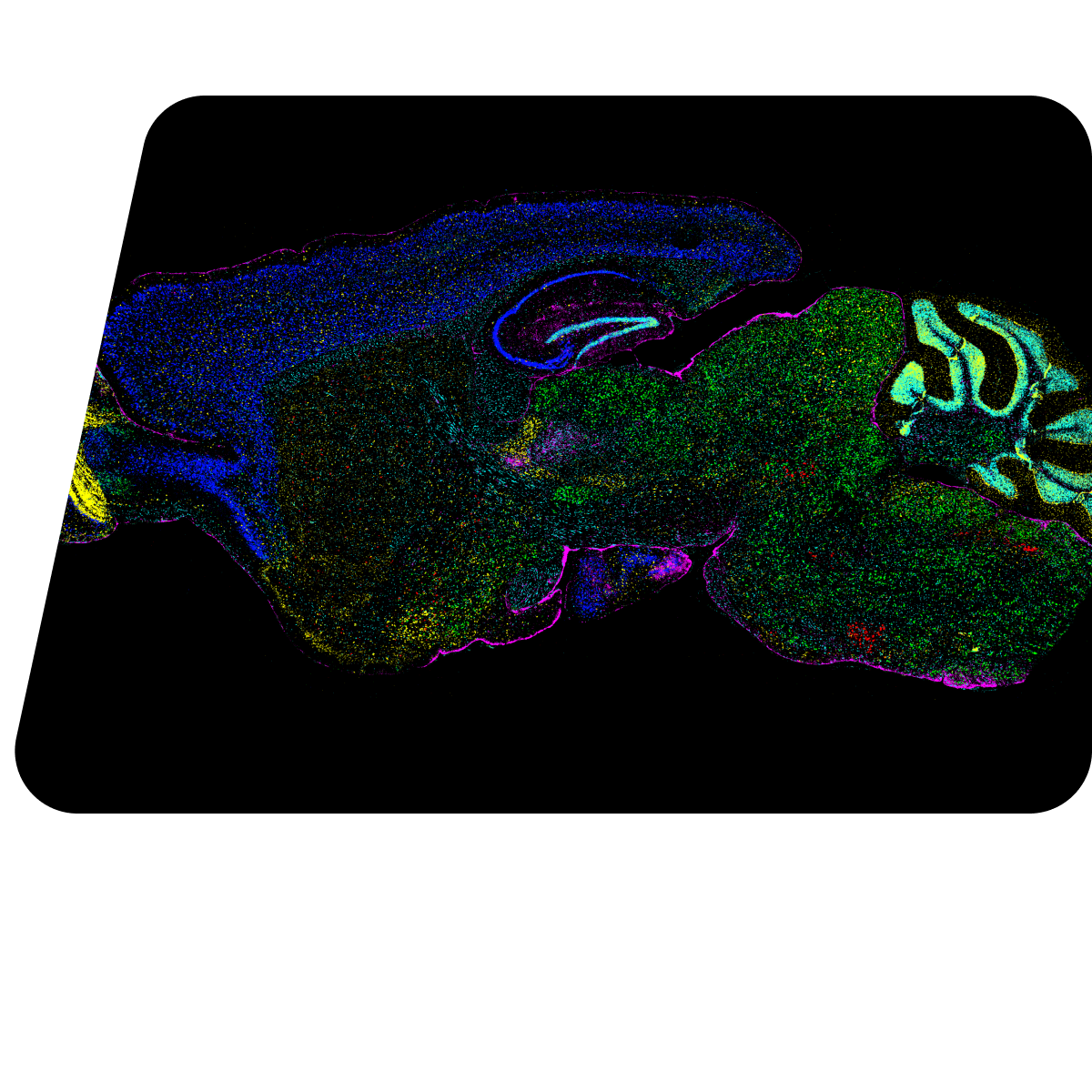
Visit Bio-Techne Spatial at Booth #1823 to see how RNAscope™ and COMET™ work together to resolve cellular diversity in the brain. Co-detect RNA and protein on the same section, map neuroimmune interactions across the tissue microenvironment, and get more from every precious brain sample, from discovery through translation.
Powered by RNAscope™ and COMET™
- Preserve spatial context: Co-detect RNA and protein to resolve cellular diversity and cell-cell interactions across the neural microenvironment.
- Uncover disease mechanisms: Identify the molecular drivers of neurodegenerative and neuroinflammatory disease.
- Build translational confidence: Advance discoveries with a fully automated, reproducible workflow.
Learn about RNAscope™ and COMET™
BaseScope™ Duplex Fluorescent Assay for Automated Spatial Detection
BaseScope™ lets you visualize short targets, exon junctions and splice variants with single-cell resolution in tissue. See it in action at our Saturday poster on dystrophin isoform detection, or stop by Booth #1823 to learn more.
Learn About BaseScope™ Duplex
Visit Us in the Poster Hall
Saturday, November 14

Spatially Resolved Detection of Dystrophin Isoforms Using BaseScope™ Duplex Fluorescent Assay
Presentation Type: Poster Presentation
Time: 1–5 PM EST
Location: Poster Hall
Presentation Number: PSTR039.09: Gene, Protein, or Cell Based Approaches
Poster Board Number: LL1
Abstract Control Number: 8924
Presenter: Sonali Deshpande, Ph.D., Manager, Research & Development, Bio-Techne Spatial
Wednesday, November 18

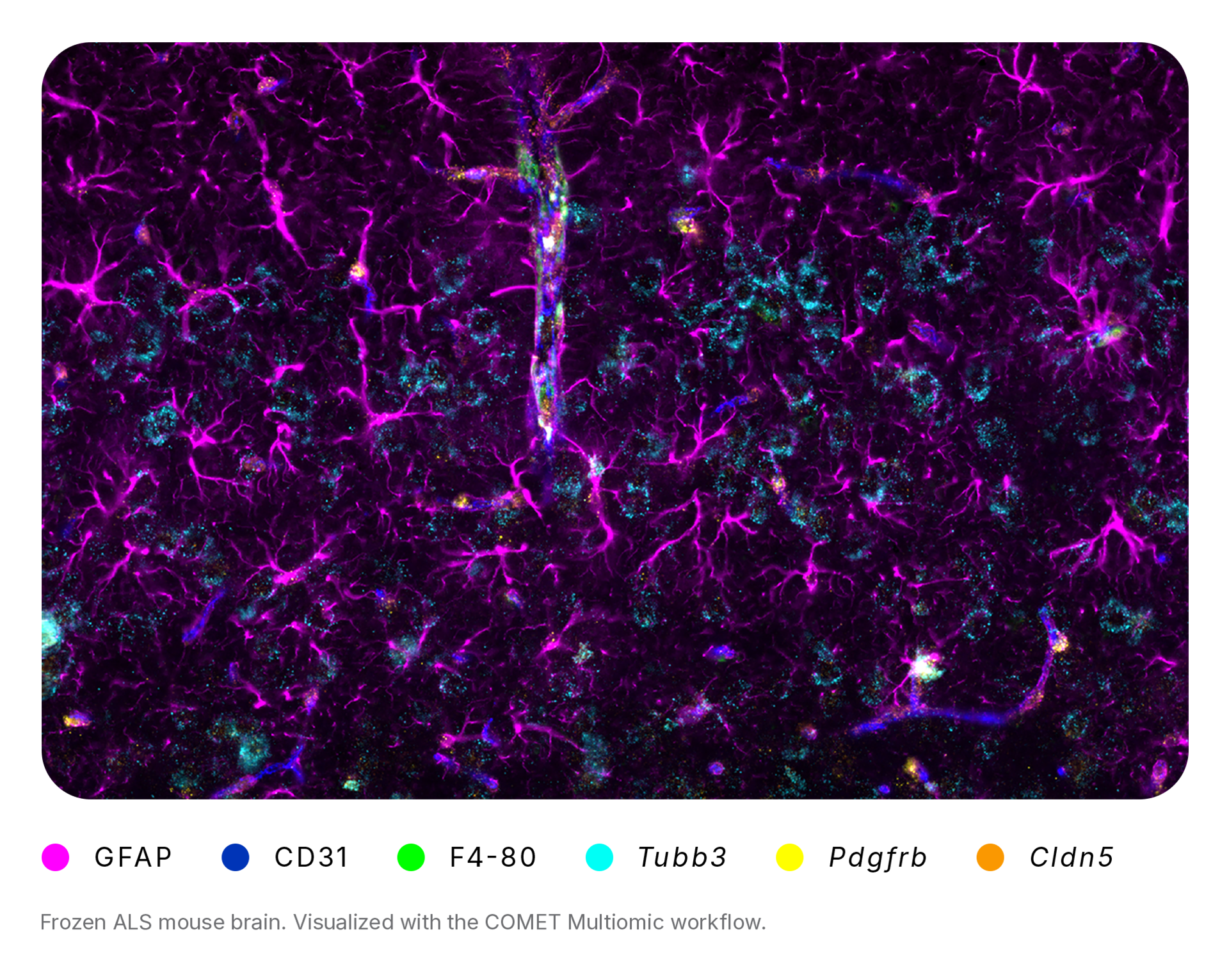
Profiling of Cellular and Molecular Features in a Mouse Model of Amyotrophic Lateral Sclerosis Using Hyperplex Spatial Multiomics
Presentation Type: Poster Presentation
Time: 8 AM–12 PM EST
Location: Poster Hall
Presentation Number: PSTR309.19: ALS and Motor Neuron Diseases: Human Genetics, Cellular Mechanisms, and Animal Models
Poster Board Number: Y18
Abstract Control Number: 8083
Presenter: Maria-Giuseppina Procopio, Ph.D., Application Development Manager, Bio-Techne Spatial

Single-Section Spatial Multiomics Reveals Neuroinflammatory and Demyelinating Pathology in the EAE Mouse Model
Presentation Type: Poster Presentation
Time: 1–5 PM EST
Location: Poster Hall
Presentation Number: PSTR358.20: Cellular and Molecular Mechanisms in Multiple Sclerosis and Other Demyelinating Diseases
Poster Board Number: AA2
Abstract Control Number: 9129
Presenter: Sukhbir Kaur, Ph.D., Advanced Field Applications Scientist, Bio-Techne Spatial

Hyperplex Spatial Multiomics for Profiling of Neurodegenerative Landscape in an Alzheimer’s Disease Mouse Model
Presentation Type: Poster Presentation
Time: 1–5 PM EST
Location: Poster Hall
Presentation Number: PSTR350: Alzheimer’s Disease: Metabolomics, Proteomics, and Multi-Omics
Poster Board Number: U17
Abstract Control Number: 8215
Presenter: Joanna Kowal, Ph.D., Senior Scientific Affairs Manager, Bio-Techne Spatial
Join Leica Biosystems and Bio-Techne Spatial as we celebrate neuroscience research during SFN 2026. You will have the opportunity to connect with colleagues, view posters, and hear about our latest innovations while enjoying premium food and beverage.
Date & time: Monday, November 16, 7–10 PM ET
Location: City Tap Penn Quarter
Address: 901 9th Street NW, Washington DC 20001
Reserve Your Spot